Understanding prepositions Building Vocabulary Worksheets for Ages 4-5
5 filtered results
-
From - To
Discover engaging and fun "Understanding Prepositions" worksheets tailored for kids aged 4-5. Designed to enhance early vocabulary skills, these printable activities help children master common prepositions like “on,” “in,” and “under” through interactive exercises featuring cute illustrations. Young learners will enjoy identifying the relationships between objects, fostering spatial awareness and language development. Perfect for parents and educators, these worksheets are a valuable resource to support foundational reading skills in preschoolers. Visit our site to access these exciting tools and give your child a head start in mastering prepositions!
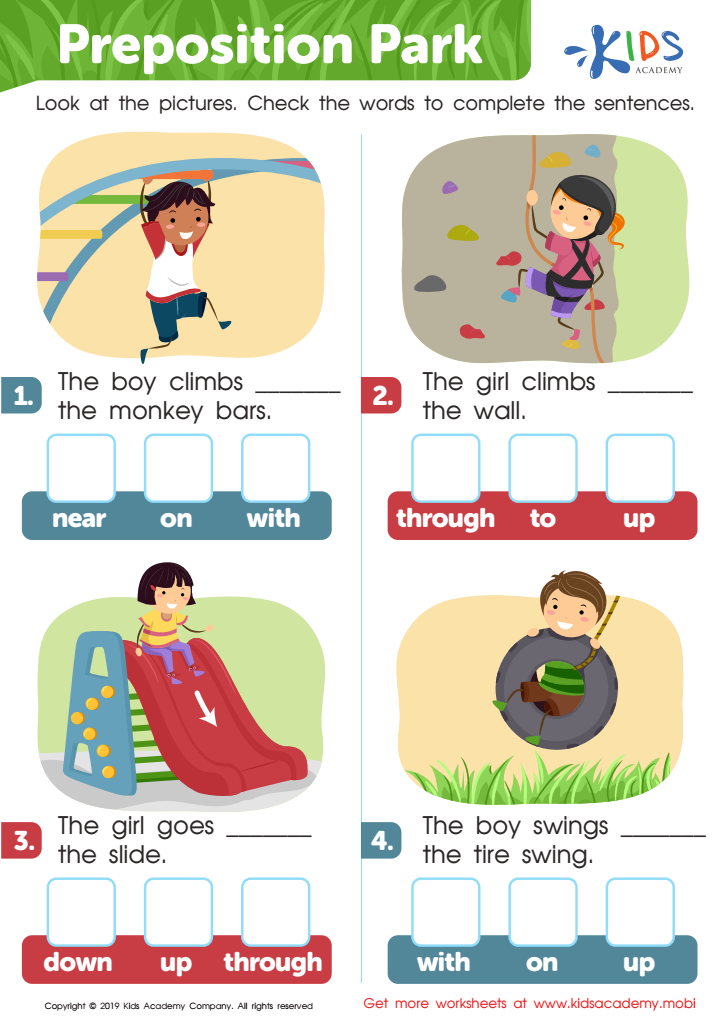
Preposition Park Worksheet
 Assign to My Students











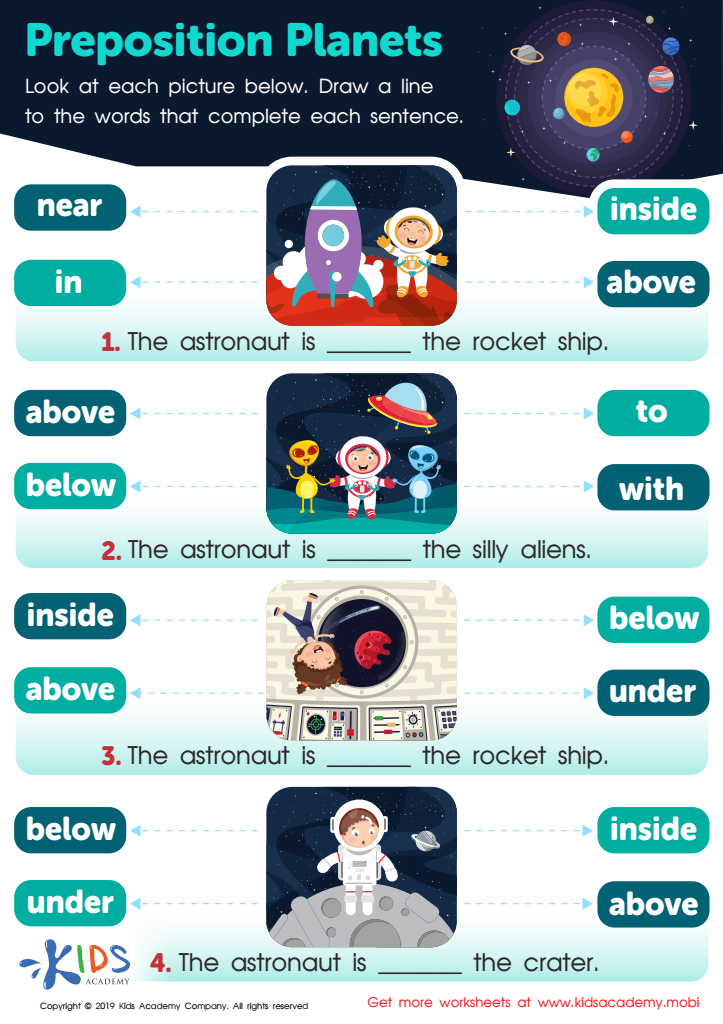
Preposition Planets Worksheet
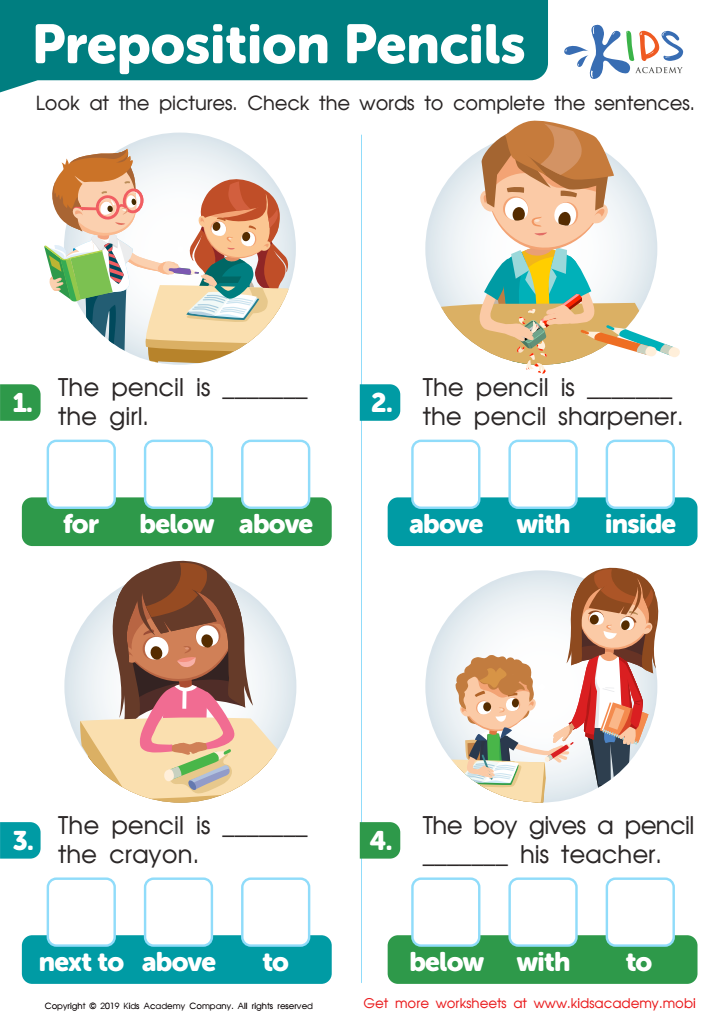
Preposition Pencils Worksheet
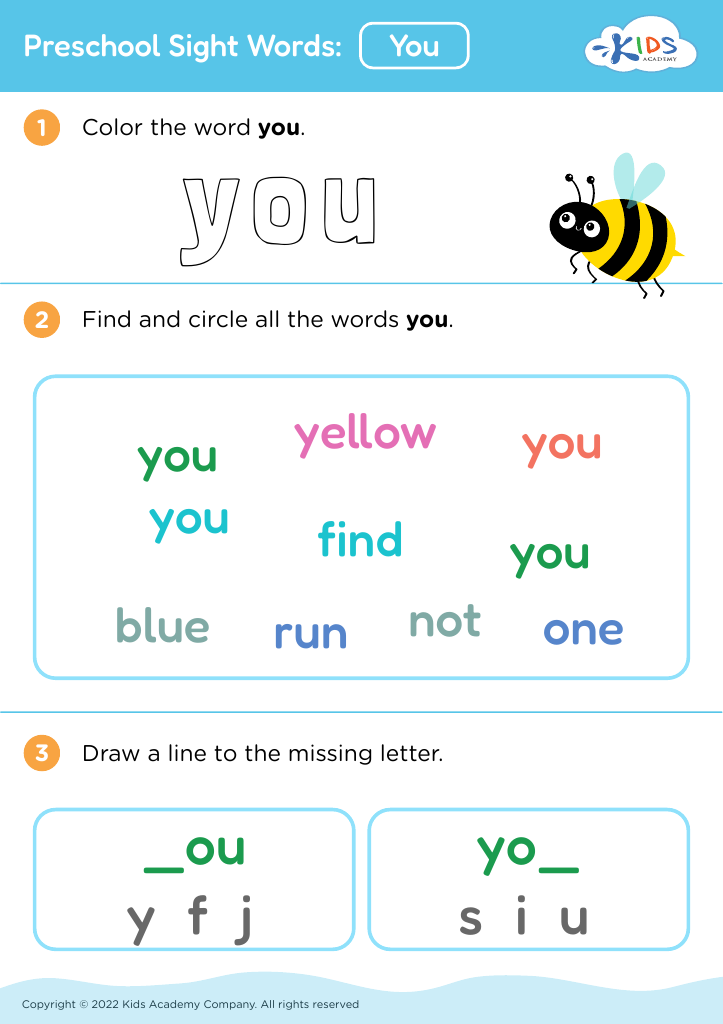




.jpg)



Understanding prepositions and building vocabulary are crucial for children ages 4-5 as these early language skills form the foundation for effective communication and academic success. Prepositions such as "in," "on," "under," and "next to" help children describe the relationships between objects, enabling them to follow directions more accurately and express themselves more clearly. Without a solid grasp of prepositions, children might struggle to articulate their needs or understand classroom instructions, which could hinder their learning experiences.
Building vocabulary at this age is equally important. A robust vocabulary allows children to comprehend stories, engage in conversations, and ask questions, which are critical components of early literacy development. A rich vocabulary supports reading comprehension and promotes confidence in speaking and writing, laying a foundation for future academic achievements.
Parents and teachers play pivotal roles in this developmental stage. By introducing a variety of words and prepositions through engaging activities, stories, and everyday interactions, adults can provide the rich linguistic environment children need to thrive. Simple games like “Simon Says”—using prepositions—can make learning fun while reinforcing essential language skills. Ultimately, nurturing these abilities in the early years fosters cognitive, social, and emotional growth, equipping children with the tools they need for lifelong learning.








