
Matching skills Reading Worksheets for Ages 4-5
3 filtered results
Difficulty Level
Grade
Age
-
From - To
Subject
Activity
Standards
Unlock your child’s potential with our Matching Skills Reading Worksheets for ages 4-5! These engaging worksheets help young learners enhance their reading and comprehension abilities through fun matching activities. Designed to spark interest and build foundational skills, each worksheet encourages kids to connect words with images, fostering both language development and critical thinking. Our vibrant and age-appropriate resources are perfect for parents and educators looking to support early literacy learning at home or in the classroom. Explore our collection today and watch your child gain confidence in reading while having a fantastic time! Start their journey to reading success!
Favorites
With answer key
Interactive
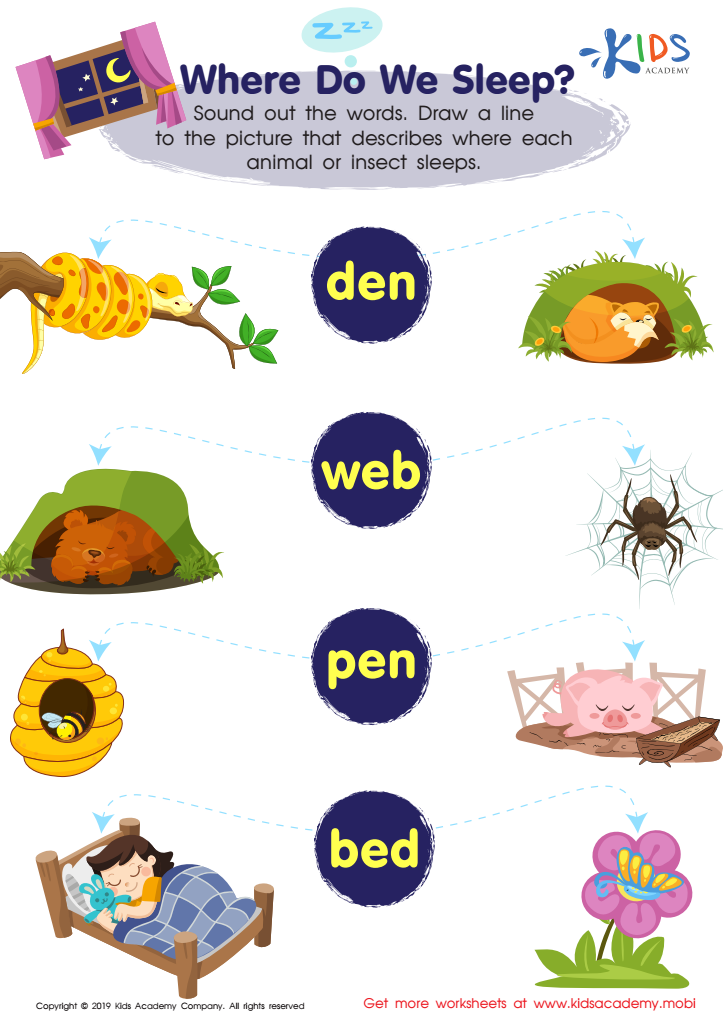
Where Do We Sleep Worksheet
Help your kids understand the importance of a safe space with this activity: Ask them to draw a line connecting the different animals and insects to the words that describe where they sleep. Remind them that everyone needs a sanctuary to rest – like the animals and insects in this printout.
 Assign to My Students
Where Do We Sleep Worksheet
Worksheet
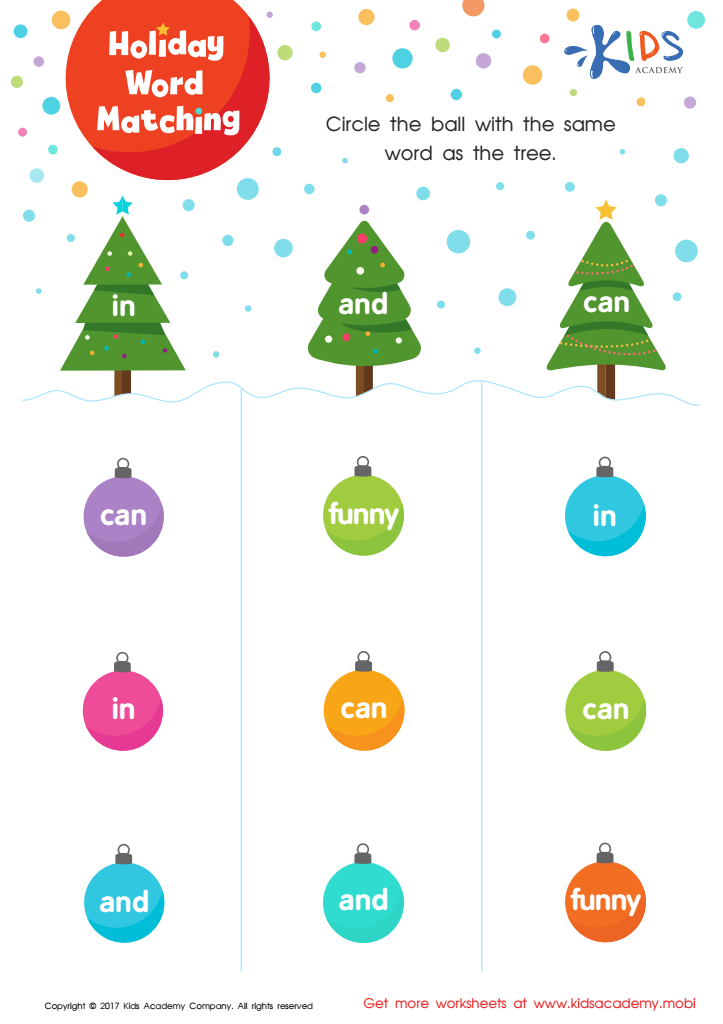
Holiday Word Matching Worksheet
Decorate with Kids Academy this year! Keep kids learning this holiday season with this festive worksheet. Let them look for sight words on Christmas trees then circle the matching ornament to decorate. It's a fun and educational way to enjoy the holidays!
Holiday Word Matching Worksheet
Worksheet
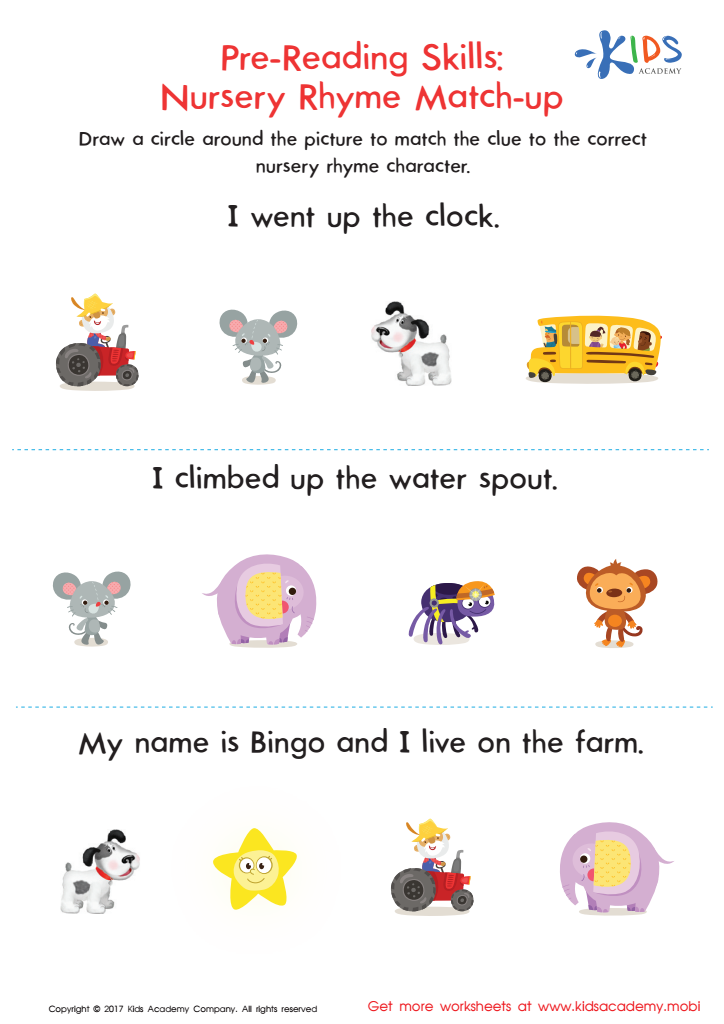
Nursery Rhyme Match–Up Worksheet
This worksheet helps kids build pre-reading skills using stories they know and love! By connecting with prior knowledge, kids can develop ideas about characters and set the stage for reading strategies.
Nursery Rhyme Match–Up Worksheet
Worksheet
Join Kids Academy for Free
Who is primarily going to use this learning content?



.jpg)




Matching skills reading is crucial for children aged 4-5 as it lays the foundation for their literacy development. At this age, children are just beginning to recognize letters, sounds, and words, making it essential for parents and teachers to facilitate skill exposure and practice.
This skill involves identifying and matching letters with corresponding sounds or words, enhancing phonemic awareness, which is critical for reading success. By fostering matching skills, children gain confidence in their ability to decode words, helping them transition to more complex reading tasks as they progress.
Moreover, early matching and recognition encourage cognitive development, allowing children to make connections between letters and their meanings. It also enhances motor skills as they practice writing and forming letters.
Parents and teachers should care because engaging children with these foundational skills not only improves their literacy but also sets a positive tone for their academic journey. It promotes a love for reading and learning, which can influence future educational outcomes. Additionally, these skills empower children to understand the world around them, enriching their communication abilities and enabling them to express themselves effectively as they grow. In essence, nurturing matching skills in reading at this formative stage is pivotal for lifelong learning.








