Vocabulary development Reading Comprehension Worksheets for Ages 4-5
4 filtered results
-
From - To
Enhance your child's language skills with our Vocabulary Development Reading Comprehension Worksheets for ages 4-5. Designed to build a strong foundation, these engaging worksheets help young readers expand their vocabulary while improving reading comprehension. Through fun, interactive activities, children discover new words, understand their meanings, and learn to use them in context. These worksheets are crafted by educational experts to align with early learning standards, ensuring your child gets the best start in literacy development. Perfect for at-home practice or classroom use, these tools make learning an enjoyable adventure for your budding reader.
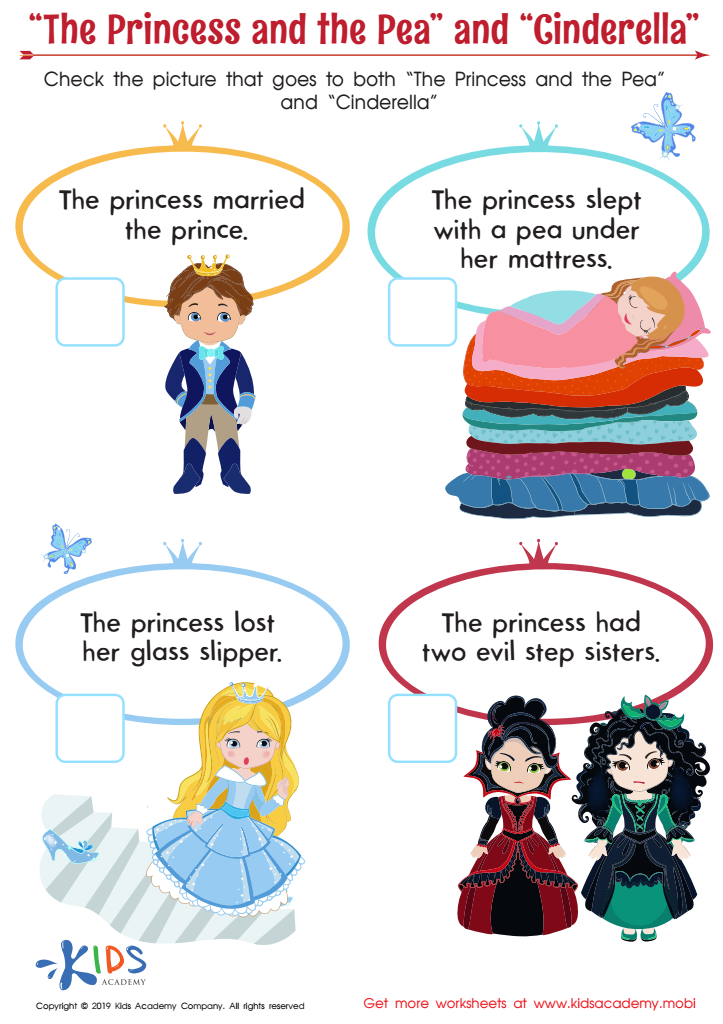
“The Princess and the Pea” and “Cinderella” Worksheet
 Assign to My Students
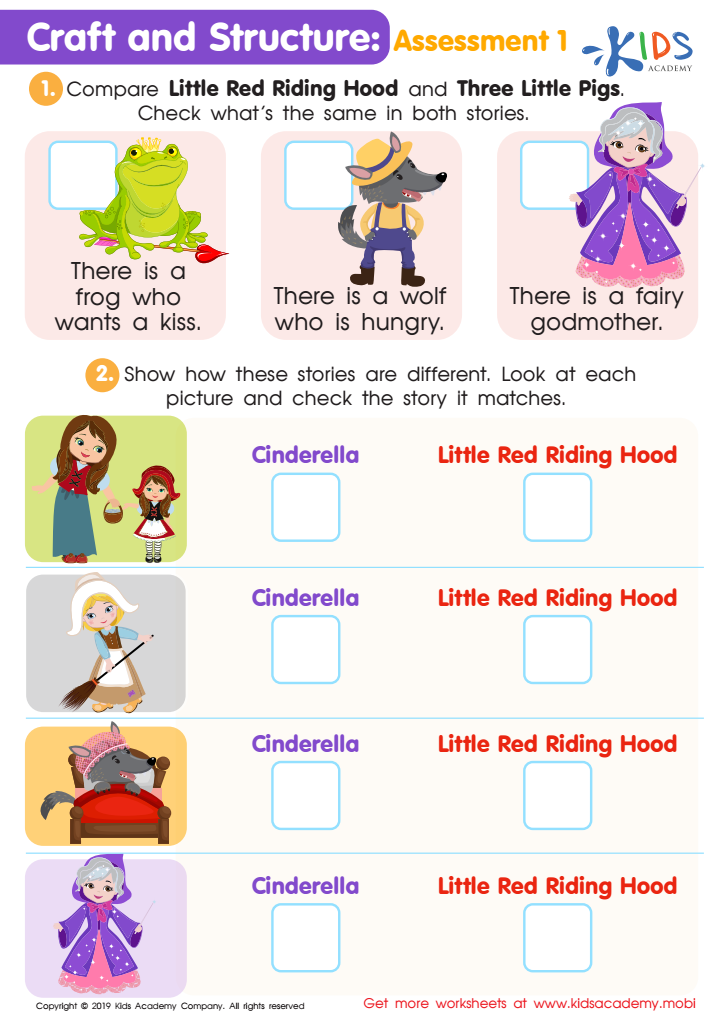
Craft and Structure: Assessment 1 Worksheet
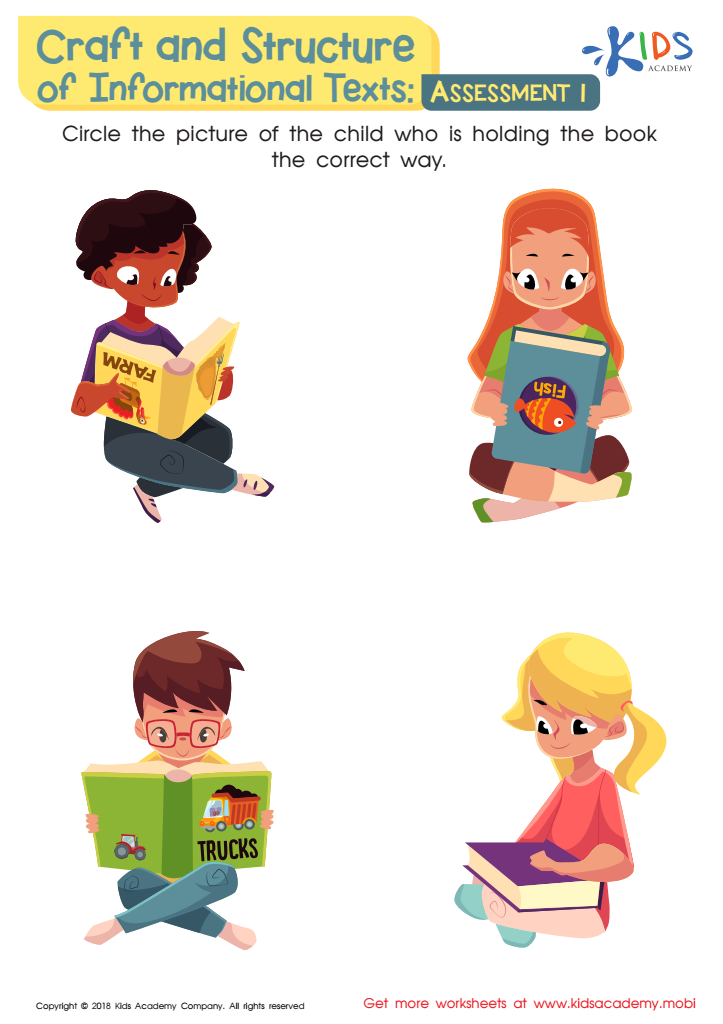
Craft and Structure of Informational Texts: Assessment 1 Worksheet
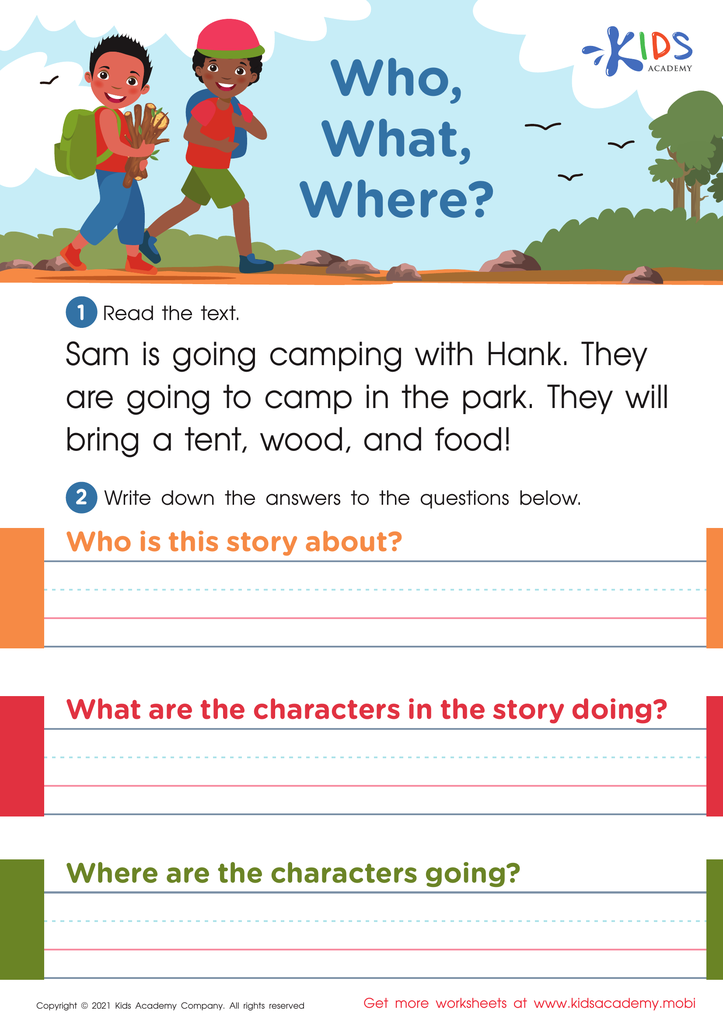
Who, What, Where? Worksheet




.jpg)


Vocabulary development and reading comprehension are foundational skills that significantly impact a child's academic success and lifelong learning. For ages 4-5, these early childhood years mark a critical period of language acquisition and cognitive growth. Developing a robust vocabulary allows children to express themselves more clearly and understand others better, which is crucial for building social skills and establishing positive relationships.
Parents and teachers should care about these skills because they set the stage for future learning. At this age, children are like sponges, absorbing new words and concepts rapidly. A rich vocabulary aids in reading comprehension by allowing young children to make sense of stories and text, enhancing their ability to follow along and retain information. This early exposure to language also enhances their ability to think critically and solve problems.
Incorporating vocabulary and reading activities helps children develop a love for reading, which has long-term educational benefits. Engaging in diverse and interactive experiences, such as storytelling, conversations, and play, promotes a deep and nuanced understanding of words and concepts.
Ultimately, by supporting vocabulary development and reading comprehension early on, parents and teachers pave the way for children to succeed academically, build confidence, and foster a lifelong passion for learning.








