Story analysis Reading Fiction Worksheets for Ages 4-5
4 filtered results
-
From - To
Unlock the magic of storytelling for your little ones with our "Story Analysis Reading Fiction Worksheets for Ages 4-5". Tailored for early readers, these engaging worksheets help kids explore and understand story elements like characters, setting, and plot. Through fun and interactive activities, children enhance their comprehension, critical thinking, and vocabulary skills. Let your child dive into enchanting tales and embark on adventures, all while learning to analyze stories with these specially designed tools. Perfectly crafted to make reading exciting and educational, our worksheets are an essential resource for young learners. Discover the joy of reading with us!
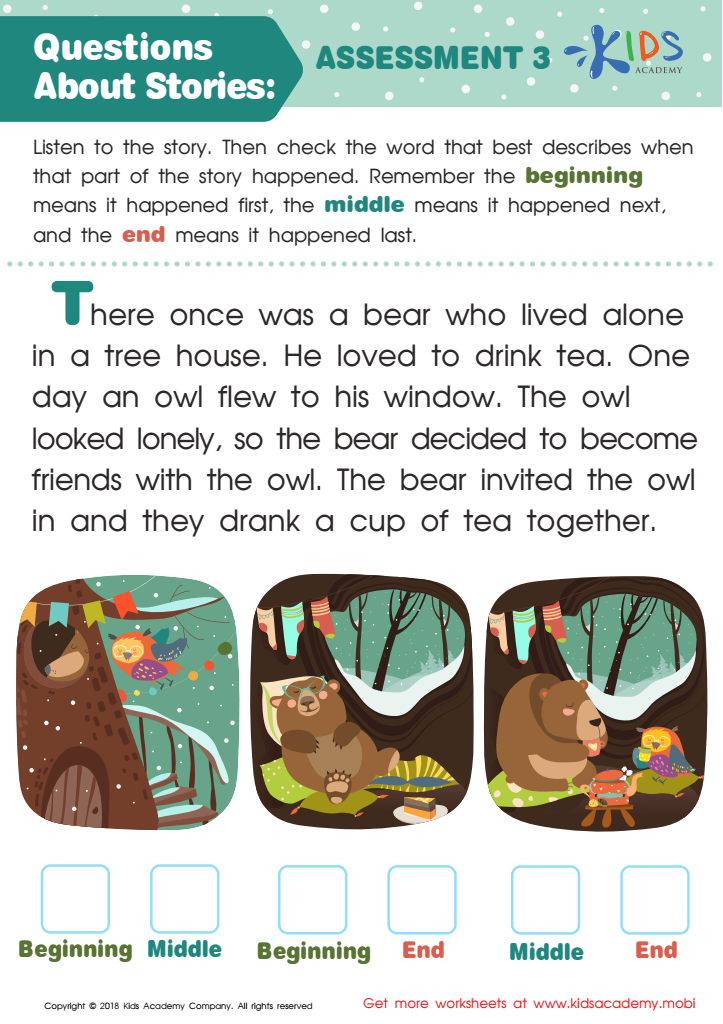
Questions About Stories: Assessment 3 Worksheet
 Assign to My Students
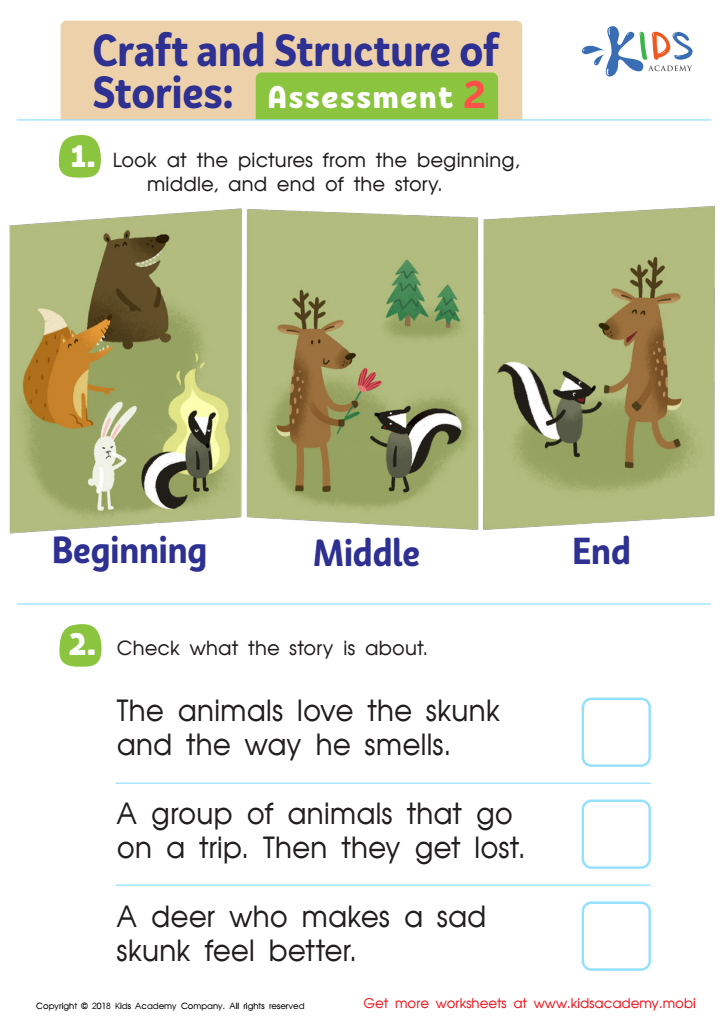
Craft and Structure of Stories: Assessment 2 Worksheet
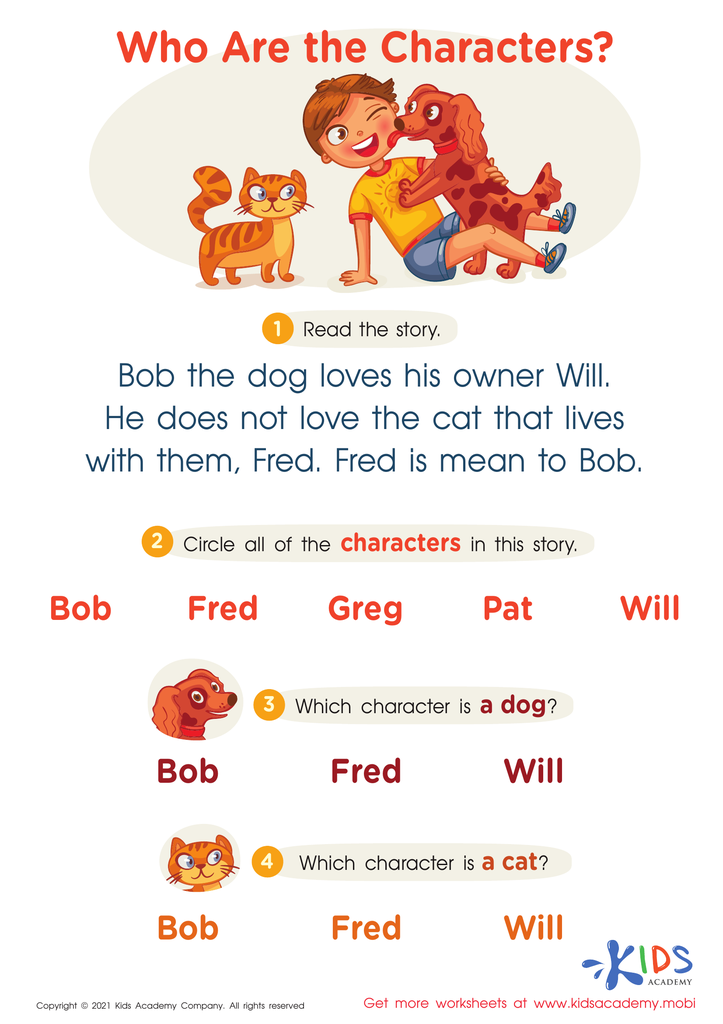
Who Are the Characters? Worksheet
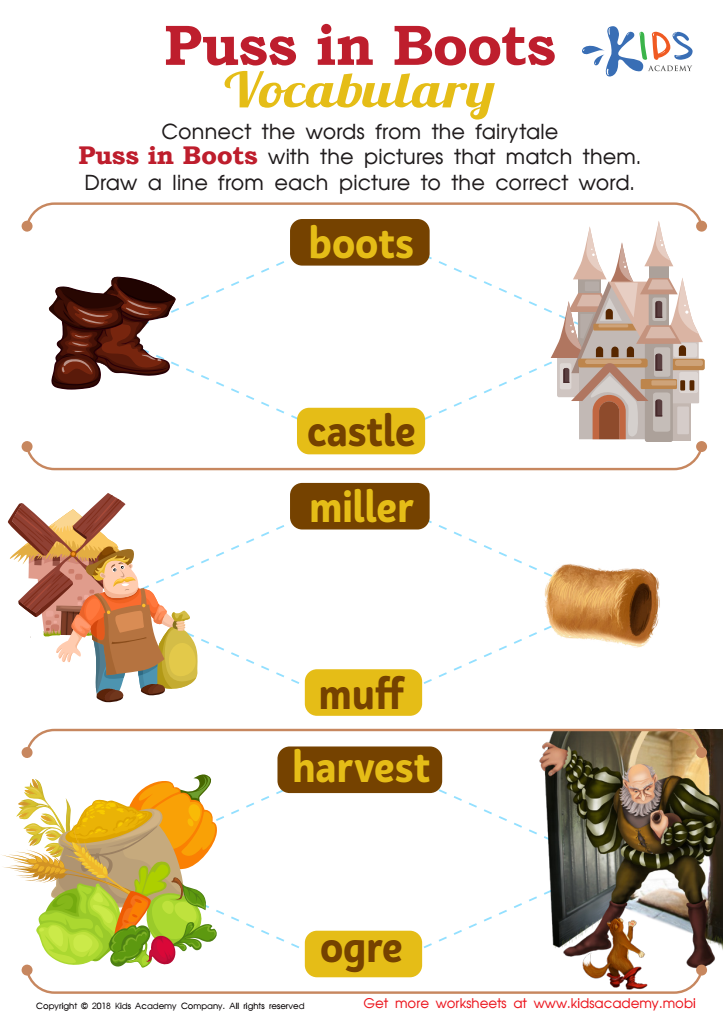
Puss in Boots Vocabulary Worksheet


.jpg)




Story analysis and reading fiction are incredibly beneficial for young children aged 4-5. At this crucial developmental stage, engagement with stories fuels cognitive growth, lays the groundwork for literacy, and broadens their understanding of the world. When parents and teachers delve into story analysis with young learners, they introduce children to foundational narrative structures, such as beginning, middle, and end. This aids in the development of sequencing skills and logical thinking.
Moreover, fiction opens doors to imaginative realms, fostering creativity and helping children learn to empathize with characters who might be different from themselves. By discussing characters’ feelings and motivations, teachers and parents help children develop emotional intelligence and a deeper understanding of human behavior.
Language skills are substantially enhanced through exposure to rich, varied vocabulary in fiction. Children pick up new words and phrases in context, which supports language acquisition and expressive abilities. Additionally, asking questions about the story encourages critical thinking and comprehension.
Developing a love for storytelling and reading during these early years can instill a lifelong passion for learning. The interaction during story analysis creates a bonding experience, making reading a shared, enjoyable activity that strengthens relationships and ensures continued interest in literature and learning.








