Rhyming skills development Rhyming Words Worksheets for Ages 4-5
3 filtered results
-
From - To
Boost your child's early literacy with our engaging Rhyming Words Worksheets designed for ages 4-5! These expertly crafted worksheets make learning fun by helping young learners develop essential rhyming skills. Through a variety of playful and interactive exercises, children will recognize patterns in word sounds, enhancing their phonemic awareness. Perfect for preschoolers and kindergarten students, our rhyming worksheets provide an enjoyable way to build a strong foundation for reading success. Download today and watch your child's love for words and reading grow as they master the art of rhyming! Visit Kids Academy for more resources.
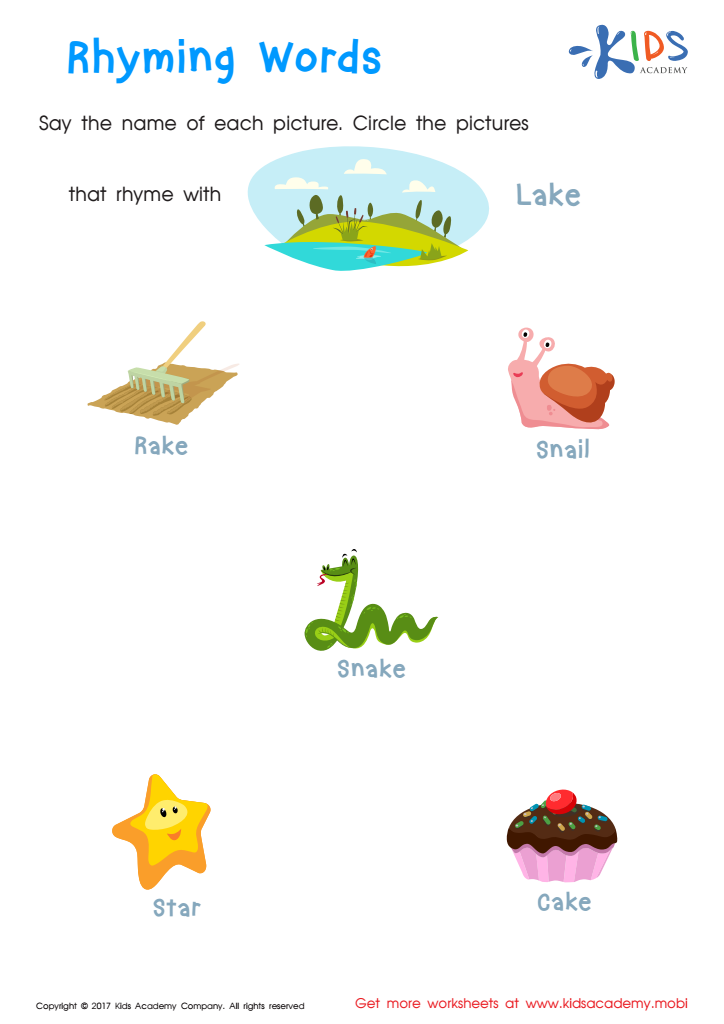
Rhyming Words Rhyming Worksheet
 Assign to My Students
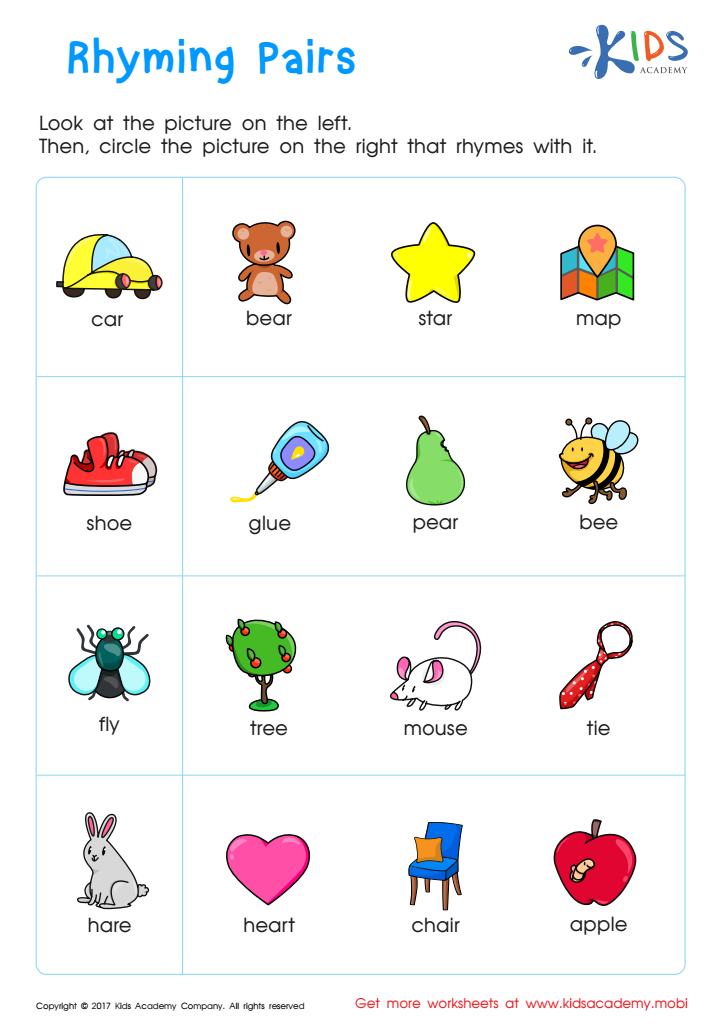
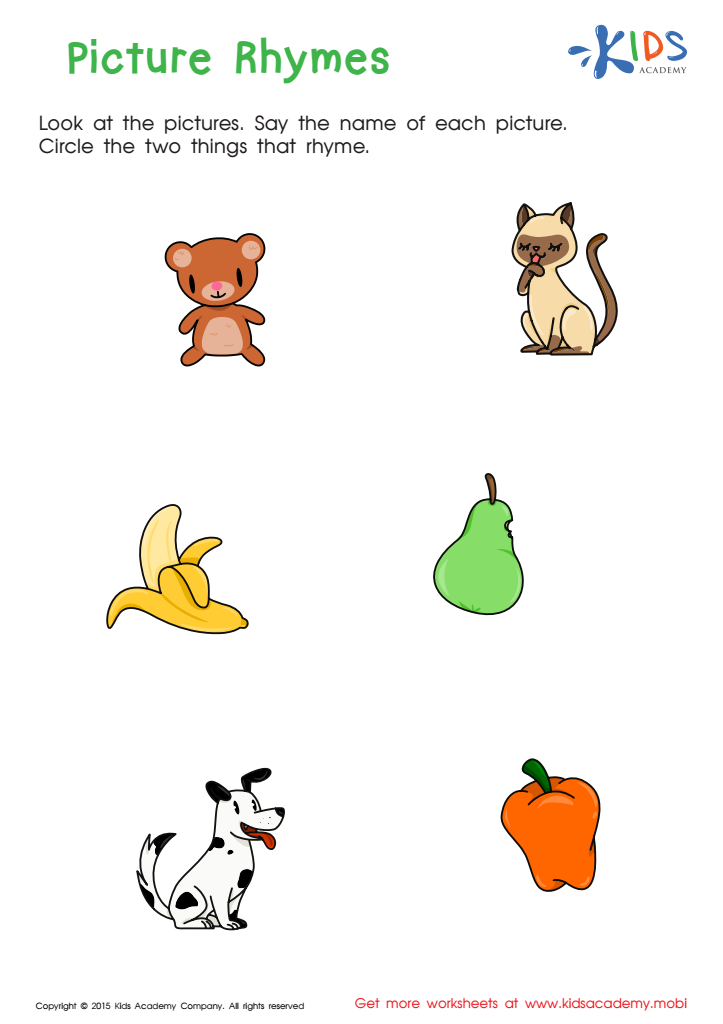
First Words: Picture Rhymes Worksheet







Parents and teachers should care about the development of rhyming skills in children aged 4-5 because this foundational skill directly supports early literacy and language development. Rhyming helps children recognize and predict sound patterns, which enhances their phonological awareness— the ability to hear, identify, and manipulate sounds in spoken language. This phonological awareness is a critical precursor to reading success, as it allows children to understand how letters and sounds form words.
Engaging with rhymes also enriches vocabulary and expressive language skills. Through repeated exposure to rhyming texts such as nursery rhymes, children learn new words and concepts in a memorable and enjoyable context. This can improve their ability to comprehend and use language effectively, which is essential for both social interaction and academic growth.
Additionally, rhyming exercises often involve playful and interactive activities that promote a love for reading and literature from an early age. This enjoyment can lead to a sustained interest in learning and exploring new texts, fostering lifelong literacy skills. Involving children in rhyming games and songs further stimulates their cognitive and auditory skills, contributing to overall brain development. Therefore, focusing on rhyming skills is a multi-faceted approach that bolsters early childhood education, making it an essential aspect of early learning curriculums.








