Reading Skills Grammar Worksheets for Ages 4-5
3 filtered results
-
From - To
Enhance your child's literacy journey with our engaging Reading Skills Grammar Worksheets designed specifically for ages 4-5! These worksheets provide a fun and interactive way for young learners to develop their reading comprehension and grammar skills. Crafted with vibrant illustrations and activities, children will cultivate their ability to identify words, understand sentences, and enhance vocabulary. Our age-appropriate exercises foster a love for reading while improving critical thinking. Suitable for both home and classroom use, these worksheets offer a perfect blend of learning and fun, setting the foundation for your child’s future success in reading and writing. Start exploring today!
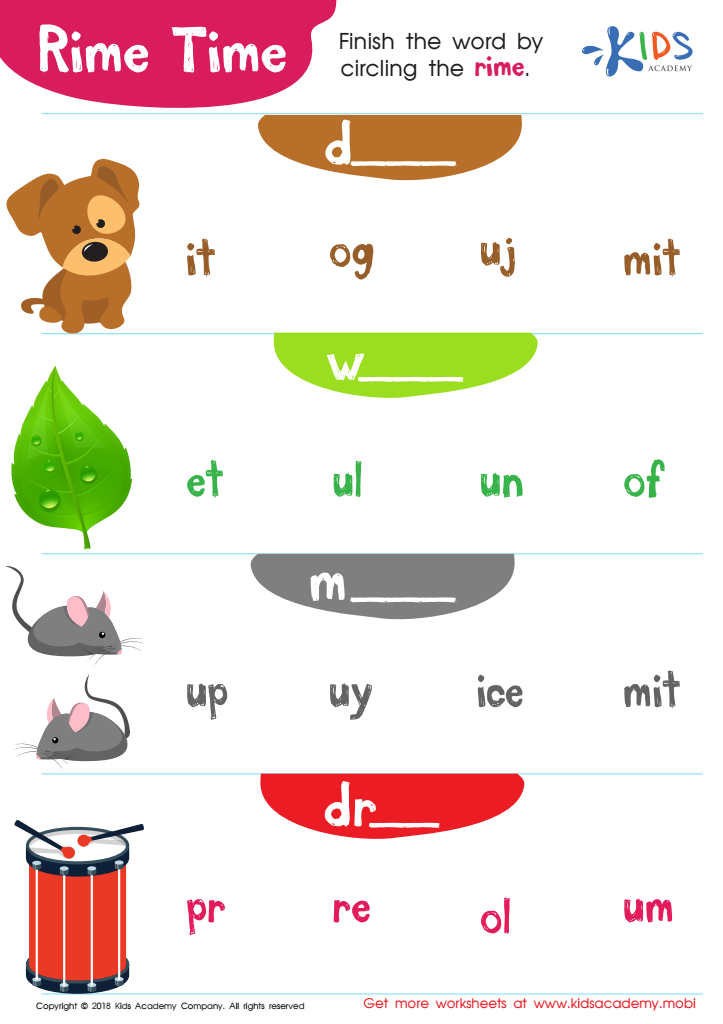
Rime Time Worksheet
 Assign to My Students
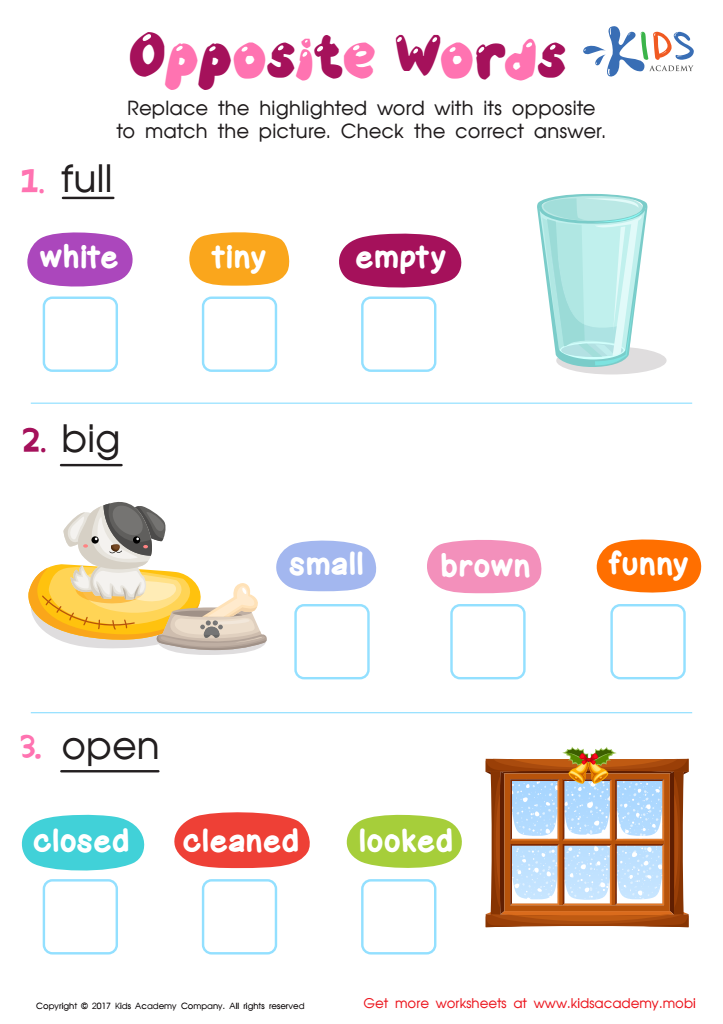
Opposite Words Worksheet
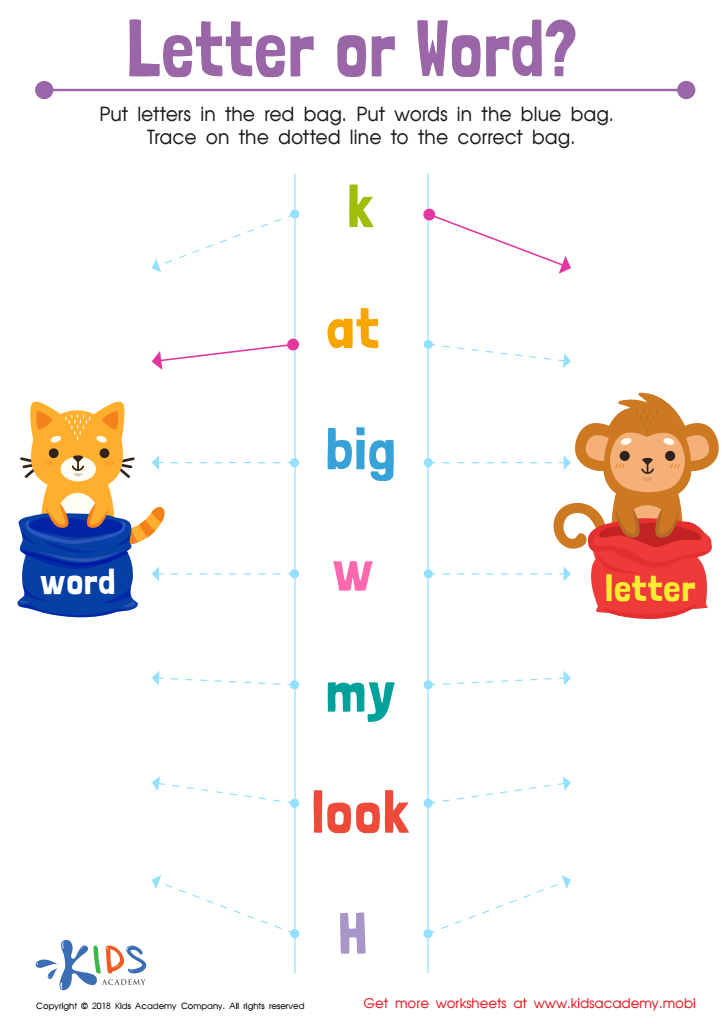
Letter or Word? Worksheet







.jpg)
Parents and teachers play a pivotal role in fostering early literacy skills in children aged 4-5, and understanding reading skills and grammar is fundamental to this development. At this young age, children are like sponges, absorbing knowledge rapidly. Developing reading skills helps children decode words, comprehend meaning, and express themselves more clearly. Enhanced language skills boost vocabulary and foster a love for reading, which can lead to lifelong learning.
Understanding grammar, even at a basic level, is crucial as it lays the foundation for effective communication. It helps young learners to grasp how sentences are constructed, which in turn aids their reading comprehension and writing abilities. When parents and teachers emphasize reading skills and grammar, they empower children to convey their thoughts and feelings accurately. This confidence in language use not only aids academic performance but also nurtures social interactions.
Moreover, as students progress through school, strong reading skills will serve them well across subjects. Inculcating these skills at an early age encourages critical thinking and problem-solving abilities. Therefore, prioritizing reading skills and grammar is essential for nurturing well-rounded, articulate, and confident individuals ready to tackle their educational journeys. Investing in these fundamental skills now reaps lifelong benefits for both children and society.








