Understanding prepositions Grammar Worksheets for Ages 4-5
3 filtered results
-
From - To
"Understanding Prepositions Grammar Worksheets for Ages 4-5" provides young learners with engaging activities to master prepositions effortlessly. Designed for preschoolers, these worksheets use colorful illustrations and simple exercises to teach spatial relationships like "in," "on," "under," and more. Children will enhance their reading and writing skills while developing a keen understanding of grammar basics. Ideal for both home and classroom settings, these worksheets foster early academic growth and build a strong foundation for future learning. Help your child navigate the world of prepositions with fun and easy-to-follow worksheets that make grammar a delightful adventure.
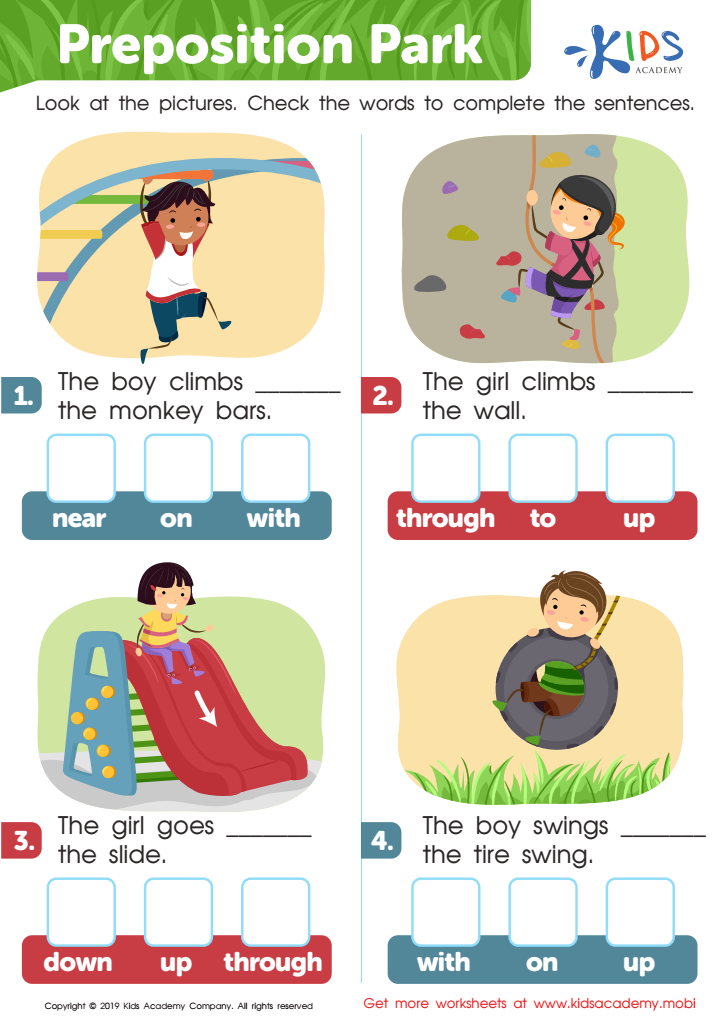
Preposition Park Worksheet
 Assign to My Students
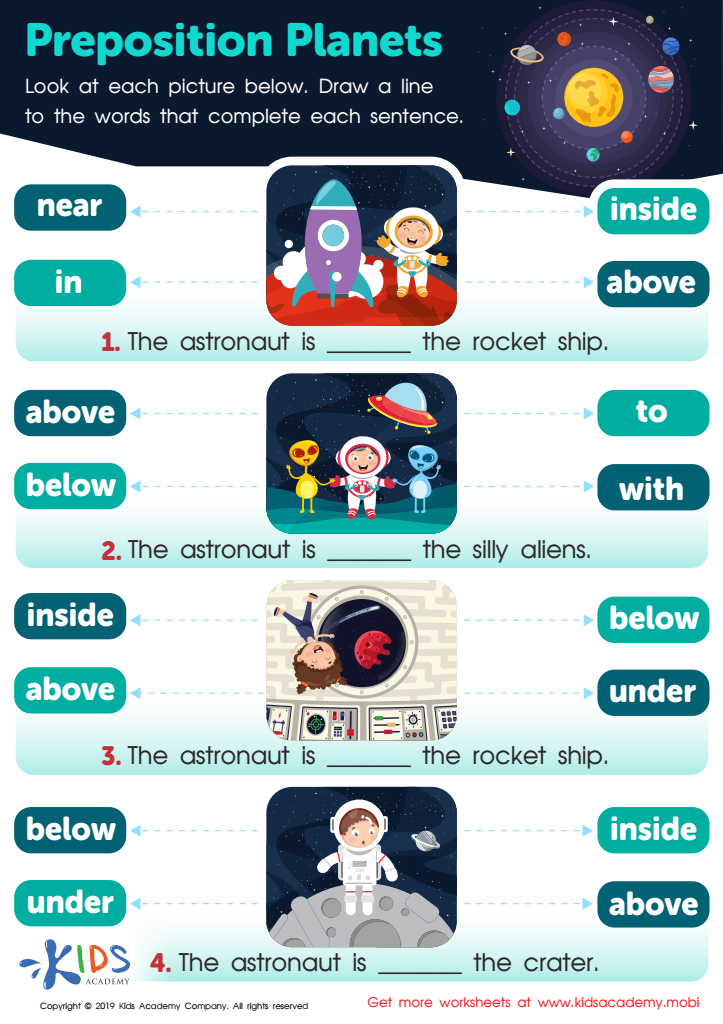
Preposition Planets Worksheet
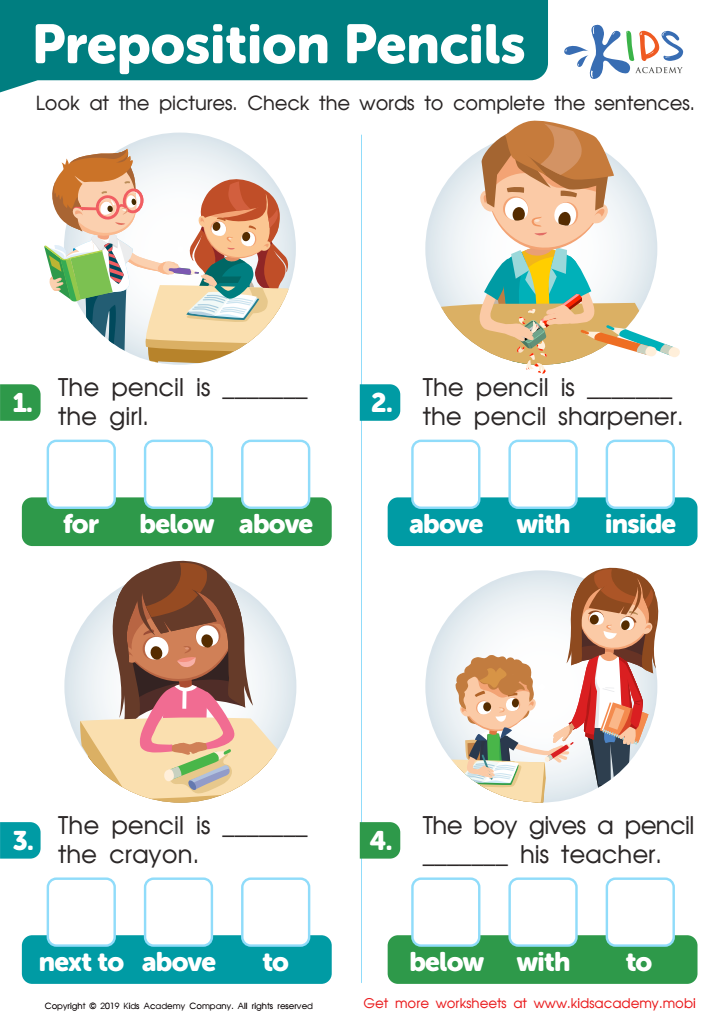
Preposition Pencils Worksheet





.jpg)

Understanding prepositions is crucial for young children, and parents and teachers play an essential role in this learning process. At ages 4-5, children are in a developmental stage where language skills are rapidly expanding. Prepositions, which are words that describe the relationship between different elements within a sentence (like "in," "on," "under," "beside"), help children grasp these spatial and relational concepts, laying a foundational stone for clear communication.
First, being able to use and understand prepositions enhances children's ability to follow directions and comprehend their environment. For example, instructions like "put your toy on the shelf" or "sit next to your friend" require understanding of prepositions to be correctly executed. Furthermore, prepositions play a significant part in narrative skills. Storytelling and understanding stories become more cohesive and coherent as children properly learn to use these words ("Once there was a cat under a tree...").
Additionally, mastery of prepositions aids in kindergarten readiness. Children equipped with a good grasp of prepositions tend to excel in both verbal interactions and more structured learning settings because they can more easily understand and form complex phrases.
Therefore, parental and educational involvement in teaching prepositions is not just about grammar—it’s about equipping children with practical and cognitive tools essential for their overall development and future success in communication and learning.








