Sentence construction Writing Worksheets for Ages 4-5
5 filtered results
-
From - To
Welcome to our Sentence Construction Writing Worksheets for Ages 4-5! These engaging worksheets are designed to help young learners develop foundational writing skills through fun and interactive activities. Perfect for preschool and kindergarten students, our resources guide kids in creating simple sentences while enhancing their vocabulary and understanding of sentence structure. Each worksheet encourages creativity and critical thinking, making learning enjoyable. With clear instructions and captivating illustrations, children will practice forming sentences in a playful way. Equip your little ones with essential writing skills that lay the groundwork for future literacy success. Explore our collection today and watch their confidence soar!
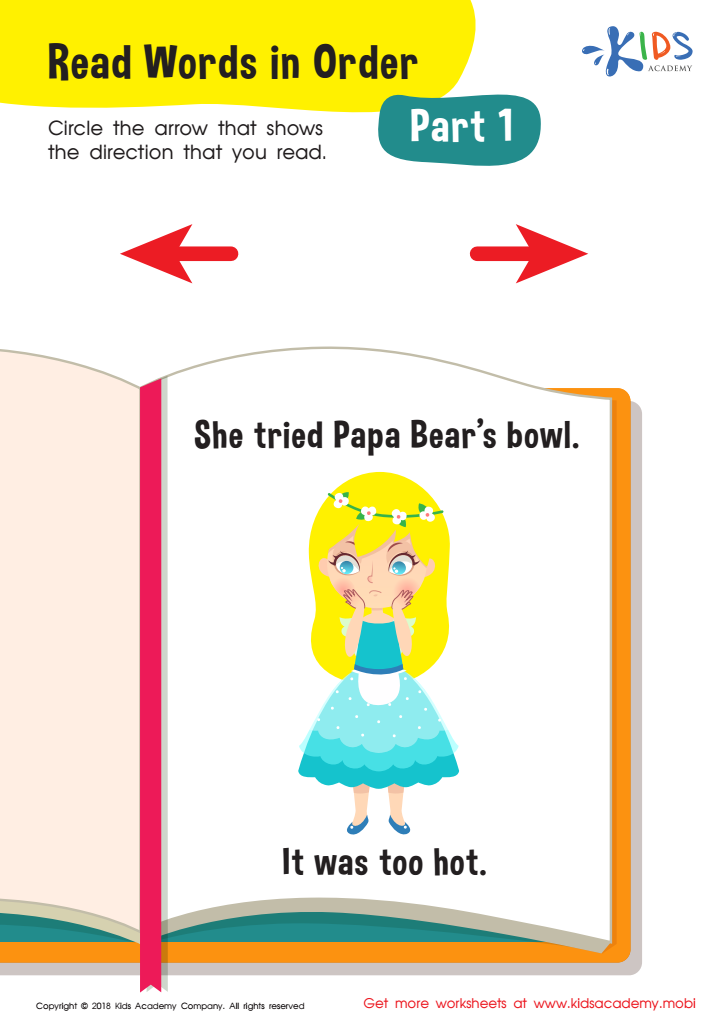
Read Words Order Part 1 Worksheet
 Assign to My Students
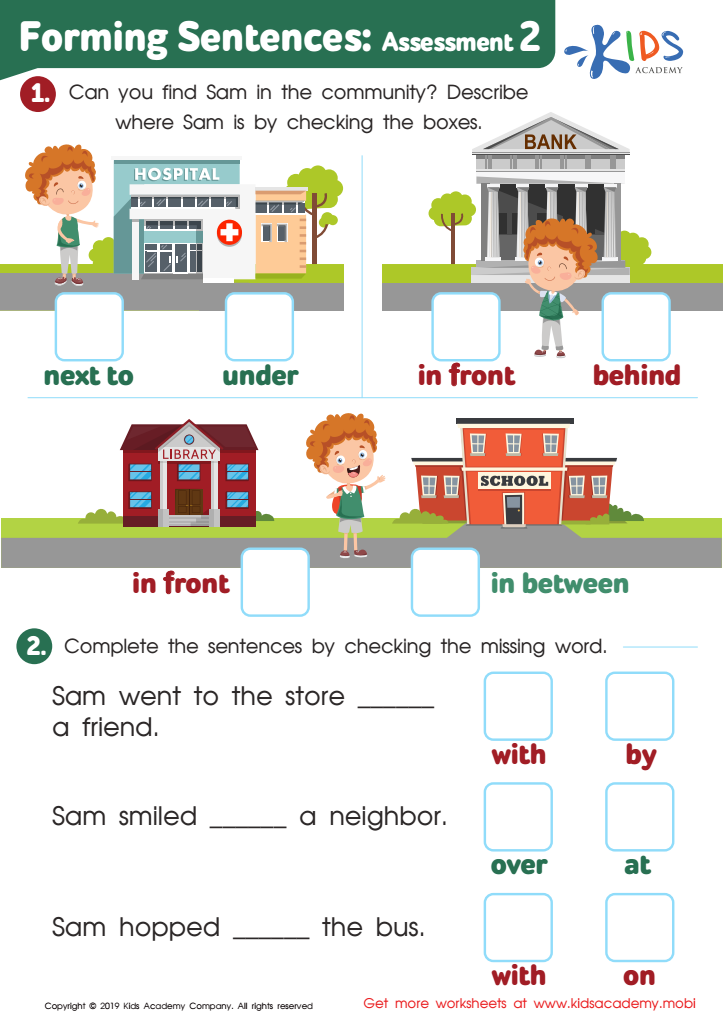
Forming Sentences: Assessment 2 Worksheet
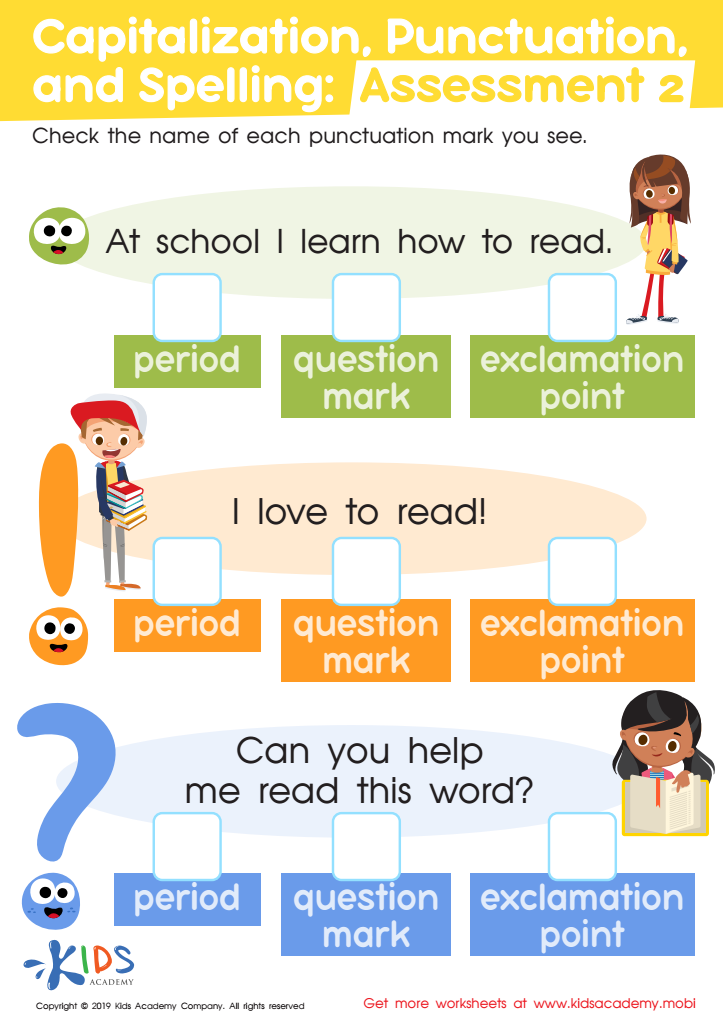
Capitalization. Punctuation. Spelling: Assessment 2 Worksheet
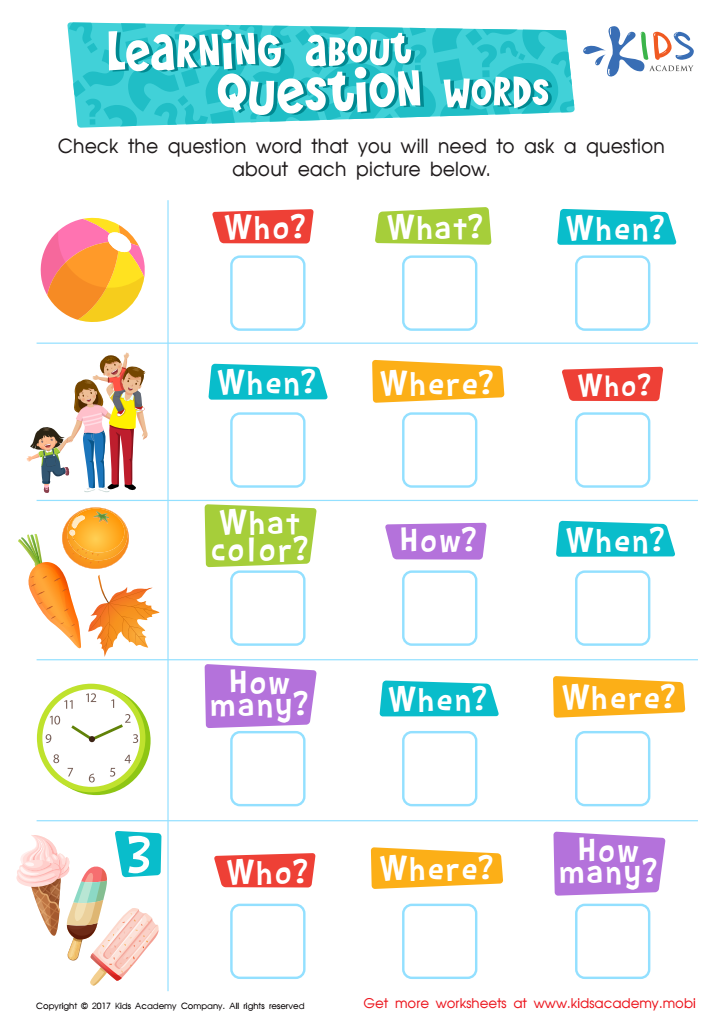
Learning about Question Words Worksheet
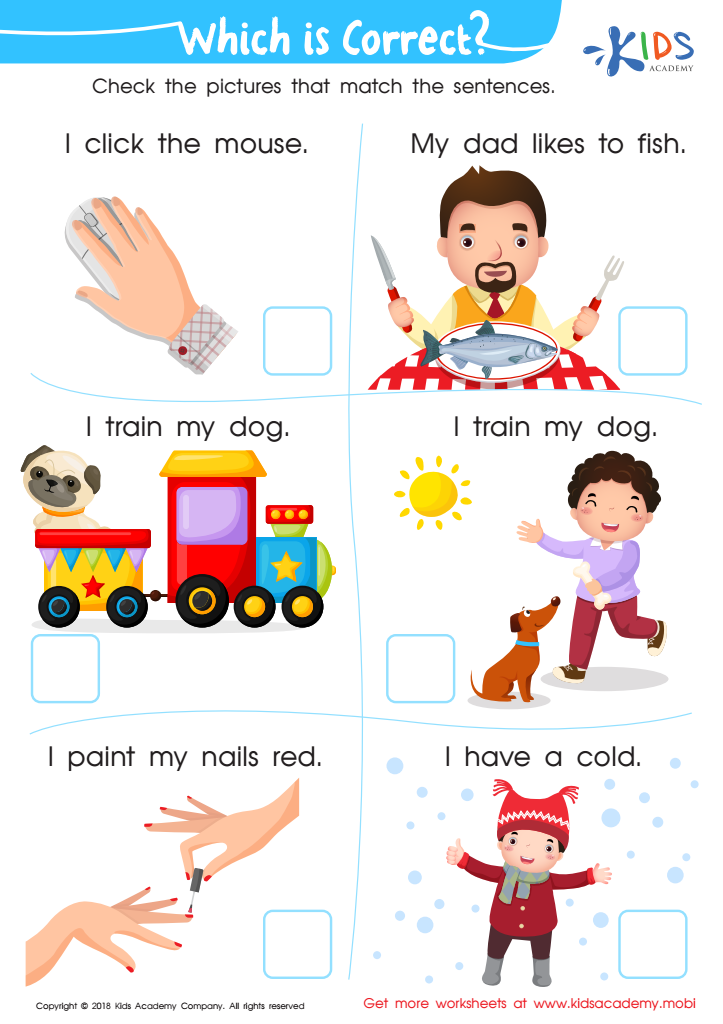
Which Is Correct? Worksheet








Sentence construction is a fundamental skill that plays a crucial role in a child's overall language development, particularly for ages 4-5. At this stage, children are naturally curious and begin to experiment with words and phrases. When parents and teachers encourage sentence construction, they help children develop essential cognitive skills such as critical thinking and creativity. Crafting sentences enables young learners to articulate their thoughts, feelings, and ideas more clearly, which fosters effective communication.
Moreover, sentence construction can enhance literacy skills and boost confidence. Children who learn to form sentences are better equipped to understand written texts as they progress in their education. This foundational skill lays the groundwork for future writing tasks, enabling them to express themselves in more complex ways as they grow.
In addition, engaging in sentence construction activities can strengthen listening and speaking skills, promoting social interaction and collaboration with peers. By investing time in teaching sentence construction, parents and teachers not only support academic readiness but also nurture holistic development, preparing children for success in school and beyond. Ultimately, encouraging these skills at an early age establishes a love for language and learning that can last a lifetime.








