Verb identification Writing Worksheets for Ages 4-5
3 filtered results
-
From - To
Introduce your little learners to the exciting world of verbs with our Verb Identification Writing Worksheets designed specifically for ages 4-5! These engaging worksheets encourage children to identify and use action words in fun, interactive ways. Through playful activities, kids will strengthen their vocabulary and enhance their writing skills. Each worksheet is skillfully crafted to make learning enjoyable, featuring colorful illustrations that captivate young minds. Perfect for early literacy development, these resources make it easy for parents and educators to support language growth. Help your child take their first steps into writing by exploring the action-packed realm of verbs!
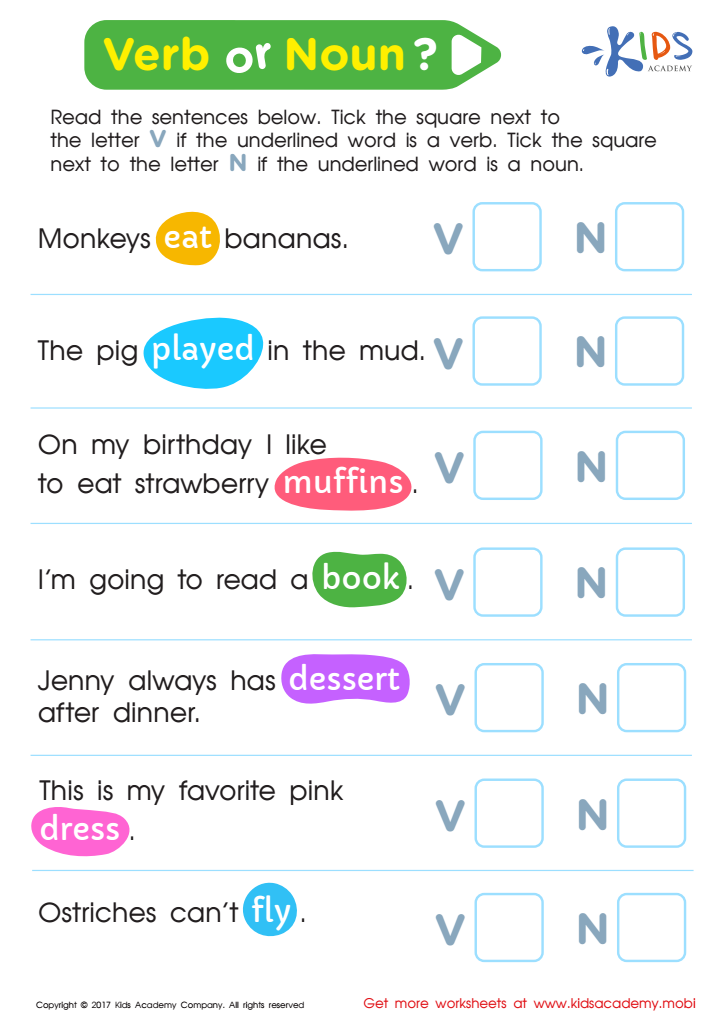
Verb or Noun Worksheet
 Assign to My Students
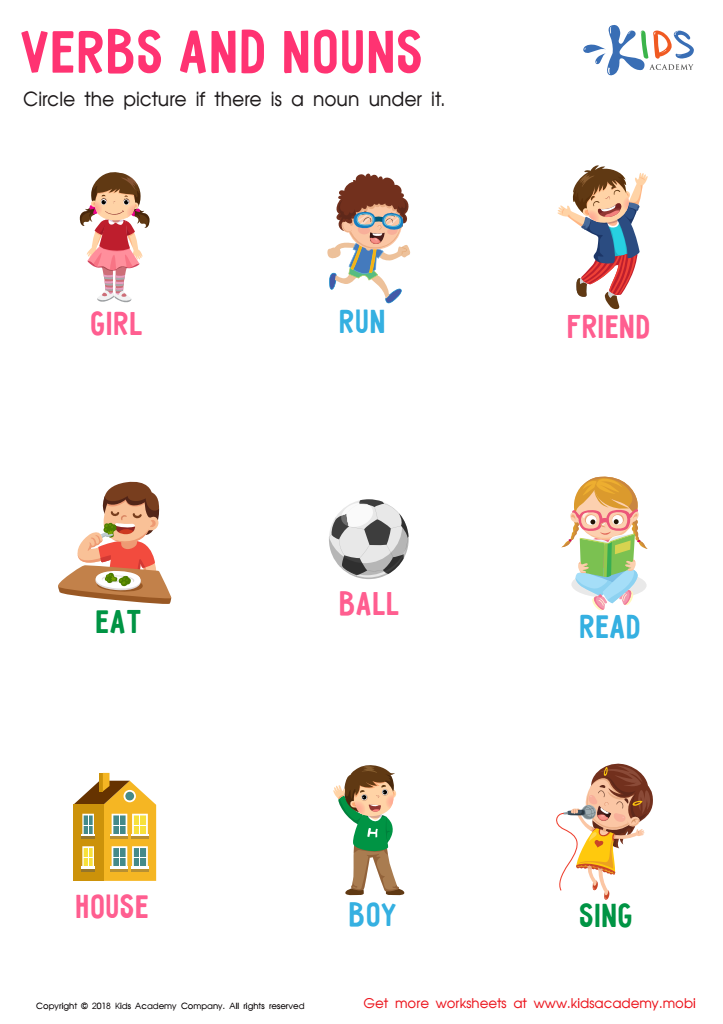
Verbs and Nouns Worksheet
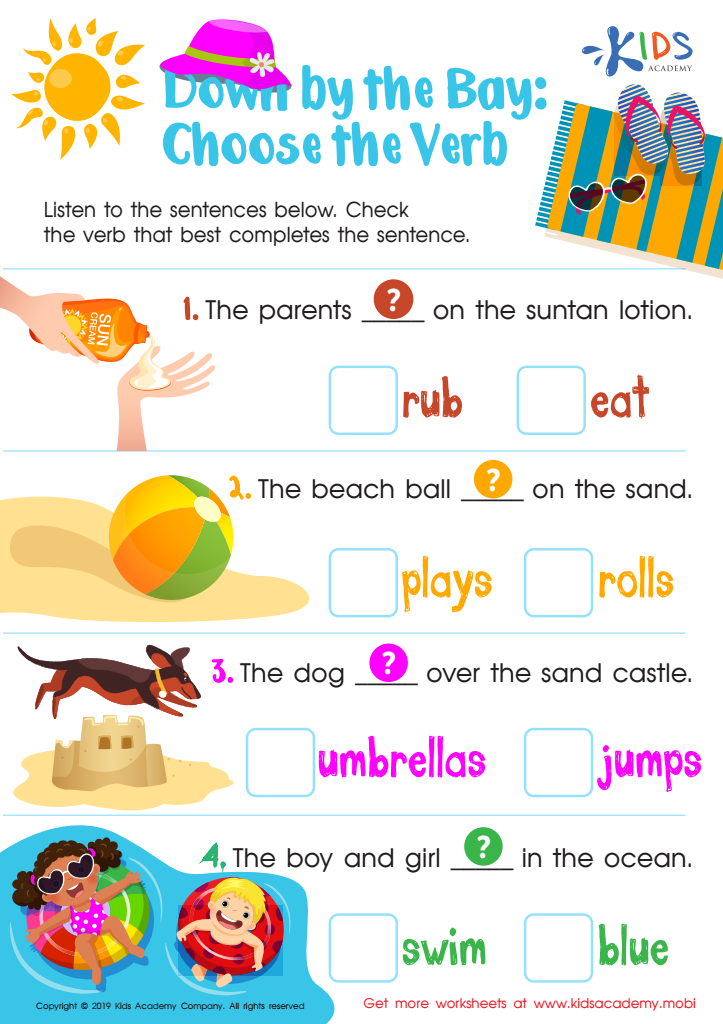
Down by the Bay: Choose the Verb Worksheet





.jpg)
Verb identification is a crucial skill for children aged 4-5 as it forms the foundation for effective communication and literacy development. Understanding verbs enhances a child's ability to construct meaningful sentences, fostering both verbal and written expression. At this age, children are are developing their vocabulary and learning to convey their thoughts, emotions, and experiences. By identifying verbs, they learn to recognize actions, which are essential for storytelling and connecting concepts in their writing.
Moreover, verb identification aids in comprehension skills. As children develop the ability to identify actions in a story, they can better understand character motivations and plot progression. This helps improve their listening comprehension and strengthens their overall language skills.
For parents and teachers, encouraging verb identification through engaging activities, such as games, role-play, or storytelling, not only makes learning fun but also cultivates an interest in language. By fostering early literacy skills, they set children on a path to academic success and confidence in their communication abilities. This foundational knowledge transforms how they interact with language throughout their educational journey and in real-life situations, creating lifelong learners who are curious and proficient in expressing themselves.








