Phonological awareness Phonics Worksheets for Ages 4-6
8 filtered results
-
From - To
Discover engaging phonological awareness worksheets designed specifically for children ages 4-6! At Kids Academy, our printable resources focus on boosting early literacy skills through fun and interactive activities. These worksheets help young learners enhance their phonemic awareness by recognizing sounds, blending phonemes, and manipulating audio patterns. Each worksheet is crafted to support and develop crucial foundational skills in reading and writing, making learning an enjoyable experience. Ideal for home or classroom use, our phonological awareness activities blend play with education, helping children become confident communicators. Explore our collection today and watch your child blossom in their phonics journey!
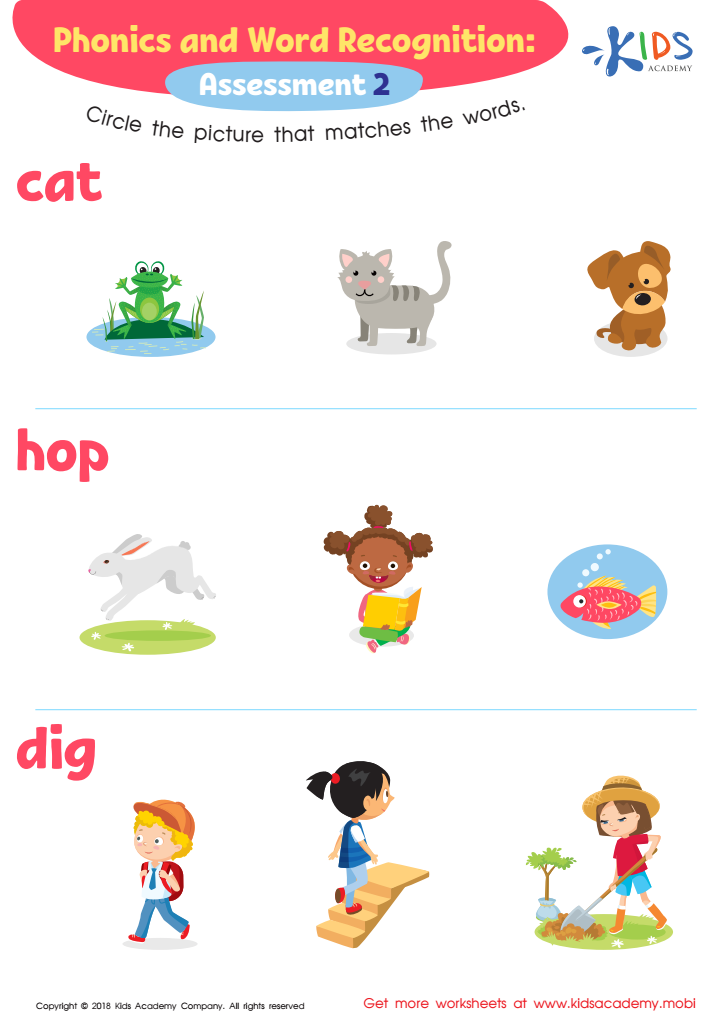
Phonological Awareness: Assessment 2 ELA Worksheet
 Assign to My Students
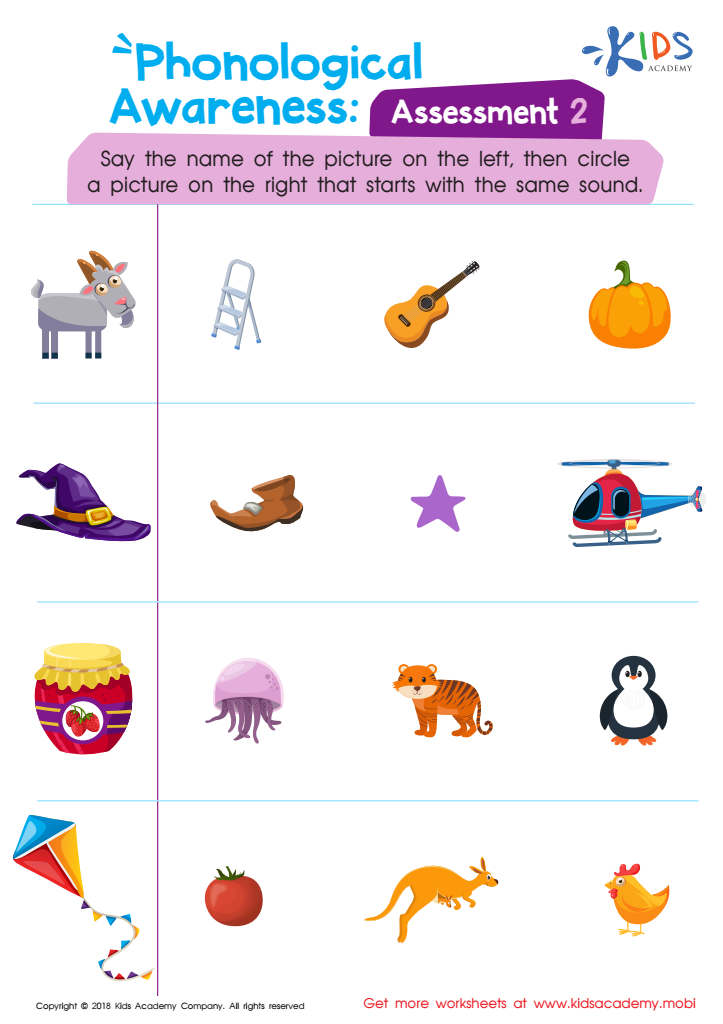
Phonological Awareness: Assessment 2 Worksheet
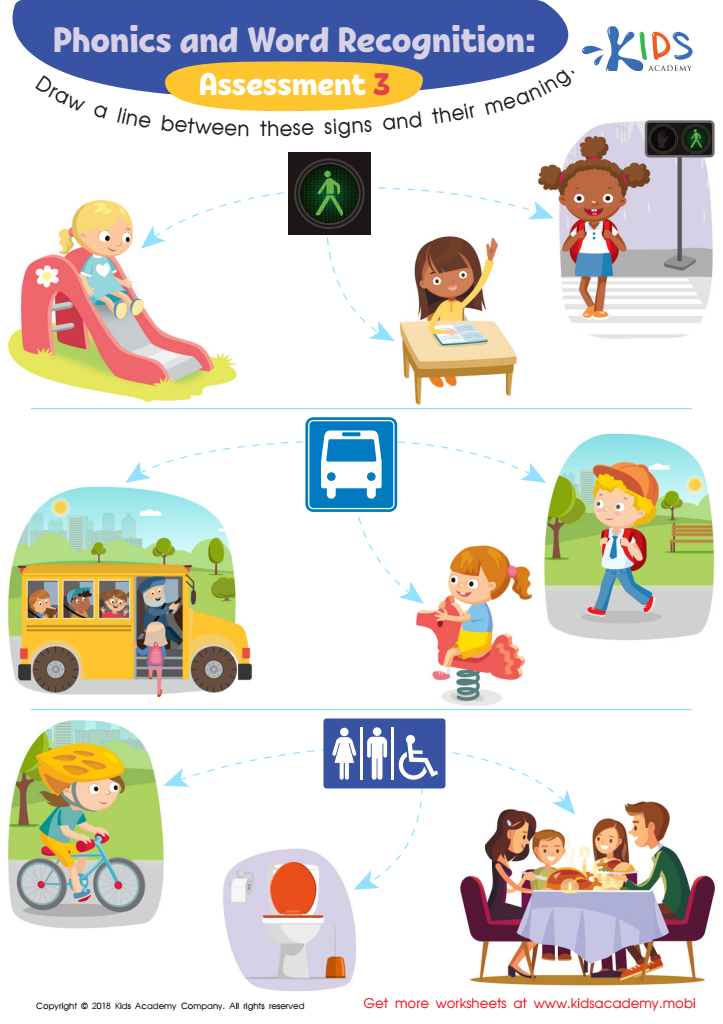
Phonological Awareness: Assessment 3 ELA Worksheet
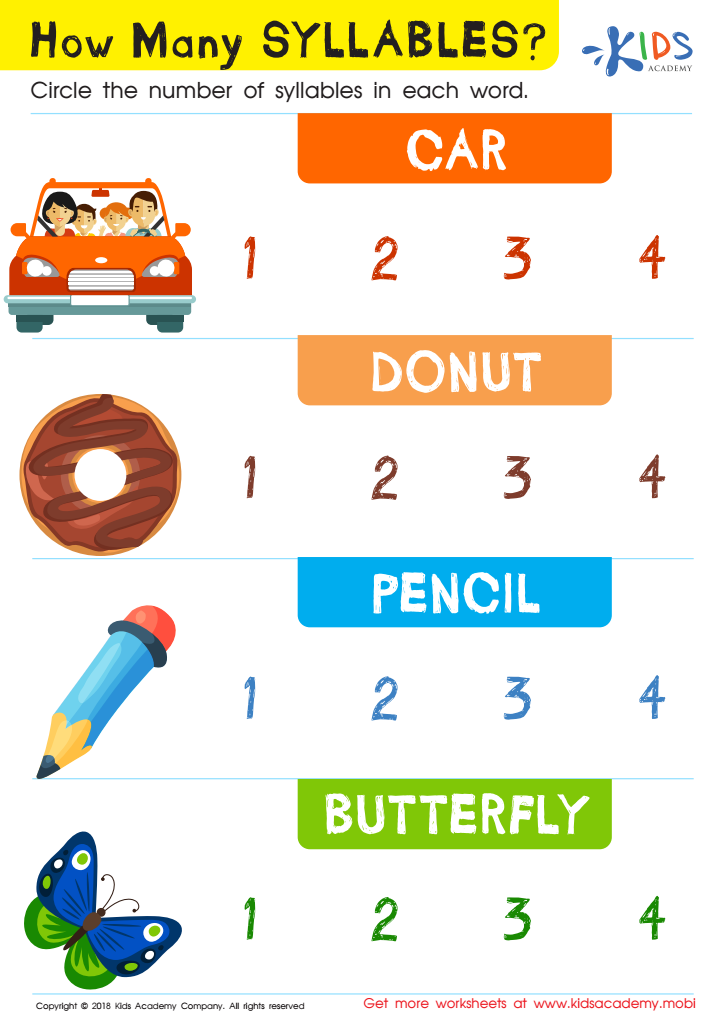
How Many Syllables? Worksheet
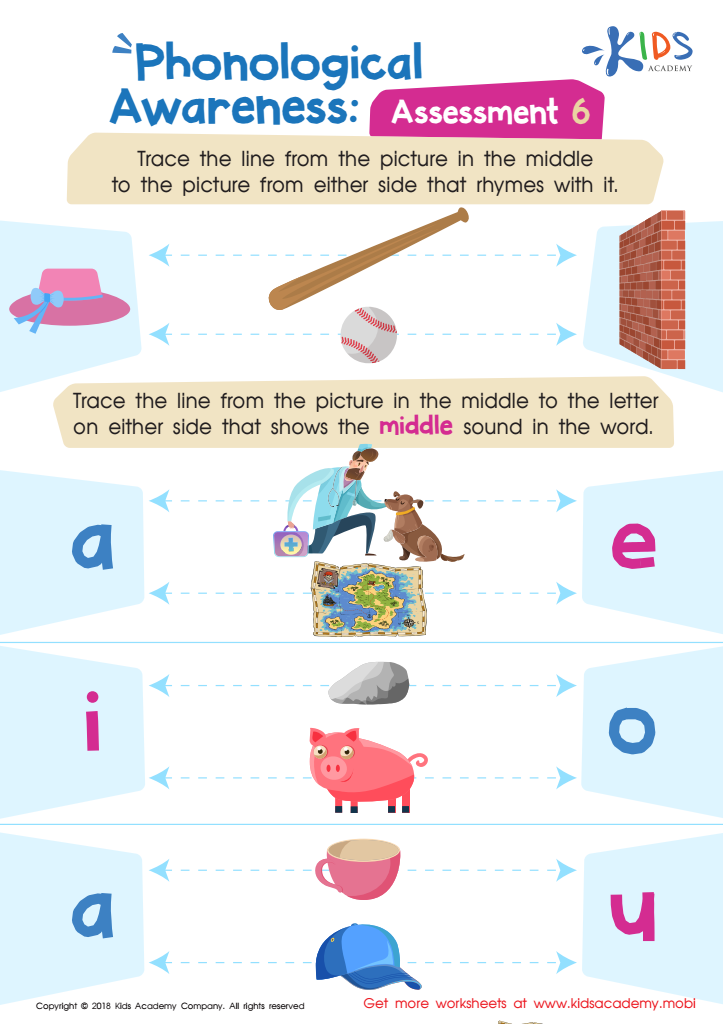
Phonological Awareness: Assessment 6 Worksheet
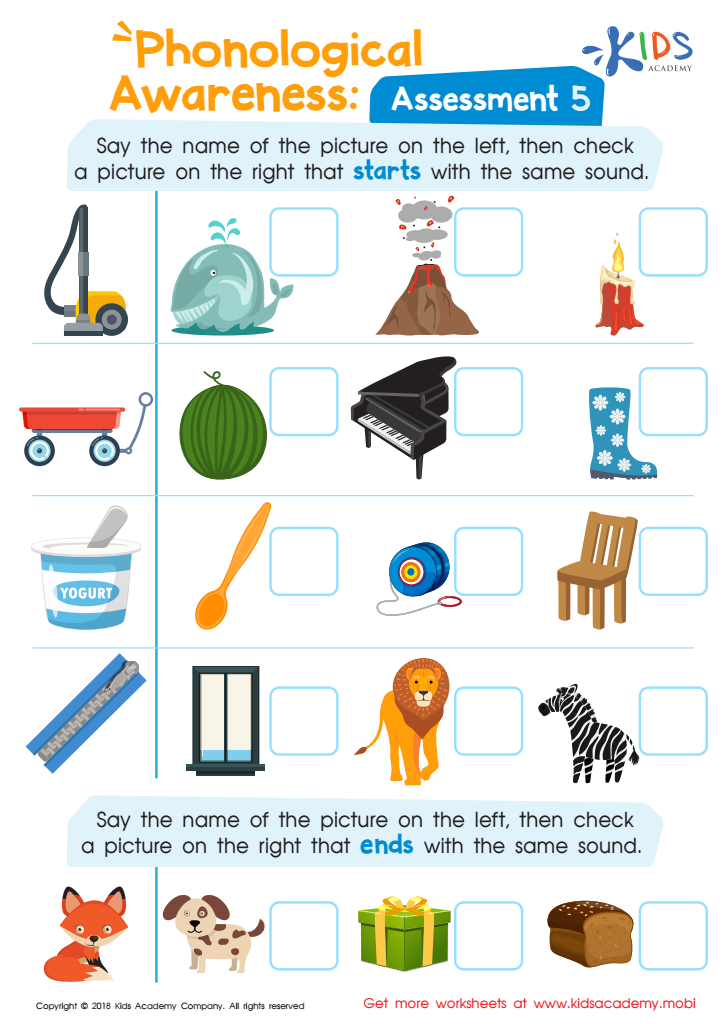
Phonological Awareness: Assessment 5 Worksheet
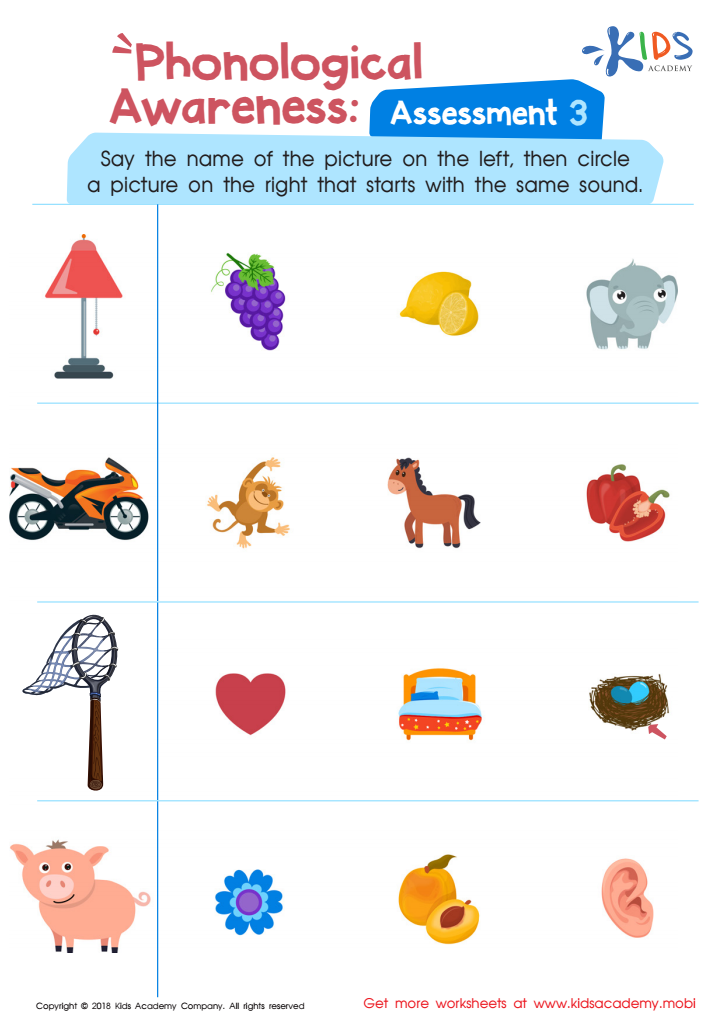
Phonological Awareness: Assessment 3 Worksheet
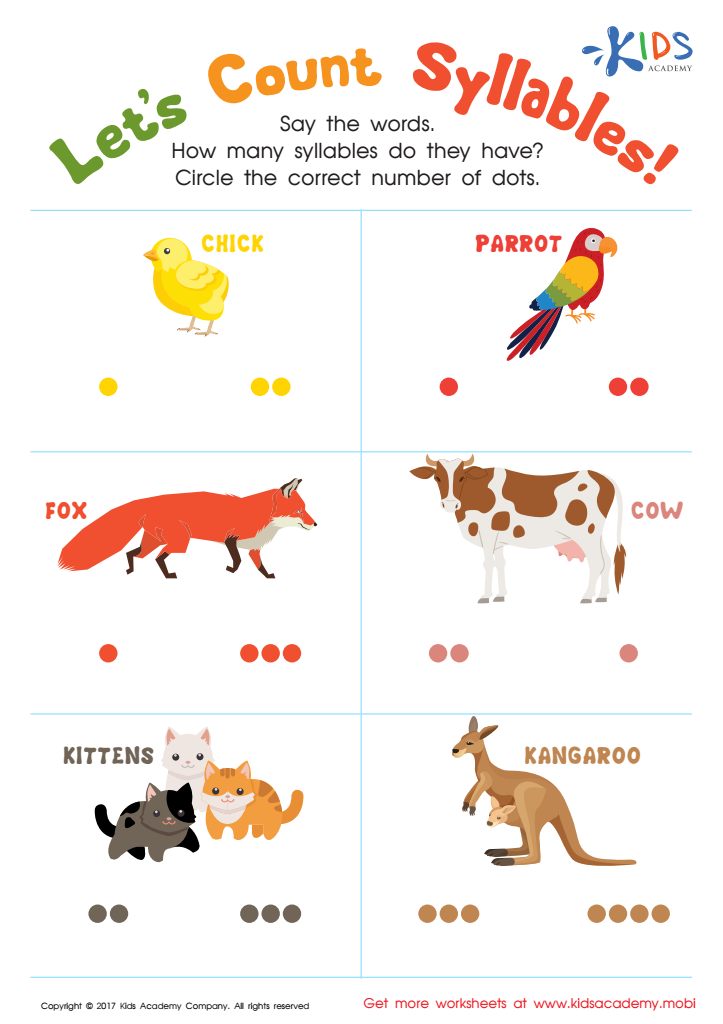
Lets Count Syllables Worksheet








Phonological awareness and phonics are critical components of early literacy development, particularly for children aged 4-6. Parents and teachers should care deeply about these concepts because they form the foundation for successful reading and writing skills.
Phonological awareness refers to the ability to recognize and manipulate sounds in spoken language, including rhymes and syllables. Developing these skills helps children understand that words are made up of smaller units of sound, setting the stage for decoding written language. Without a strong grasp of phonological awareness, children may struggle to sound out words, making reading challenging and frustrating.
Phonics, on the other hand, involves the relationship between letters and sounds. By teaching children the sounds associated with letters, they learn to decode words, leading to fluent reading. This skill enhances comprehension and confidence, encouraging a lifelong love for reading.
Investing time and effort in phonological awareness and phonics not only supports children's academic success but also boosts their overall communication abilities and self-esteem. As they gain confidence in their reading skills, they can better engage with stories, ideas, and information, fostering curiosity and creativity. Ultimately, these skills equip children with critical tools for their future educational journey.







