Phonological awareness Phonics Worksheets for Ages 4-5
8 filtered results
-
From - To
Enhance your child's reading readiness with our Phonological Awareness Phonics Worksheets designed specifically for ages 4-5! These worksheets help young learners develop essential skills such as sound recognition, rhyming, and syllable segmentation. Through engaging activities and vivid illustrations, children will practice identifying and manipulating sounds in words, laying a strong foundation for future literacy success. Perfect for preschools, homeschooling, or supplemental learning, our resources make phonics fun and interactive! Download and explore a variety of exercises that cater to your child's learning pace and style. Foster a love for language and prepare your little ones for their reading journeys today!
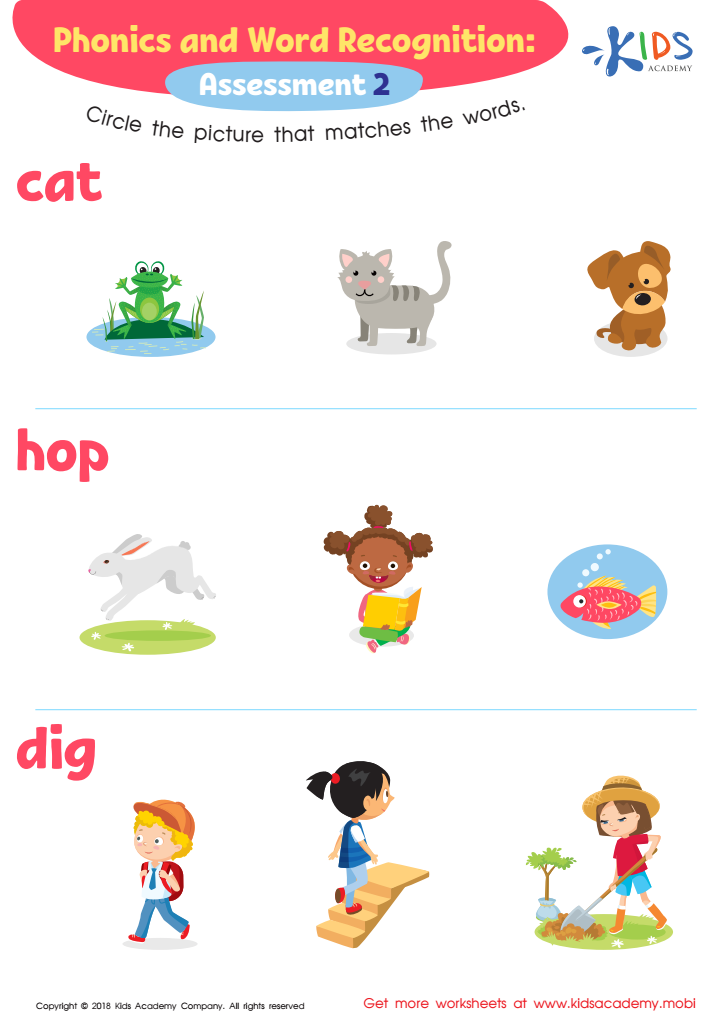
Phonological Awareness: Assessment 2 ELA Worksheet
 Assign to My Students
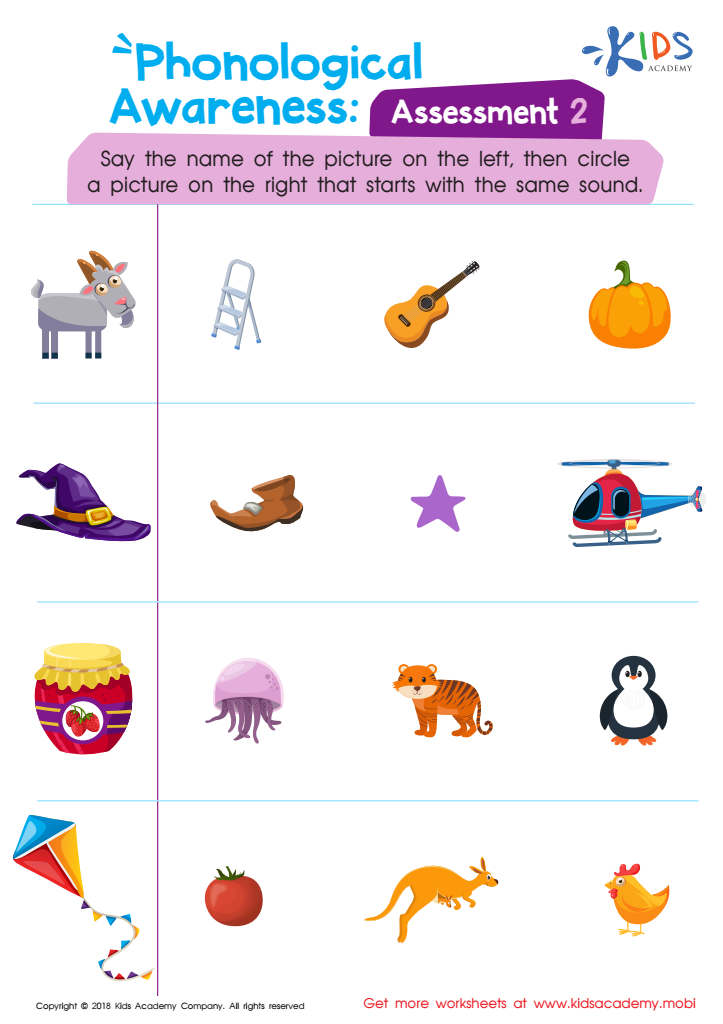
Phonological Awareness: Assessment 2 Worksheet
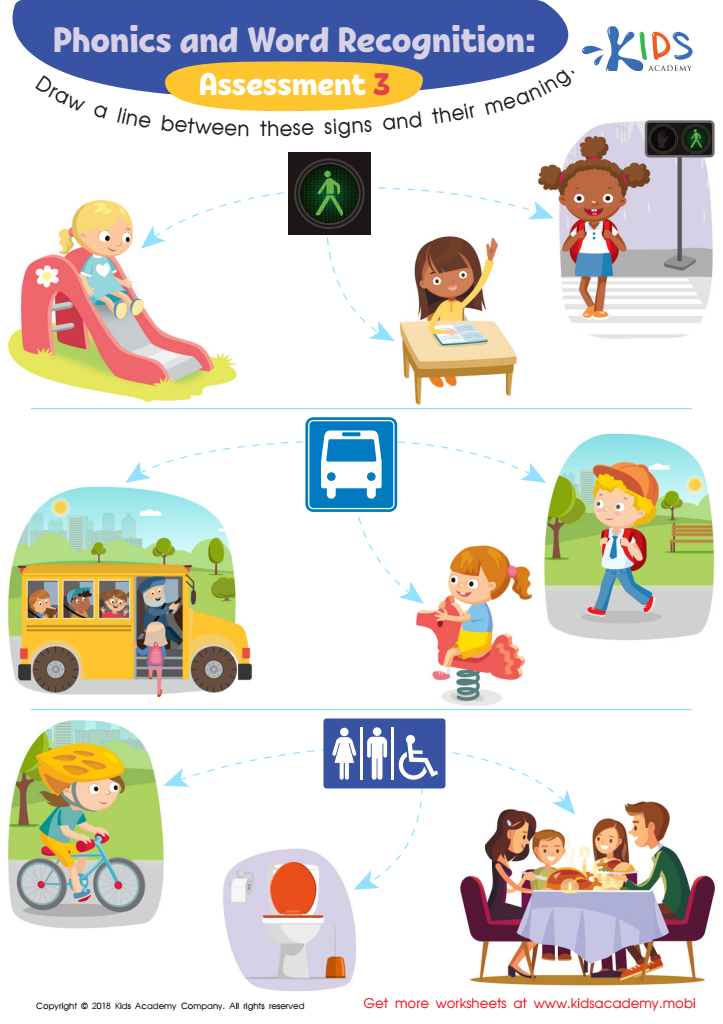
Phonological Awareness: Assessment 3 ELA Worksheet
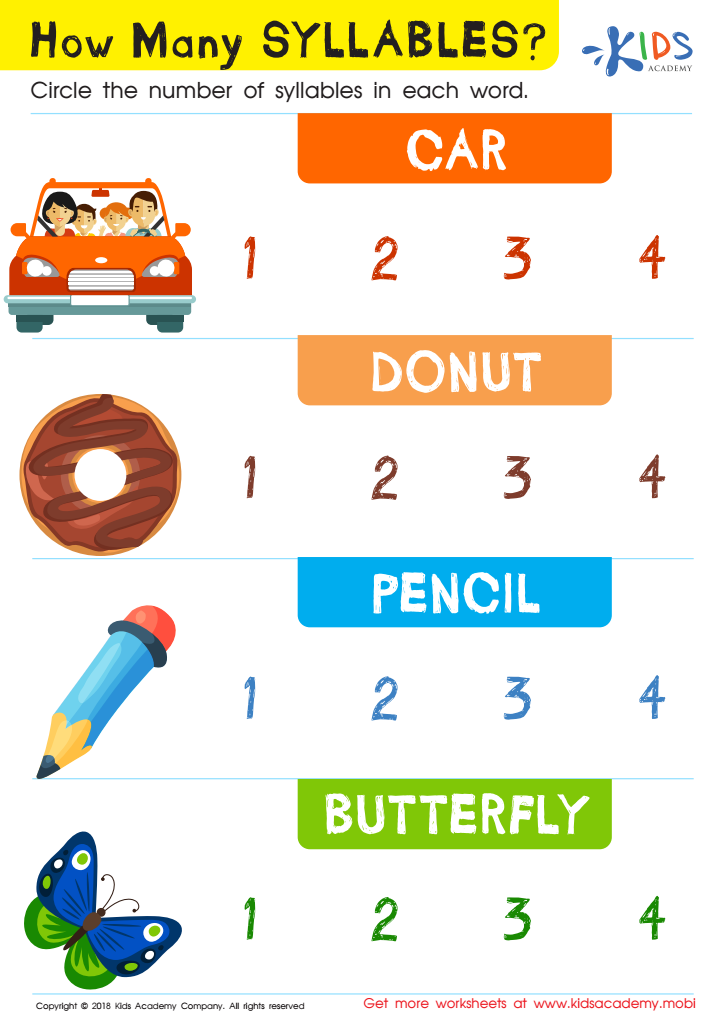
How Many Syllables? Worksheet
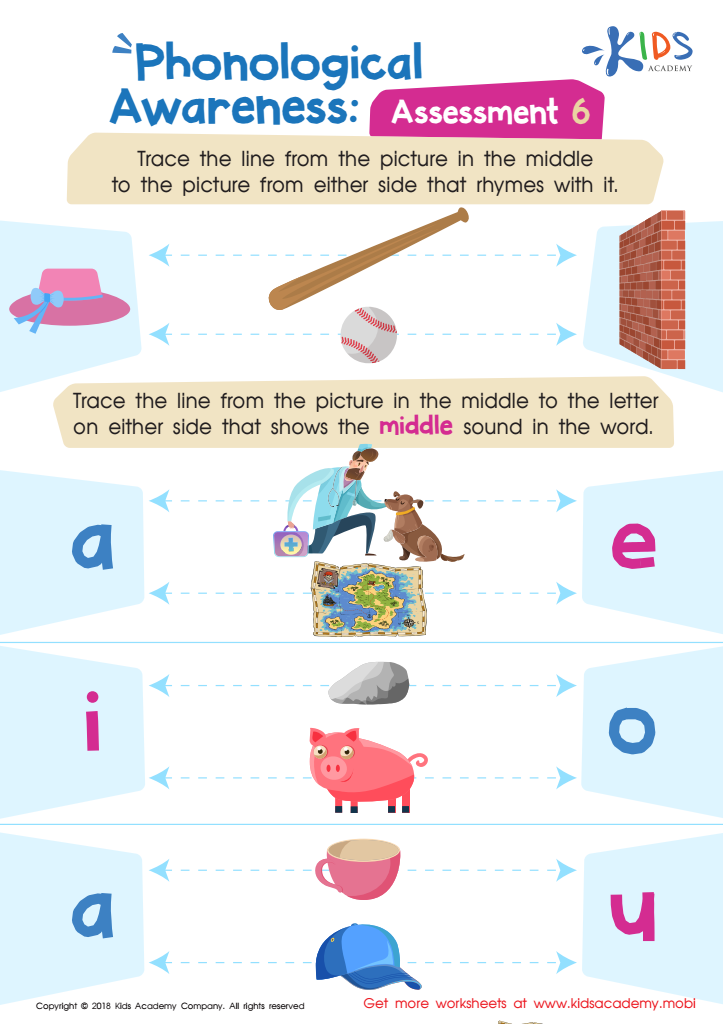
Phonological Awareness: Assessment 6 Worksheet
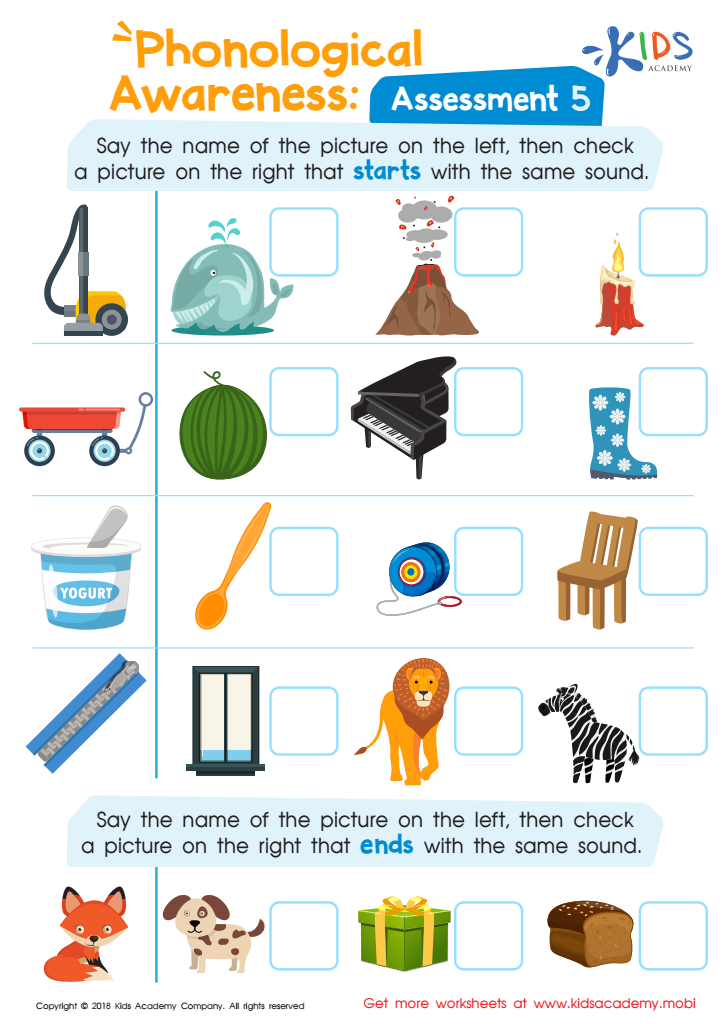
Phonological Awareness: Assessment 5 Worksheet
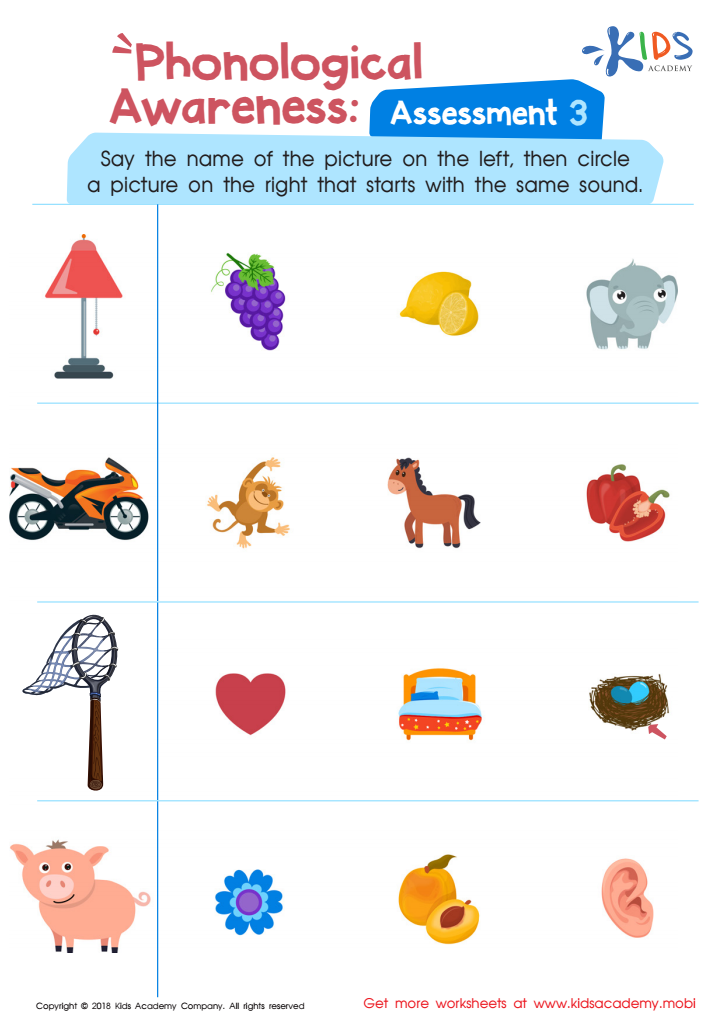
Phonological Awareness: Assessment 3 Worksheet
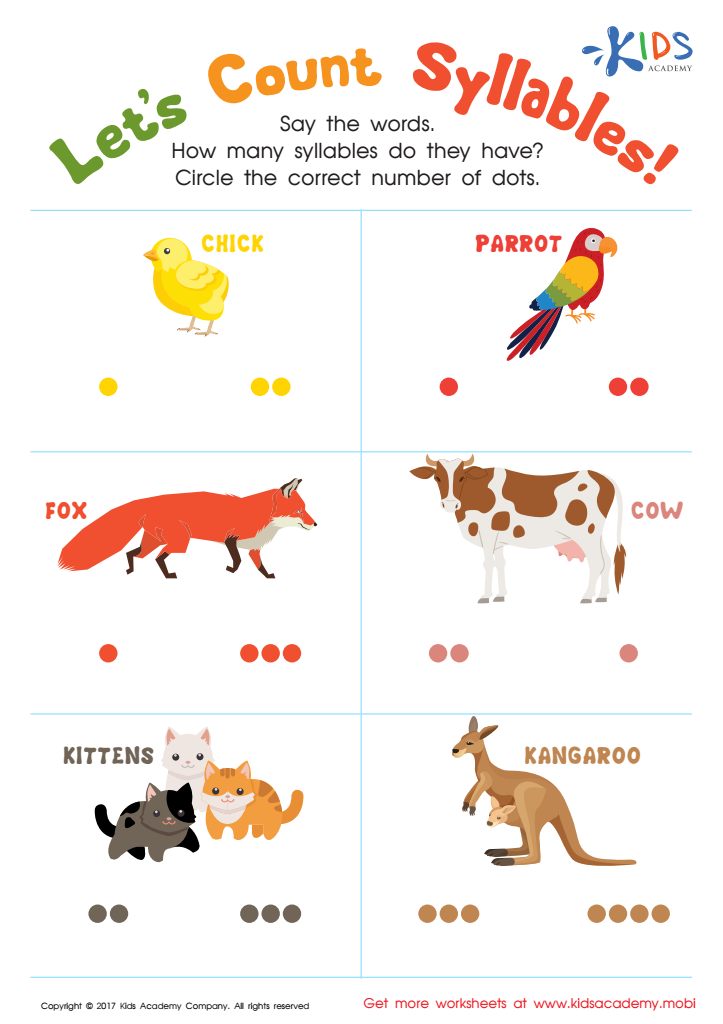
Lets Count Syllables Worksheet








Phonological awareness and phonics are foundational skills essential for early literacy development in children aged 4-5. Parents and teachers should prioritize these skills because they play a critical role in a child's ability to read and write effectively.
Phonological awareness involves recognizing and manipulating sounds in spoken language, including syllables, rhymes, and individual phonemes. This skill is crucial for children's future reading success, as it helps them understand how sounds connect to form words. Developing phonological awareness allows children to become skilled at word recognition, which is vital for comprehending texts.
Phonics complements phonological awareness by teaching children the relationship between letters and sounds. It provides them with the tools they need to decode words, making reading more accessible and enjoyable. With strong phonics skills, children can sound out unfamiliar words, increasing their confidence and enthusiasm for reading.
Moreover, strong literacy skills obtained through phonemic awareness and phonics can positively impact overall academic achievement and self-esteem. Thus, both parents and teachers should engage young learners in fun, interactive activities that foster these skills, setting a solid foundation for a lifetime of reading and learning. Supporting these aspects at an early age can lead to significant long-term benefits in a child's educational journey.







