Basic math operations Worksheets for Ages 4-6
5 filtered results
-
From - To
Discover our engaging Basic Math Operations Worksheets designed specifically for children ages 4-6! These fun and interactive worksheets help young learners master essential math skills, including addition, subtraction, counting, and number recognition. Tailored to spark curiosity and make learning enjoyable, our resources include colorful illustrations and relatable examples that capture children's attention. Each worksheet encourages practice through play, promoting confidence in early math abilities. Perfect for parents and educators, these printable materials align with early childhood education standards and support skill development at home or in the classroom. Start your child's math journey with our vibrant and educational worksheets today!
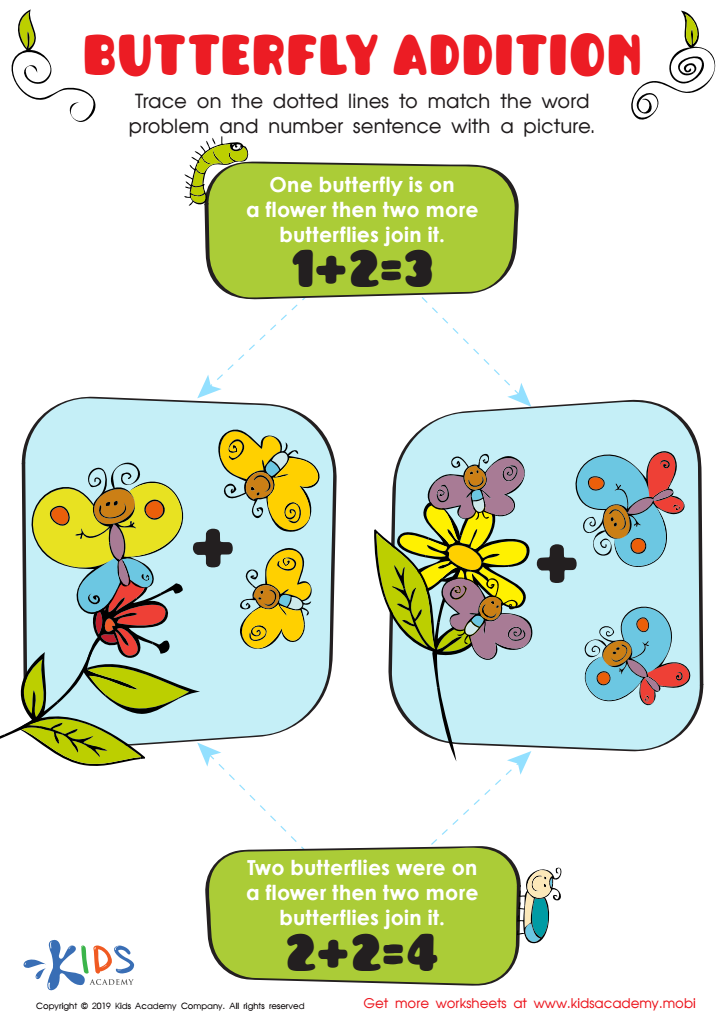
Butterfly Addition Worksheet
 Assign to My Students
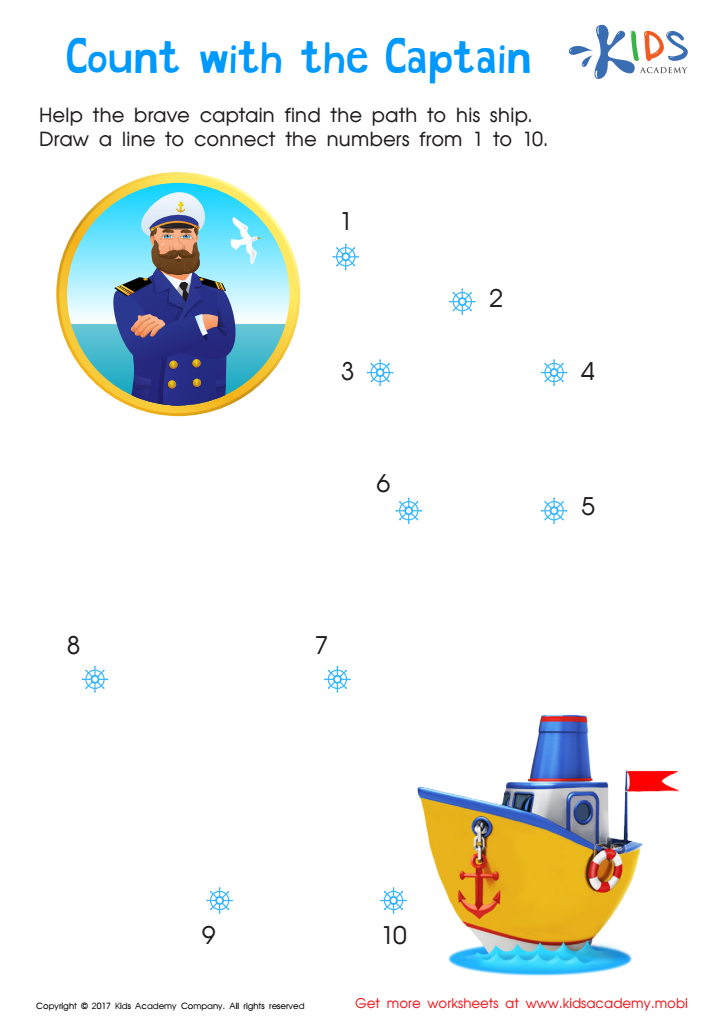
Count with the Captain Connect Dots Worksheet
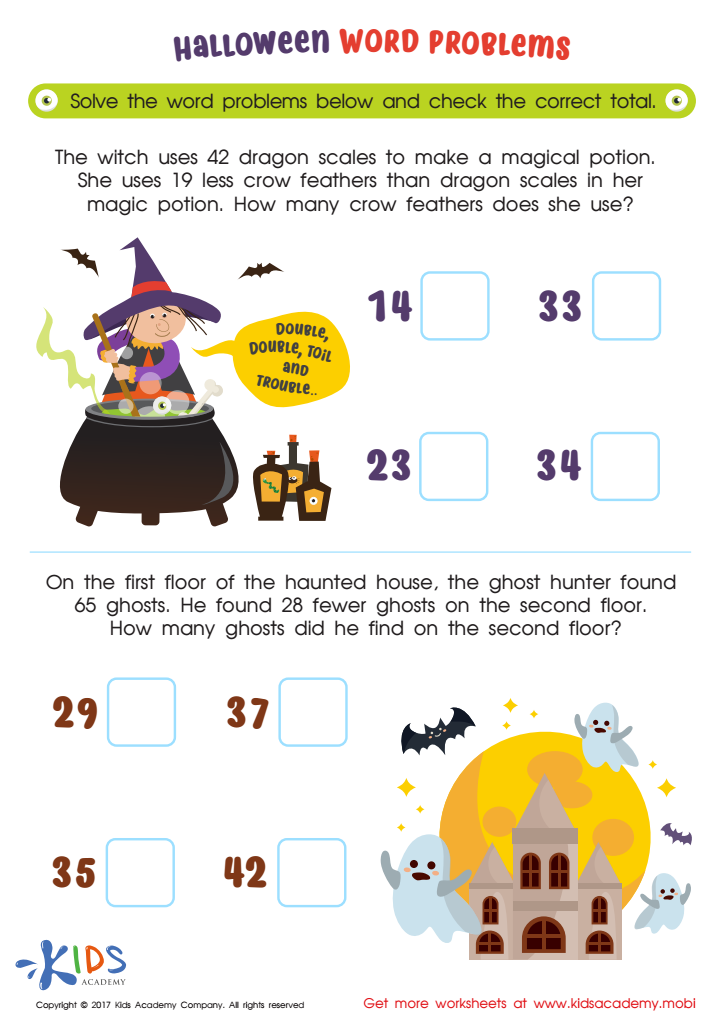
Halloween Word Problems Printable
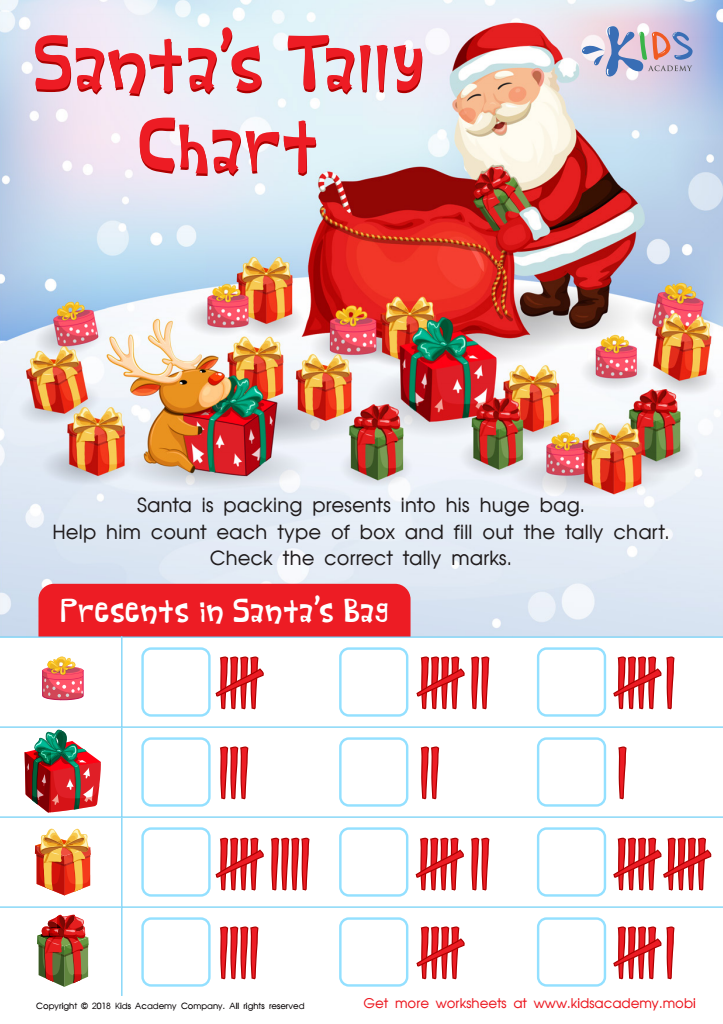
Santa Tally Chart Worksheet
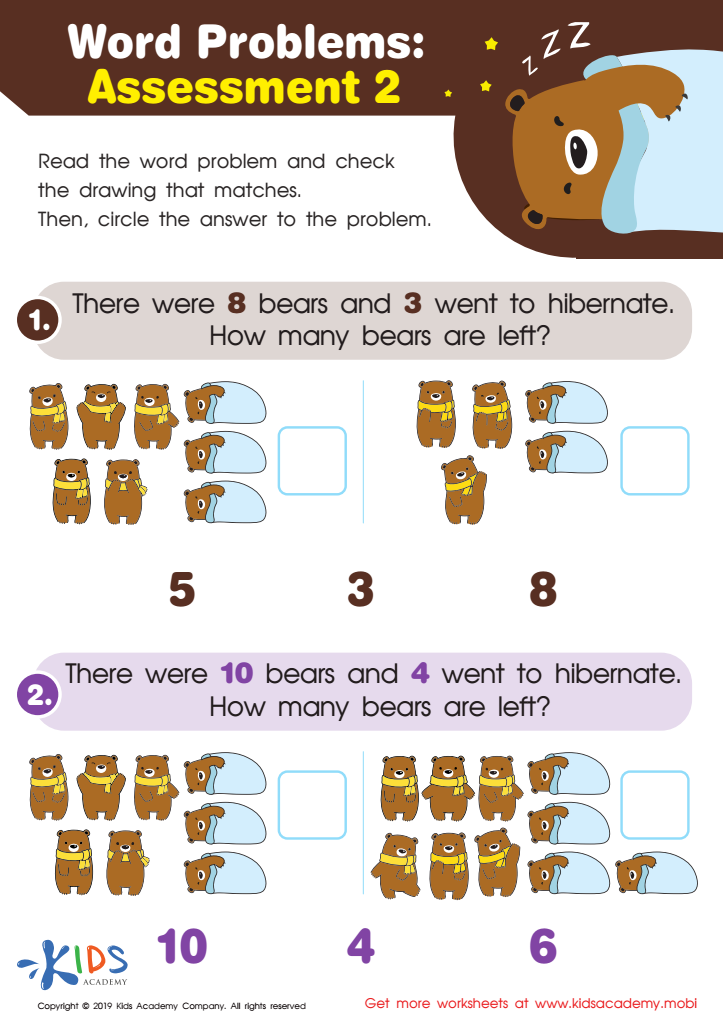
Word Problems: Assessment 2 Worksheet








Basic math operations, such as addition, subtraction, multiplication, and division, serve as the foundation for a child's mathematical understanding and overall cognitive development. For children aged 4-6, these fundamental skills are crucial for several reasons. First, mastering basic math operations fosters critical thinking, problem-solving skills, and logical reasoning. At this age, children are naturally curious and eager to learn, making it an optimal time to introduce mathematical concepts through engaging activities.
Moreover, early exposure to math helps children develop a positive attitude towards the subject, reducing anxiety and building confidence as they progress through their education. When parents and teachers emphasize basic math operations, they set the stage for more complex mathematical concepts introduced in later years. It can enhance a child’s ability to make sense of the world around them, from understanding patterns in nature to managing time and resources.
Finally, strong foundational math skills are crucial for academic success across subjects. Children whose mathematical abilities are nurtured early on tend to perform better later in school, influencing their future educational and career opportunities. Thus, parents and teachers play a pivotal role in cultivating a love for math and a solid understanding of basic operations during this formative stage.








