Comparing shapes Worksheets for Ages 4-6
3 filtered results
-
From - To
Discover our engaging "Comparing Shapes Worksheets" designed specifically for children ages 4-6! These interactive worksheets help young learners develop essential geometry skills by teaching them to identify, compare, and contrast various shapes. Through colorful visuals and fun activities, children will enhance their recognition of shapes like circles, squares, and triangles, fostering their critical thinking abilities. Our worksheets are perfect for home or classroom use, making learning enjoyable and effective. Whether sorting shapes, matching, or discussing similarities and differences, these activities promote early math skills essential for your child’s development. Download your free worksheets today and inspire a love for learning!
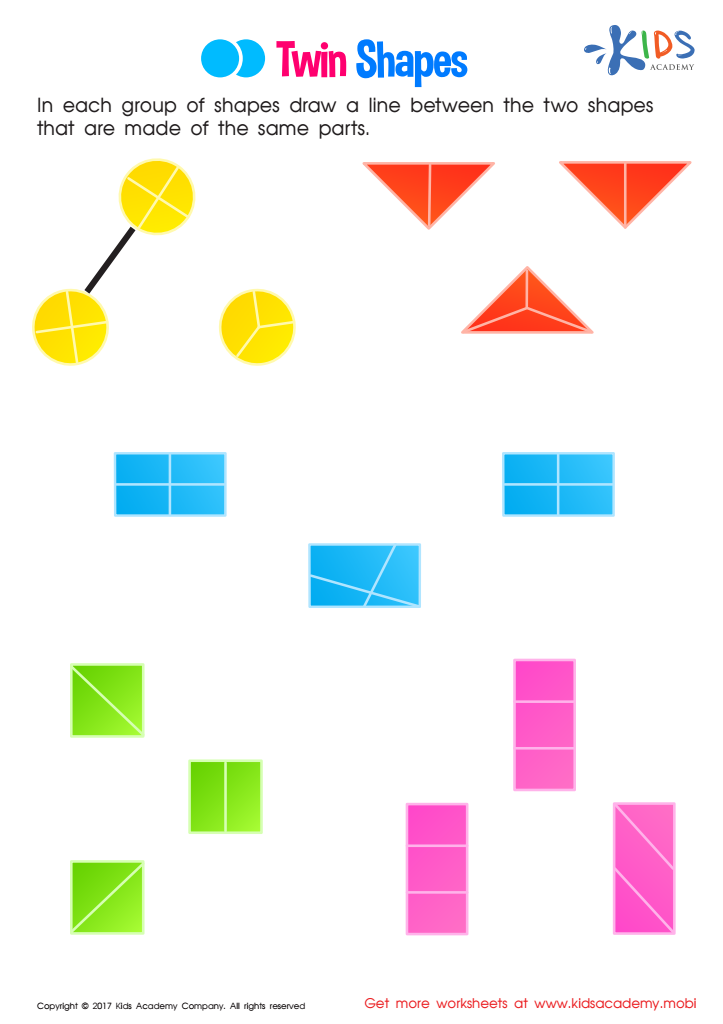
Twin Shapes Worksheet
 Assign to My Students
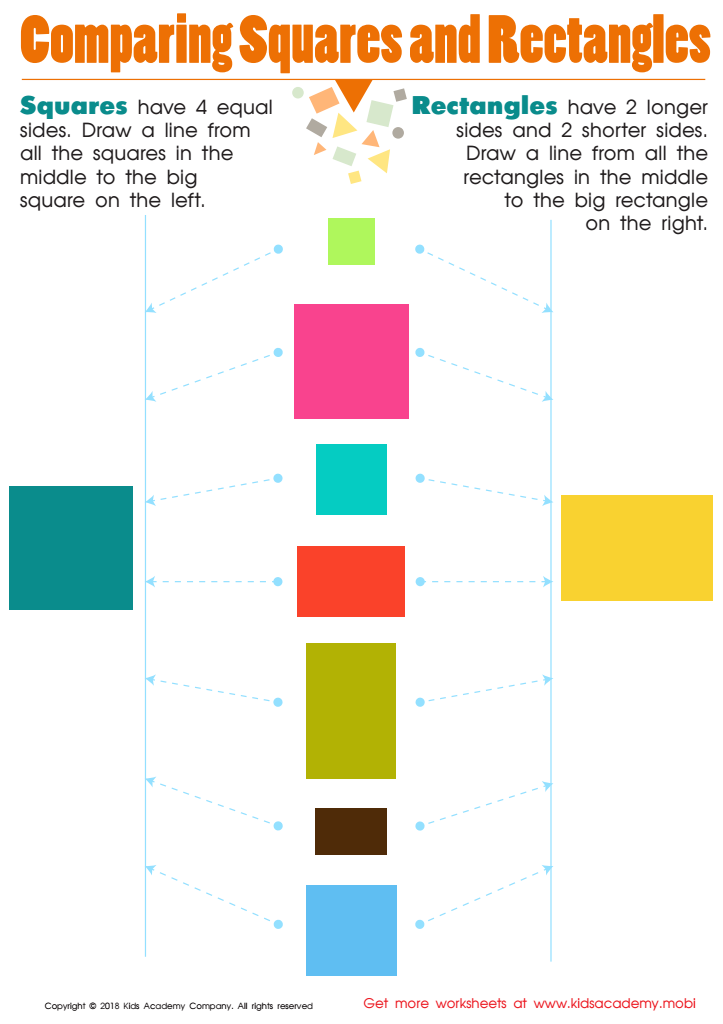
Comparing Squares Rectangles Worksheet
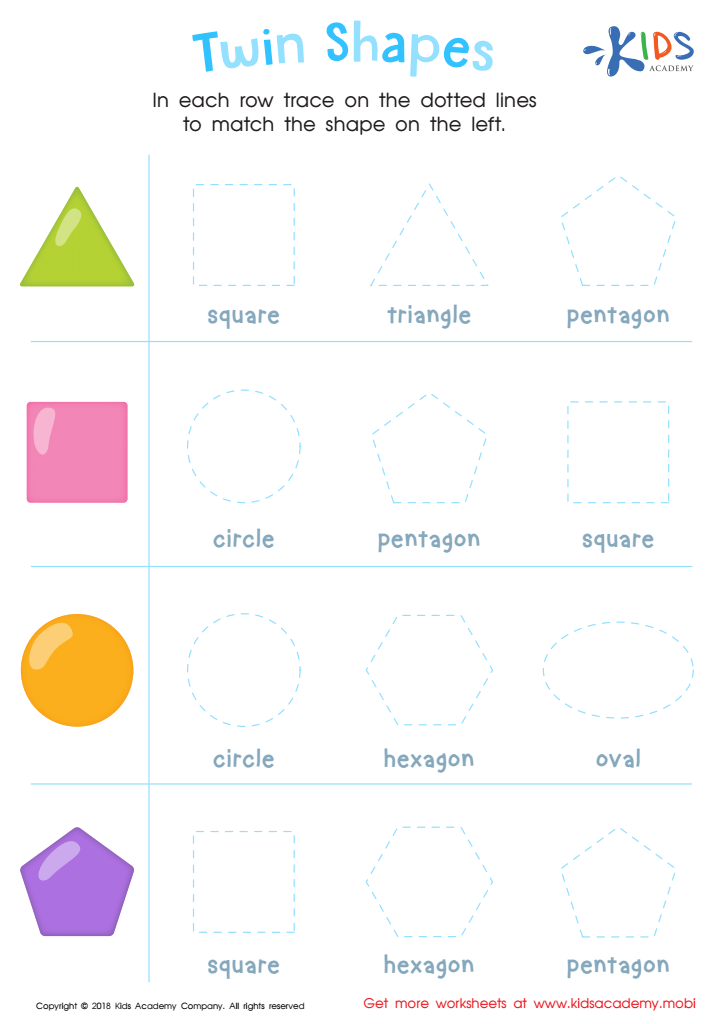
Twin Shapes Dot-to-Dot Worksheet






Comparing shapes is a vital skill for children aged 4 to 6, laying the foundation for their mathematical understanding and spatial awareness. Parents and teachers should care about this concept for several reasons. First, it fosters critical thinking and cognitive development, as children learn to observe, analyze, and identify differences and similarities in shapes. This process enhances their problem-solving skills, which are essential for academic success.
Additionally, mastering shape comparison helps children understand their environment. Recognizing shapes in everyday objects cultivates observational skills and encourages curiosity about the world around them. Moreover, shape comparison promotes language development, as children articulate their observations, using terms like "bigger," "smaller," "round," and "square." This vocabulary is crucial for effective communication.
Socially, engaging in shape-related activities can facilitate teamwork and cooperative learning, fostering relationships between peers. Lastly, early exposure to shape comparison bridges to more complex mathematical concepts, such as geometry and measurement, as children progress in their education.
In essence, comparing shapes equips children with essential skills and knowledge that extend beyond mathematics, crucially supporting their overall development during these formative years.








