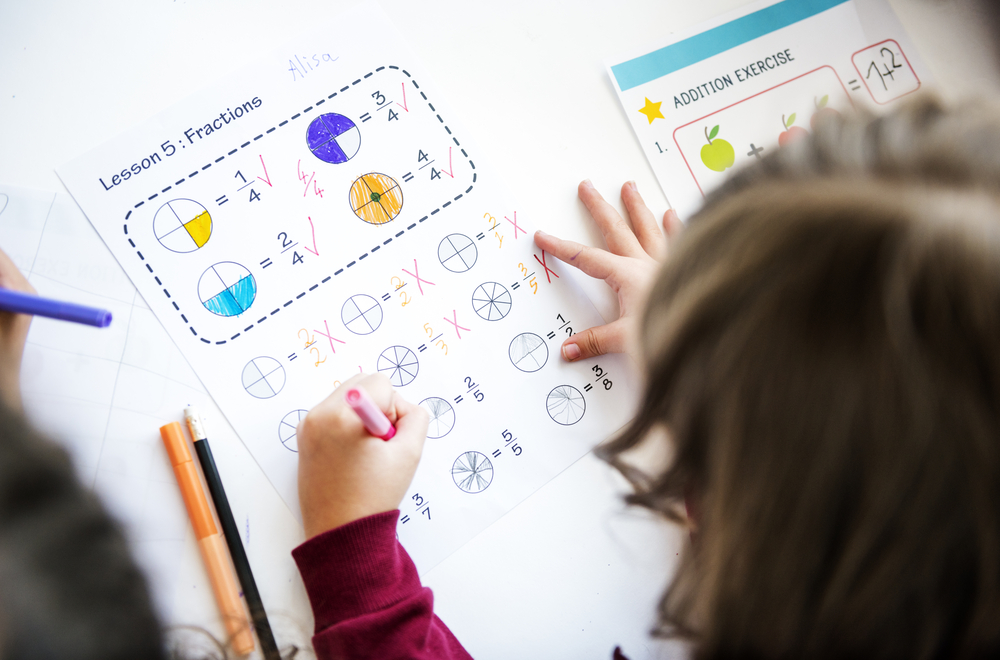
Unlock the power of learning with our "Contextual Understanding Worksheets for Ages 4-6." These expertly designed worksheets aim to boost comprehension and critical thinking in young children by placing concepts in familiar contexts. Each activity engages kids with age-appropriate scenarios, improving their ability to understand and respond. Perfect for preschool and early grade students, these colorful and interactive worksheets cover a range of skills including reading, vocabulary, and problem-solving. Foster a love of learning and prepare your child for future academic success with our fun, educational materials. Ideal for both classroom and home learning.

Check out this FREE "Contextual understanding" Trial Lesson for age 4-6!

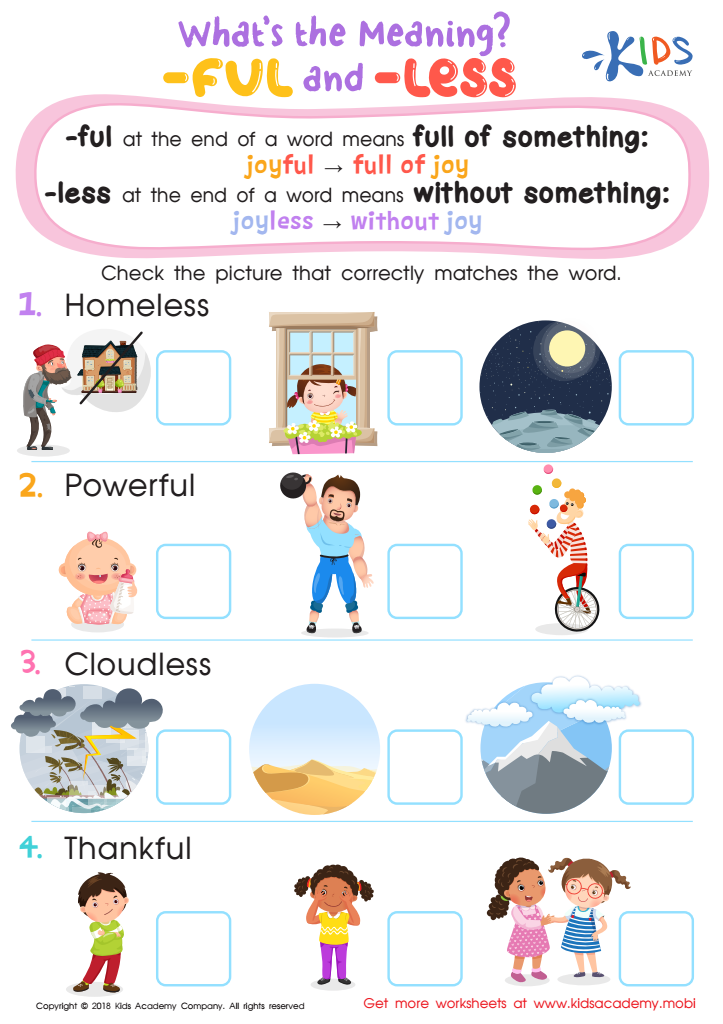
Suffixes –ful, -less

Favorites
With answer key
Interactive
  • 4-6
  • Contextual understanding
What's the Meaning? Worksheet

What's the Meaning? Worksheet

Look with your youngster through this colorful worksheet and match the pictures to the words at the top. These words have different meanings due to either a prefix or suffix being added, such as "ful" or "less".
What's the Meaning? Worksheet
Worksheet
What Does It Mean? Worksheet

What Does It Mean? Worksheet

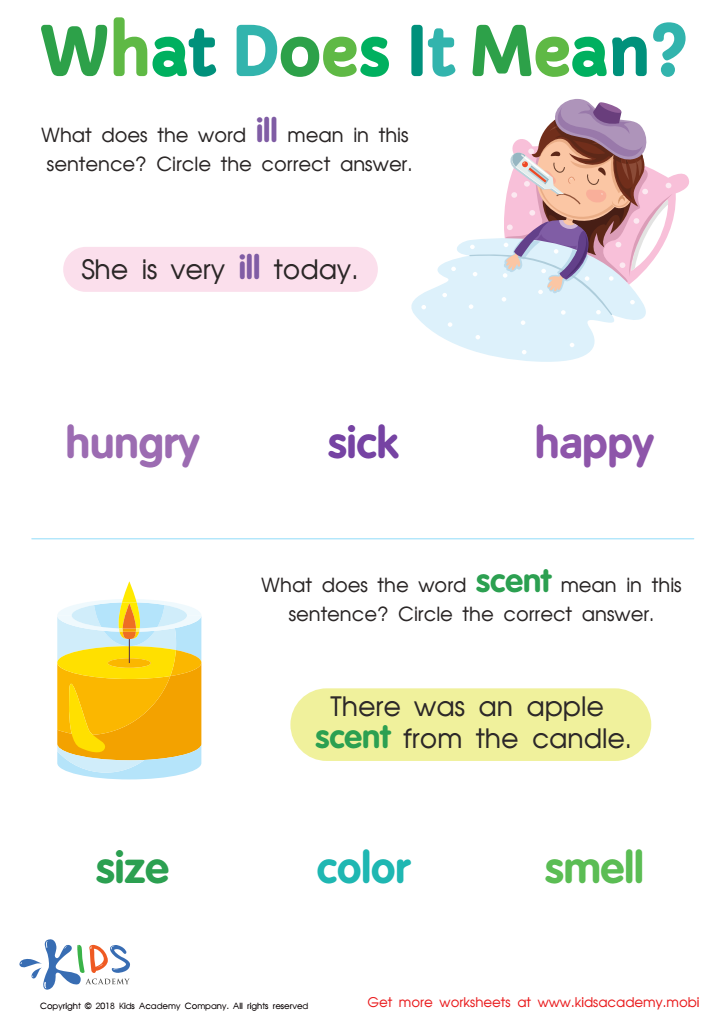
Students should know the meaning of words, even when used in different contexts. This worksheet has two sections. In the first, there's a picture on the right side. Ask students the meaning of 'ill' in "she is very ill today". Help them circle the correct answer from the options. The second section follows the same pattern. Make sure students circle the right answer.
What Does It Mean? Worksheet
Worksheet
Craft and Structure: Assessment 2 Worksheet 2

Craft and Structure: Assessment 2 Worksheet 2

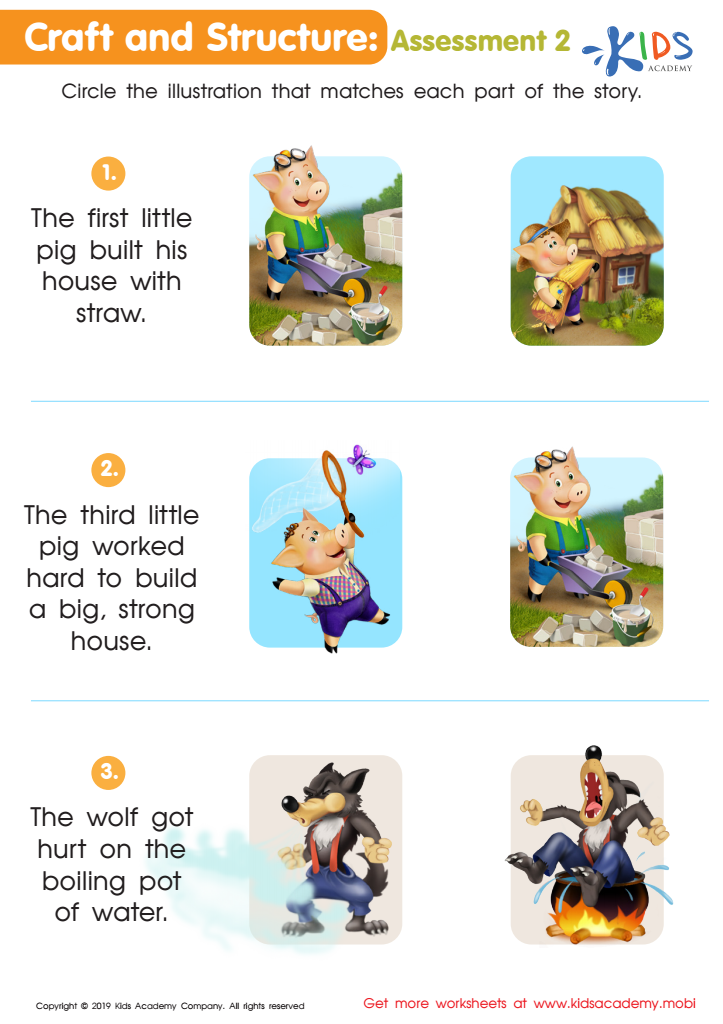
This fun printout with colorful illustrations will assess how much your kids pay attention to story time. Go through the pictures and help them circle the ones that match each part of the story. Stimulate their brains and have fun in the process!
Craft and Structure: Assessment 2 Worksheet 2
Worksheet
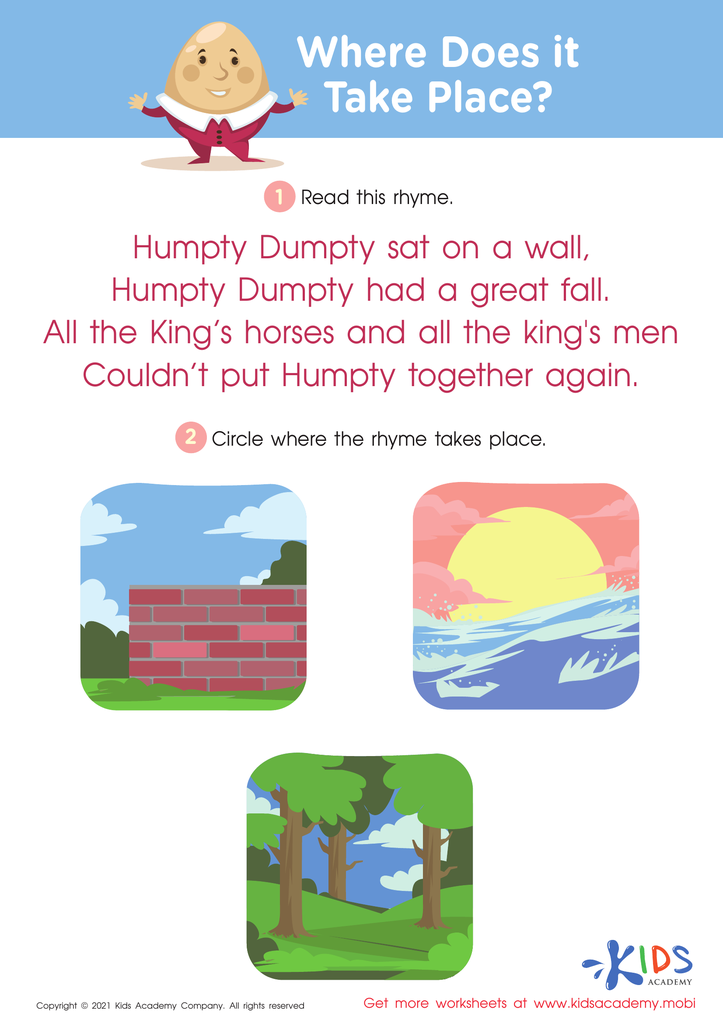
Where Does It Take Place? Worksheet

Where Does It Take Place? Worksheet

Original: The number of children who are enrolled in the school has increased by 10% from the previous year. Enrollment in the school has increased 10% from last year, with more children attending.
Where Does It Take Place? Worksheet
Worksheet
Guess the Meaning Worksheet

Guess the Meaning Worksheet

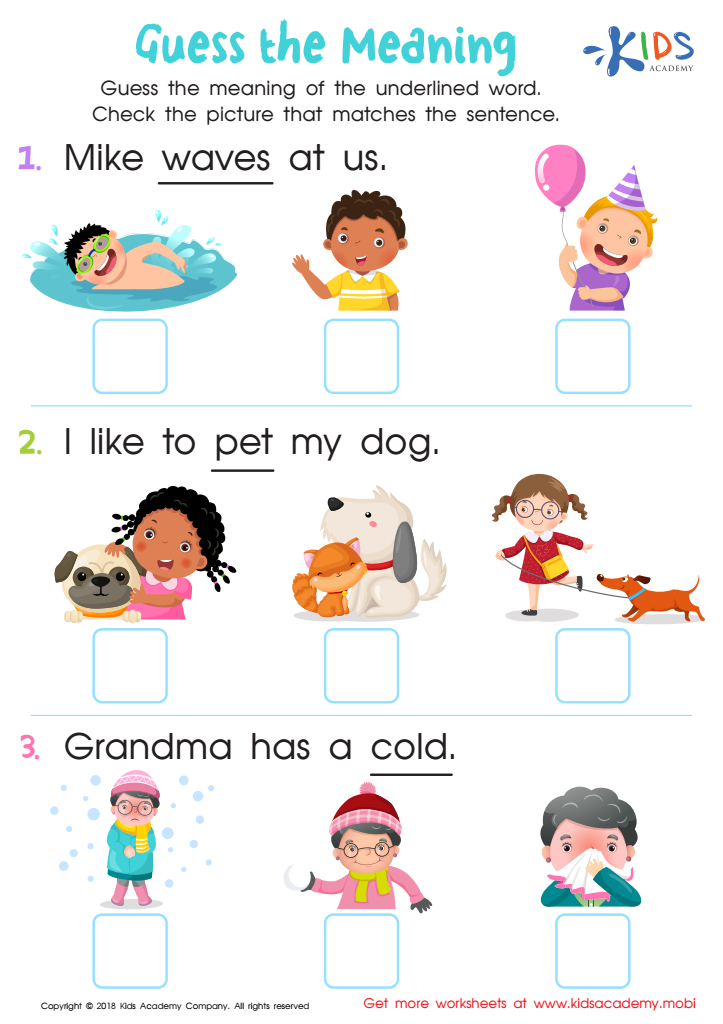
Help your child learn the meanings of words in different contexts by using this colourful, free worksheet. What is the meaning of the underlined words in each sentence? Look at the images and pick the one that accurately describes the word's context.
Guess the Meaning Worksheet
Worksheet
Vocabulary: Assessment 5 Worksheet
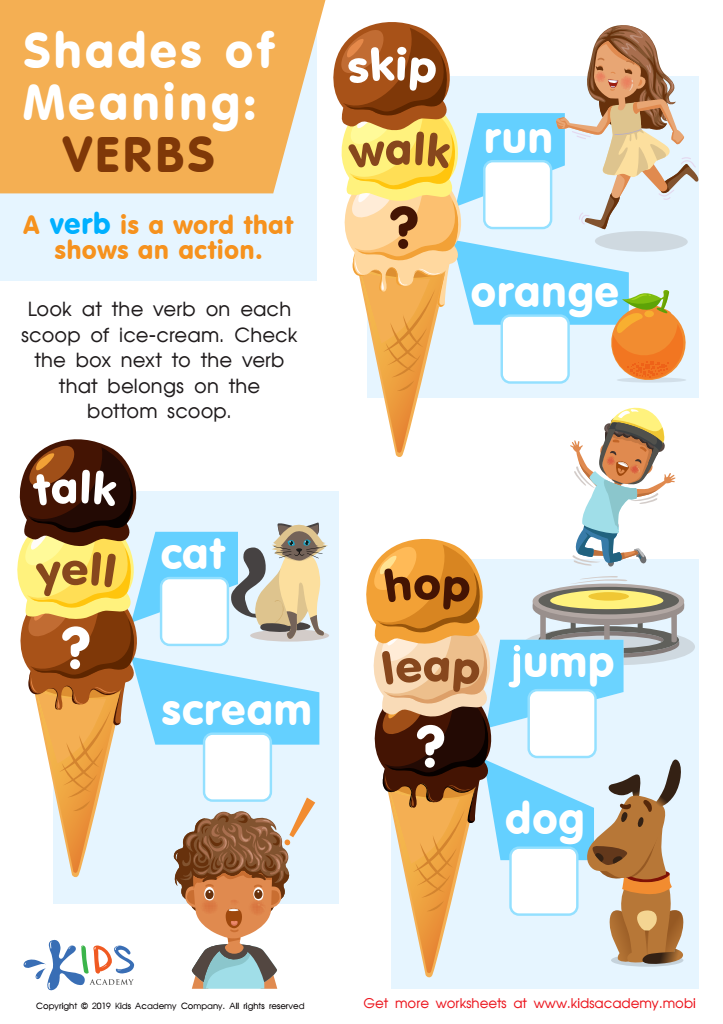

Vocabulary: Assessment 5 Worksheet

Help your child prepare for preschool and kindergarten with this fun and informative worksheet from Kids Academy! Have them look at each picture and think about what's happening, then read each word and circle the one that describes the activity. Strengthen reading and vocabulary skills while assessing progress with each task!
Vocabulary: Assessment 5 Worksheet
Worksheet
Shades of Meaning: Verbs Worksheet
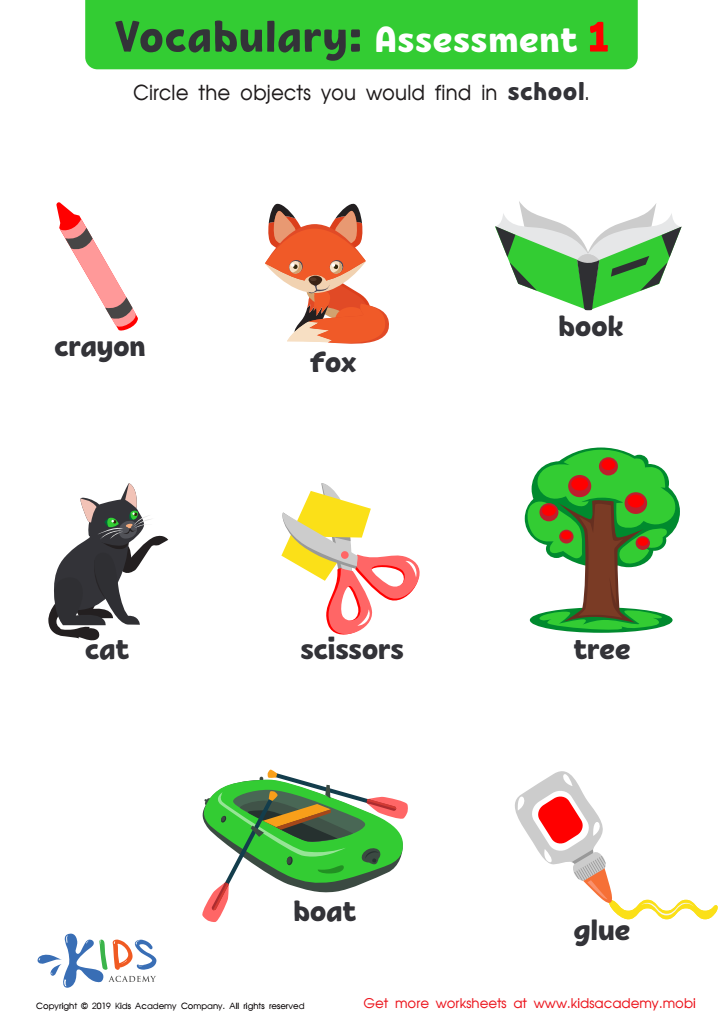

Shades of Meaning: Verbs Worksheet

Verbs are words that show action. Introduce kindergartners to verbs by having them check the box next to the verb that belongs on the bottom scoop in a worksheet. This is a great way to teach them this important part of speech and help them learn to write proper sentences and speak correctly.
Shades of Meaning: Verbs Worksheet
Worksheet
Vocabulary: Assessment 1 Worksheet

Vocabulary: Assessment 1 Worksheet

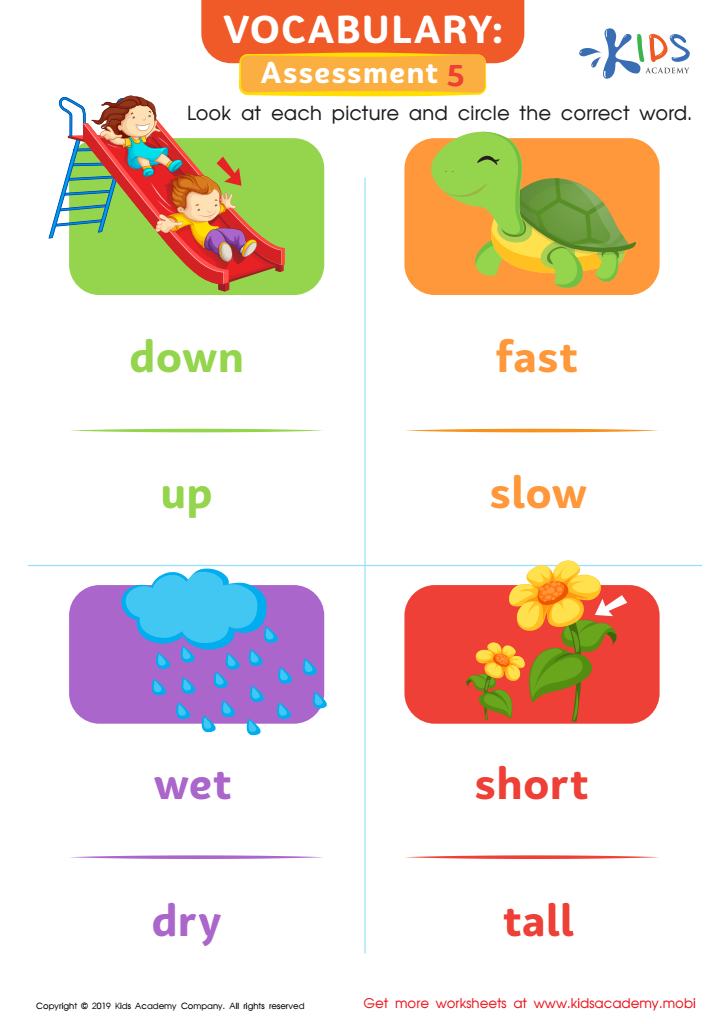
Want to check your child's vocabulary? This worksheet has kids identify objects from school through picture clues. It reinforces reading and fine motor skills, while providing an assessment of their reading growth and needs.
Vocabulary: Assessment 1 Worksheet
Worksheet
Free printable synonym worksheets for 2nd grade

Free Printable Synonym Worksheet

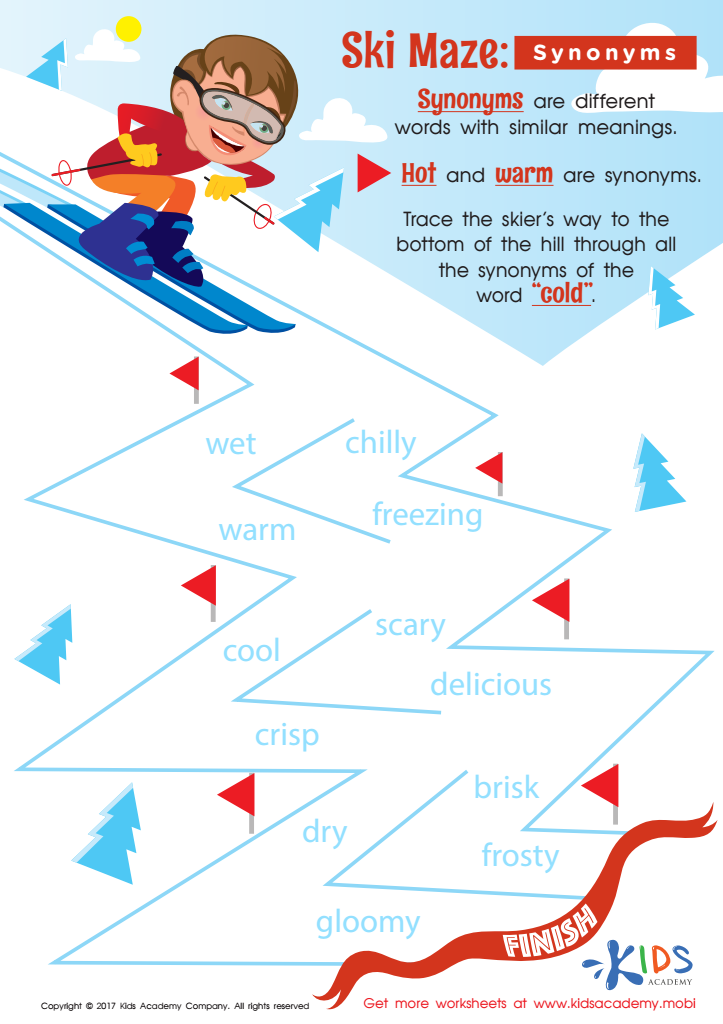
Our free printable synonym worksheet for 2nd grade will help kids learn similar words to expand their vocabulary. Kids will have fun challenging themselves to find all the words that are synonyms for “cold”. Enhance their language and writing with this joyful worksheet!
Free Printable Synonym Worksheet
Worksheet
What Does It Mean? Worksheet

What Does It Mean? Worksheet

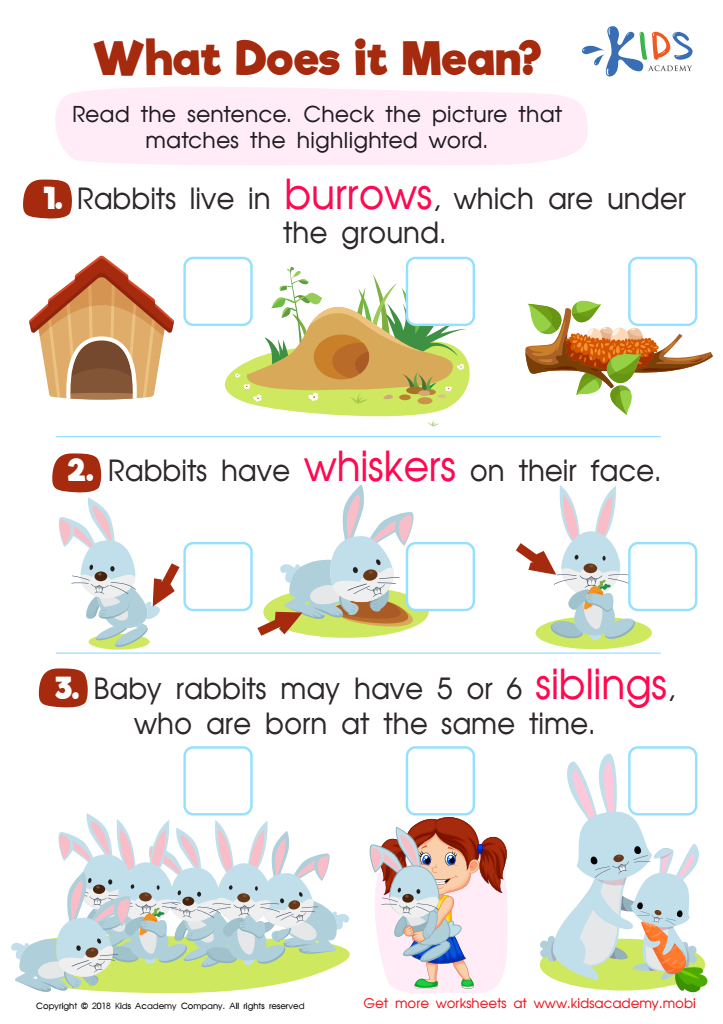
Teach your child to use context clues with this engaging Kids Academy worksheet. Read the sentences and find the pink-highlighted word. Use the other words in the sentence to figure out the meaning, then check the box next to the picture that represents it.
What Does It Mean? Worksheet
Worksheet
Word Choice Worksheet

Word Choice Worksheet

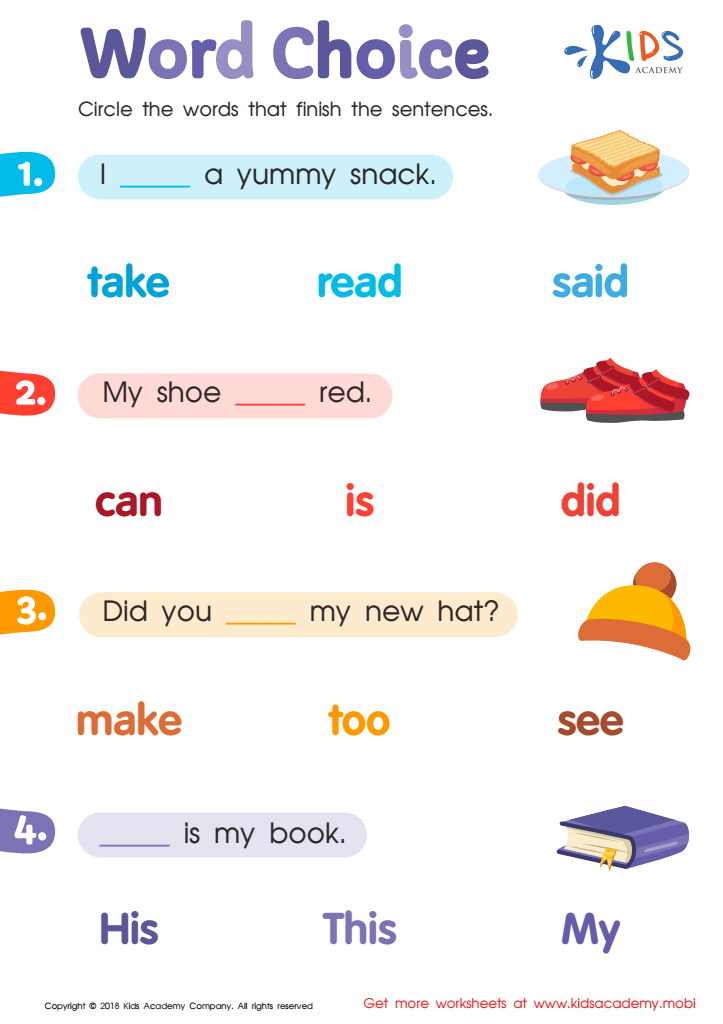
This worksheet can help your children become better readers. By now, you should have an idea of their reading level. Read the incomplete sentences aloud and point to the missing piece. Have your students pick the correct word they think best fits the sentence out of the options given.
Word Choice Worksheet
Worksheet


Children aged 4-6 are at a pivotal stage of cognitive development, where they begin to understand how the world around them works. Contextual understanding is crucial at this age because it helps children make sense of new information and integrate it into their existing knowledge base. When parents and teachers prioritize contextual understanding, they enable kids to grasp not just isolated facts, but also the relationships and the situational relevance of what they're learning.

For example, knowing that "apple" is a fruit is useful, but understanding that apples grow on trees, can be eaten for nutrition, and are part of various meals enriches a child’s broader comprehension. This enrichment fosters critical thinking and problem-solving skills, enhancing academic readiness.

Additionally, when children connect their learning to real-life situations, they are more engaged and motivated. This approach also nurtures social-emotional skills, as young children start recognizing contexts in social interactions, leading to better empathy and communication abilities.

By caring about contextual understanding, parents and teachers lay a foundation for a lifelong love of learning. They help children to not just memorize, but to understand and apply knowledge intuitively, preparing them for the complexities of future educational challenges and real-world situations.