
Reading skills improvement Worksheets for Ages 4-6
16 filtered results
Difficulty Level
Grade
Age
-
From - To
Subject
Activity
Standards
Enhance your child's reading abilities with our engaging Reading Skills Improvement Worksheets designed specifically for ages 4-6. These thoughtfully crafted resources offer a variety of fun activities that foster early literacy development, including phonics, sight words, and comprehension exercises. By incorporating colorful illustrations and interactive tasks, our worksheets capture young learners’ attention and make reading skills practice enjoyable. Tailored to support your child's individual learning journey, these worksheets help build a solid foundation for future academic success. Explore our collection today and watch your little one's love for reading grow while mastering essential skills at their own pace!
Favorites
With answer key
Interactive
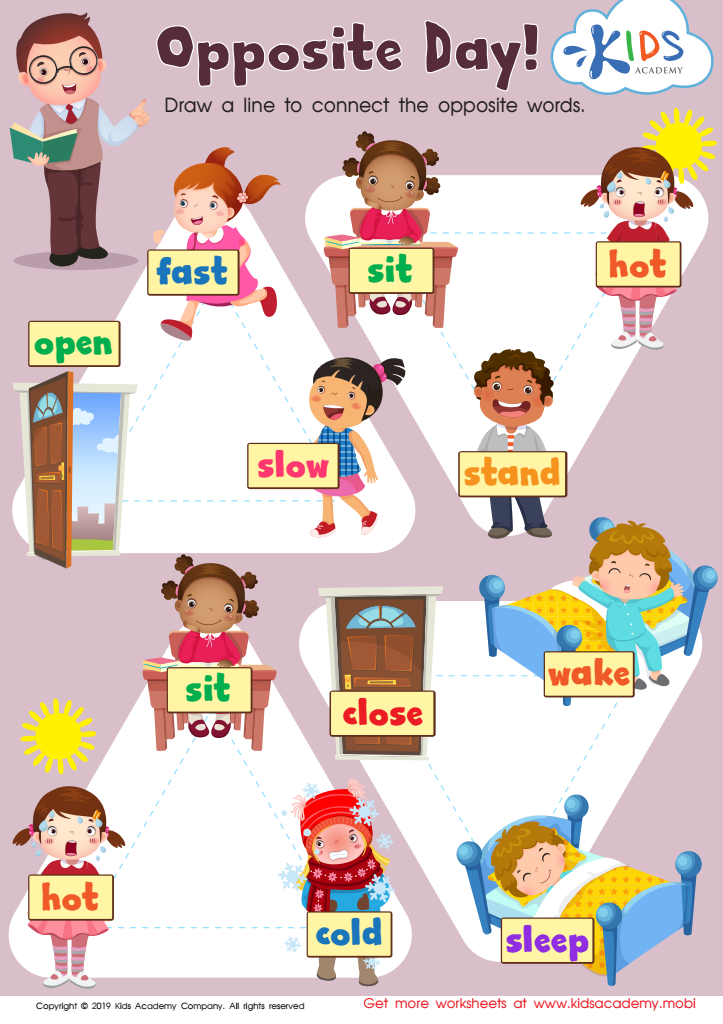
Opposite Day Worksheet
Early learners need to know about opposites to improve their higher-order thinking and critical thinking. This fun worksheet helps them understand the concept, practice opposite words, read high-frequency words and work on fine motor skills. Download the traceable PDF to get started.
 Assign to My Students
Opposite Day Worksheet
Worksheet
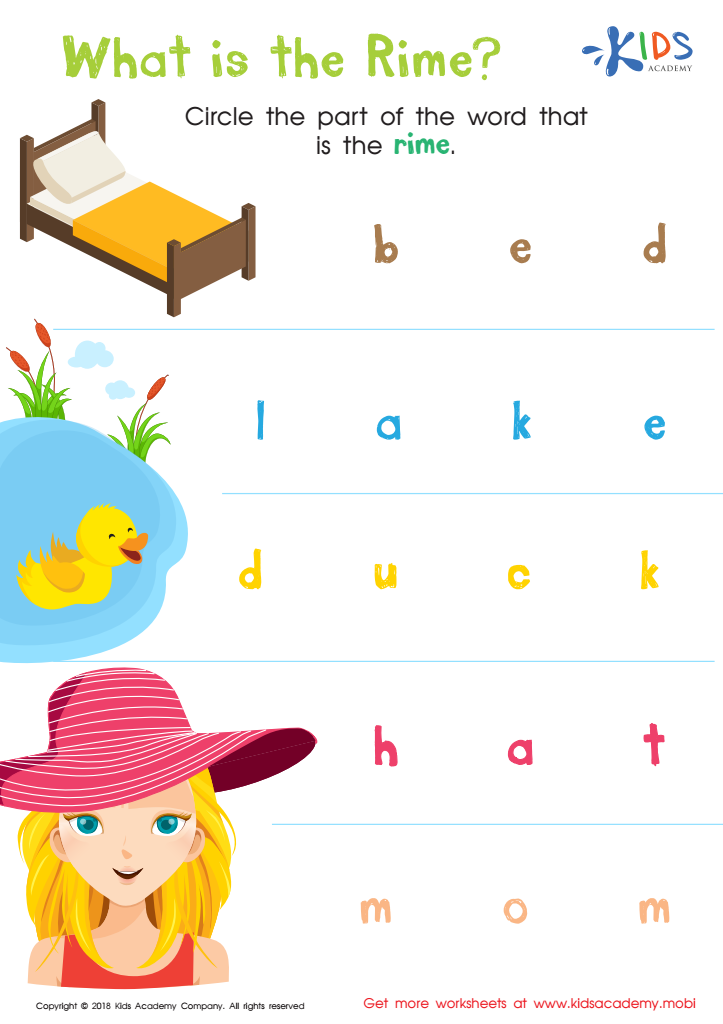
What Is the Rime? Worksheet
Kids will love this PDF worksheet that boosts their reading skills and fine motor skills as they trace the correct rimes for each picture. Knowing onset and rime is key to decoding and fluency, and this worksheet makes it fun! They won't even know they're learning and will be asking for more.
What Is the Rime? Worksheet
Worksheet
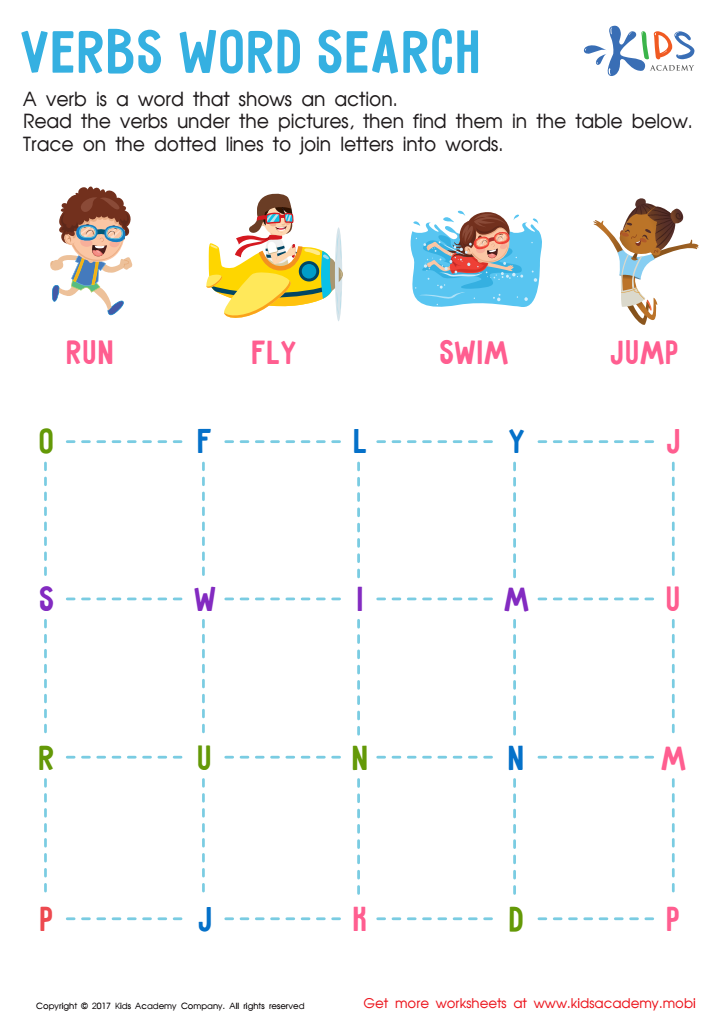
Verbs Word Search Worksheet
Ask your child if they understand the meaning of the word "verb". If not, explain that it's a word that shows an action. Give examples of familiar verbs. Then look at the pictures in the tracing sheet and read the words. Ask your child to follow the dotted lines to find the hidden words. Perfect tool to teach spot and use verbs!
Verbs Word Search Worksheet
Worksheet
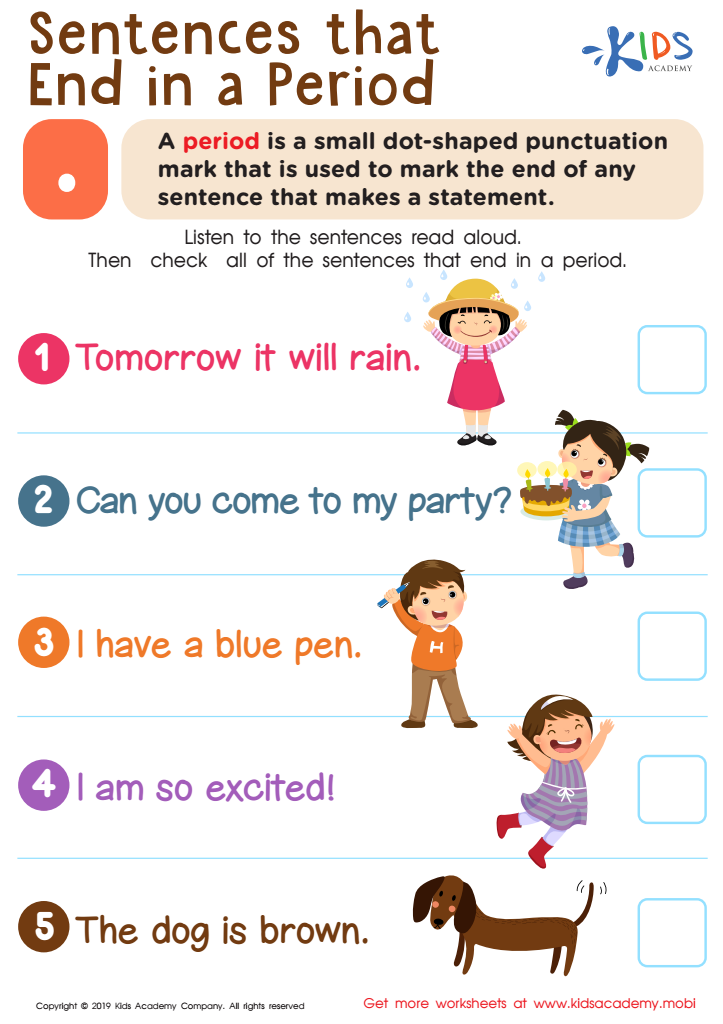
Sentences That End in a Period Worksheet
Before beginning, ask your kids if they know what punctuation marks are and can name a few. Common examples are the period (a small dot-shaped mark at the end of sentences), comma, question mark, and exclamation mark. Help practice their use with questions in the worksheet.
Sentences That End in a Period Worksheet
Worksheet
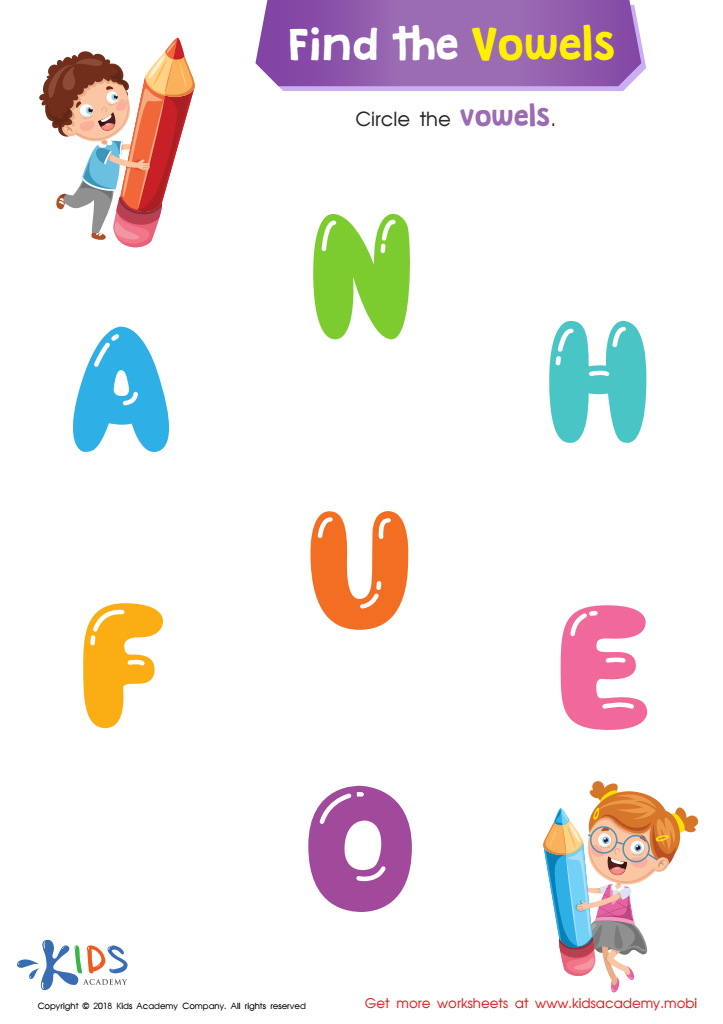
Find the Vowels Reading Worksheet
This worksheet helps kids identify vowels with bright colors and engaging activities to strengthen their visual discrimination and fine motor skills. Young learners will find it easy to succeed and be excited to keep reading!
Find the Vowels Reading Worksheet
Worksheet
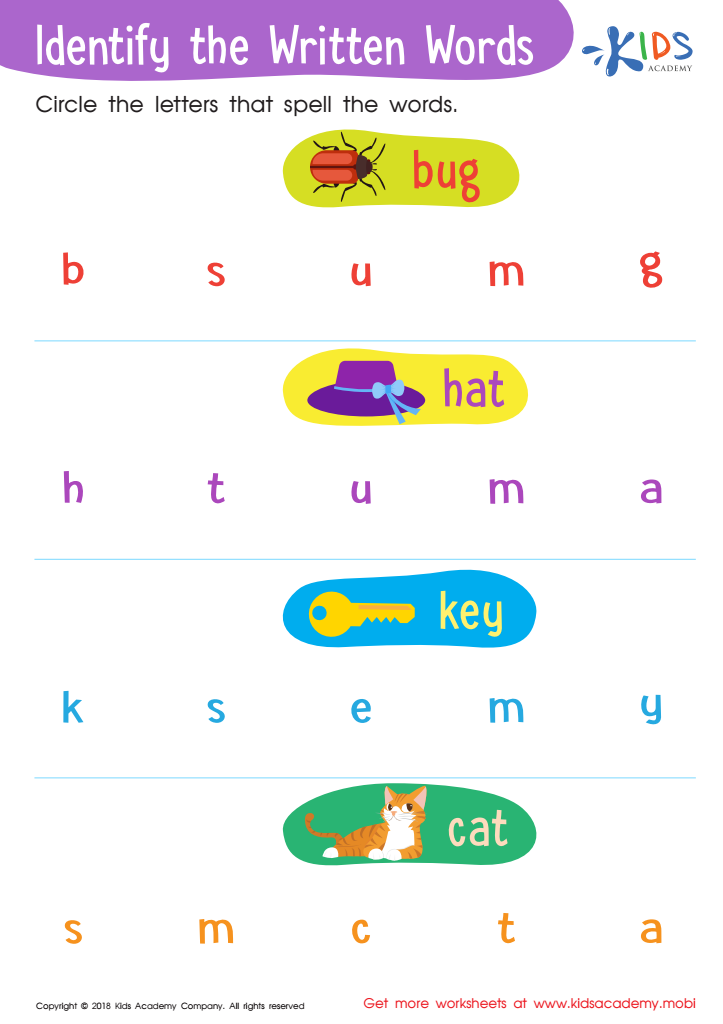
Identify the Written Words Worksheet
Have your students identify the objects on the printout, then spell the words. If they already know how to spell, this exercise should be easy. Help them circle the correct letters from the set to spell out the words. This is a great way to reinforce reading and spelling skills. Max 80 words.
Identify the Written Words Worksheet
Worksheet
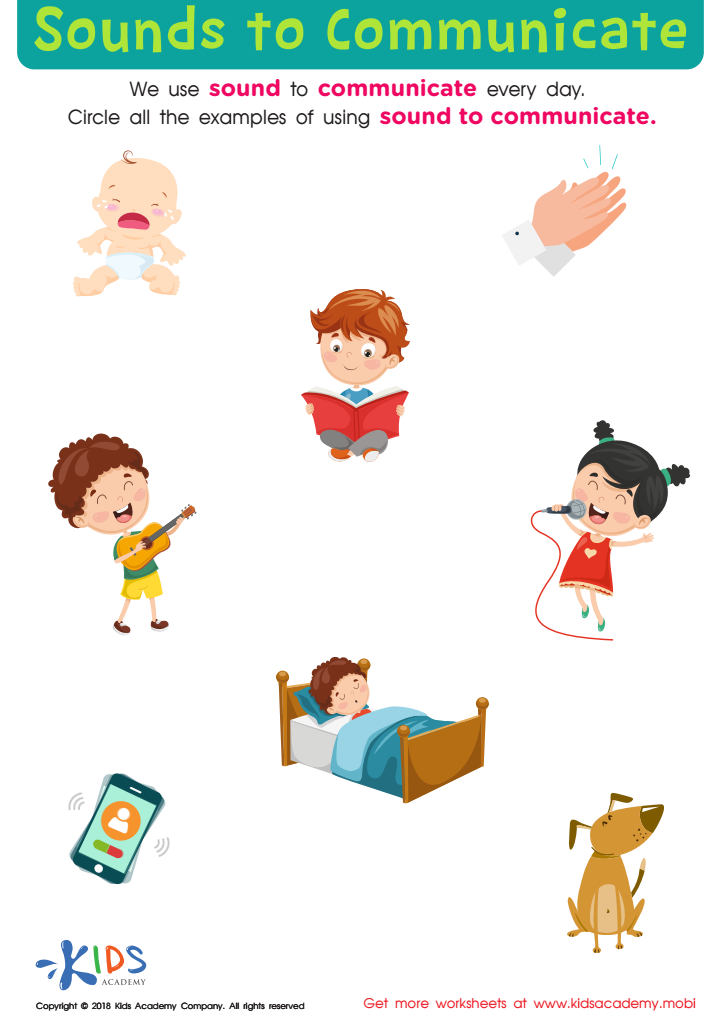
Sounds to Communicate Worksheet
Sounds are important for communication. Ask your students to name sounds people, animals and things make. Then, review this worksheet with them and see if they can identify the activities. Ask them to circle examples of sounds used to communicate.
Sounds to Communicate Worksheet
Worksheet
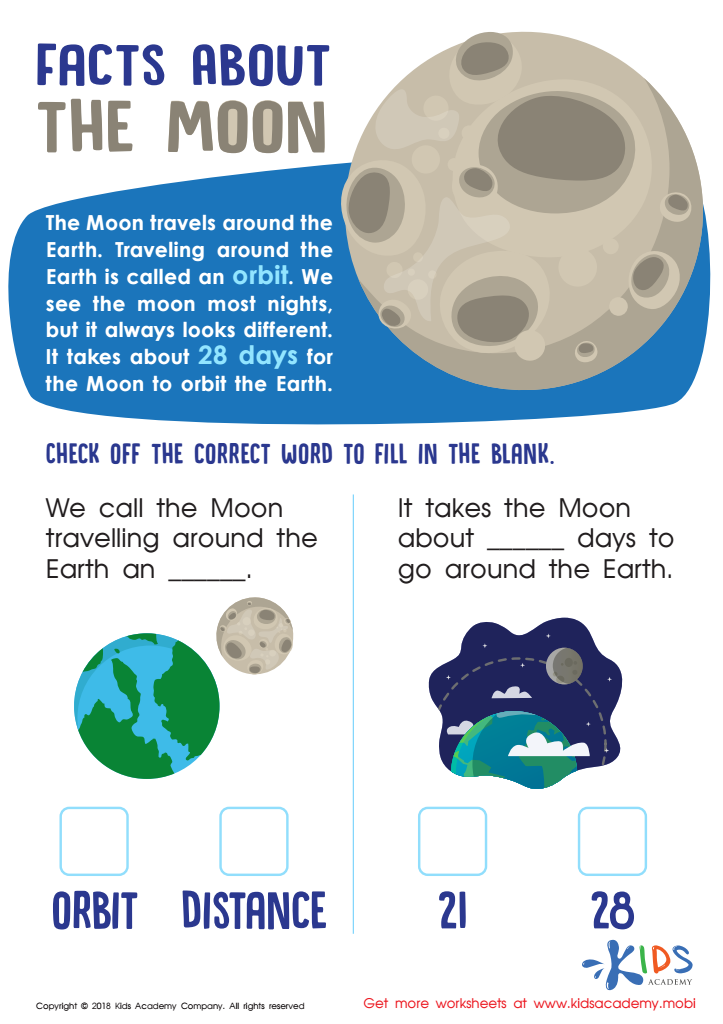
Facts About the Moon Worksheet
Have your child learn about our moon's orbit with this engaging worksheet! They can read the introductory paragraph for the required vocabulary, then read the sentences under the images and check off the correct boxes. Explore the wonders of the cosmos and our planet with this fun exercise!
Facts About the Moon Worksheet
Worksheet
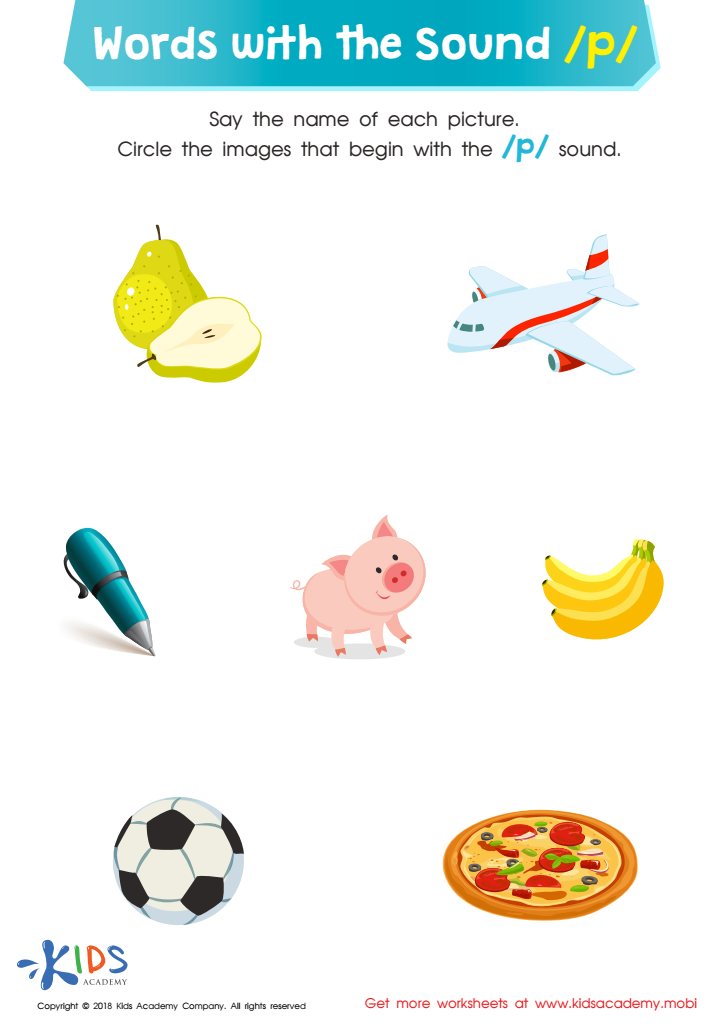
Words with sound p Reading Worksheet
Working on this fun worksheet? Name each picture aloud and listen carefully before circling those that start with the letter «p»! Pizza, pig, plane, or banana - practice phonics to help your child recognize the letter «p» sound for successful early reading and decoding!
Words with sound p Reading Worksheet
Worksheet
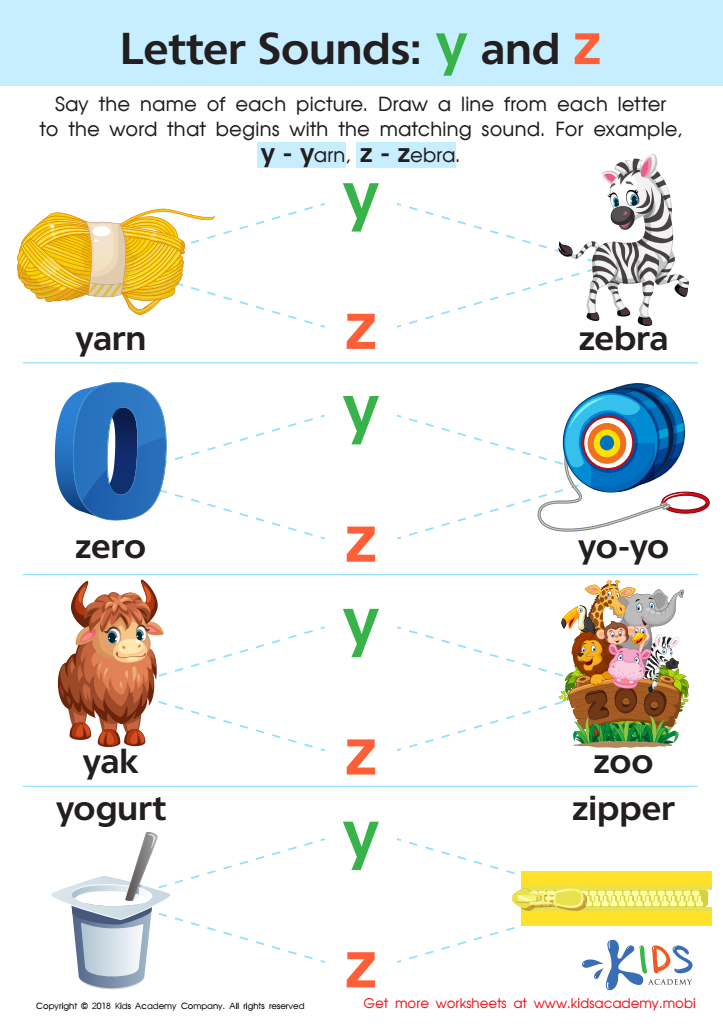
Letter Y and Z Sounds Worksheet
Y and Z can be tricky for kids to learn. Kids Academy has the answer with a great worksheet. "Yo-yo", "yak" and "zebra" help kids recognize, say and trace each letter. Plus, they can read the words and match them to images! Let your child try and help them master phonics at the end of the alphabet.
Letter Y and Z Sounds Worksheet
Worksheet
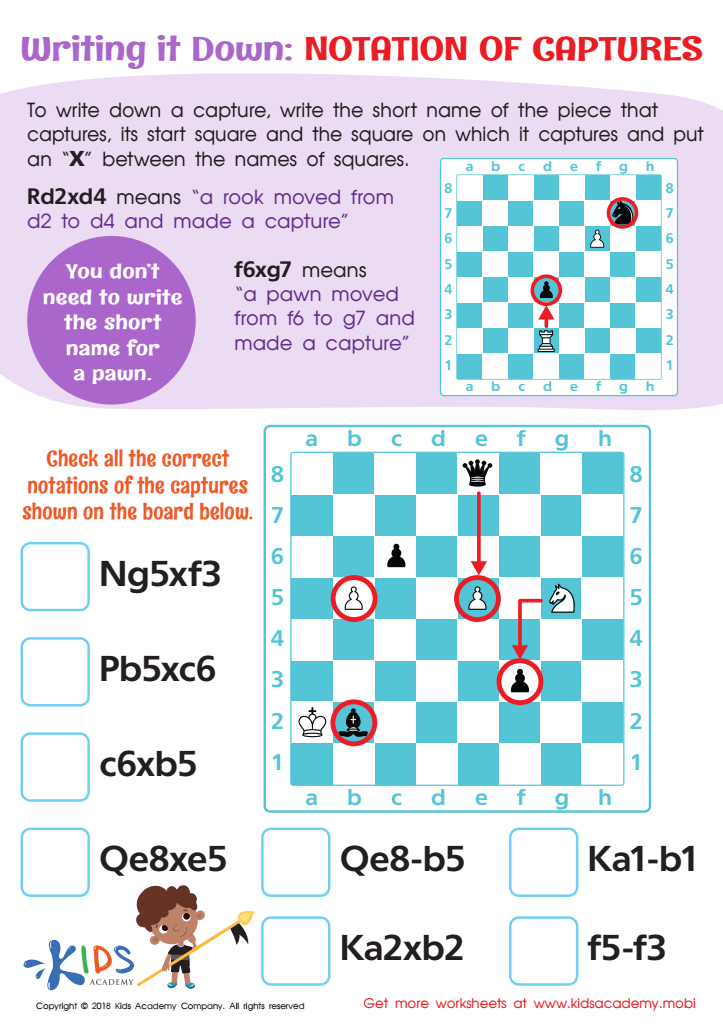
Notation of Captures Writing it Down Worksheet
To teach students how to record captures in chess, use this worksheet. Write down the piece's short name, start sq., and the sq. where it captures, separating them with an X. For example, Rd2Xd4 means a rook moved d2 to d4 and took a piece. Pawn captures don't need a name.
Notation of Captures Writing it Down Worksheet
Worksheet
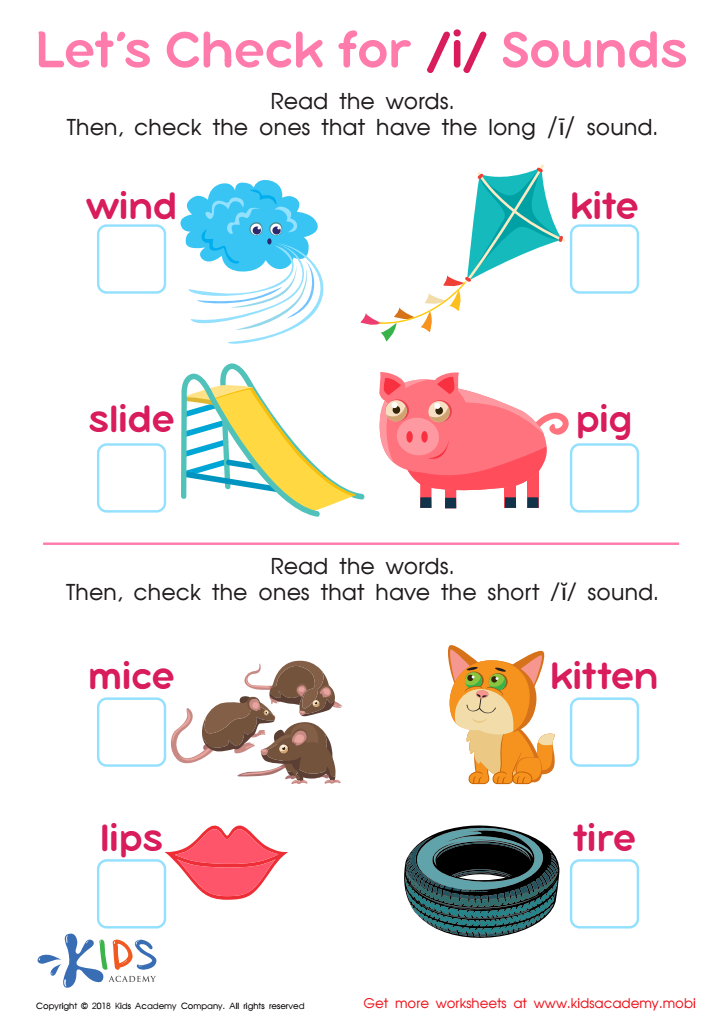
Let's Check for «i» Sounds Worksheet
This fun worksheet with pictures boosts phonics skills - differentiating between long «ī» and short «i» sounds in 1- and 2-syllable words. Kids use picture clues to read words, then check off the correct ones. It's a great way for new readers to practice early reading skills and find success on their own.
Let's Check for «i» Sounds Worksheet
Worksheet
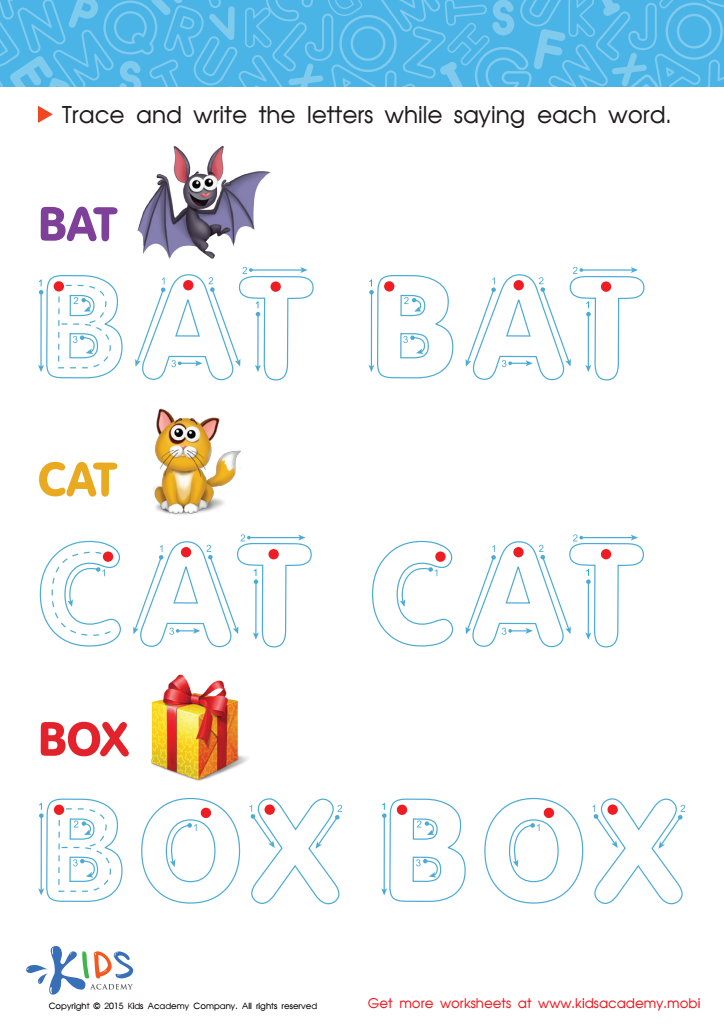
A Bat, a Cat and a Box Spelling Worksheet
Check out this new spelling worksheet, perfect for kids! It includes three lines with three small words to learn. Let's practice pronunciation, reading, and writing them. Trace and write the words on your own, then explore more free vocabulary worksheets at Kids Academy. Learn and make your studies enjoyable!
A Bat, a Cat and a Box Spelling Worksheet
Worksheet
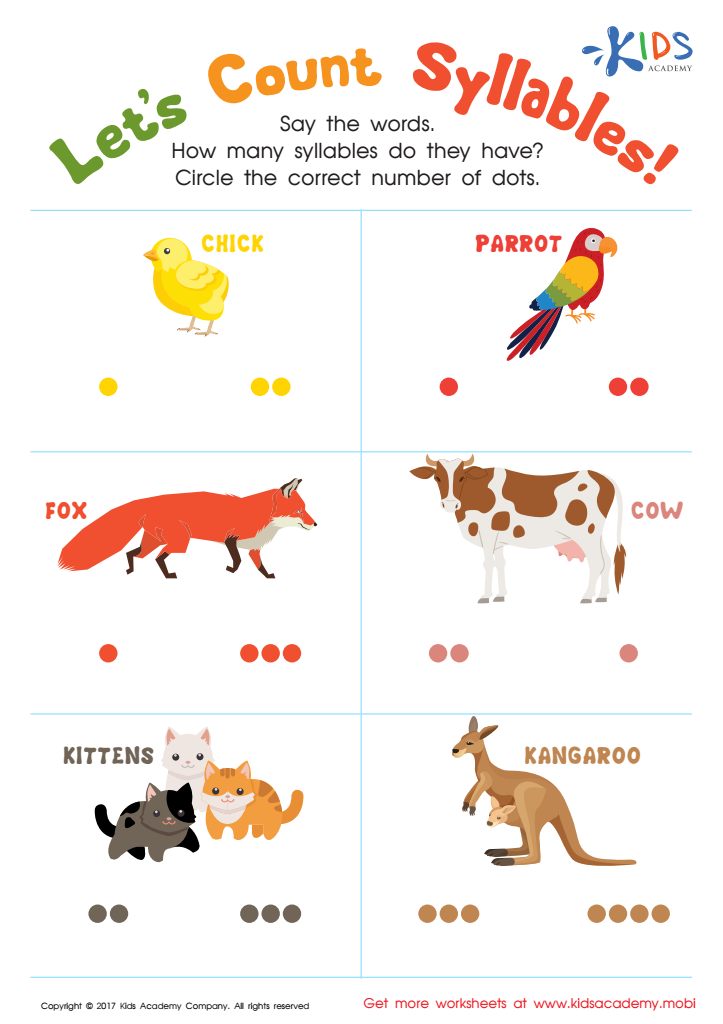
Lets Count Syllables Worksheet
This fun animal worksheet makes learning to read easier by breaking words into syllables. Bright, cheery pictures give context and help kids choose the right syllable count. Count together and enjoy as your child learns and gains success!
Lets Count Syllables Worksheet
Worksheet
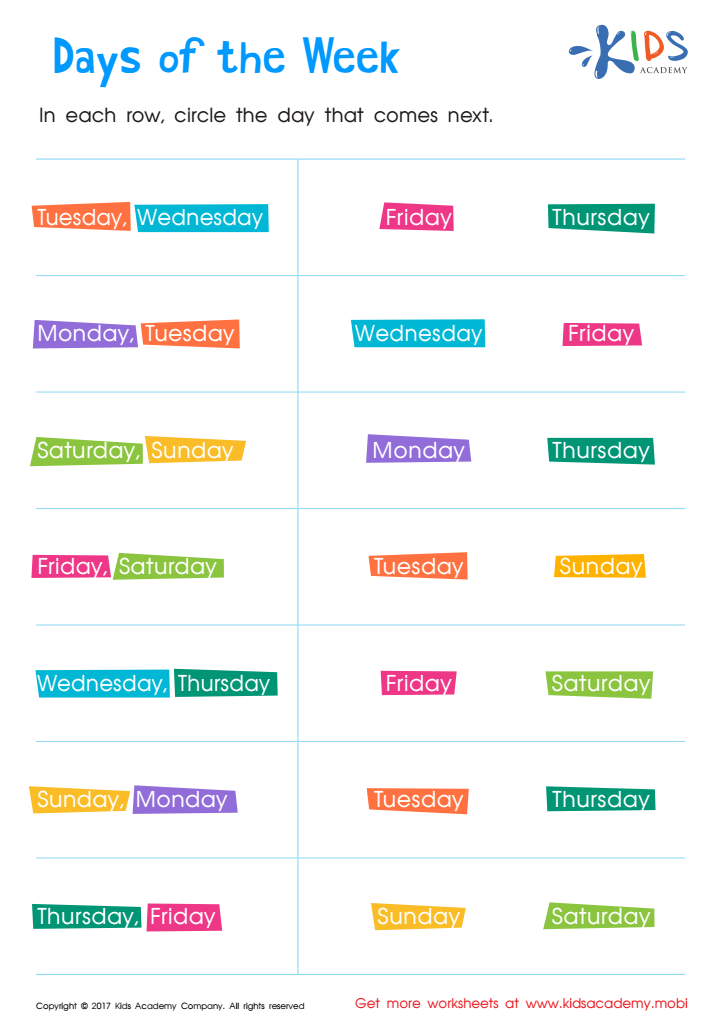
Days of the Week Worksheet
This worksheet will help your child learn one of life's most basic concepts: the days of the week. Kids read each row and select the next day. After finishing, your child will have a firm grasp on days of the week!
Days of the Week Worksheet
Worksheet
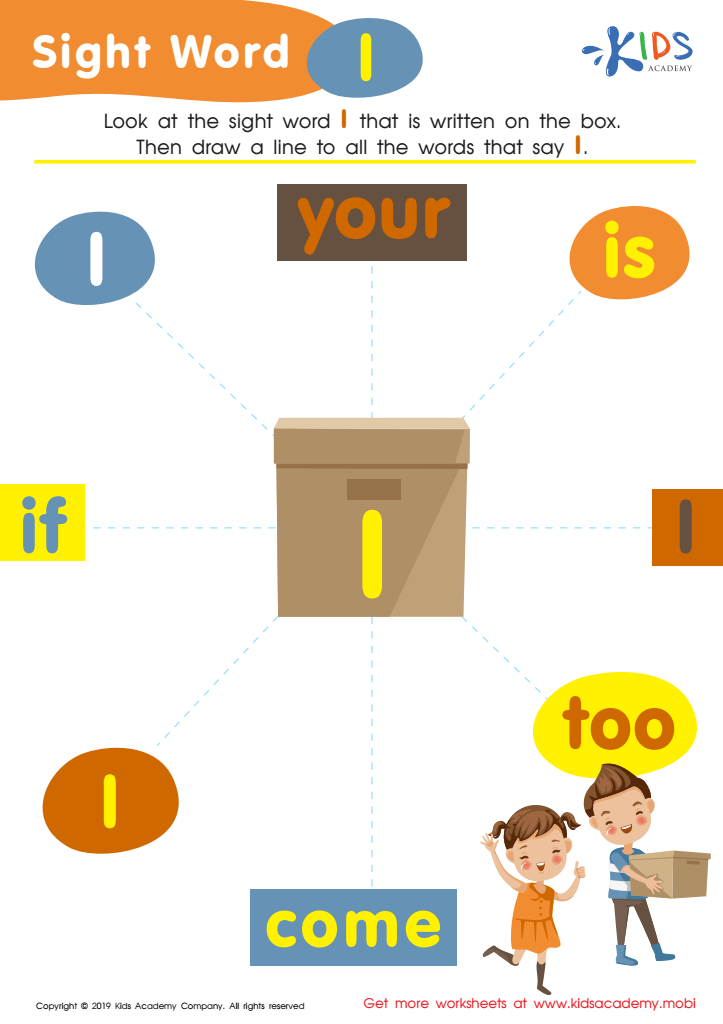
Sight Word I Worksheet
Recognizing the sight word 'I' is harder than it looks! When kids are learning to read, they understand 'I' by its sound, not as a word. This free worksheet gives them practice with 'I', letting them work on their fine motor skills too. They'll join 'I' to shapes containing the same letter. It's a great way to give kids confidence in their reading skills!
Sight Word I Worksheet
Worksheet
Join Kids Academy for Free
Who is primarily going to use this learning content?







Improving reading skills in children aged 4-6 is crucial for their overall development. At this early stage, children's brains are exceptionally receptive to learning, and fostering reading abilities sets the foundation for their future academic success. Early literacy skills, such as phonemic awareness, vocabulary development, and comprehension, significantly impact not just reading proficiency, but also mathematics and social skills.
Parents and teachers play a vital role in creating a positive reading environment. Engaging storytime and interactive reading experiences help stimulate children's imagination and critical thinking skills. Early readers are likely to develop greater confidence, self-esteem, and a love for learning, contributing to a more enriching educational experience.
Additionally, improving reading skills at this age helps address potential literacy disparities. Children with strong reading skills are better prepared for formal schooling, reducing the likelihood of falling behind their peers. This proactive approach allows educators to identify and support children who may struggle with reading, ensuring that no child is left behind.
Ultimately, prioritizing reading skill improvement fosters lifelong learners and creates a foundation for future academic achievement, making it essential for parents and teachers to actively support and promote literacy development.








