Spatial understanding Worksheets for Ages 4-6
3 filtered results
-
From - To
Enhance your child’s spatial understanding with our engaging worksheets designed for ages 4-6! These printable resources help young learners develop essential skills in recognizing shapes, understanding directions, and visualizing spaces. Our thoughtfully crafted activities encourage exploration and creativity, making learning fun and interactive. Each worksheet focuses on key concepts like position, size, and patterns, reinforcing cognitive development through play. Ideal for home or classroom settings, these materials cater to early childhood education and help prepare your child for future learning challenges. Foster spatial awareness today and watch your child's confidence and problem-solving abilities soar! Explore our collection now!
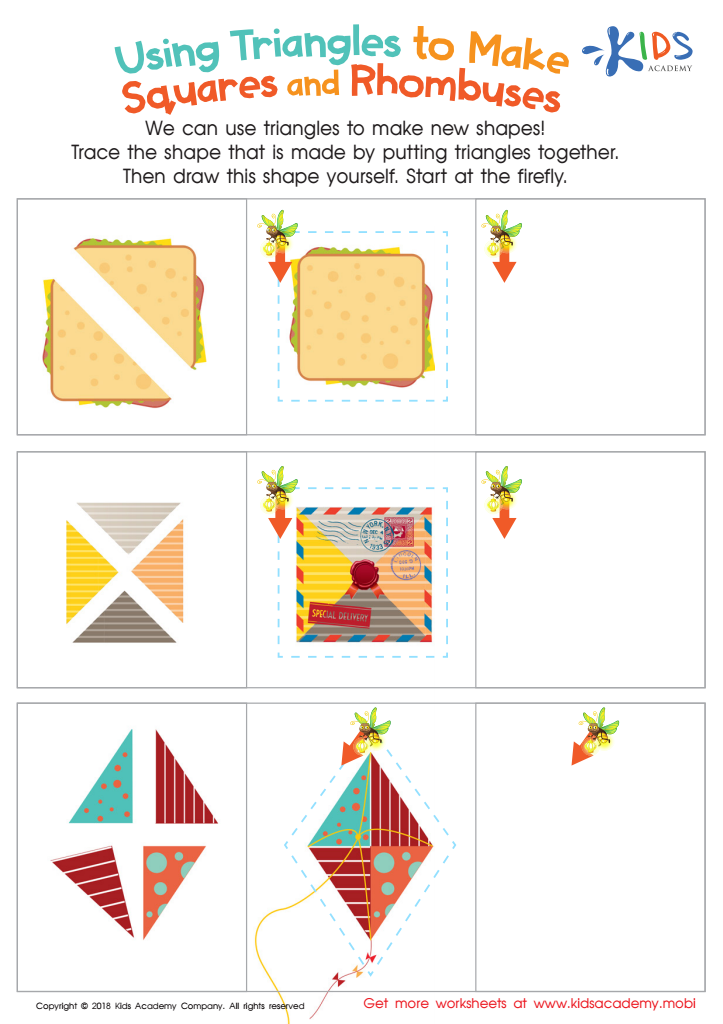
Using Triangles to Make Squares and Rhombuses Worksheet
 Assign to My Students
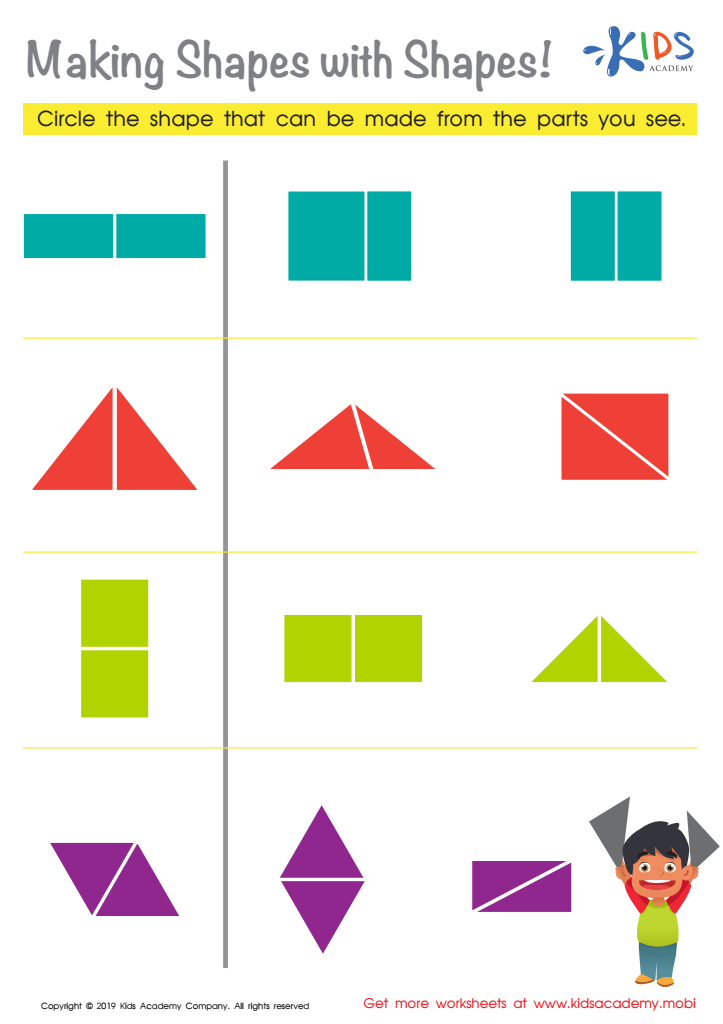
Making Shapes with Shapes Worksheet
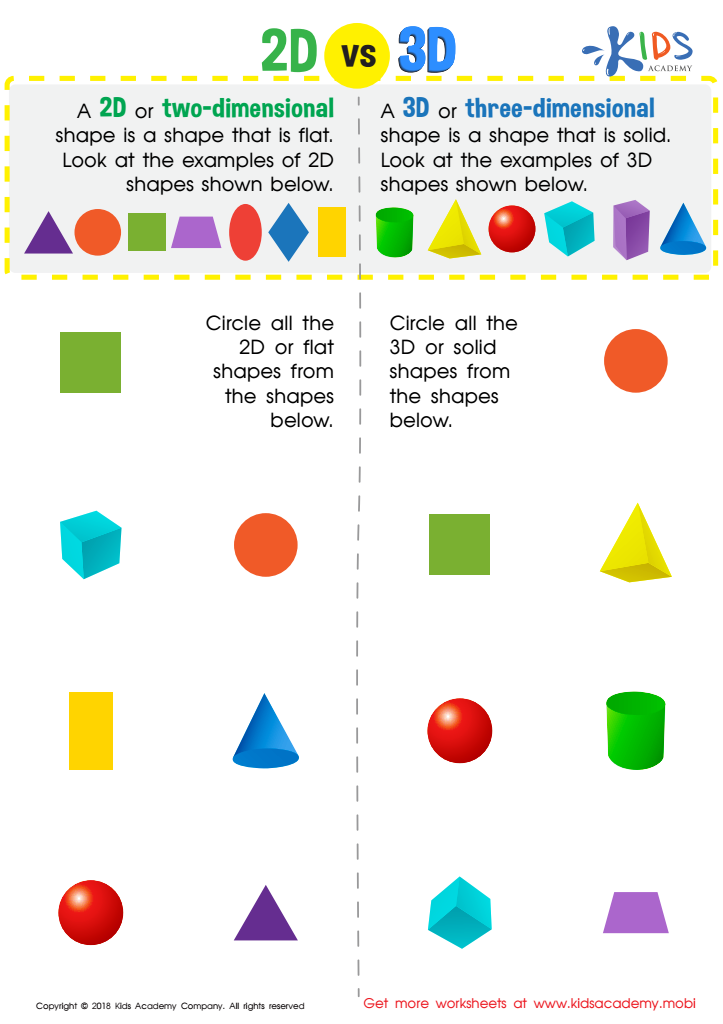
2D vs 3D Shapes Worksheet






Spatial understanding is crucial for children aged 4-6 as it lays the foundation for various cognitive skills essential for their overall development. At this age, children engage in activities that develop their ability to understand and manipulate space, shapes, and sizes, which is vital for math and science skills later on. By enhancing spatial awareness, children learn important concepts such as distance, direction, and the relationships between objects.
Parents and teachers should care about spatial understanding because it supports problem-solving abilities and critical thinking. Young children explore their environment, helping them make sense of the world. For instance, playing with blocks or puzzles promotes fine motor skills and spatial reasoning. Moreover, these activities encourage creative exploration, which is essential for developing confidence and independence.
Furthermore, spatial understanding is linked to language development. Children learn vocabulary associated with location and size, enriching their communication skills. This early understanding not only prepares them for academic success but also fosters a sense of curiosity about their environment. By prioritizing spatial activities and discussions, parents and teachers can provide children with the tools they need to navigate challenges in school and life, ultimately contributing to well-rounded, capable individuals.








