
Spelling Skills Worksheets for Ages 4-6
19 filtered results
Difficulty Level
Grade
Age
-
From - To
Subject
Activity
Standards
Enhance your child's spelling abilities with our Spelling Skills Worksheets designed specifically for ages 4-6. These engaging, printable resources provide a fun and interactive way for early learners to practice letter recognition, word formation, and phonetic understanding. Our worksheets feature colorful visuals and simple exercises that keep children motivated while developing their spelling proficiency. Aligned with developmental standards, these activities support essential literacy skills, fostering a love for reading and writing. Perfect for use at home or in the classroom, our Spelling Skills Worksheets make learning enjoyable and effective for young children as they embark on their educational journey.
Favorites
With answer key
Interactive
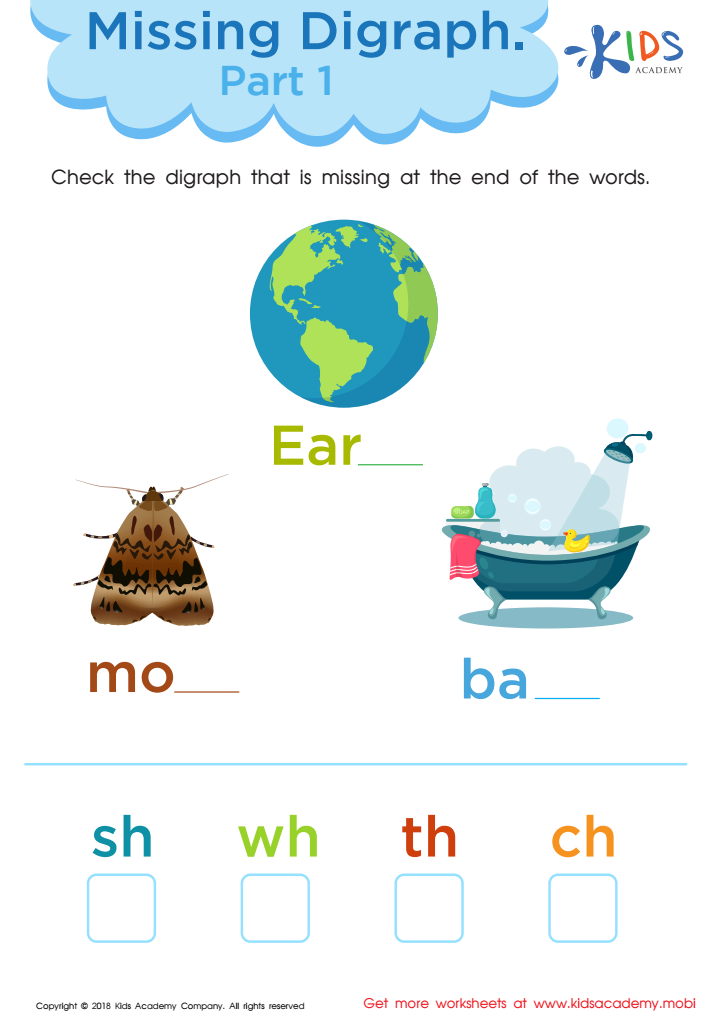
Missing Digraph: Part 1 Worksheet
Practice the 'th' digraph with this worksheet! Ask kids to say the words shown and sound out the letters below each image. Check the box with the correct digraph to complete. Examples include 'earth', 'bath' and 'moth', all ending with the same two letters. Phonics teaches that digraphs are two letters that make one sound.
Missing Digraph: Part 1 Worksheet
Worksheet
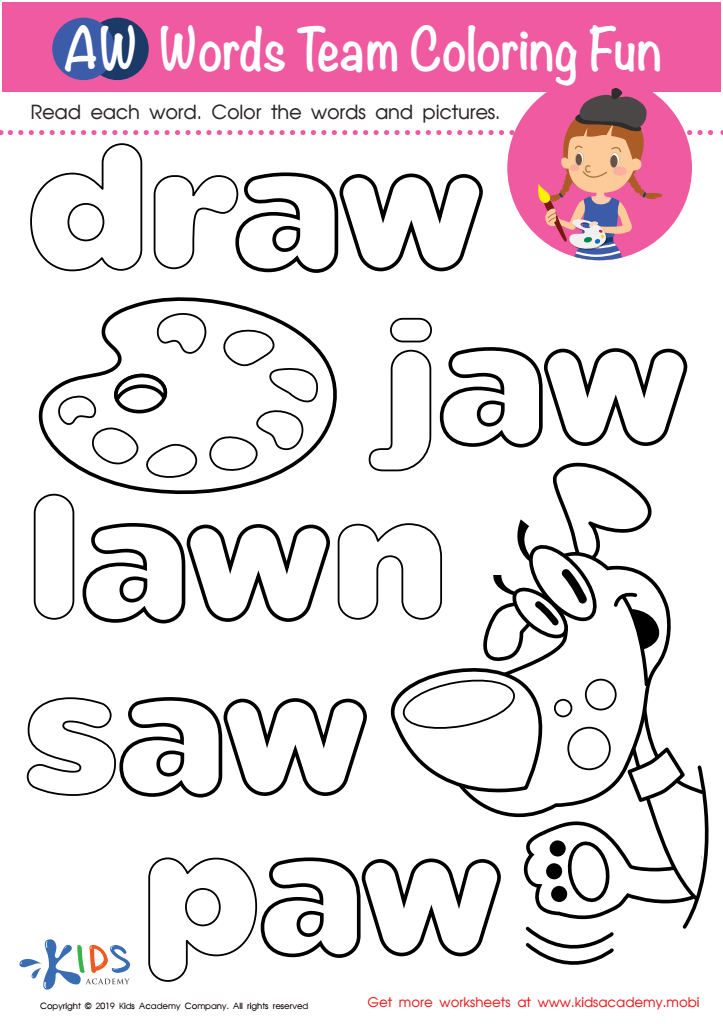
AW Words Team Coloring Fun Worksheet
Coloring words they can read is a blast for little learners! This worksheet offers emerging readers the chance to practice and gain confidence in reading words from the -aw family, while also improving fine-motor and creativity skills. Without knowing it, they'll learn about phonetic teams along the way!
Download (PDF)
 Assign to My Students
Assign to My Students
AW Words Team Coloring Fun Worksheet
Worksheet
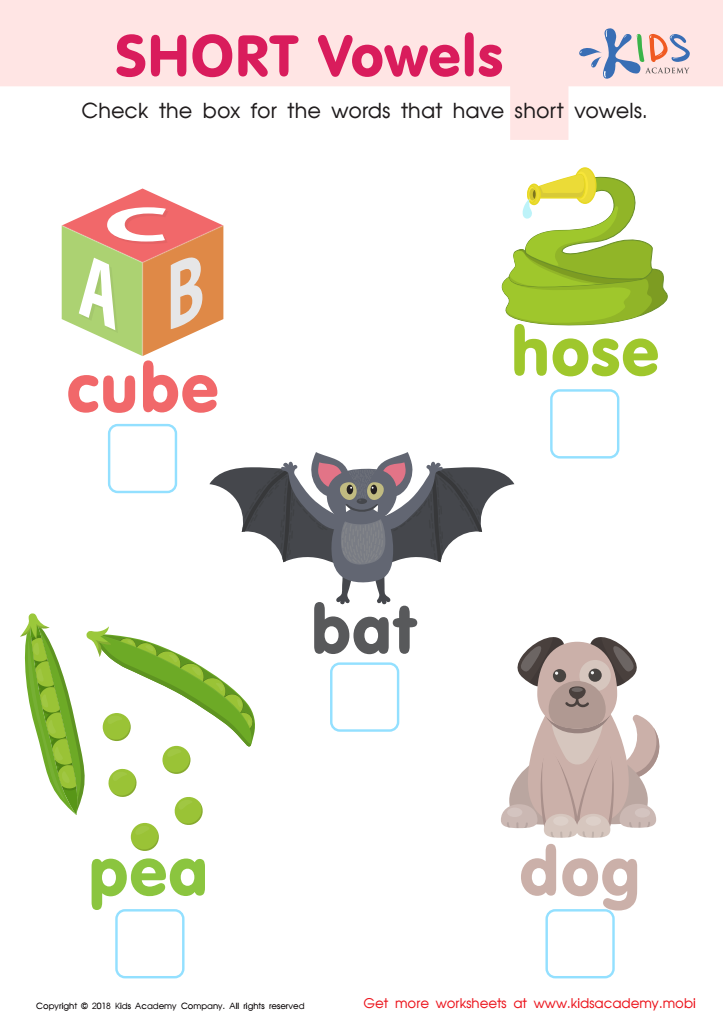
short vowels Worksheet
Say "dog" and notice how long it takes to pronounce the vowel. Is it short or long? Compare it to "pea" and use this worksheet to quickly assess your child's mastery. Have them name each picture and listen for the vowel sounds. Only check the boxes for words with short vowel sounds.
short vowels Worksheet
Worksheet
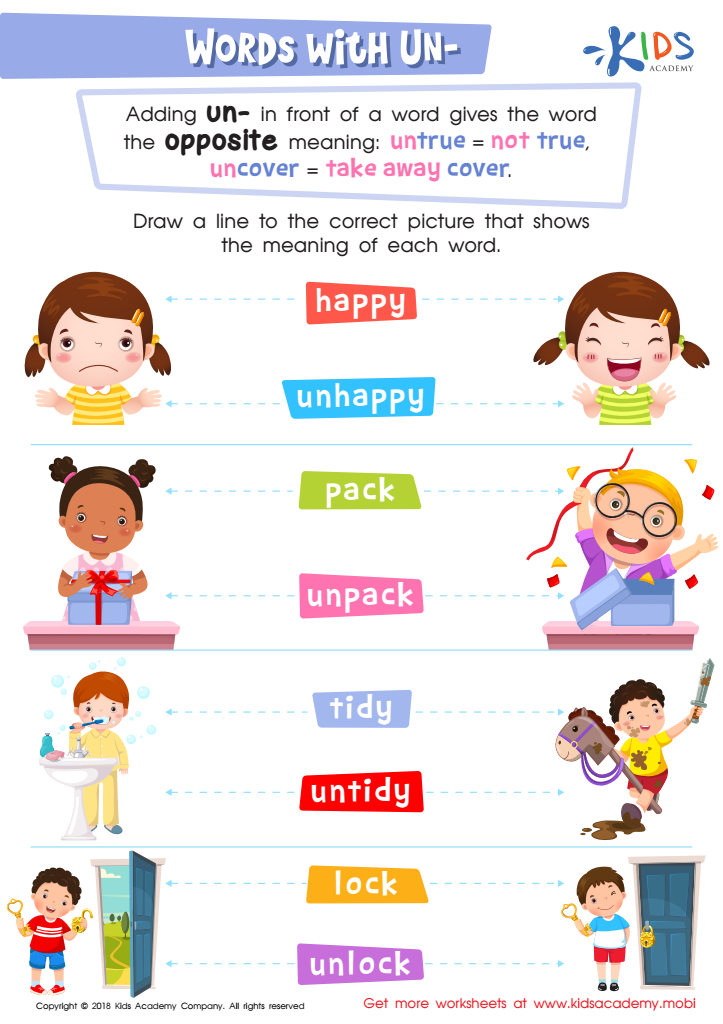
Words with Un– Worksheet
Prefixes can change the meaning of words. Adding "Un-" can give the opposite meaning, like Un-true, Un-happy, and Un-finish. Help your child learn with this worksheet. Draw a line to the picture that shows each word's meaning.
Words with Un– Worksheet
Worksheet
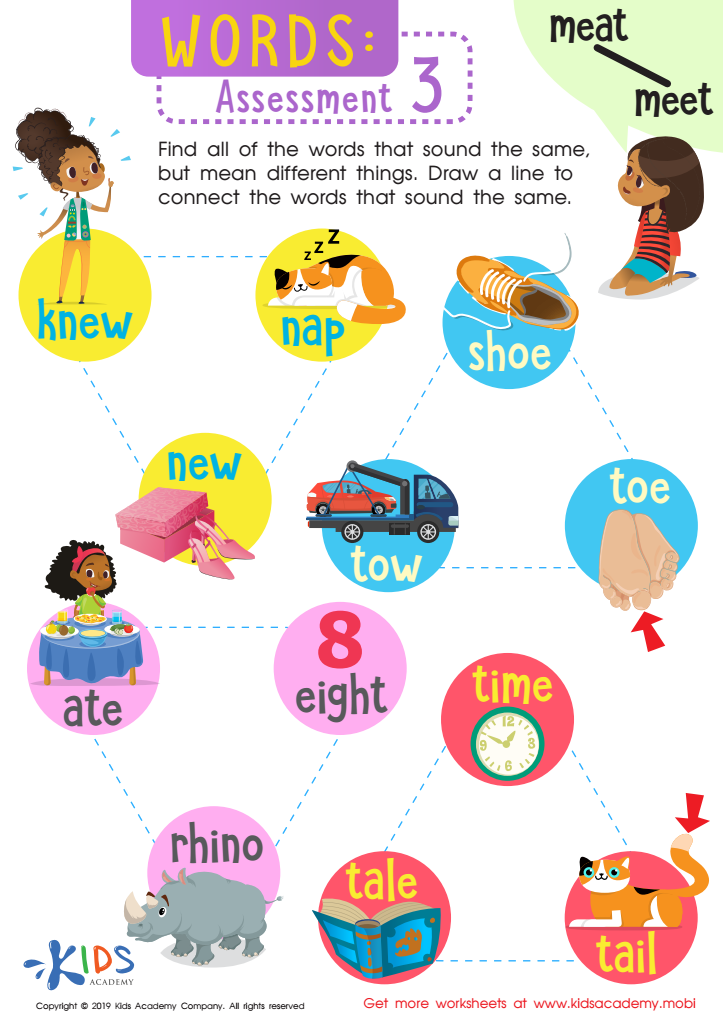
Words: Asessment 3 Worksheet
Assess your child's knowledge of homonyms with words like "toe" and "tow". This fun worksheet helps find words that sound the same but have different meanings and spellings. Use it to introduce homographs--words spelled the same with different meanings!
Words: Asessment 3 Worksheet
Worksheet
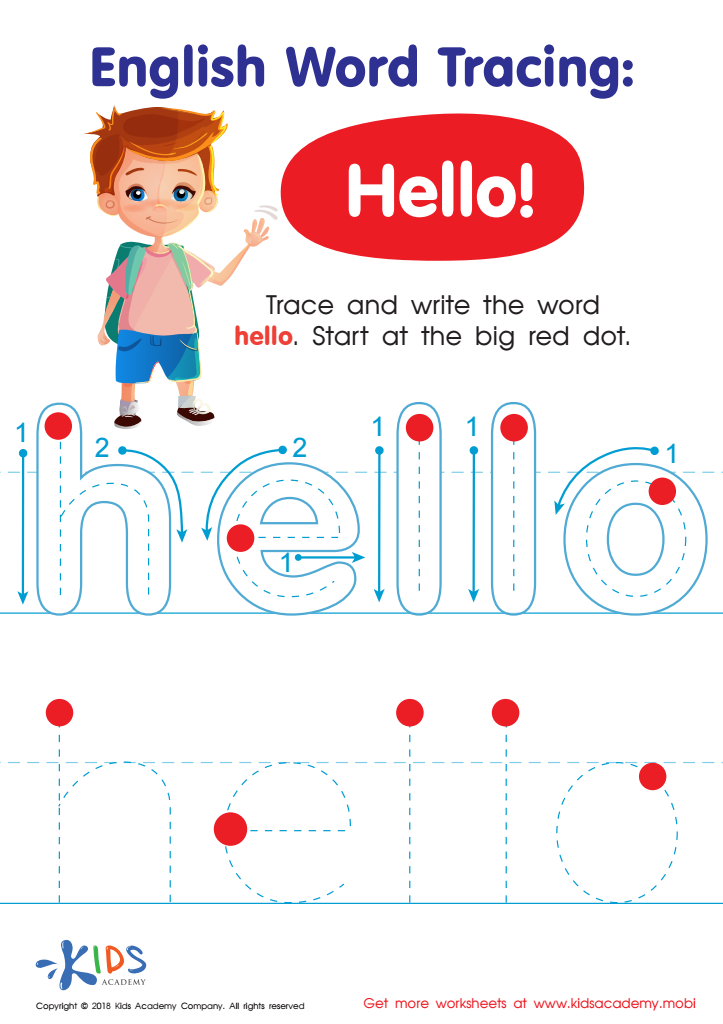
English Word Tracing: Hello Worksheet
Searching for free worksheets to help your kids refine their motor skills, handwriting and English word knowledge? Get this cheerful PDF! It offers your children the chance to practice tracing words like Hello, while following a top-to-bottom, left-to-right patterning.
English Word Tracing: Hello Worksheet
Worksheet
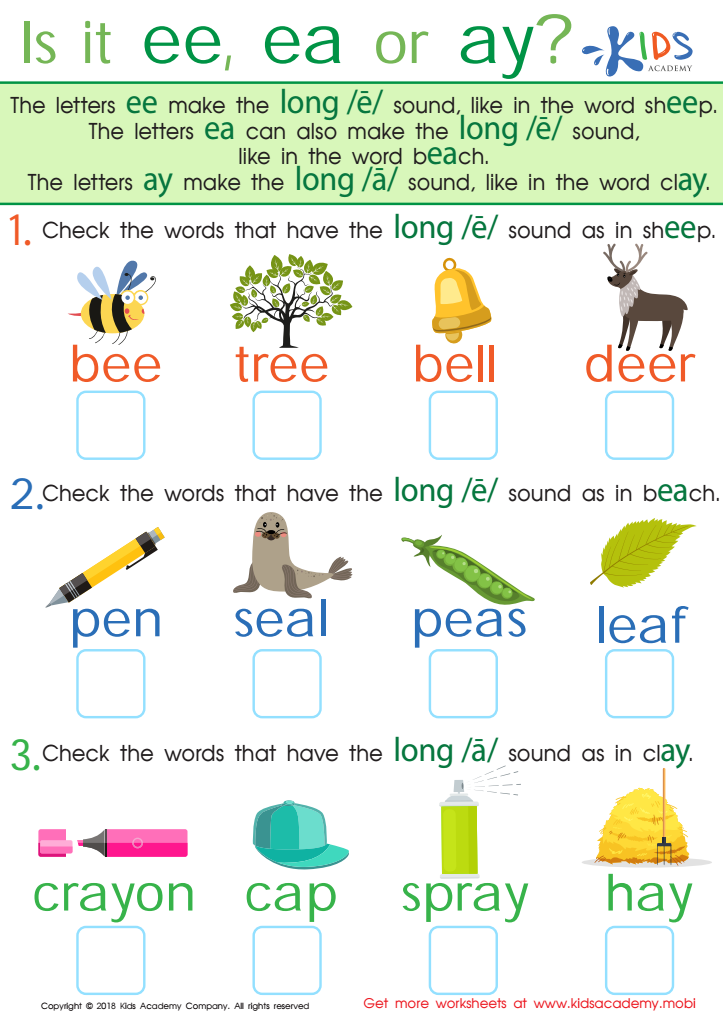
Is It EE, EA, or AY? Worksheet
When 'ee', 'ea' and 'ay' are in words, they usually make the long /e/ and /a/ sounds. Examples of words with 'ee' are "sheep", 'beach' and 'seat' with 'ea', and 'clay' and 'play' with 'ay'. Check this colourful worksheet with your kids; help them find the words that make the long /e/ sound like 'sheep'.
Is It EE, EA, or AY? Worksheet
Worksheet
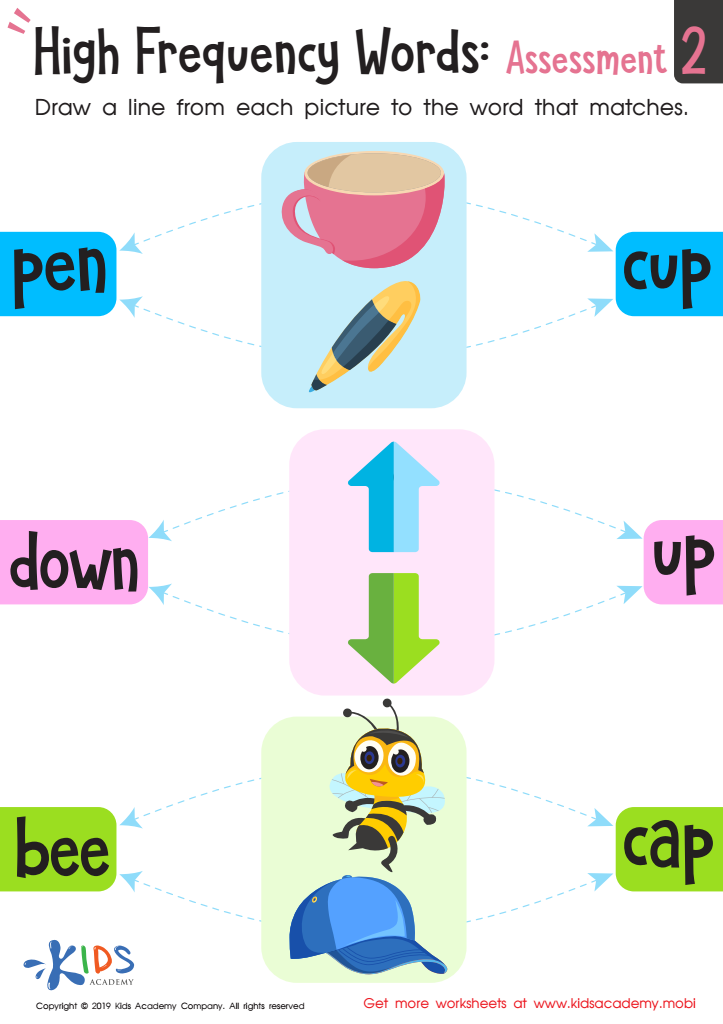
High Frequency Words: Assessment 2 Worksheet
Having knowledge of high frequency words can make emergent readers stronger and boost comprehension. This free assessment worksheet uses traceable lines to connect the picture to its corresponding words, allowing them to feel successful. It's a great way to reinforce high frequency words with familiar imagery.
High Frequency Words: Assessment 2 Worksheet
Worksheet
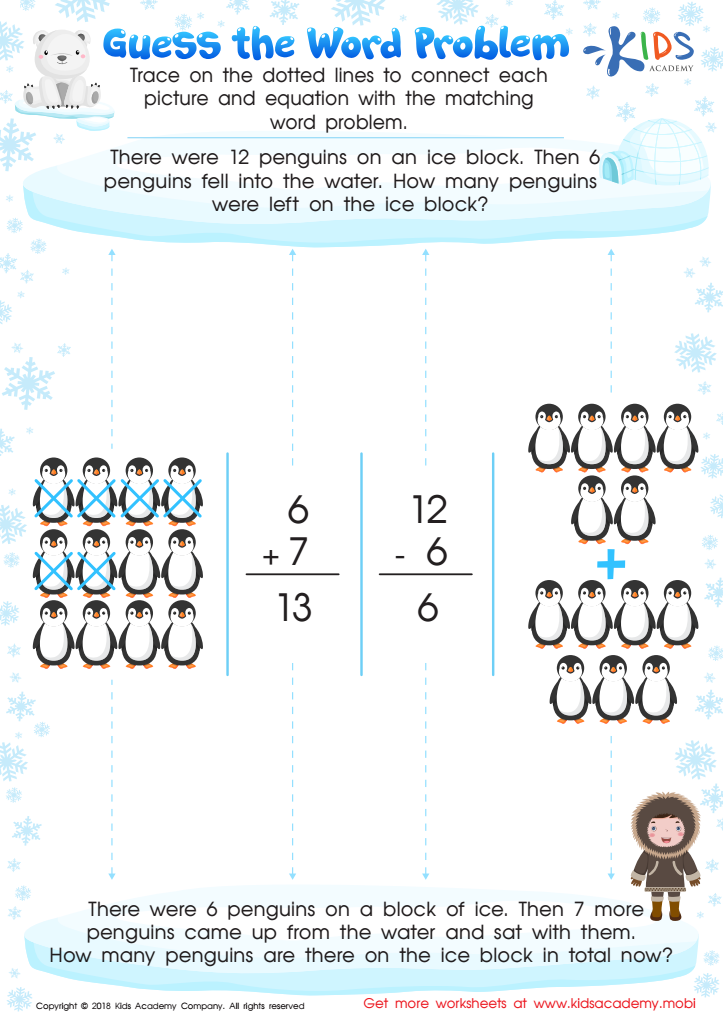
Guess the Word Problem Worksheet
Head to the Arctic Circle for math word problems with penguins, bears, and eskimos! This winter printable worksheet helps kids enjoy math with cute images. Guide kids through addition and subtraction in standard form with the penguins. Compare word problems to its written and pictorial forms for an enjoyable lesson!
Guess the Word Problem Worksheet
Worksheet
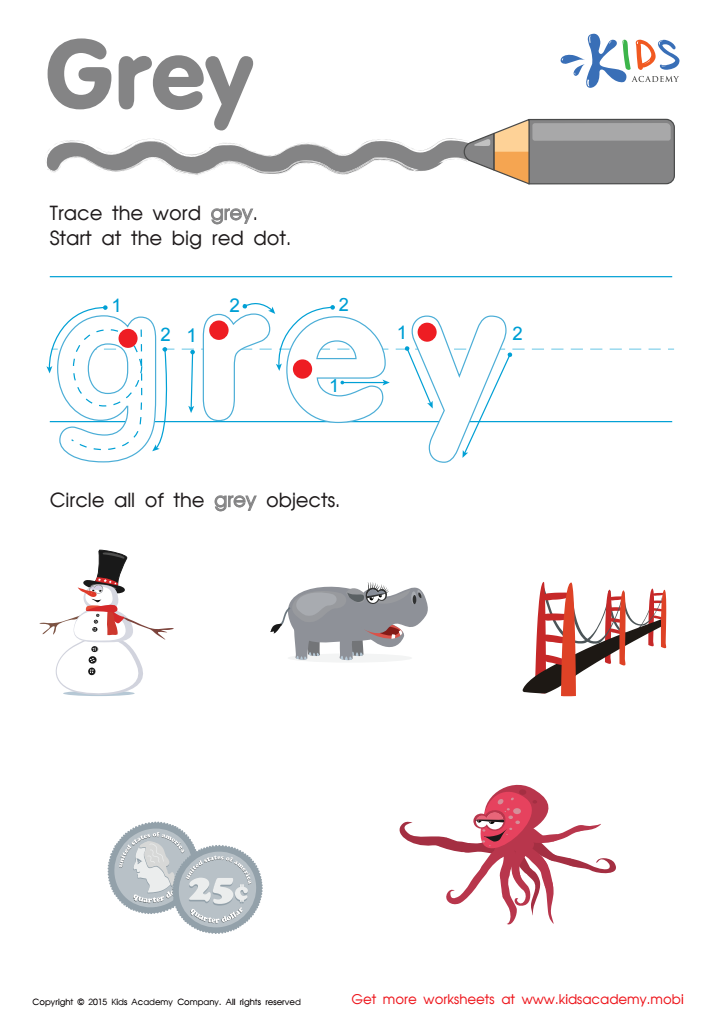
Grey Tracing Color Words Worksheet
Help your kindergartener boost their writing skills with this free printable handwriting worksheet! They can trace the sight word "grey" with a grey crayon, starting at the big red dots. Sounding out and tracing the letters can help strengthen their handwriting. Ask them to name and circle all the grey objects to give extra practice. Get more free worksheets here!
Grey Tracing Color Words Worksheet
Worksheet
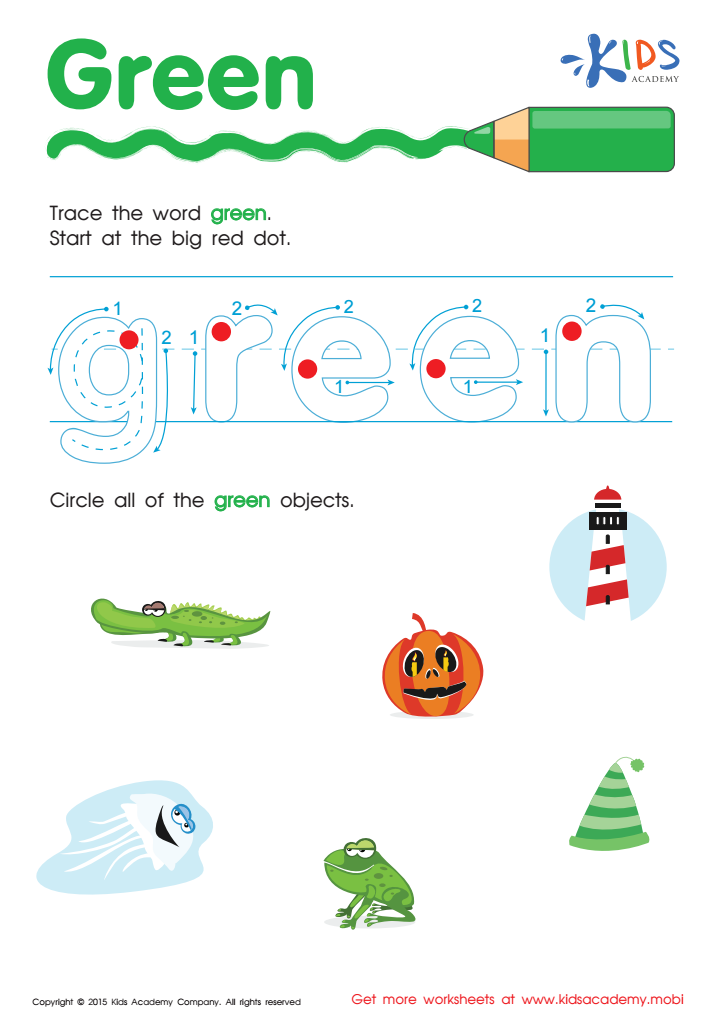
Green Tracing Color Words Worksheet
Encourage writing and spelling practice with this vibrant free handwriting worksheet. Have your child trace the new name of a primary color, "green," and circle green items in the picture. Ask them what else can be green for a challenging activity. Through this worksheet, your kindergartener can learn and play at the same time. For more free printables, look here.
Green Tracing Color Words Worksheet
Worksheet
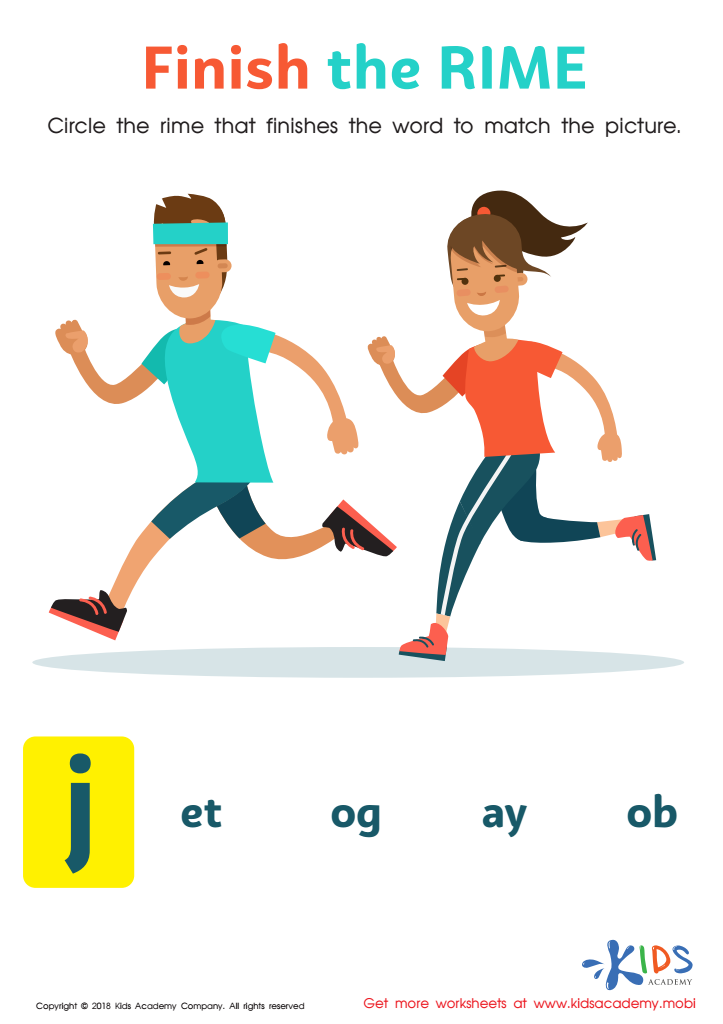
Finish the Rime Worksheet
Rimes help kids learn word families and spelling strategies. This PDF worksheet gives new readers practice with initial consonants, pictures, colors and motor skills. It's fun and cheery, and a great way to boost phonological awareness and rime identification.
Finish the Rime Worksheet
Worksheet
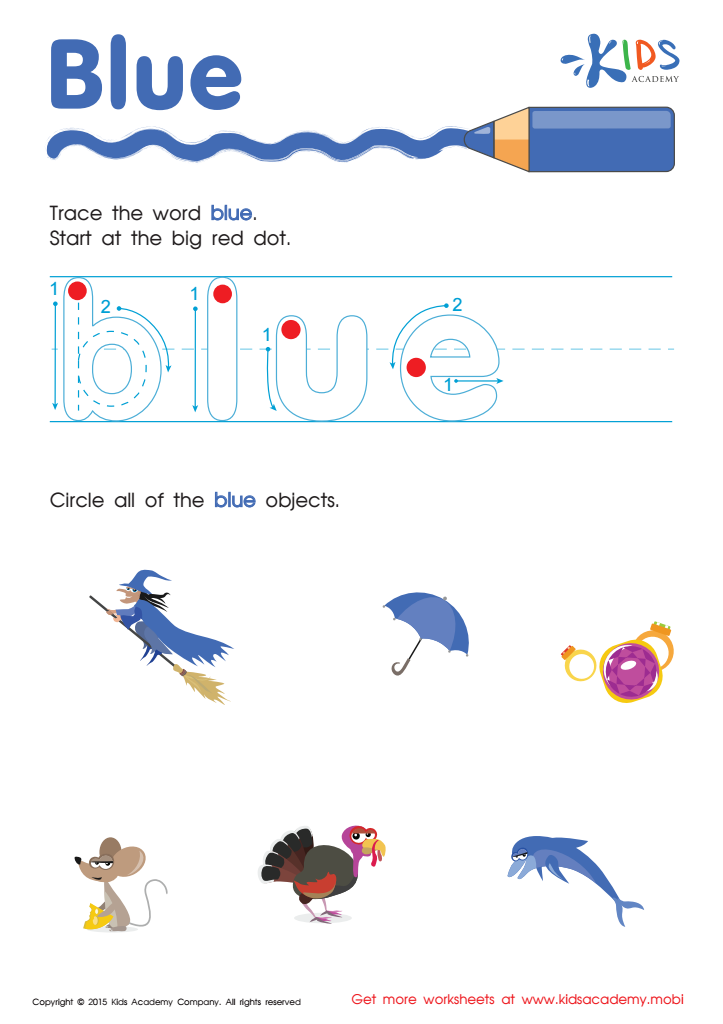
Blue Tracing Color Words Printable
Encourage your child's motor skills by having them trace the word "blue" with their blue crayon on this free printable handwriting worksheet, starting at the red dots. Ask them to circle all the blue objects they see. Check out here for more handwriting practice.
Blue Tracing Color Words Printable
Worksheet
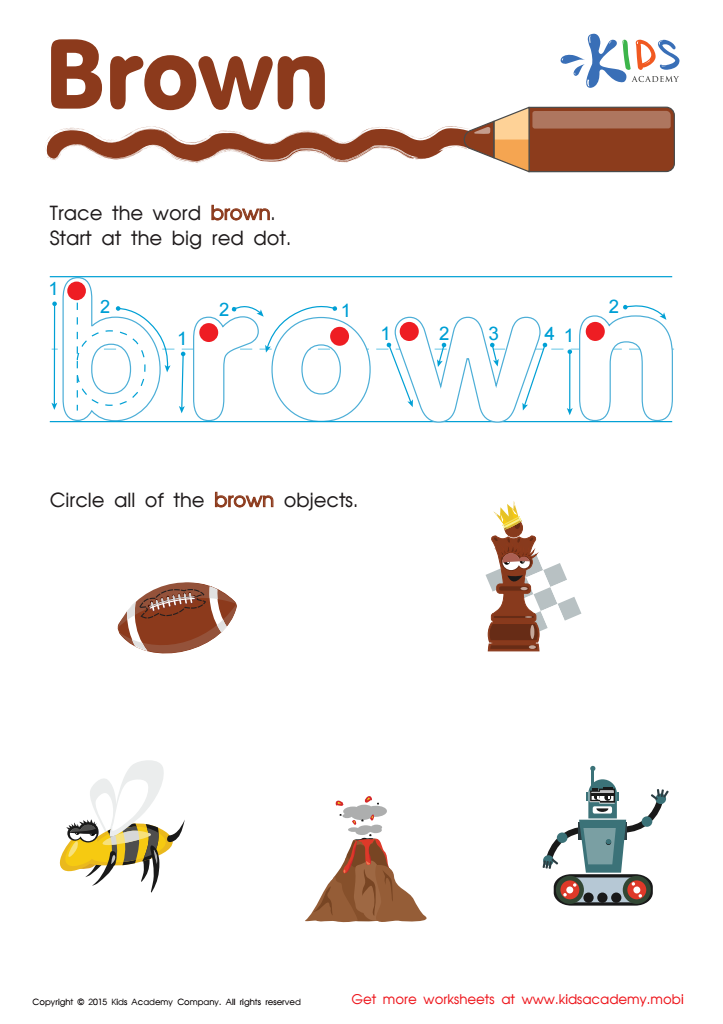
Brown Tracing Color Words Worksheet
This worksheet helps kids develop fine motor muscles and practice writing. Have them trace the word "brown" with a crayon, then find the brown objects in the picture. Ask them to look around and say what's brown in their room to make it more fun. Writing basics and a bit of fun - check out this free printable handwriting worksheet! For more tracing color words, check out here.
Brown Tracing Color Words Worksheet
Worksheet
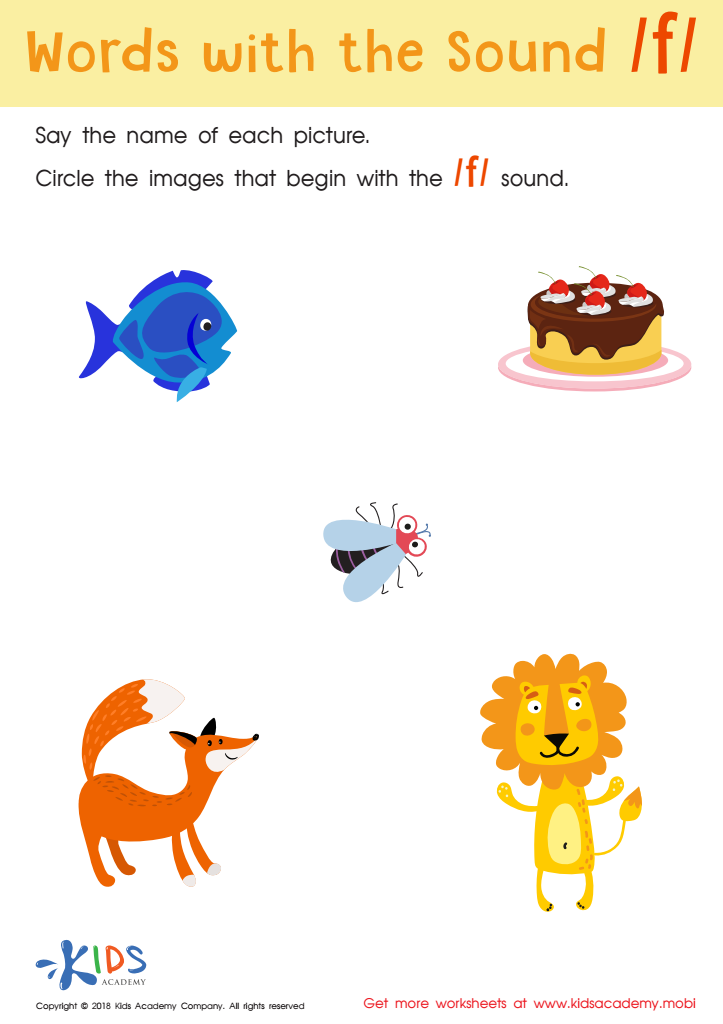
Words with sound f Reading Worksheet
This illustrated phonics worksheet is ideal for preschool or kindergarten. It helps boost learners' literacy skills with a focus on the letter "f". Ask your child to name all the pictures, listening for that sound. Examples are fish, fox, lion, bug. When they can identify which words start with "f", have them circle the images. Congratulate them on a job well done!
Words with sound f Reading Worksheet
Worksheet
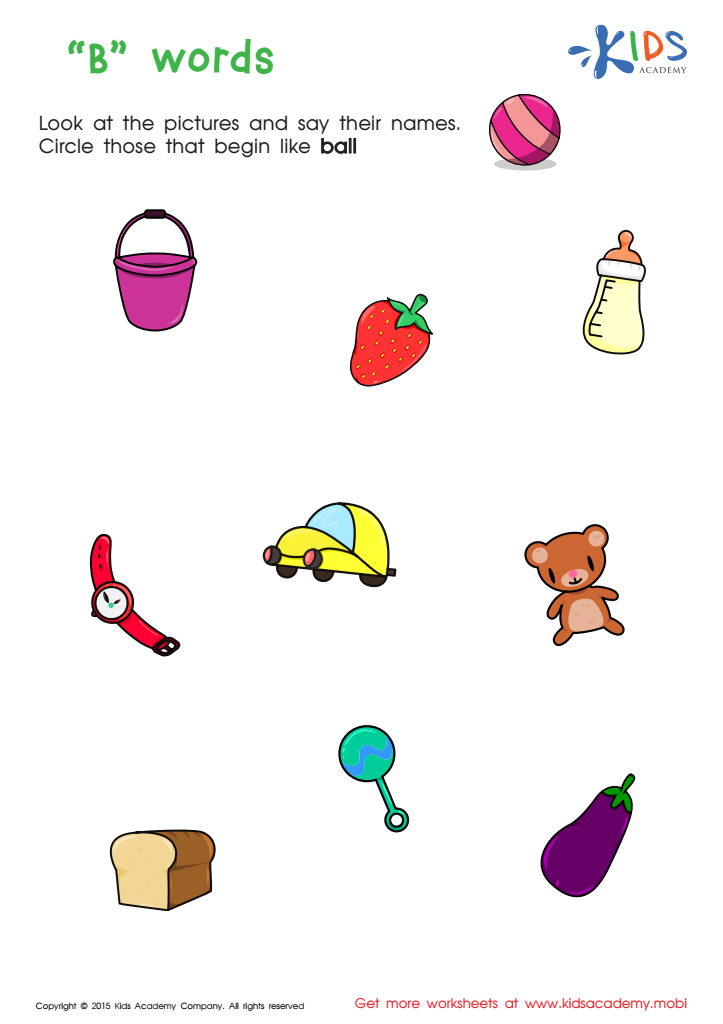
First Words Worksheet
Want to help your preschooler learn to read and write? Start with this 'B' words printable worksheet. It will help your child match pictures to the letters they know, sound out words, and build literacy. Once they understand the concept, they can start sounding out words and building reading skills.
First Words Worksheet
Worksheet
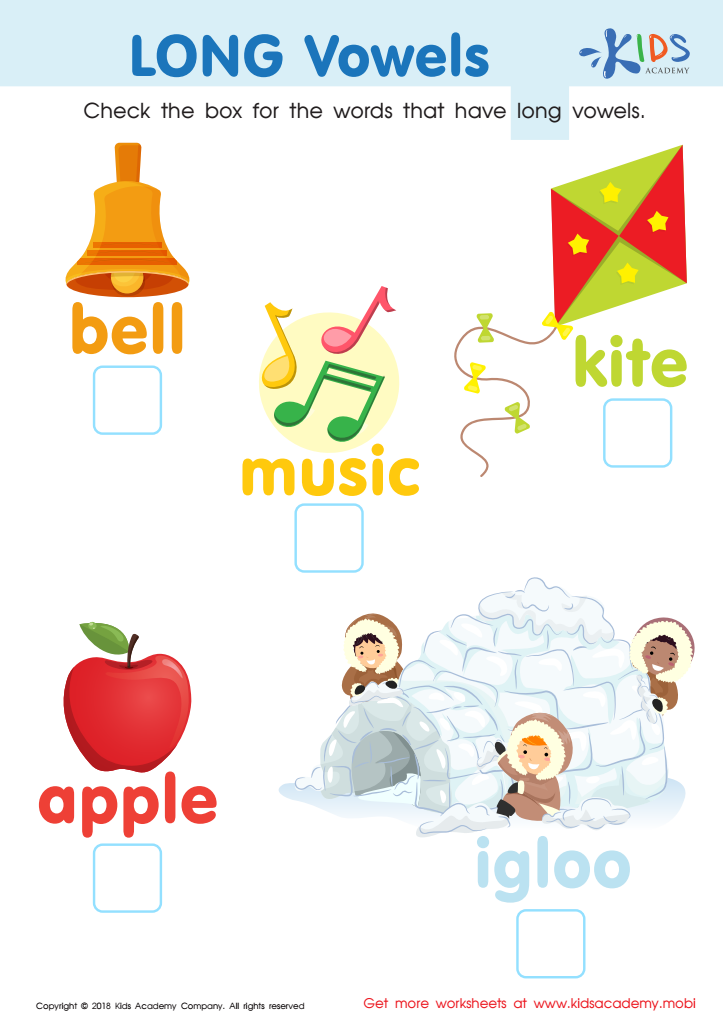
long vowels Worksheet
Have your early learner identify long vowels with this quick review. Ask them to name each picture aloud and listen out for the long vowel sounds to separate them from the shorter ones. Circle the ones that are long! Watch out for words with two vowels - they can be tricky!
long vowels Worksheet
Worksheet
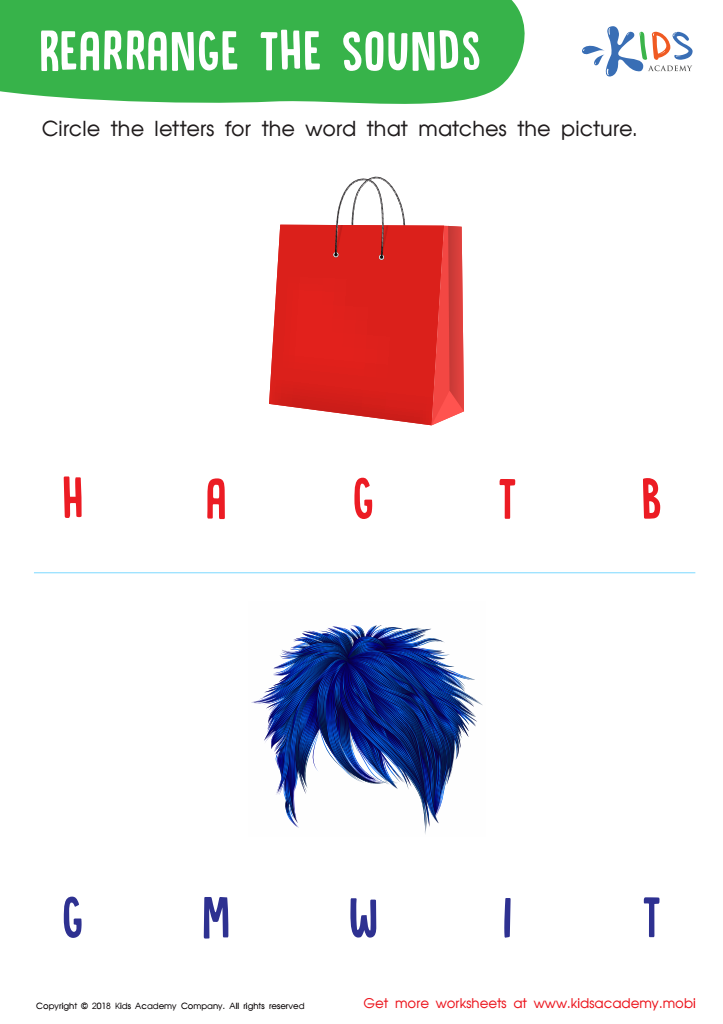
Rearrange the Sounds Worksheet
Ask students if they can identify the objects in the worksheet and spell the words. Guide them to find and circle the letters that match the picture. This exercise should be easy-peasy for advanced spellers.
Rearrange the Sounds Worksheet
Worksheet
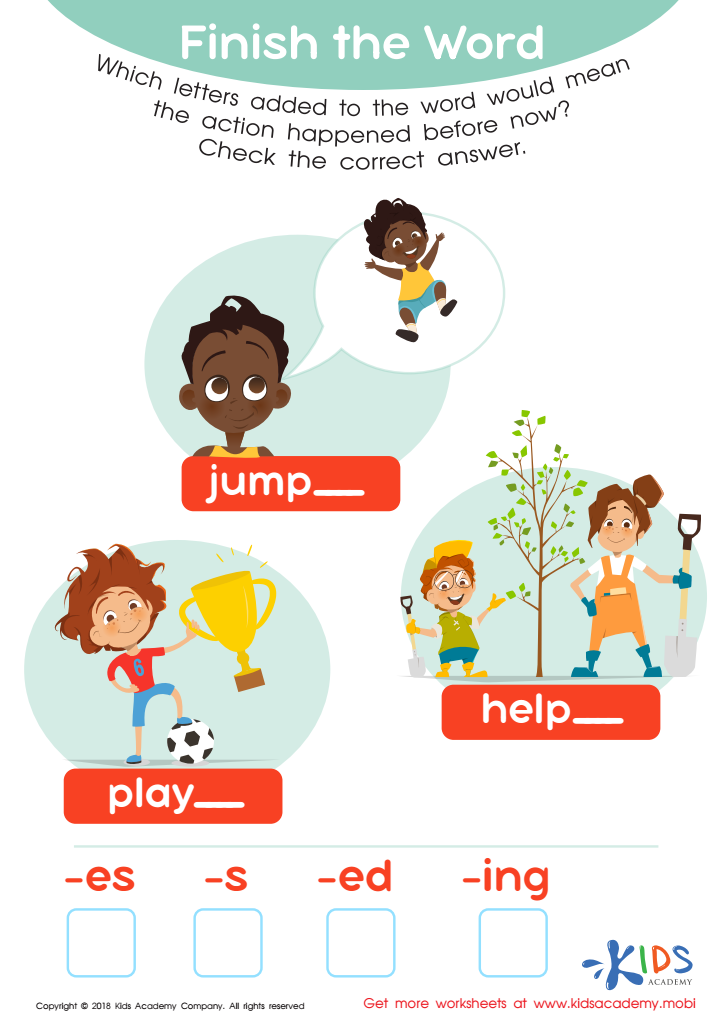
Finish the Word Worksheet
Does your kid know tenses? Listen to see if they are using words correctly. With this worksheet, your kids will learn to use the appropriate past tense forms. Ask them which letters added to words make the action past. Help them check the answers.
Finish the Word Worksheet
Worksheet
Join Kids Academy for Free
Who is primarily going to use this learning content?








Spelling skills are foundational for young learners aged 4 to 6, impacting their overall literacy and language development. During these formative years, children begin to make connections between sounds and letters, a critical step in learning to read and write effectively. Teaching spelling at this age helps children recognize patterns in words, enhancing their phonemic awareness—a skill that is vital for decoding words during reading.
Additionally, strong spelling skills boost children’s confidence in their communication abilities. As they learn to spell, they will feel more empowered to express their thoughts and ideas, setting the stage for partnerships in reading and writing later. Spelling practice can also facilitate vocabulary expansion, as children encounter new words, understand their meanings, and learn to incorporate them into their writing.
Furthermore, spelling activities can be enjoyable and engaging for young children, making learning a positive experience. Incorporating games, songs, and hands-on activities not only enhances their interest but also fosters a love for language. Overall, reinforcing spelling skills during ages 4-6 lays the groundwork for a successful educational journey, promoting literacy and communication skills essential for academic achievement and lifelong learning. Parents and teachers play a critical role in nurturing these skills, ensuring children build a solid foundation for future learning.








