Visual Learning Adding Up to 5 Worksheets for Ages 4-6
84 filtered results
-
From - To
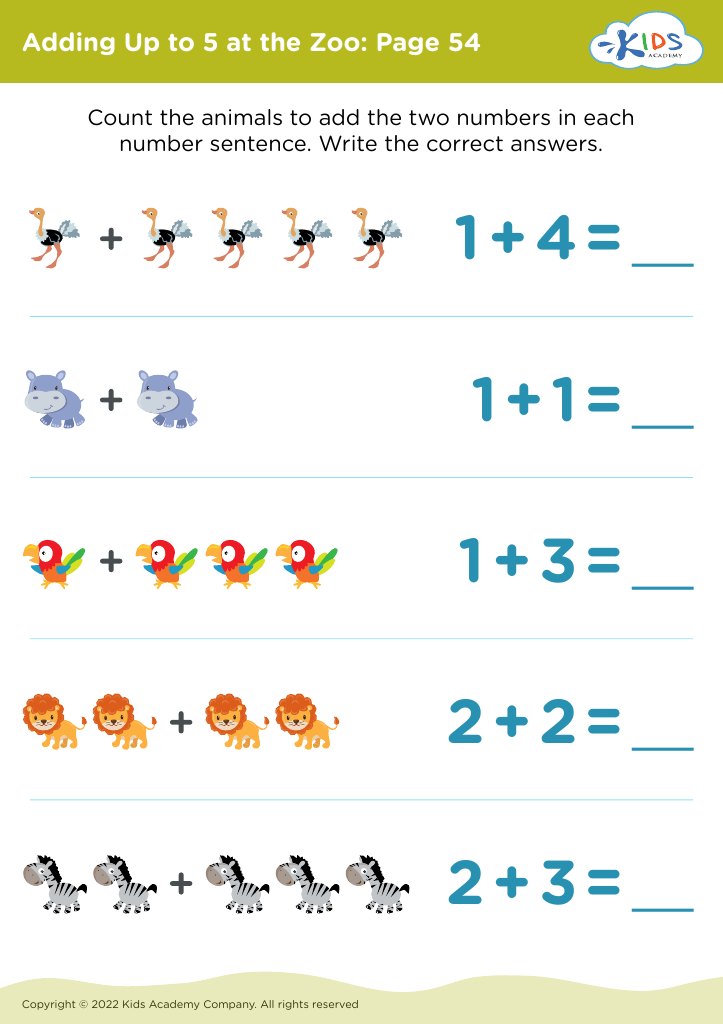
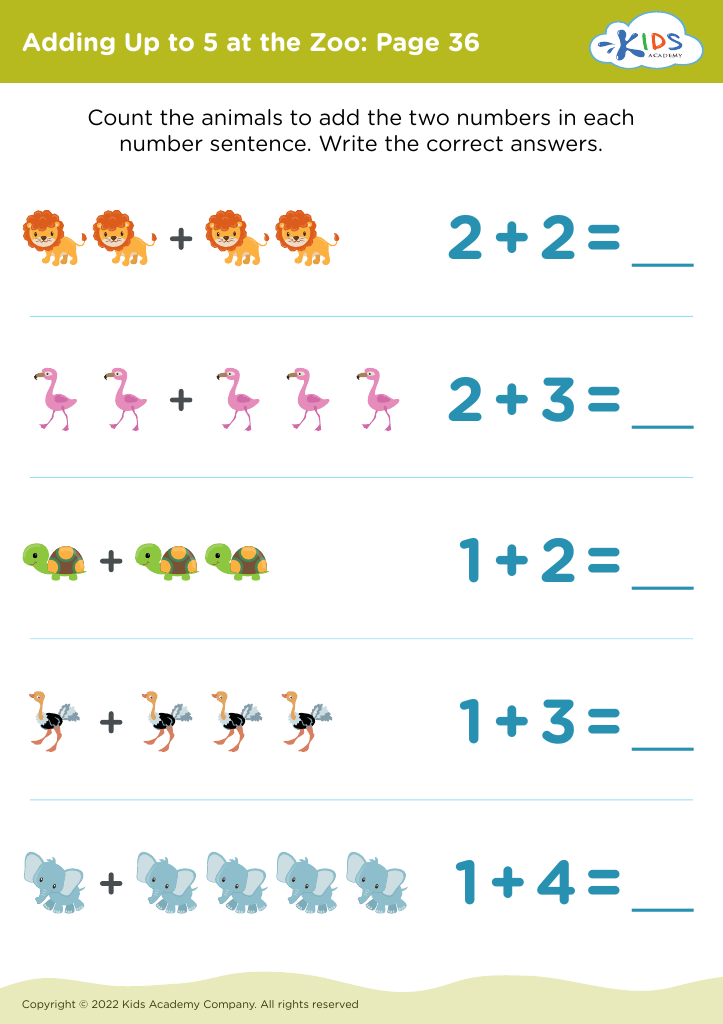
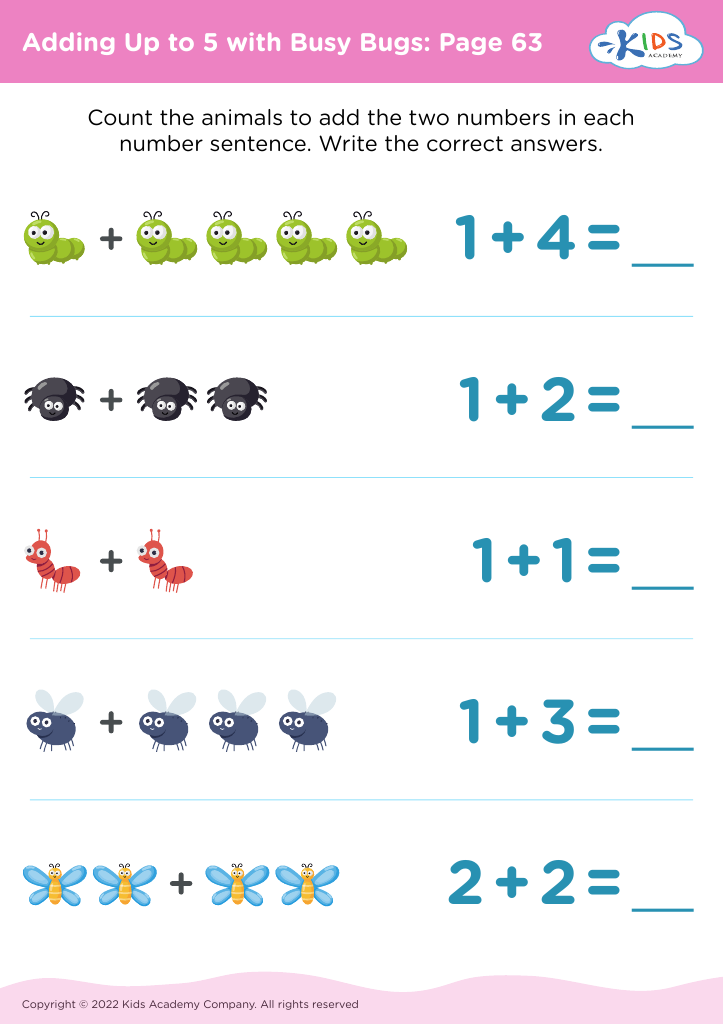
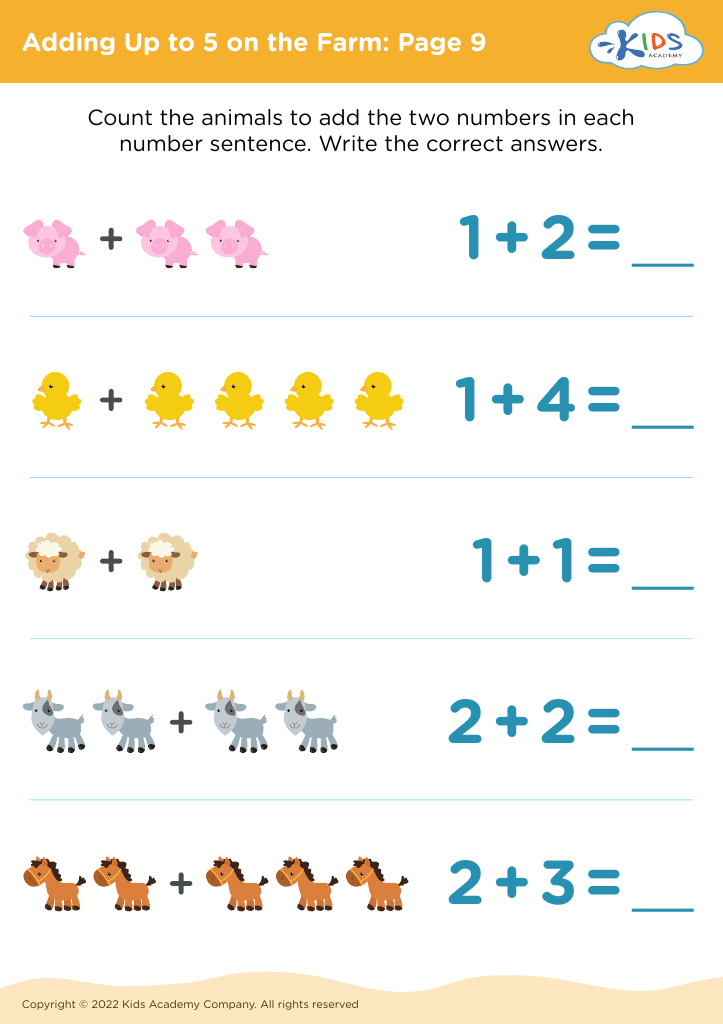
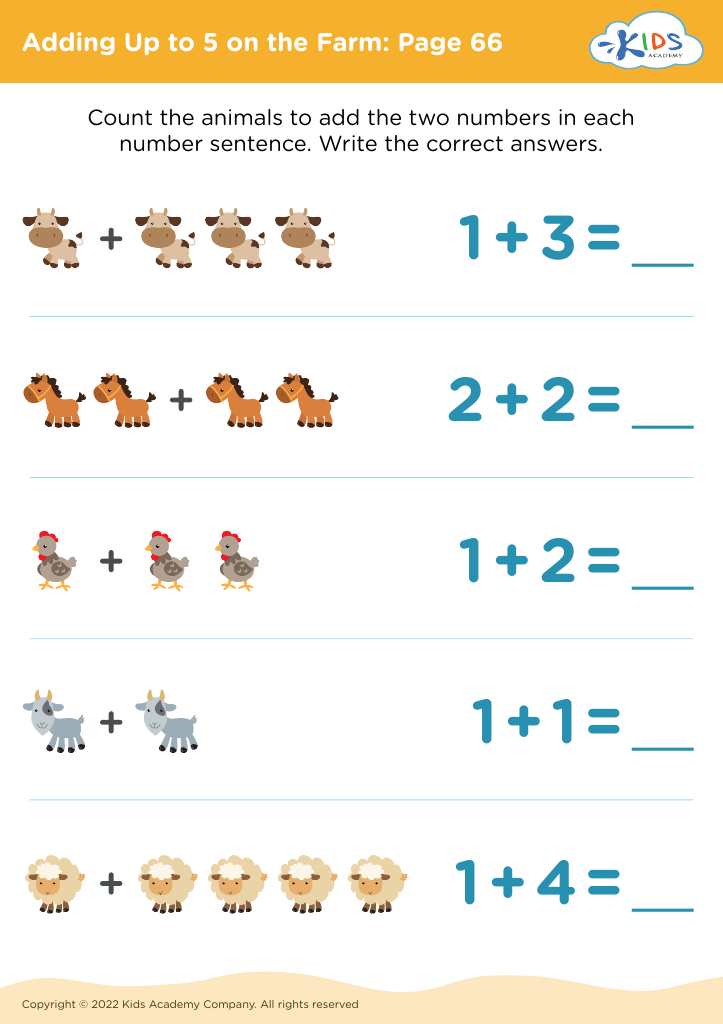
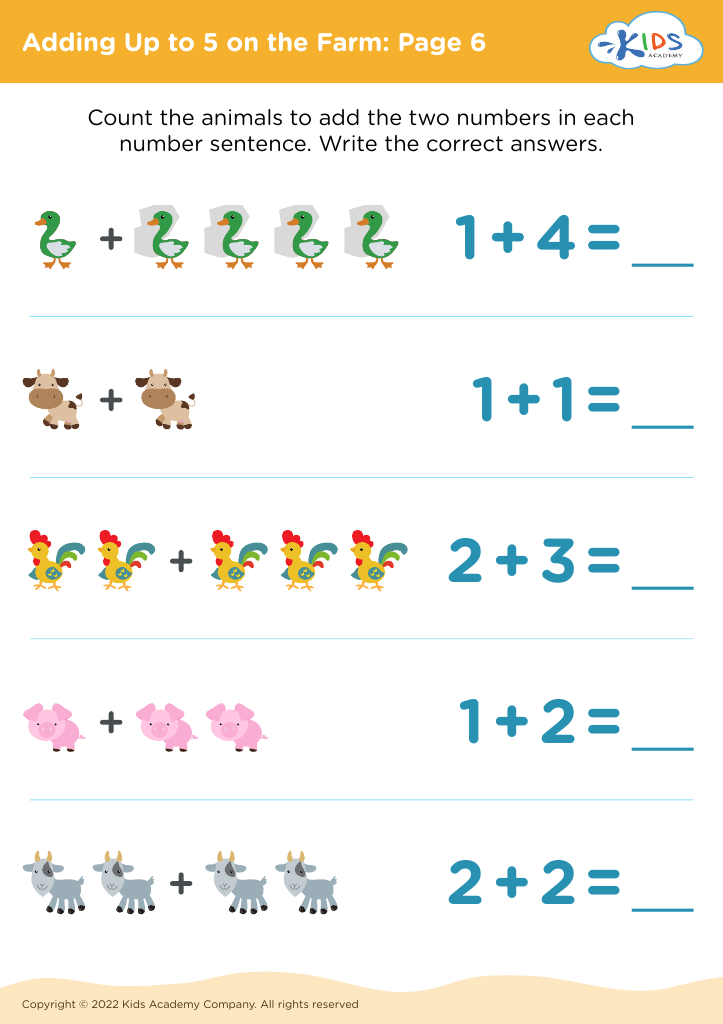
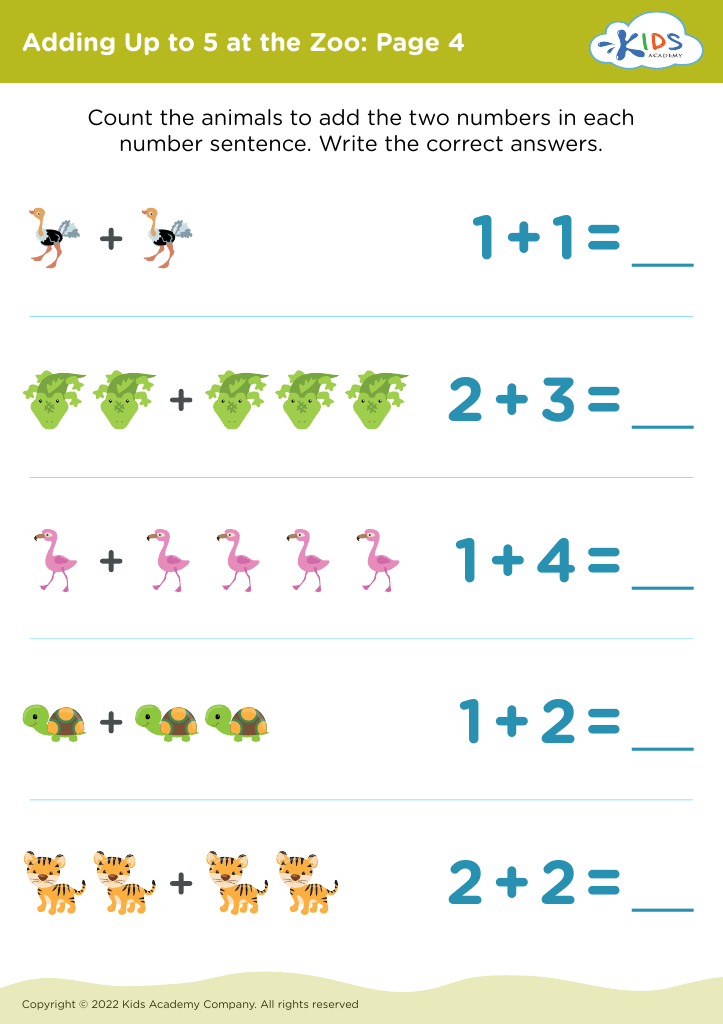
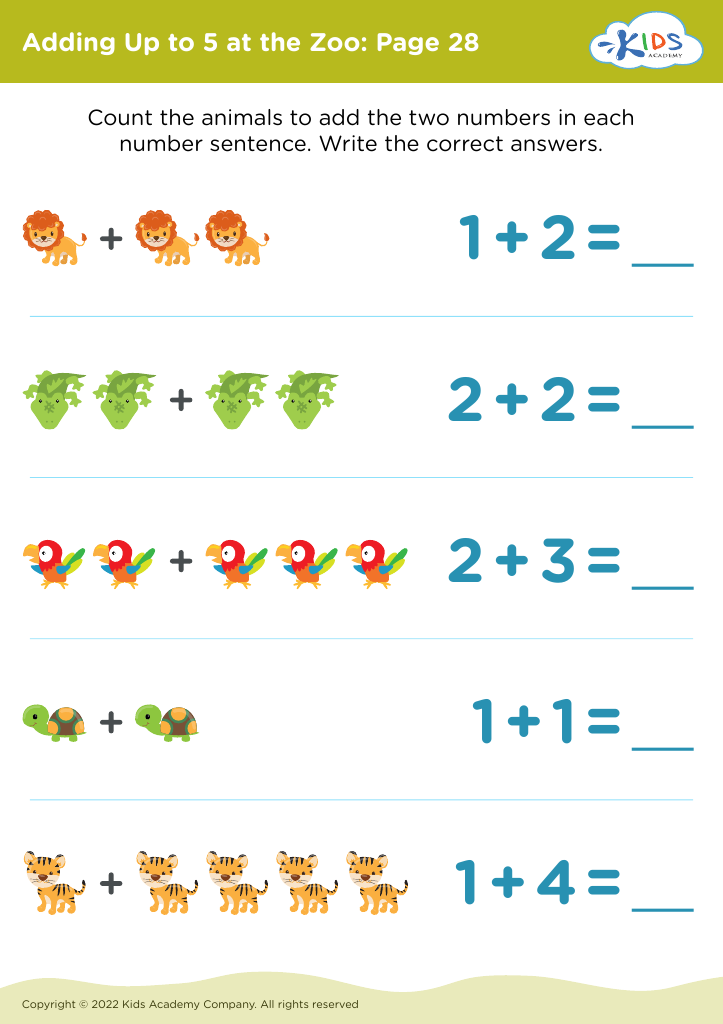
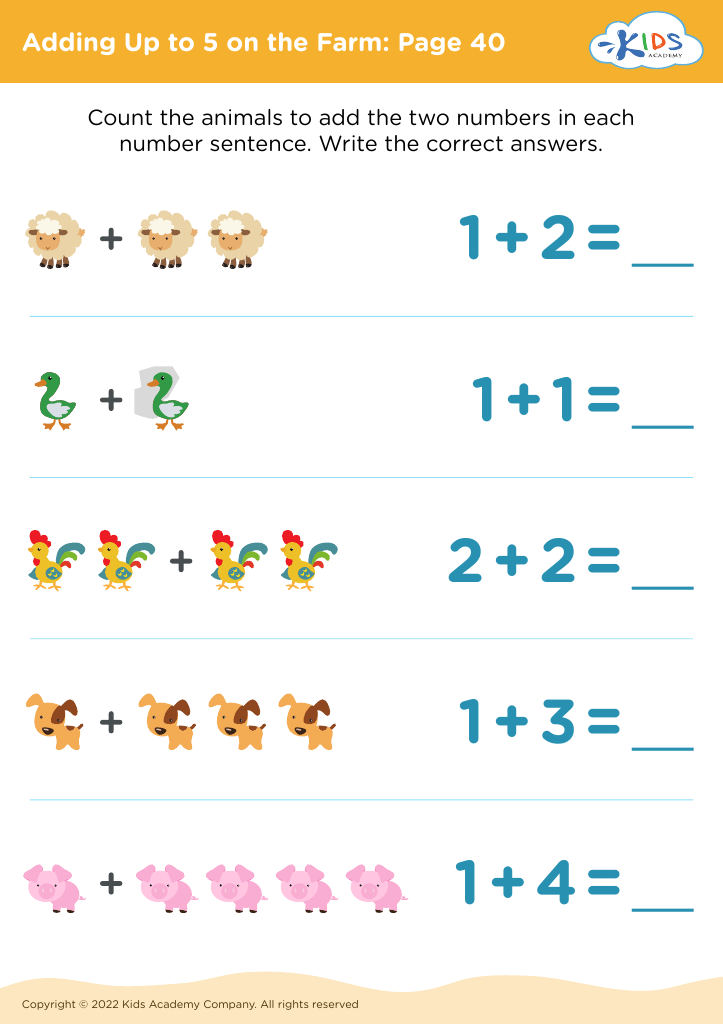
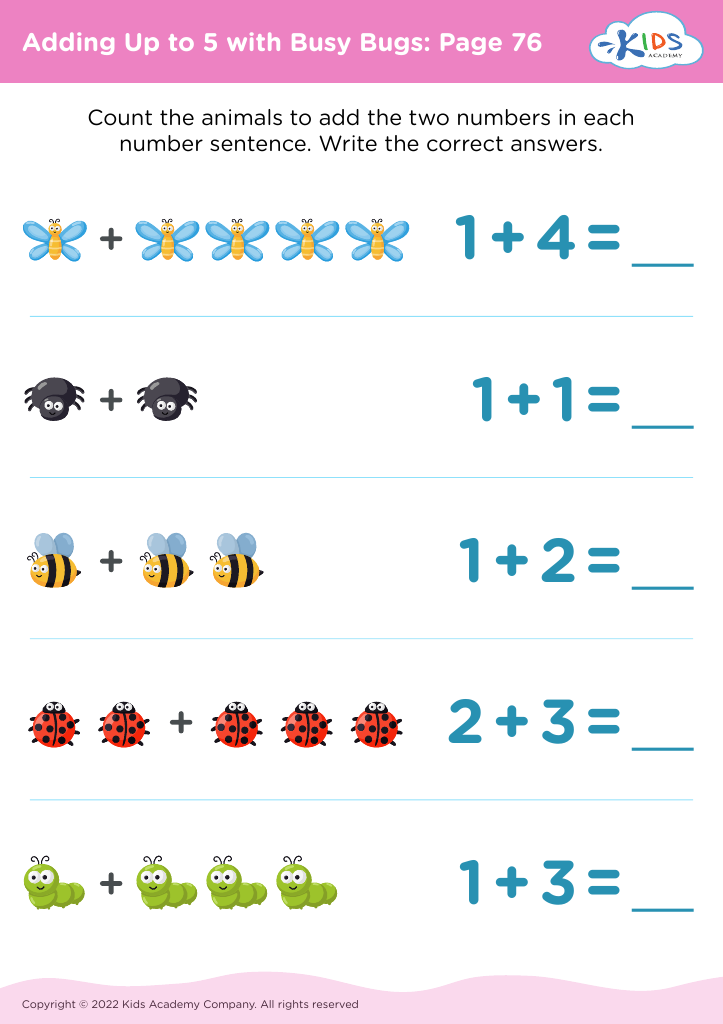
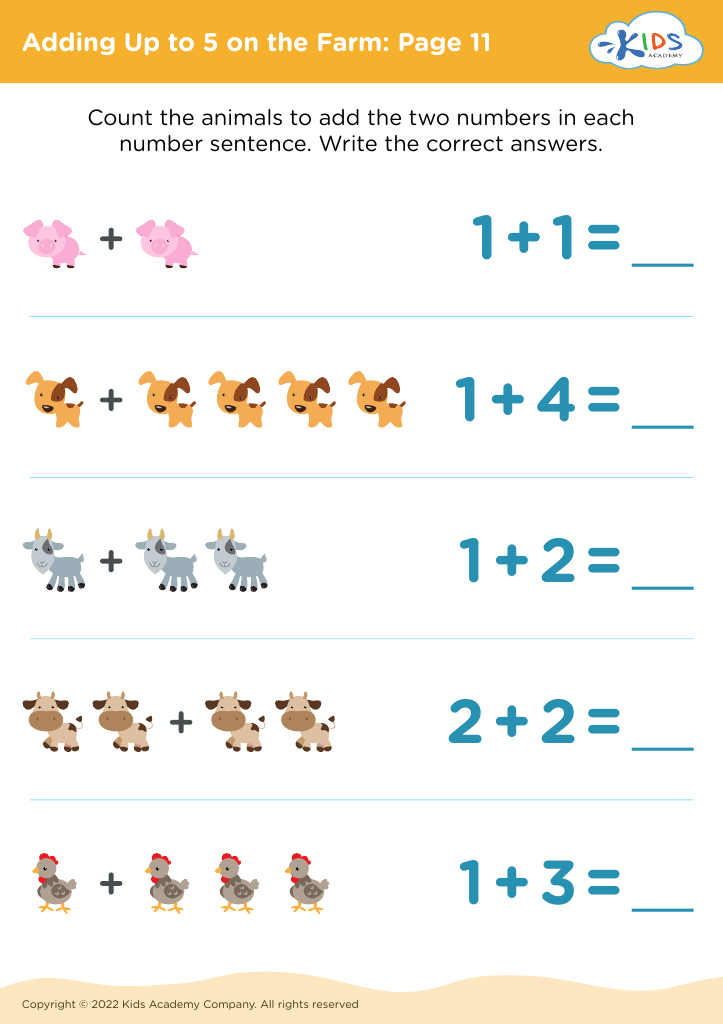
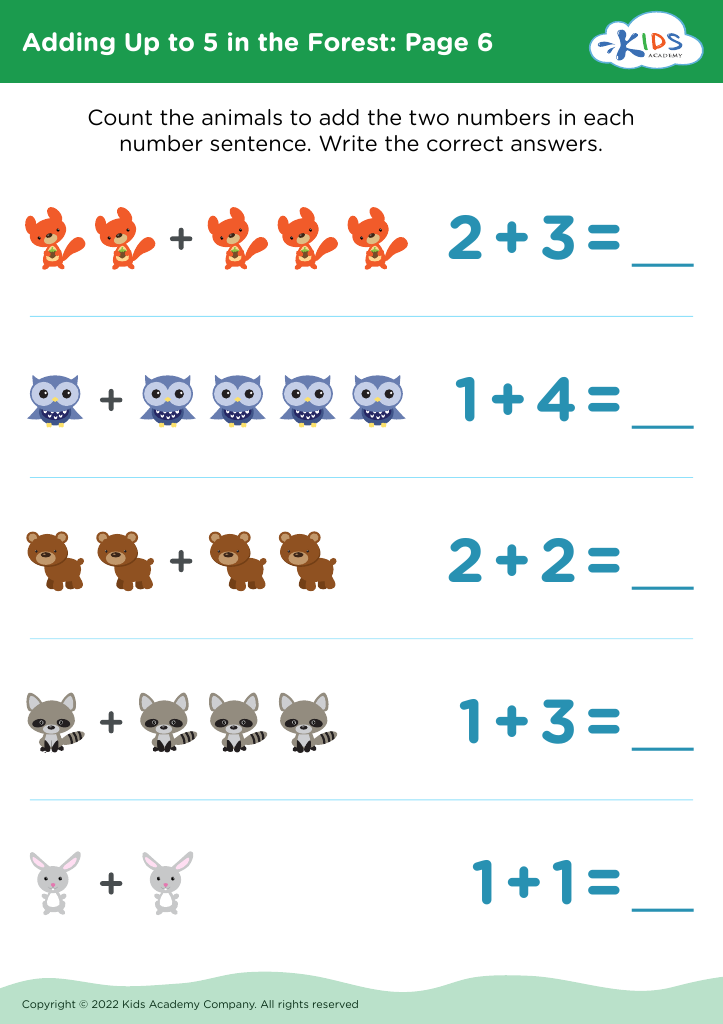
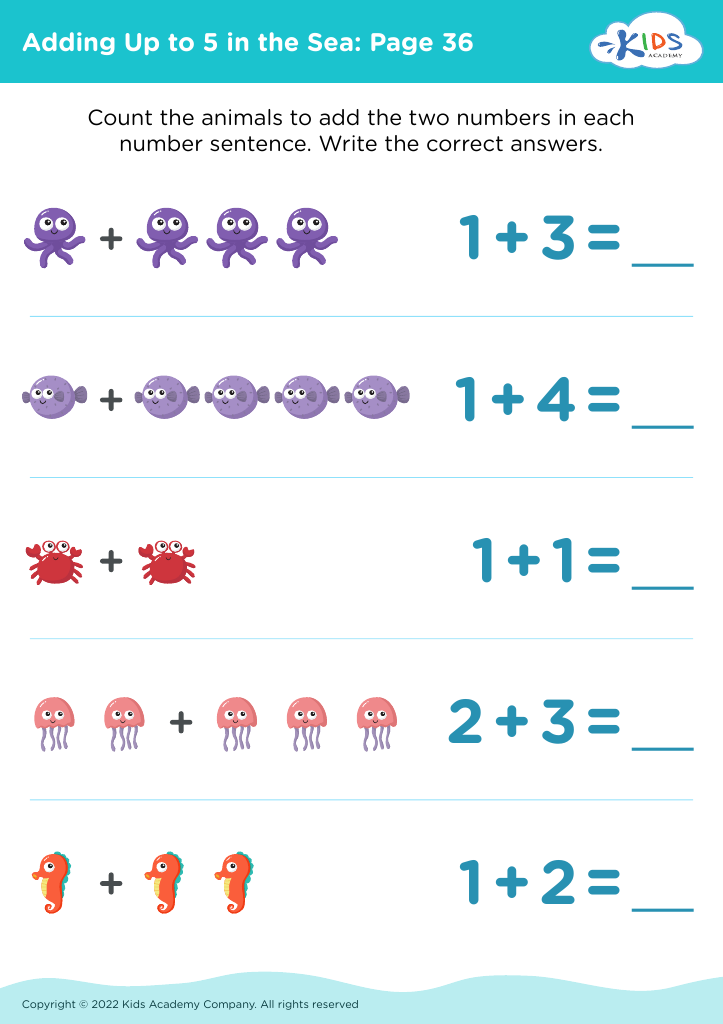
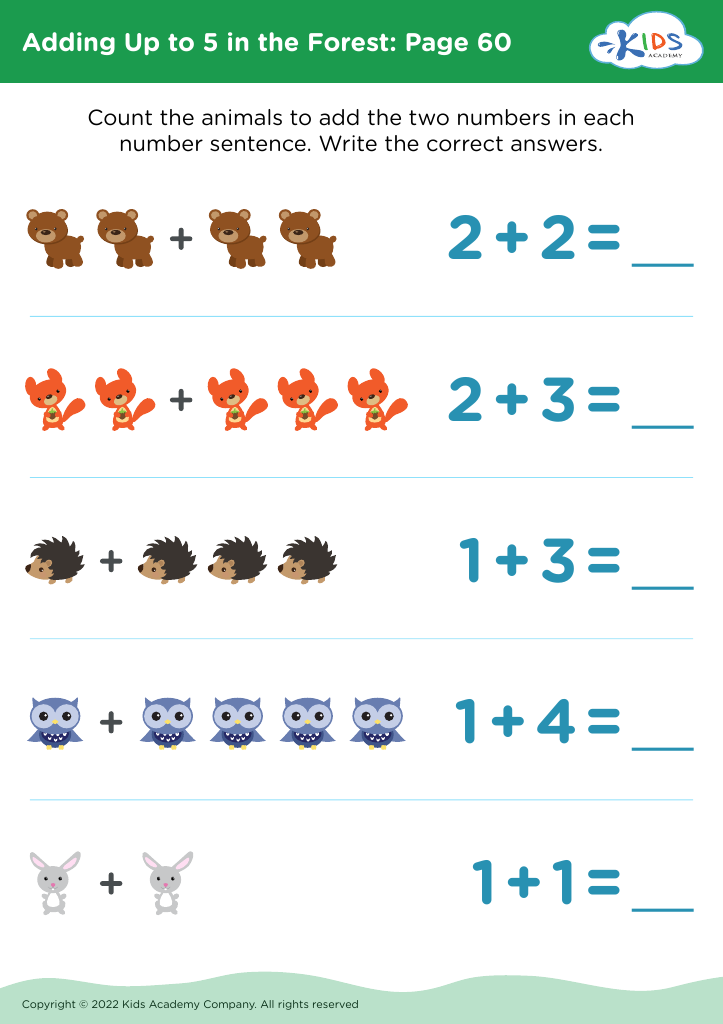
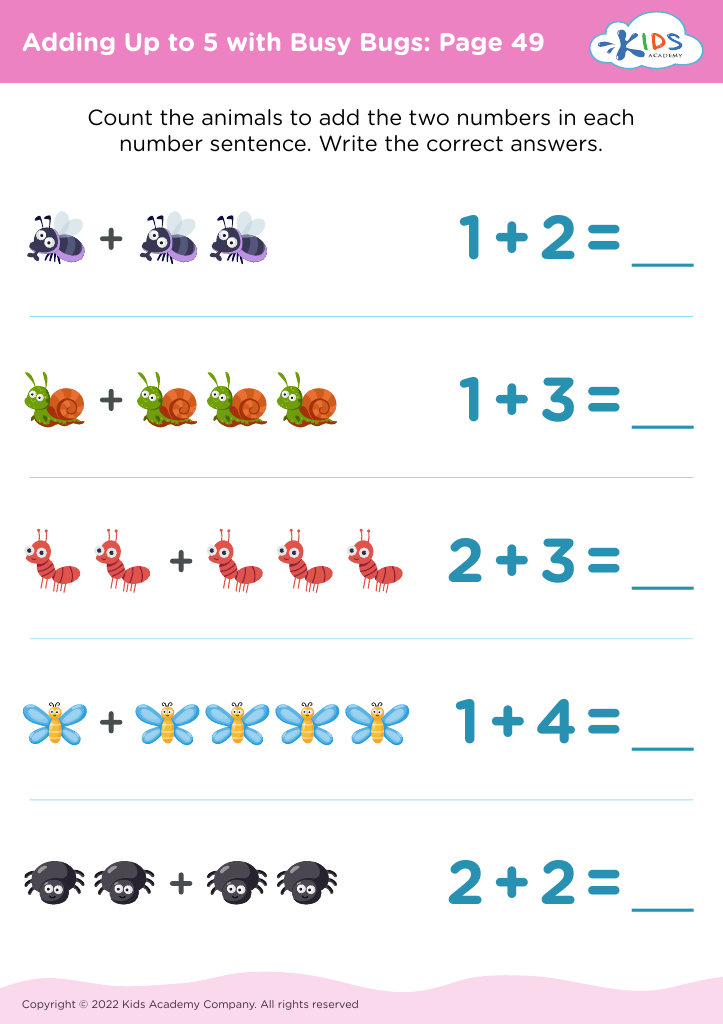
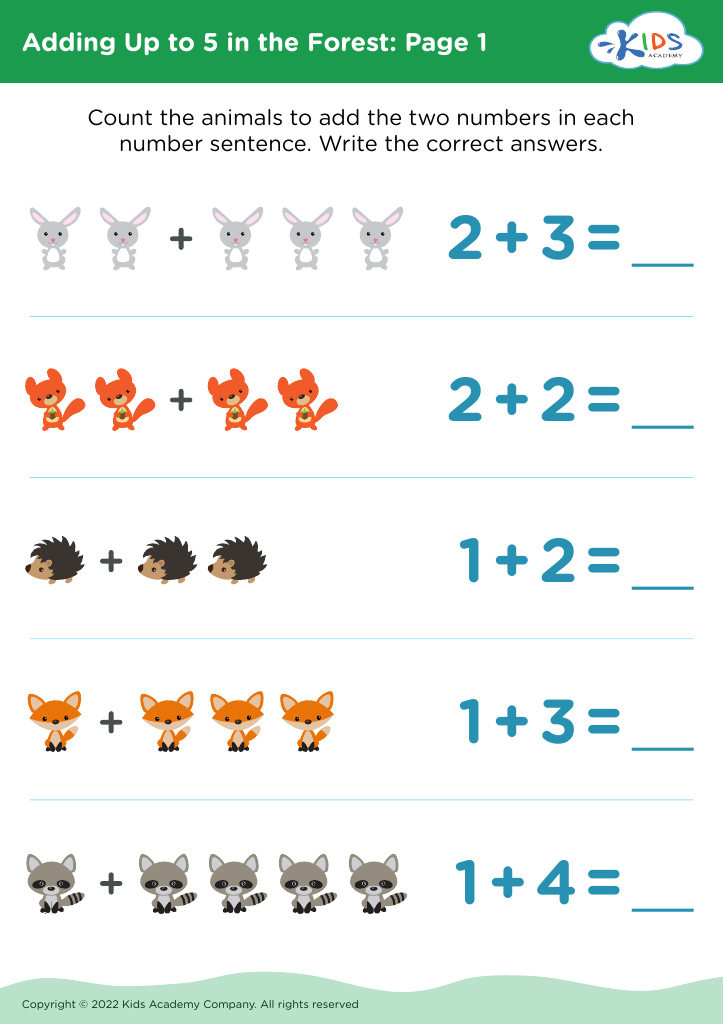
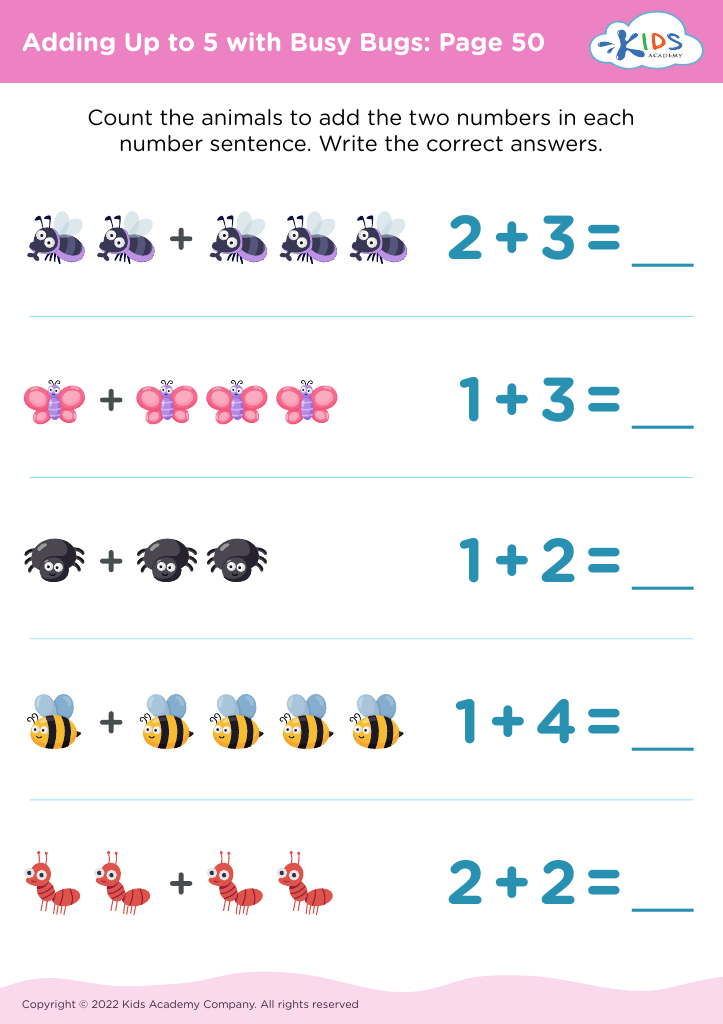
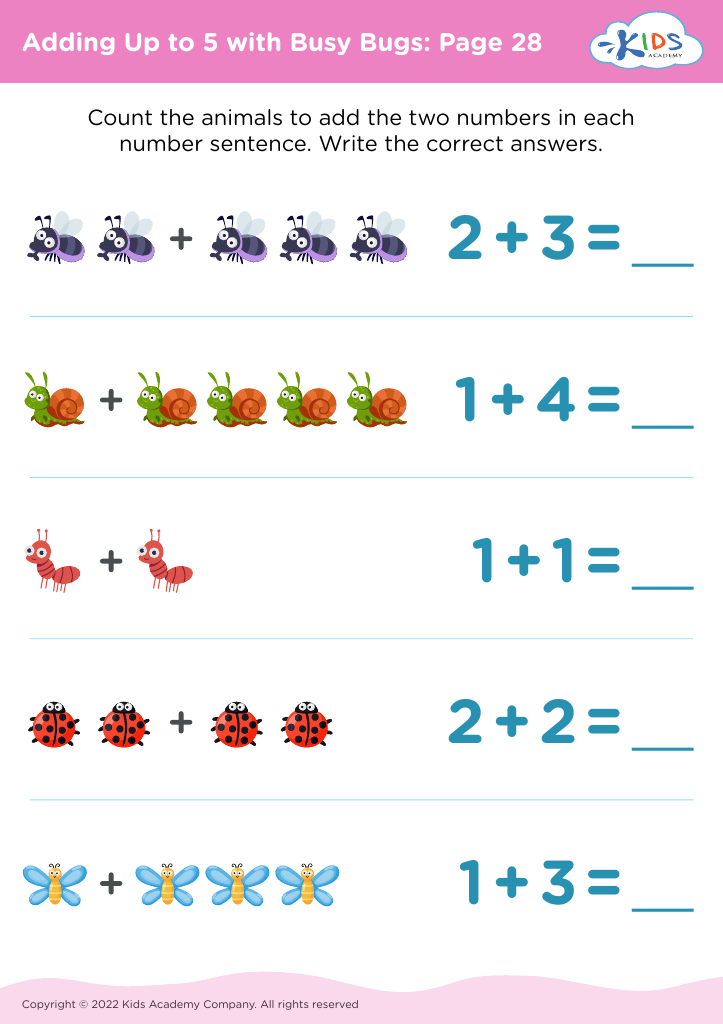
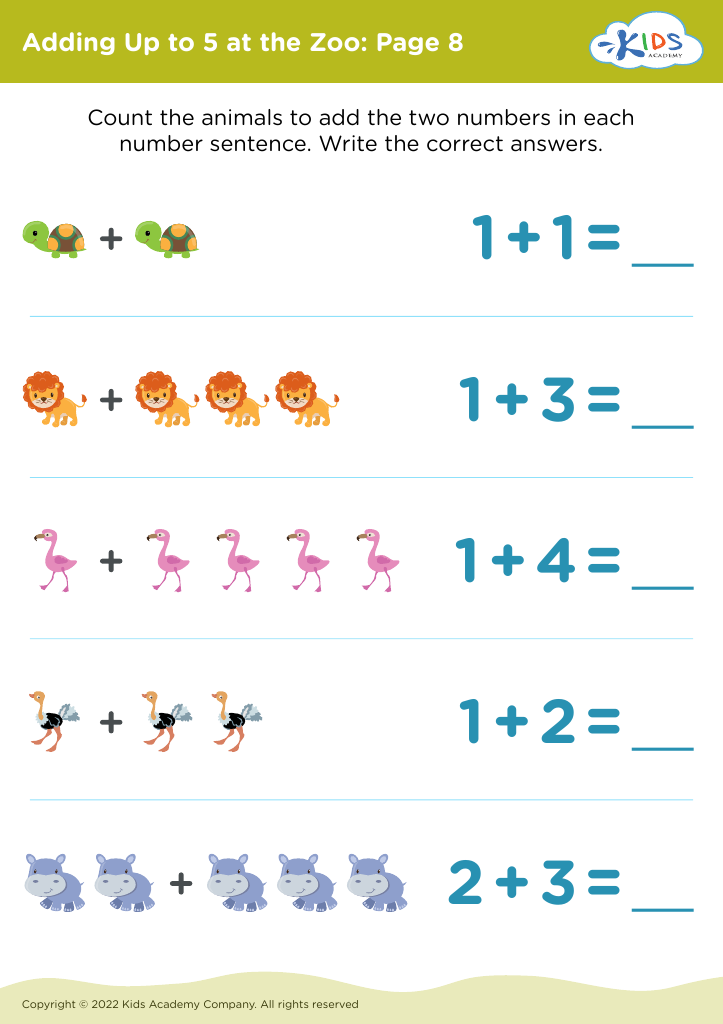
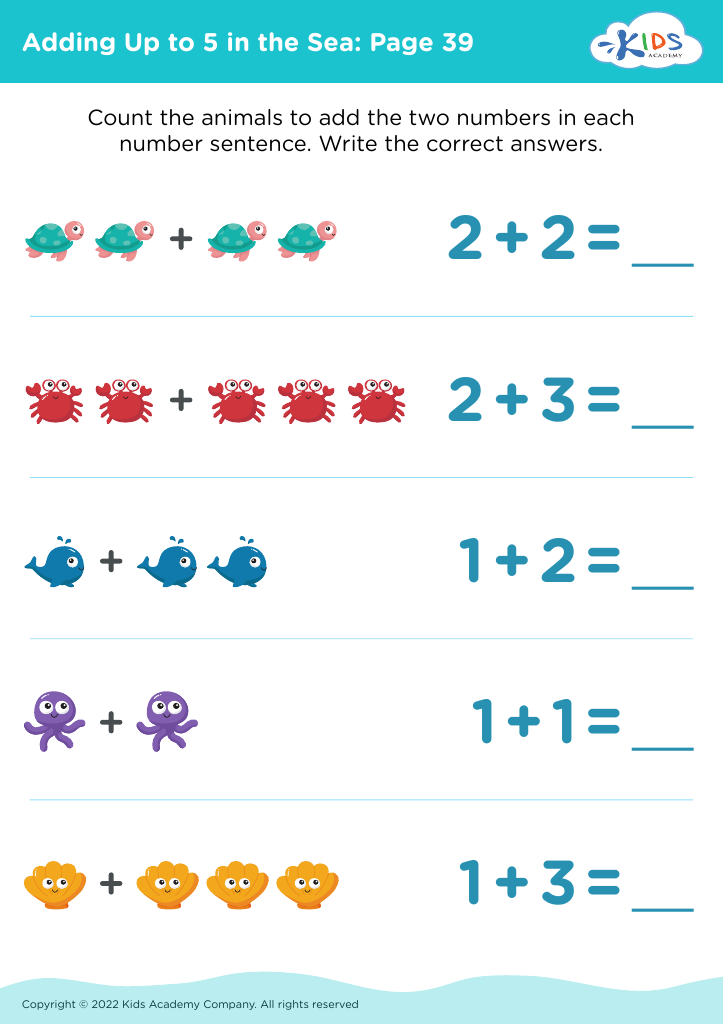
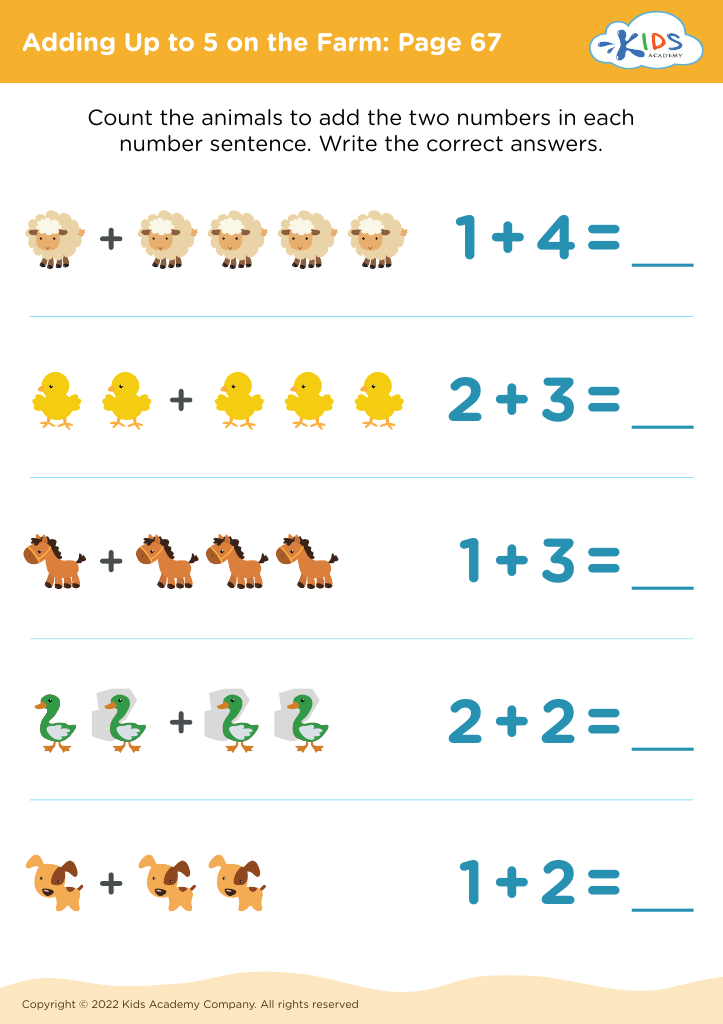
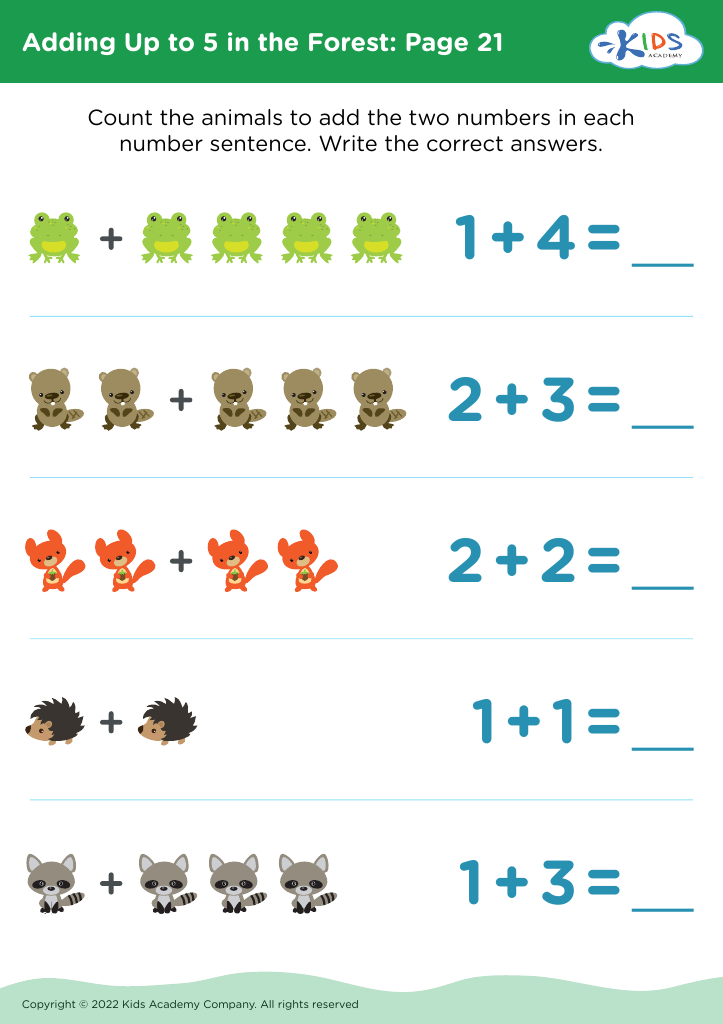
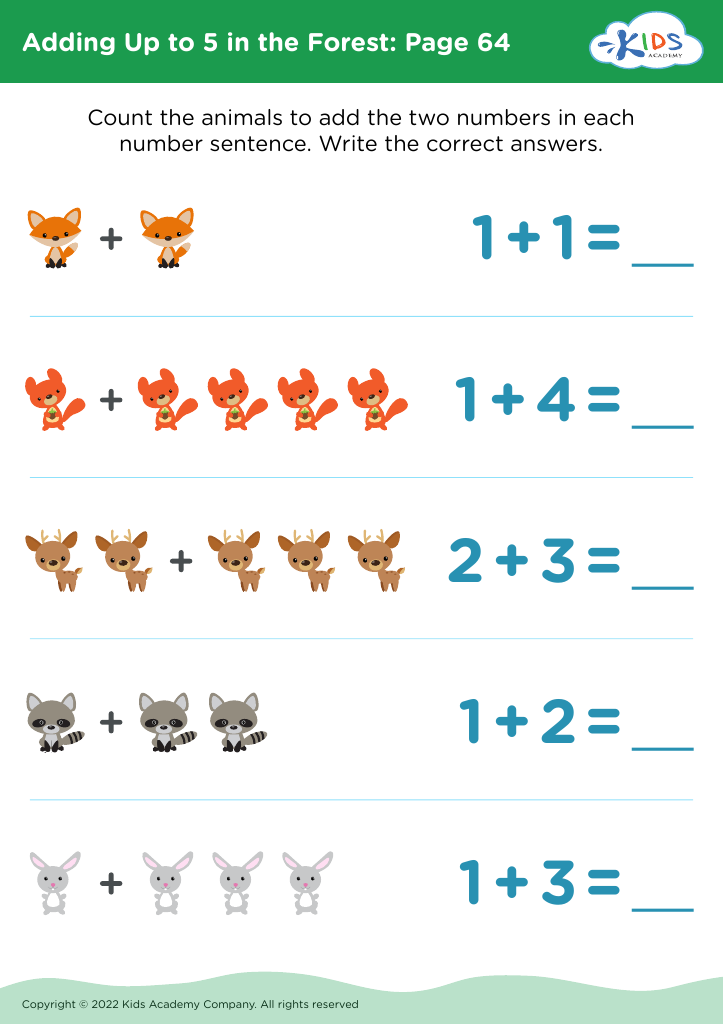
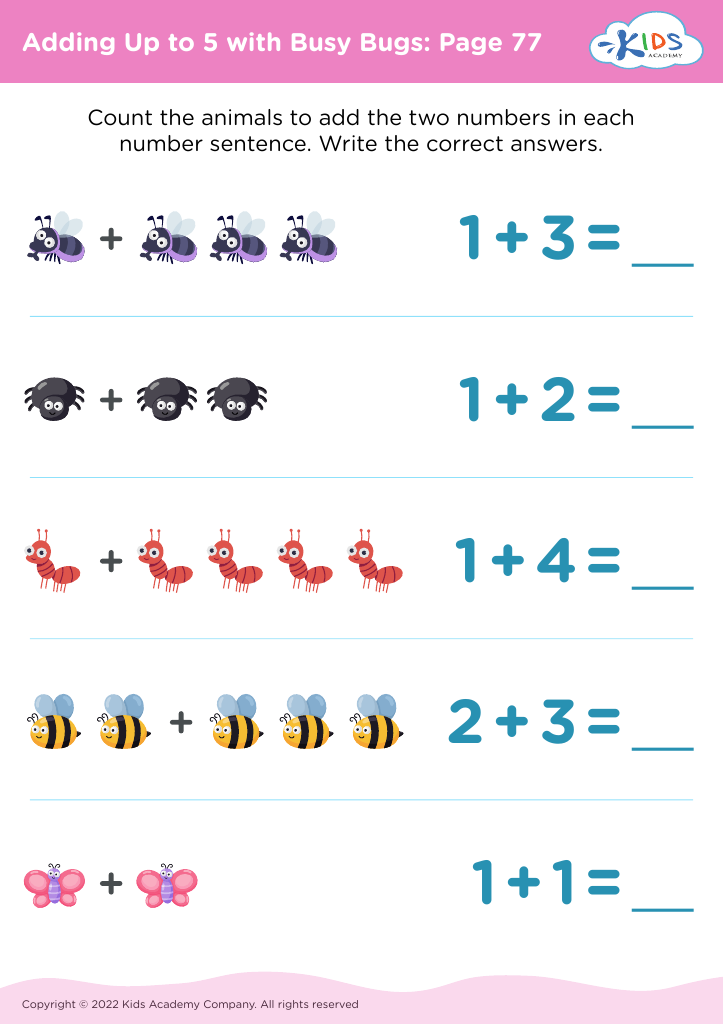
Introducing our Visual Learning Adding Up to 5 Worksheets for Ages 4-6, designed to make early math skills engaging and effective. Perfect for young learners, these printable worksheets employ vibrant imagery and interactive activities to help children grasp basic addition facts up to 5. By leveraging visual learning techniques, our materials create an inviting environment where kids can practice math fundamentals while having fun. Ideal for both classroom and at-home use, these worksheets promote confidence, enhance problem-solving skills, and lay a strong foundation for future math success. Encourage your little ones to embrace math with enthusiasm and confidence!



%20(1).jpg)
.jpg)



Visual learning is a powerful tool for children aged 4-6, especially when learning foundational math skills, such as adding up to 5. At this developmental stage, children’s brains are highly receptive to visual stimuli, which makes using visual aids an effective way to enhance their understanding and retention.
When children see representations of numbers through pictures, objects, or diagrams, it helps them grasp abstract concepts in a concrete manner. For example, visual aids like counting blocks, number lines, and illustrated addition problems can turn numerical symbols into relatable, countable items. This is crucial because young learners often find it easier to understand the idea of "adding" when they can visualize combining groups of items.
Moreover, visual learning supports the development of critical thinking and problem-solving skills. By repeatedly viewing and manipulating visual representations of addition, children start recognizing patterns and relationships between numbers, laying down a solid mathematical foundation.
Parents and teachers should care about visual learning aids because they cater to different learning styles and can address various learning needs, ensuring that all children gain a basic understanding of addition. This encourages a positive attitude towards math, reducing anxiety and fostering an environment where children feel confident in their abilities to solve mathematical problems. Simply put, using visual learning to teach addition sets children on a successful path in their math education journey.








