Comparing Fractions Addition & Subtraction Worksheets for Ages 4-6
4 filtered results
-
From - To
Discover our fun and engaging Comparing Fractions Addition and Subtraction Worksheets specifically designed for children ages 4-6! These interactive worksheets provide a seamless way for young learners to explore basic fraction concepts through addition and subtraction. With vibrant illustrations and age-appropriate challenges, kids will develop their fraction skills while having a great time. Each worksheet focuses on comparing different fractions, enhancing their understanding and boosting their confidence in math. Ideal for classroom activities or at-home learning, these resources support early math development. Start your child’s mathematical journey today and see them thrive with our comprehensive collection of worksheets!
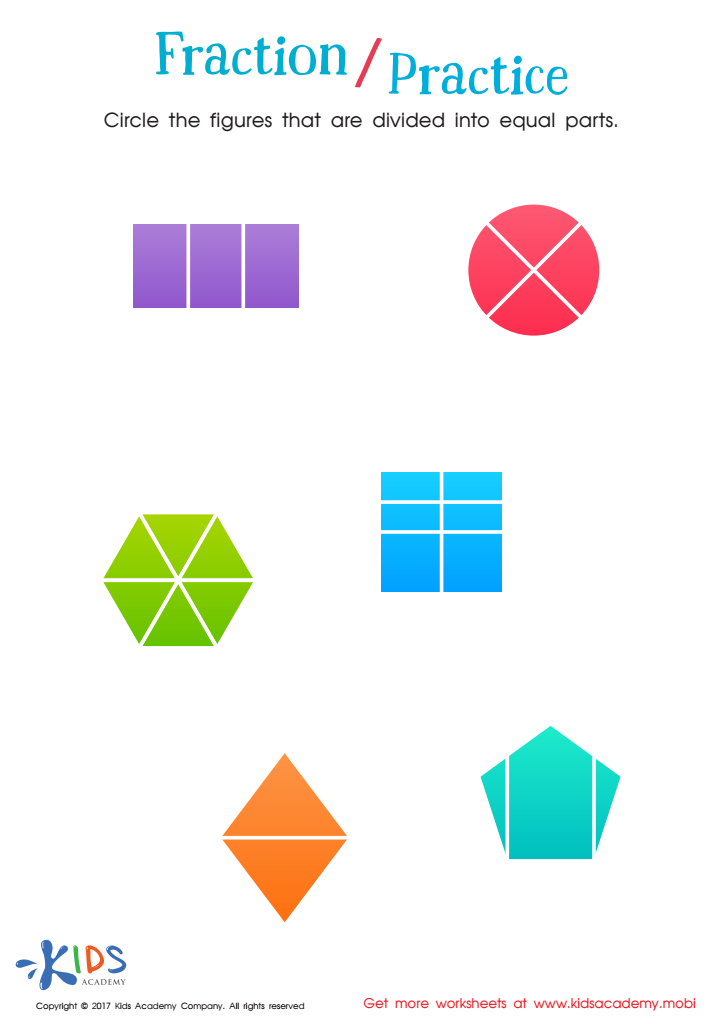
Fractions: Shapes Worksheet
 Assign to My Students
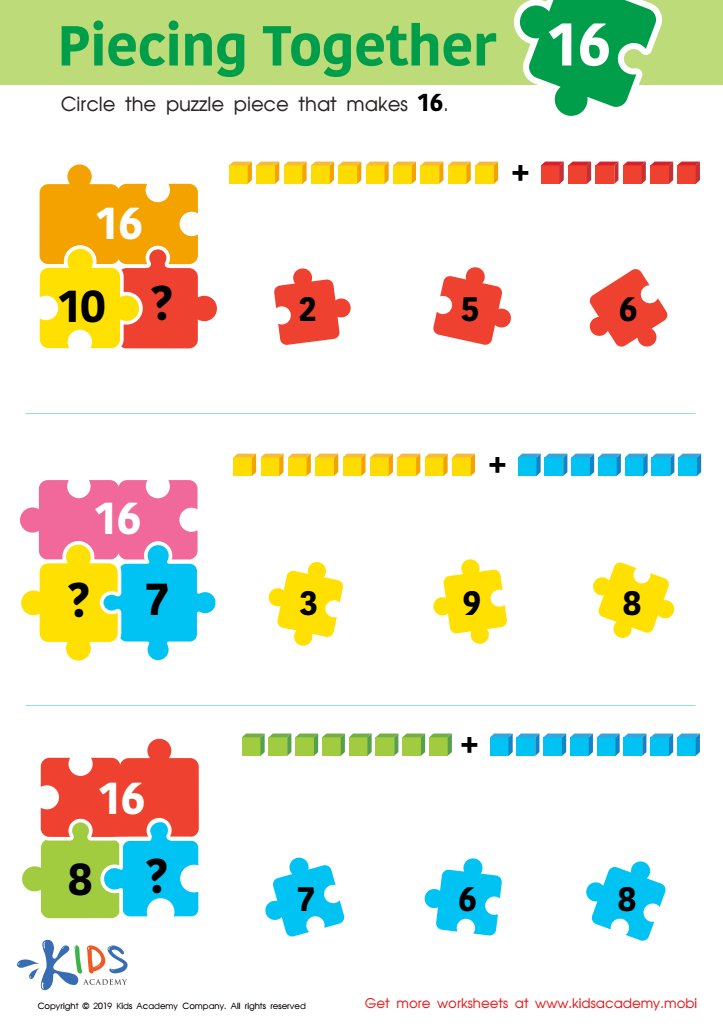
Piecing Together 16 Worksheet
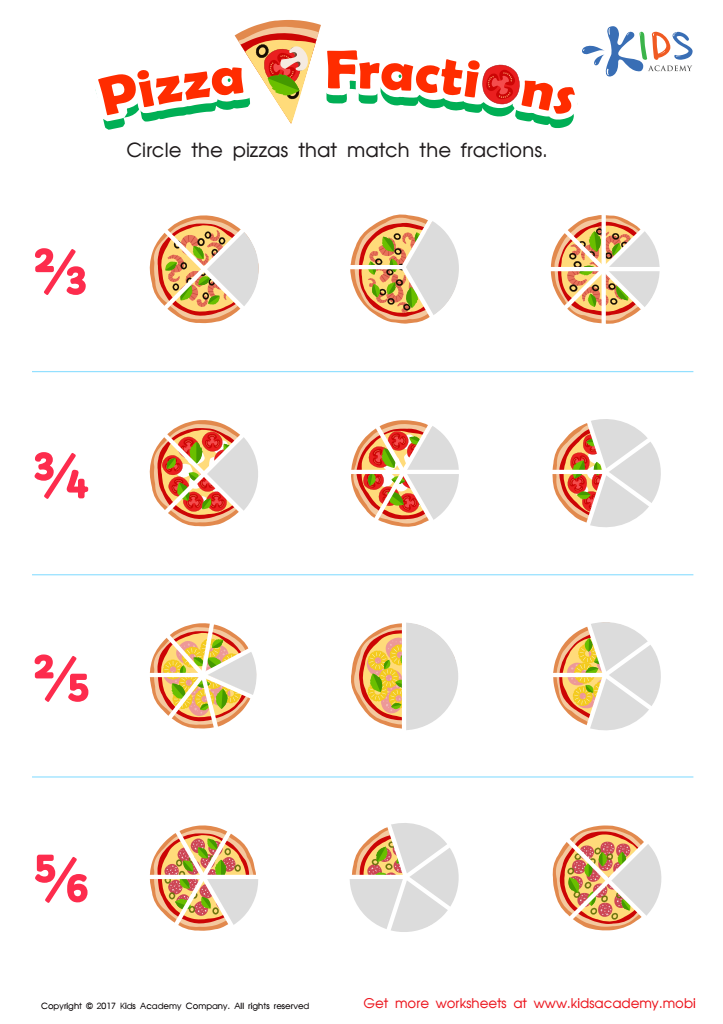
Fractions: Pizza Printable
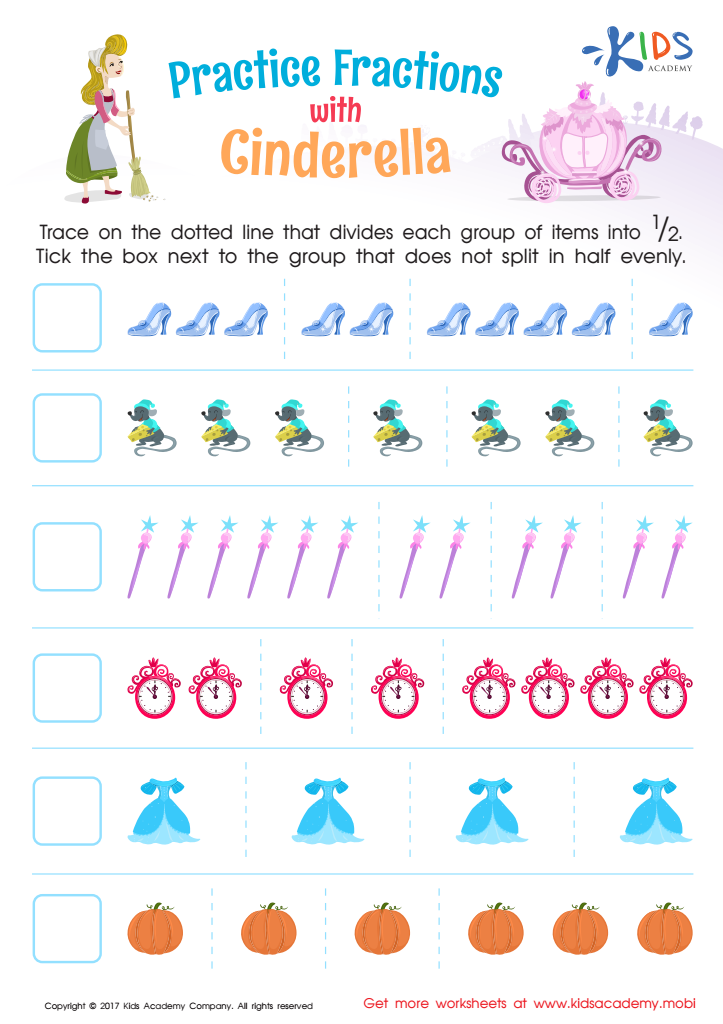
Fractions: Cinderella Printable








Understanding and comparing fractions in addition and subtraction is an important foundational skill that sets the stage for future mathematical concepts. For children ages 4-6, learning about fractions enhances their number sense and reasoning abilities. At this age, they are beginning to grasp basic mathematical concepts, and introducing fractions introduces them to the ideas of quantity and division, essential in various real-world situations.
Parents and teachers should care about this because these early experiences with fractions help develop critical thinking skills. Recognizing that a whole can be divided into parts assists children in understanding sharing and distributing, which are vital social skills. Furthermore, using visual aids, such as pie charts or fraction bars during play-based learning, can create engaging learning opportunities that foster curiosity and creativity.
Additionally, combining fractions with addition and subtraction introduces the concept of combining parts to form a whole, a fundamental arithmetic principle. Children become better problem solvers by exploring these ideas in a hands-on context. As they advance in math, a solid grasp of fractions paves the way for understanding more complex topics like decimals, ratios, and beyond. Thus, addressing these concepts early on enhances overall mathematical literacy and confidence.








