Counting proficiency Addition Worksheets for Ages 4-6
11 filtered results
-
From - To
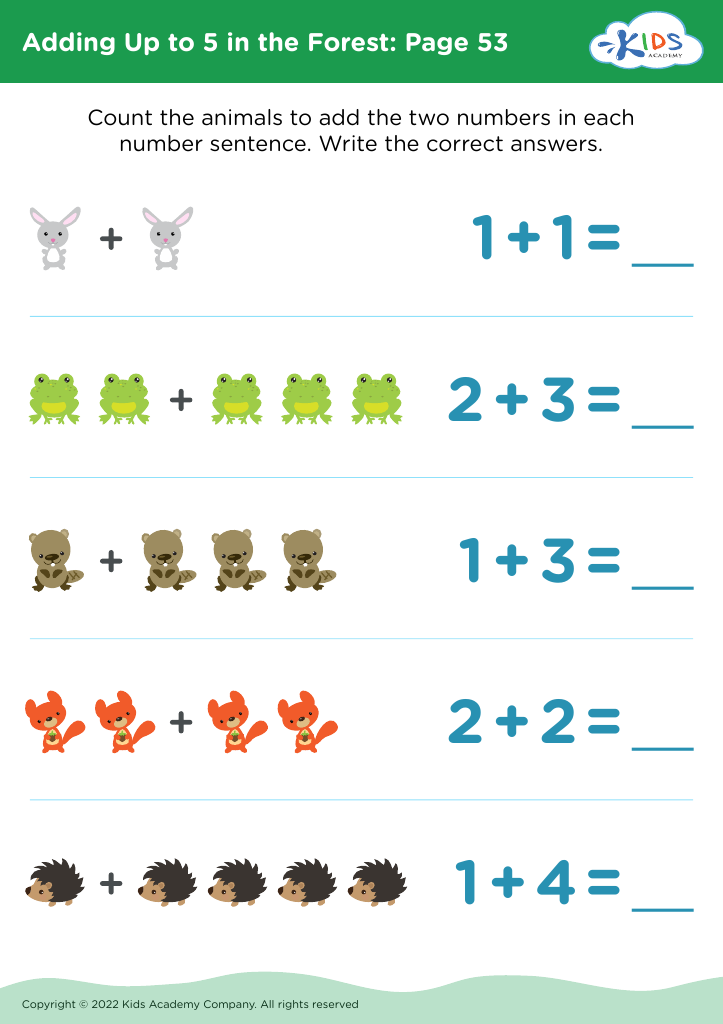
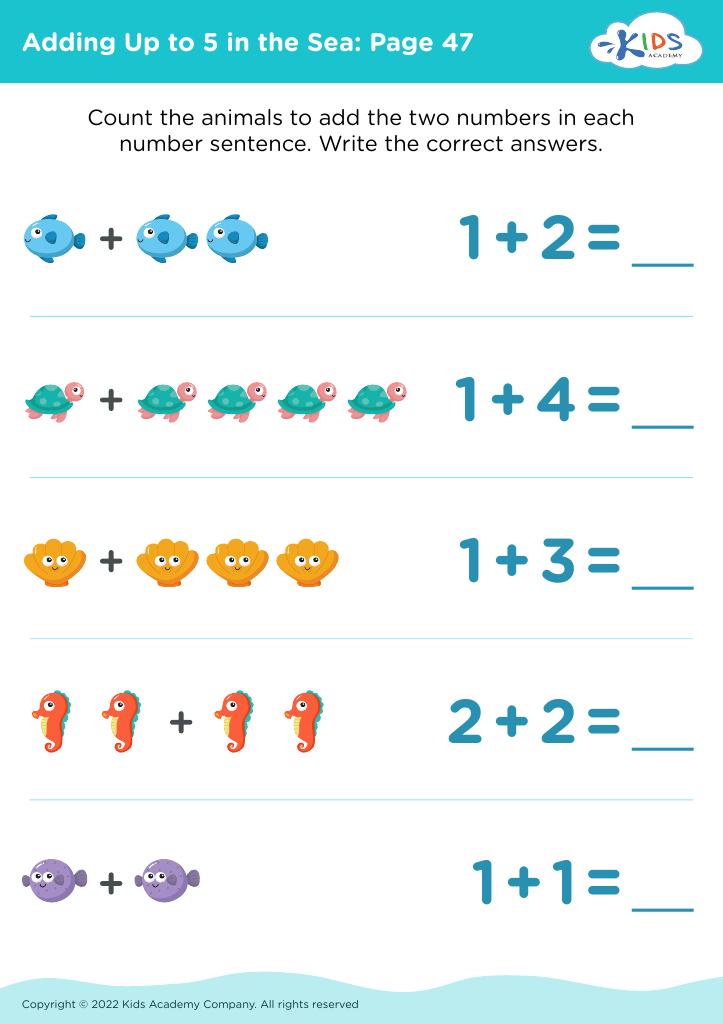
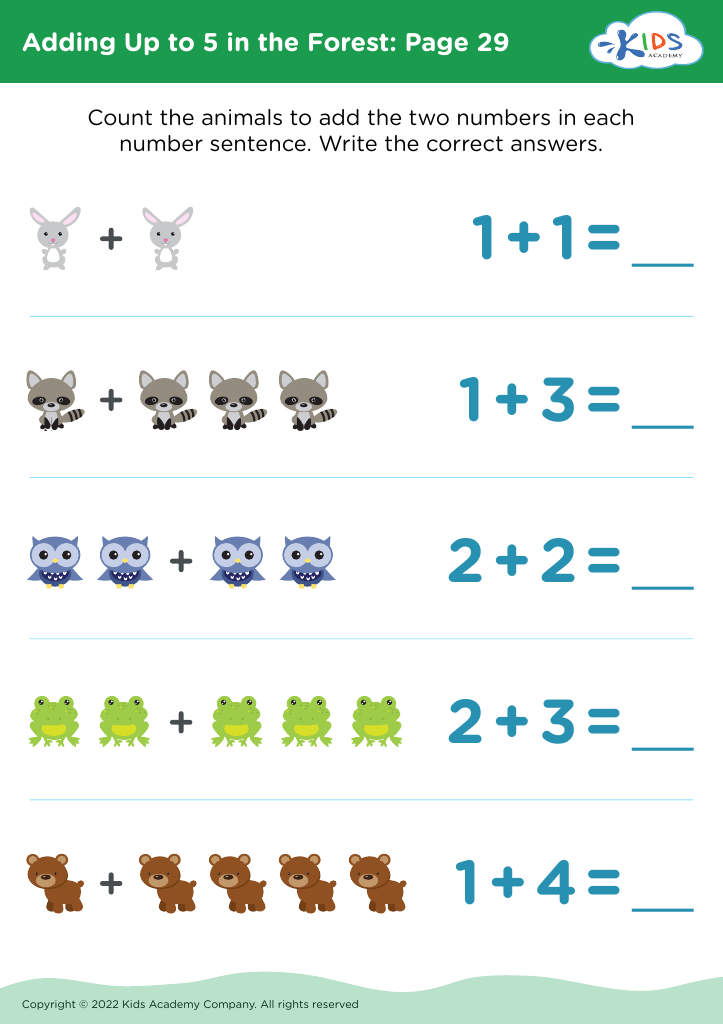
Boost your child's math skills with our "Counting Proficiency Addition Worksheets for Ages 4-6." Designed for early learners, these engaging worksheets help children master basic addition concepts while developing their counting proficiency. Perfect for preschoolers and kindergarteners, each worksheet features fun, themed exercises that inspire young minds. From counting objects to simple addition problems, these resources promote both confidence and accuracy. Easy-to-follow instructions and delightful illustrations ensure that learning math becomes a joyous adventure. Create a strong mathematical foundation for your little one with our expertly crafted addition worksheets, tailored to stimulate and support early math learning.
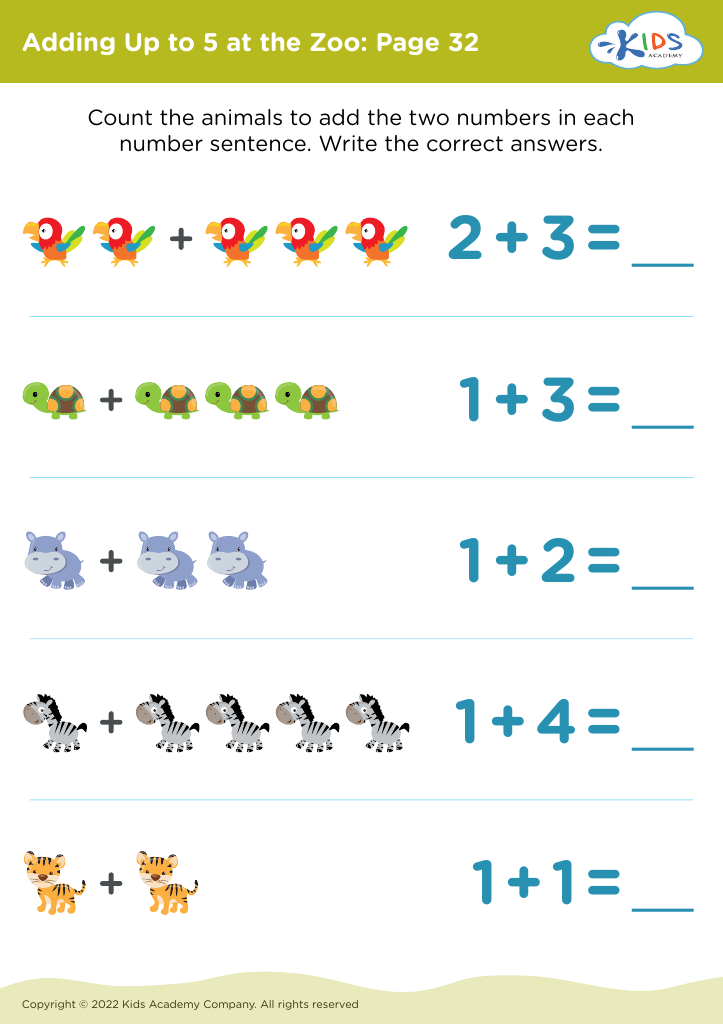
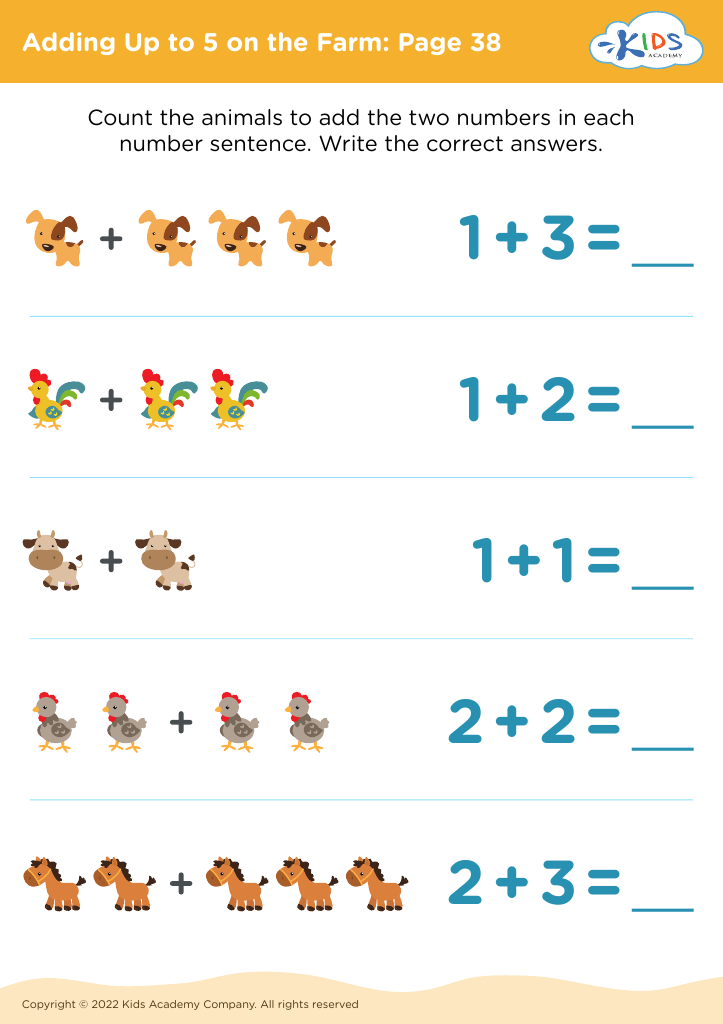
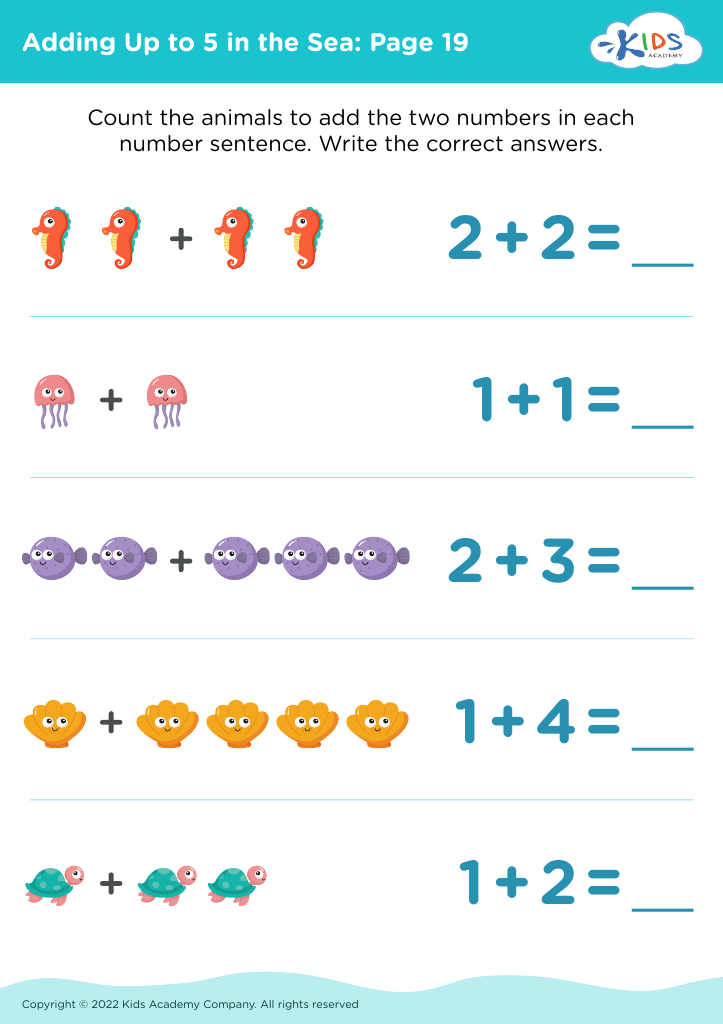
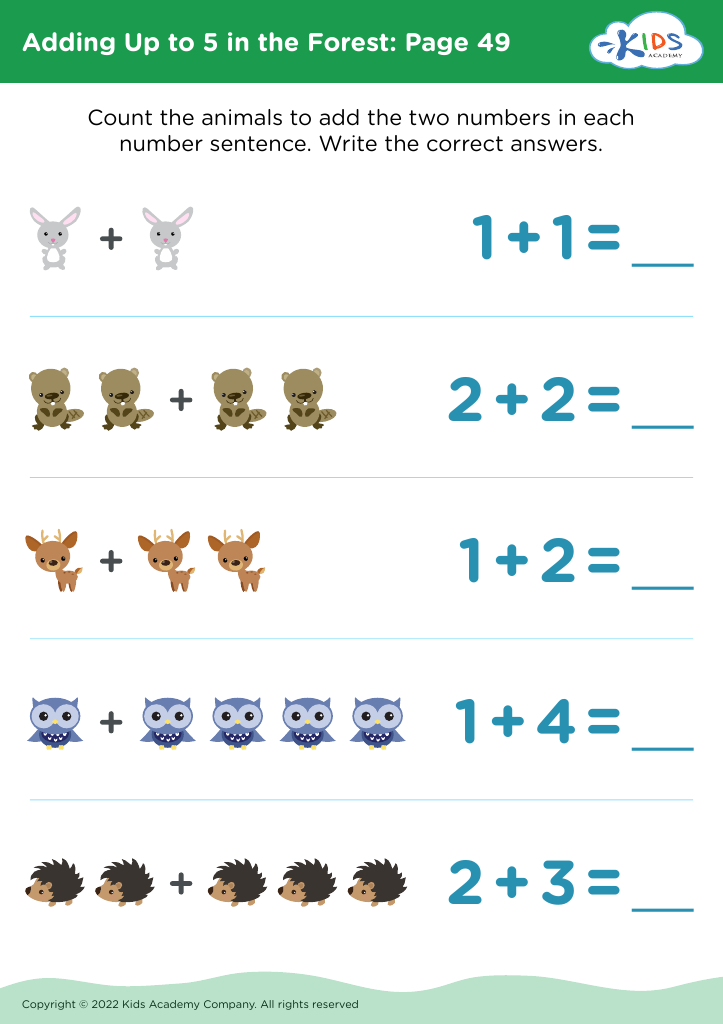
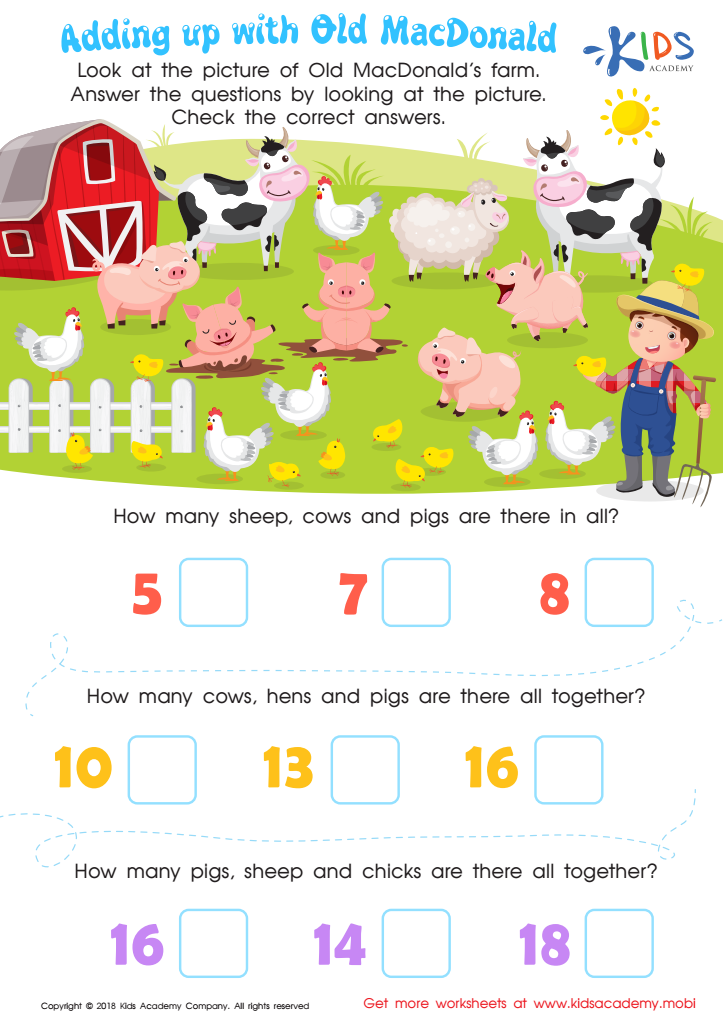
Adding Up with Old MacDonald Worksheet
 Assign to My Students
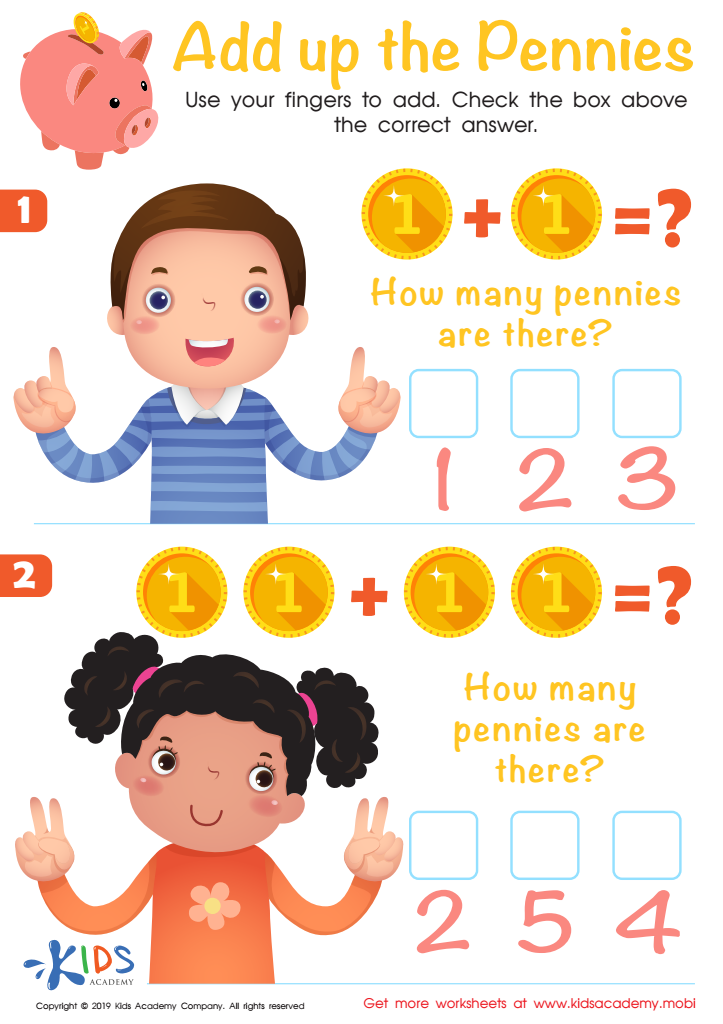
Add up the Pennies Worksheet
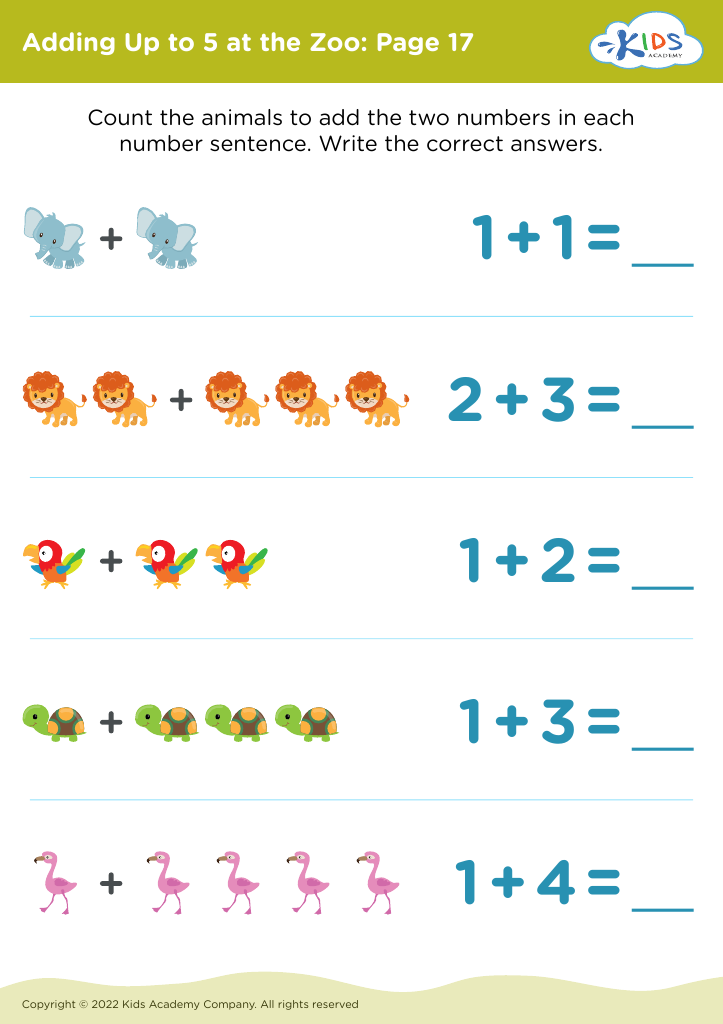
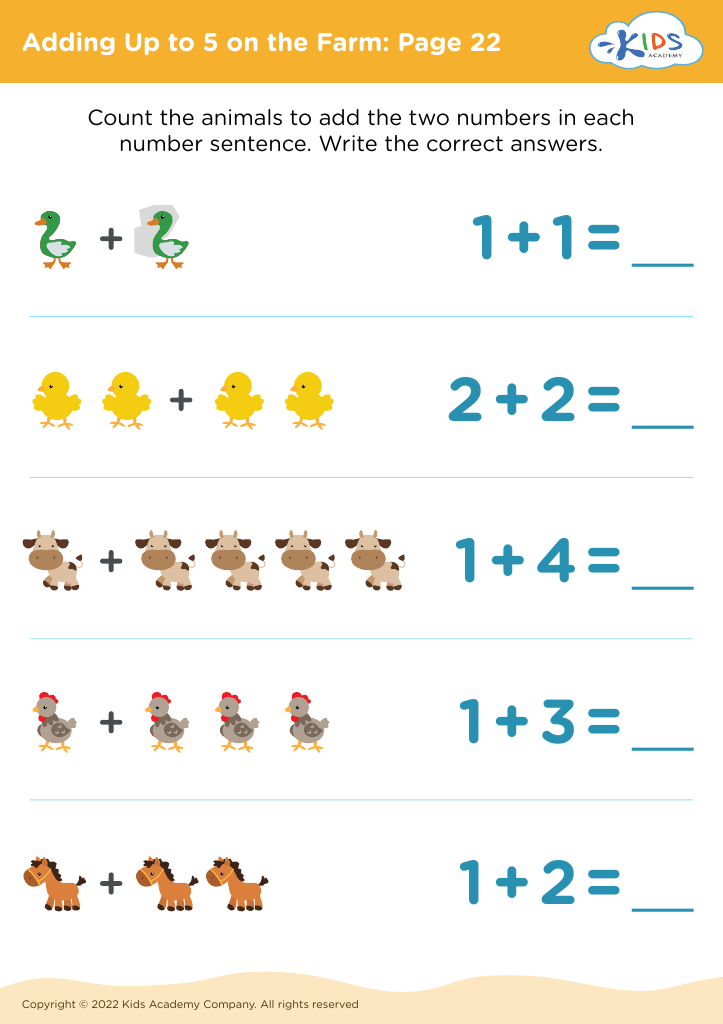








Counting proficiency and a basic understanding of addition are cornerstones of early math education and play a pivotal role in the cognitive development of children aged 4-6. At this stage, children are naturally curious and are developing foundational skills that will support their academic journey. Proficiency in counting aids in enhancing numerical literacy, which is essential for understanding more complex mathematical concepts later in life, such as subtraction, multiplication, and division.
When children are taught counting and basic addition, they gain not only mathematical skills but also critical thinking, problem-solving, and reasoning abilities. These skills can translate into other areas of learning and everyday life, helping children make connections and build knowledge structures. Additionally, success in math-related tasks early on can build a child's confidence and enthusiasm towards tackling challenges, fostering a positive attitude toward learning in general.
Moreover, early counting and addition activities often involve engaging, interactive tasks that promote fine motor skills, concentration, and teamwork when done in group settings. These are crucial alongside social skills development. Thus, parents and teachers should prioritize these early math skills to create a strong educational foundation, contributing not only to academic success but also to the overall growth and development of the child.








