Problem-Solving Skills Division Worksheets for Ages 4-6
3 filtered results
-
From - To
Unlock your child's mathematical potential with our engaging Problem-Solving Skills Division Worksheets designed for ages 4-6. These expertly crafted worksheets transform learning into a fun adventure, helping young learners develop essential division skills through interactive activities and age-appropriate challenges. With vibrant visuals and clear instructions, each worksheet enhances critical thinking, boosts confidence, and lays a strong foundation for future math success. Perfect for both classroom and at-home learning, our division worksheets provide an excellent resource to keep your child motivated and excited about math. Start their journey to becoming problem-solving pros today!
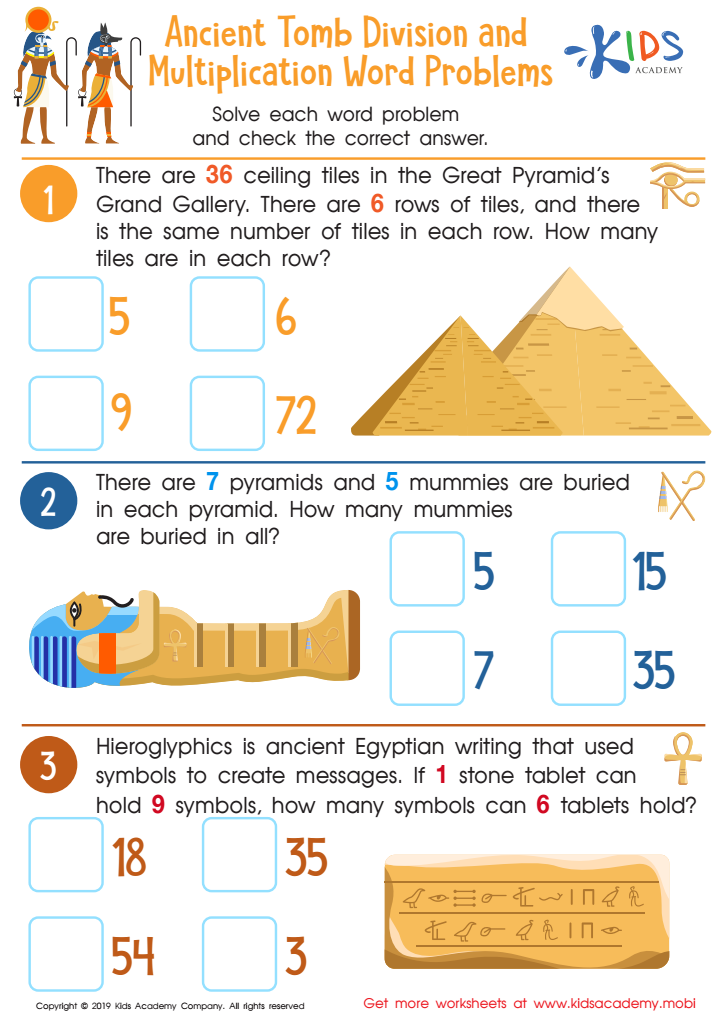
Ancient Tomb Division and Multiplication Word Problems Worksheet
 Assign to My Students
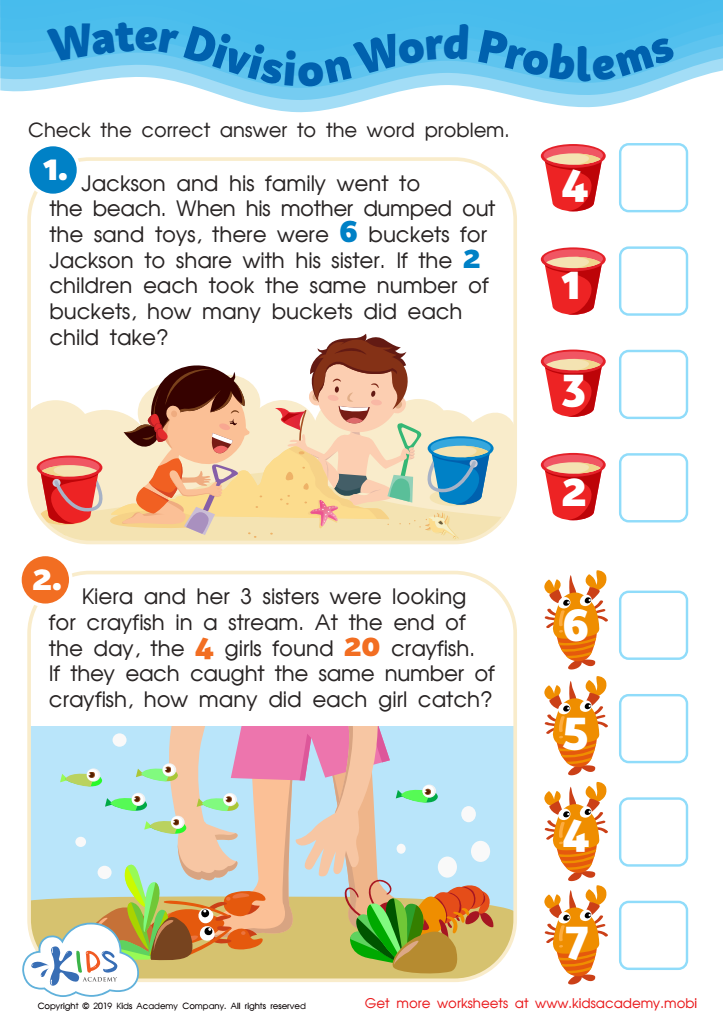
Water Division Word Problems Worksheet
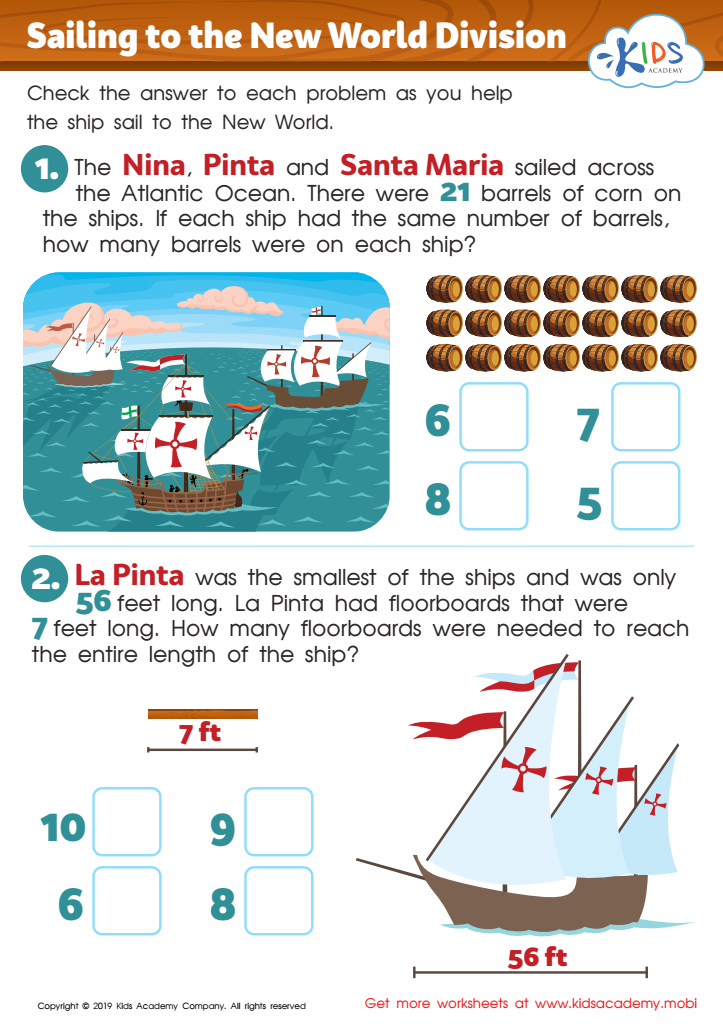
Sailing to the New World Division Worksheet








Problem-solving skills are foundational competencies that significantly impact a child's overall development, and thus, it is crucial for parents and teachers to nurture these skills, even in young children aged 4-6. At this early stage, children are like sponges, absorbing new concepts and ways of thinking rapidly. Problem-solving activities help young minds develop critical thinking, reasoning, and analytical abilities that are essential across all areas of learning, including math, literacy, and social interactions.
Early exposure to problem-solving can foster creativity and innovation. For instance, when children are asked to figure out how many cookies each friend would receive if six cookies are divided among three kids, they start to grasp not only simple division but also fairness and sharing. These kinds of exercises can strengthen their mathematical foundations while making learning interactive and enjoyable.
Additionally, strong problem-solving skills can equip children with the tools to handle challenges and setbacks more effectively. They learn perseverance, patience, and the importance of trying multiple solutions before reaching a conclusion. Such resilience is vital for their academic journey and personal growth. By integrating problem-solving exercises into early education, parents and educators can help children become more confident, adaptable, and equipped for future endeavors.








