Color Identification Geometry Worksheets for Ages 4-6
5 filtered results
-
From - To
Introduce young learners (ages 4-6) to essential math concepts with our "Color Identification Geometry Worksheets." Designed to build foundational skills in geometry, these engaging worksheets combine vibrant color identification exercises with fun geometric shapes. Kids will learn to recognize and name shapes while practicing color differentiation in a playful manner. Perfect for preschool and kindergarten students, our worksheets promote critical thinking, fine motor skills, and cognitive development. Tailored to early childhood education standards, these printable resources are ideal for classroom or at-home learning. Make math an enjoyable journey with our expertly crafted worksheets!
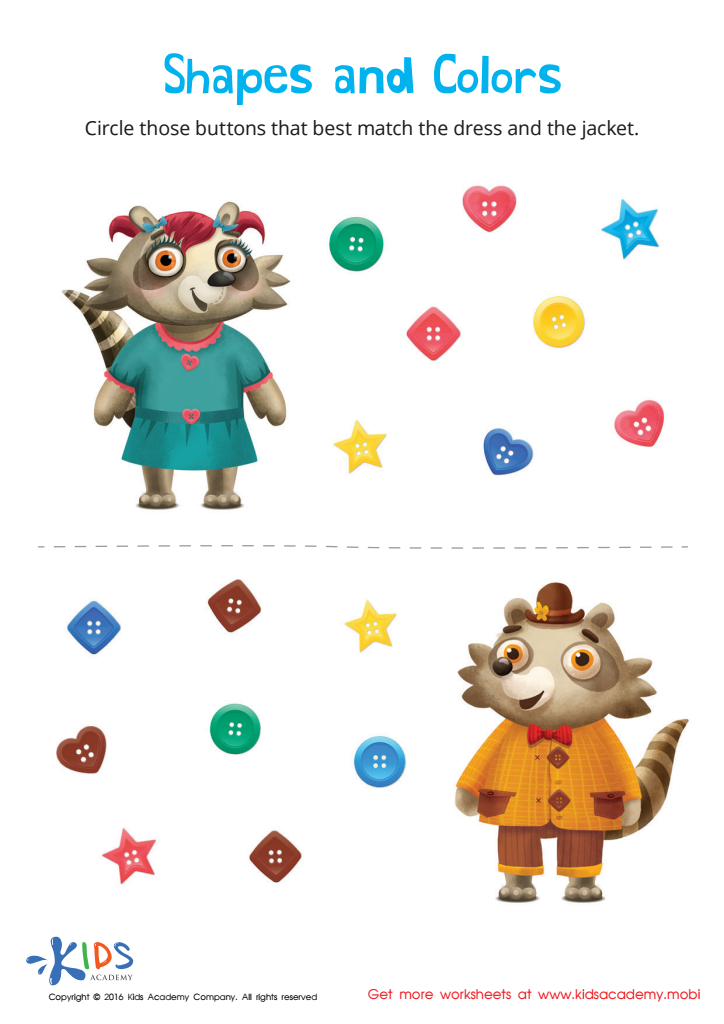
Matching: Shapes and Colors Worksheet











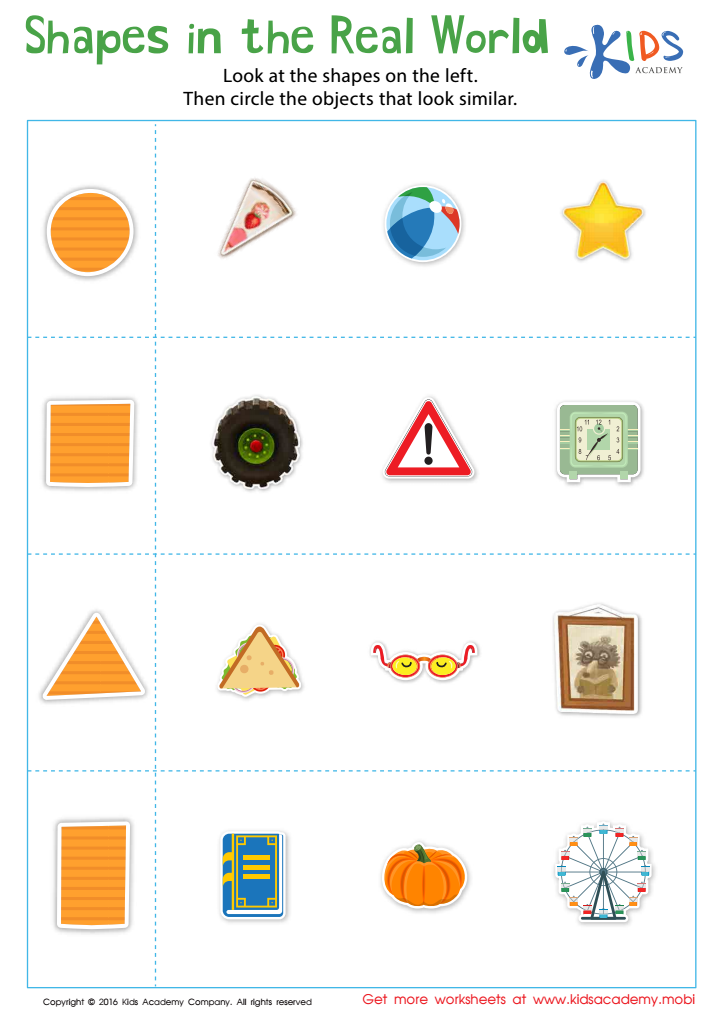
Shapes in the Real World Worksheet
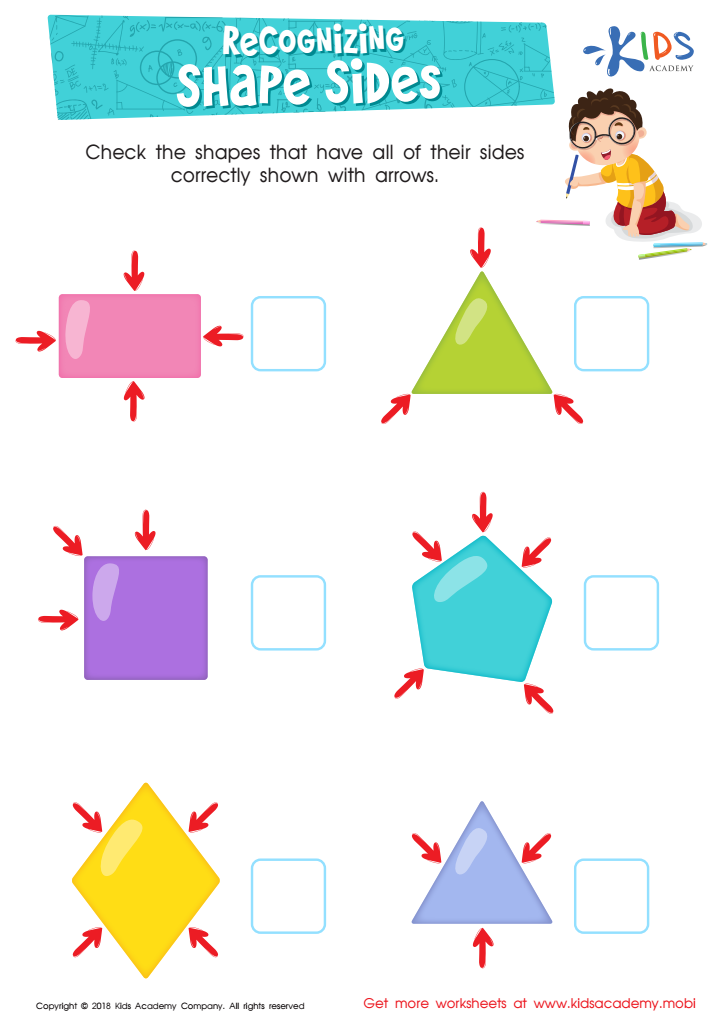
Recognizing Shape Sides Worksheet
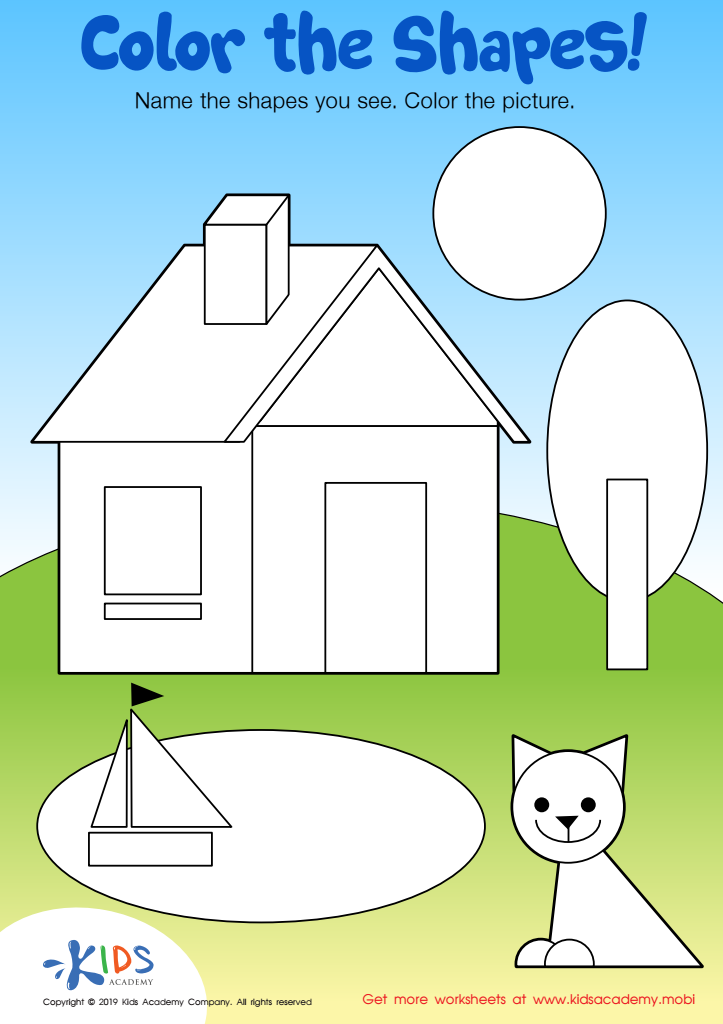
Color the Shapes Worksheet
 Assign to My Students
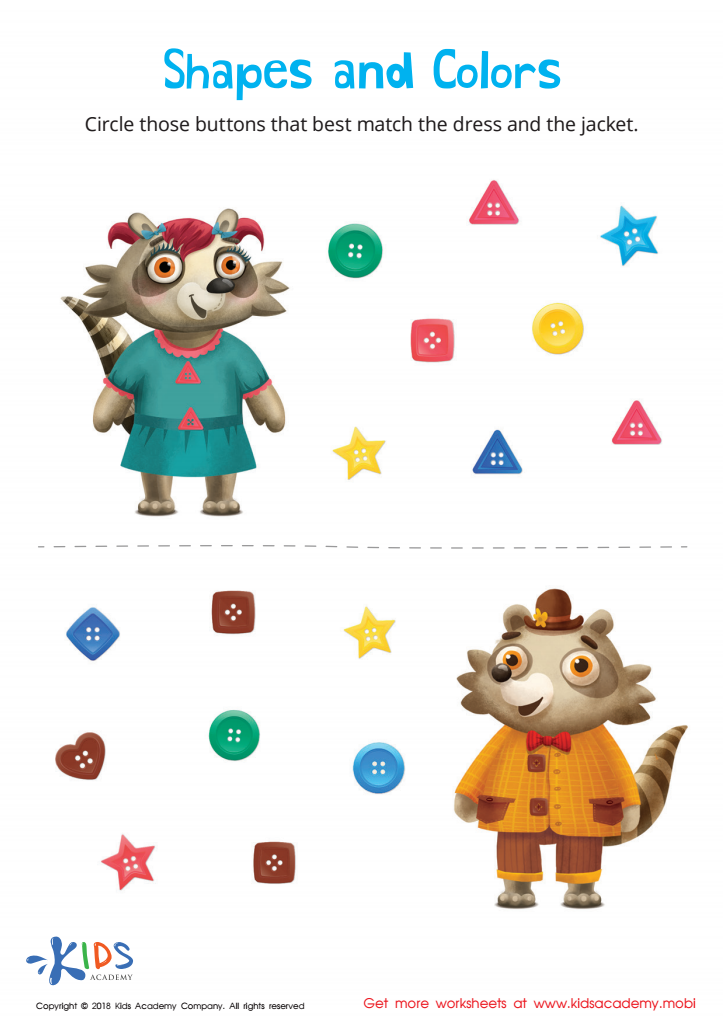
Shapes and Colors Worksheet








Color identification and geometry are fundamental aspects of early childhood education that significantly influence a child's cognitive and perceptual development. When parents and teachers engage children aged 4-6 in activities related to color identification and geometry, they're not just teaching basic concepts; they're laying a crucial foundation for future learning.
Firstly, color identification helps young children with classification skills, enabling them to group and sort objects, an essential precursor to mathematical thinking. Recognizing and naming colors also aids in vocabulary growth and communication skills, making it easier for children to express their thoughts and feelings.
Geometry introduces children to shapes and spatial relationships, critical components of mathematical literacy. When children explore geometric shapes, they learn to recognize patterns, understand symmetry, and comprehend spatial orientation, all of which are foundational for higher-order math skills like geometry and algebra. Additionally, familiarity with geometric shapes can enhance problem-solving abilities and logical thinking.
Moreover, hands-on activities involving color and geometry can boost fine motor skills as children manipulate objects and draw shapes. Interactive experiences using colors and geometric shapes also promote creativity and artistic expression.
Primarily, color identification and geometry prepare children for more complex concepts in the academic curriculum, support emotional development by providing tools for expression, and cultivate a readiness to tackle diverse challenges both inside and outside the classroom.








