Problem-solving abilities Geometry Worksheets for Ages 4-6
3 filtered results
-
From - To
Discover our engaging Problem-solving Abilities Geometry Worksheets designed specifically for children aged 4-6! These interactive worksheets promote critical thinking and enhance spatial awareness through fun geometric challenges. Young learners will explore shapes, patterns, and spatial relations while developing essential problem-solving skills in a playful environment. Each worksheet features vibrant illustrations and simple instructions, making learning enjoyable and effective. Perfect for early grade teachers and parents, our resources support children in strengthening their math abilities as they progress. Encourage creativity and cognitive growth with our expertly crafted geometry worksheets, ensuring a solid foundation for future learning in mathematics and beyond!
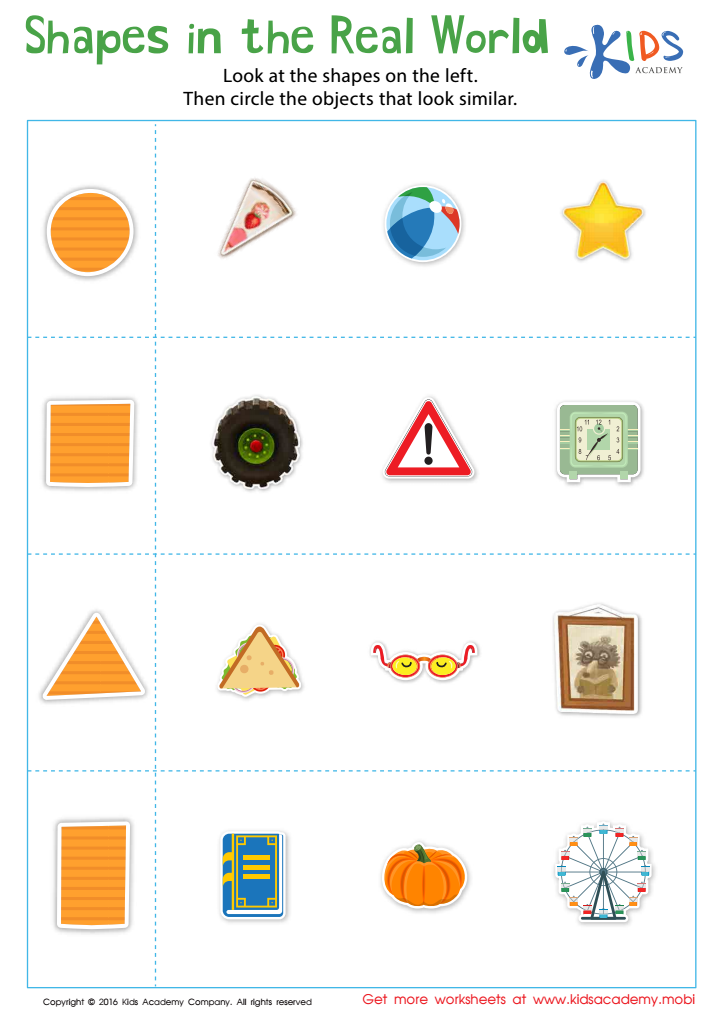
Shapes in the Real World Worksheet
 Assign to My Students











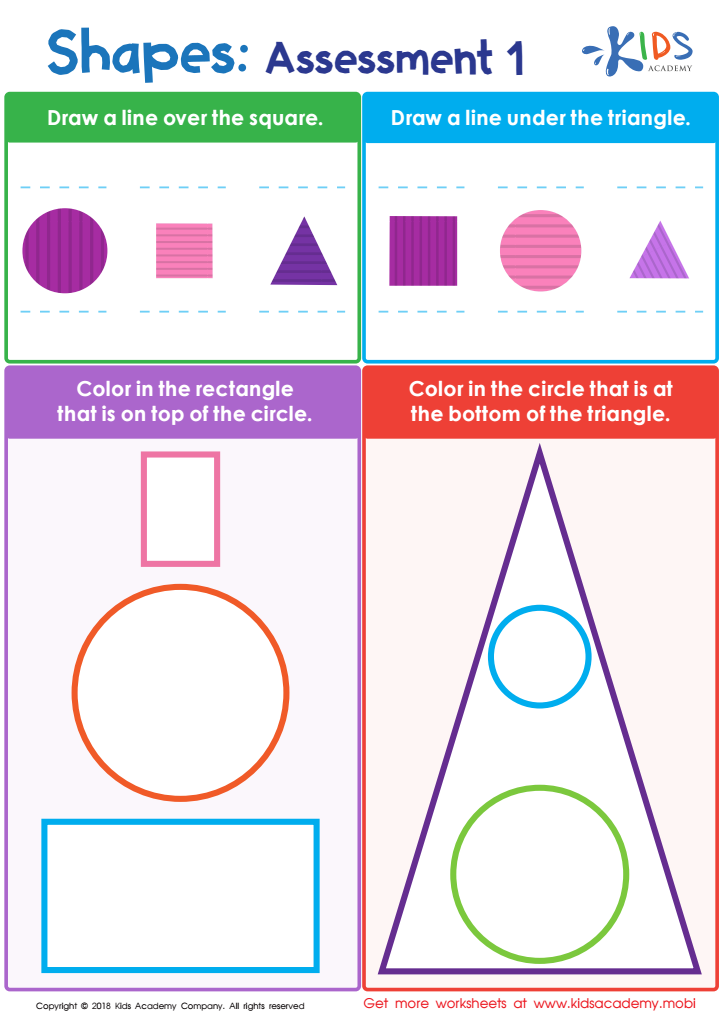
Shapes: Assessment 1 Worksheet
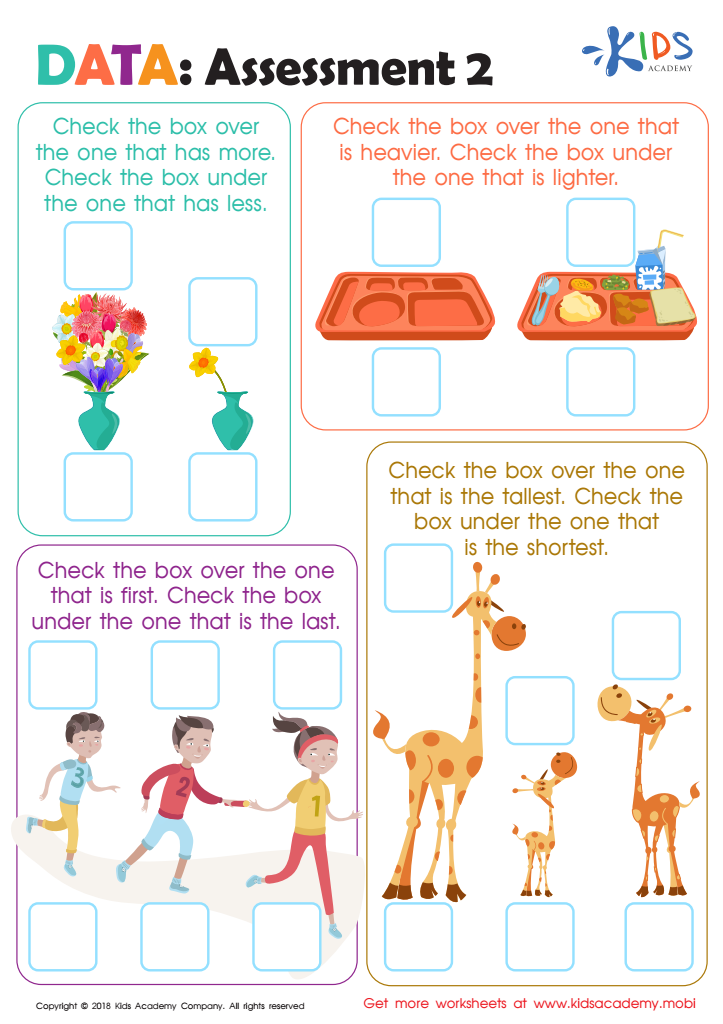
Data: Assessment 2 Worksheet








Problem-solving abilities in geometry are essential for children ages 4-6, as they form the foundational skills for critical thinking and reasoning. During this developmental stage, children are naturally curious and keen to explore shapes, spatial relationships, and patterns. Engaging in geometric problem-solving activities helps children develop cognitive skills, such as classification, comparison, and pattern recognition, which are crucial for early mathematical understanding.
Moreover, geometric problem-solving fosters creativity. When children manipulate shapes or find solutions to puzzles, they learn to visualize and experiment with concepts, building a sense of confidence in their abilities. These skills are not only beneficial for mathematics but also enhance their overall academic performance, positively impacting areas such as reading and science.
Parents and teachers significantly influence children’s attitudes towards math. By encouraging exploration and inquiry in geometry, they not only build essential mathematical skills but also nurture a positive and resilient mindset towards problem-solving. Early exposure to geometry promotes observational skills, encourages cooperative play through collaborative activities, and helps children communicate effectively about their thought processes. In short, by fostering problem-solving abilities in geometry, adults play a crucial role in equipping children with essential life skills that extend beyond mathematics.








