Basic arithmetic skills Numbers Worksheets for Ages 4-6
4 filtered results
-
From - To
Explore our "Basic Arithmetic Skills Numbers Worksheets" designed for children ages 4-6! These engaging and interactive worksheets help young learners develop foundational math skills through fun activities focused on recognizing and manipulating numbers. With colorful illustrations and a variety of exercises, children will practice counting, addition, and subtraction in an exciting way. Our worksheets promote critical thinking and enhance cognitive abilities, ensuring a playful and effective learning experience. Perfect for homeschooling, classroom use, or additional practice at home, these worksheets support early math development, setting a solid foundation for future learning. Download now and watch your child's confidence soar!
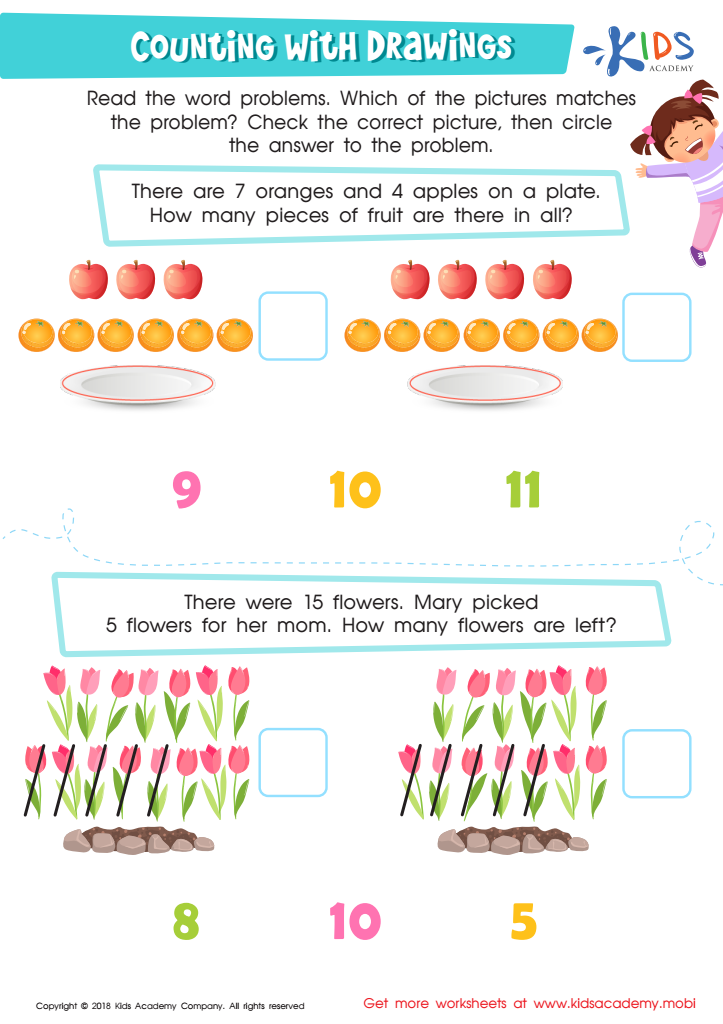
Counting with Drawings: Fruits & Chocolates Worksheet
 Assign to My Students
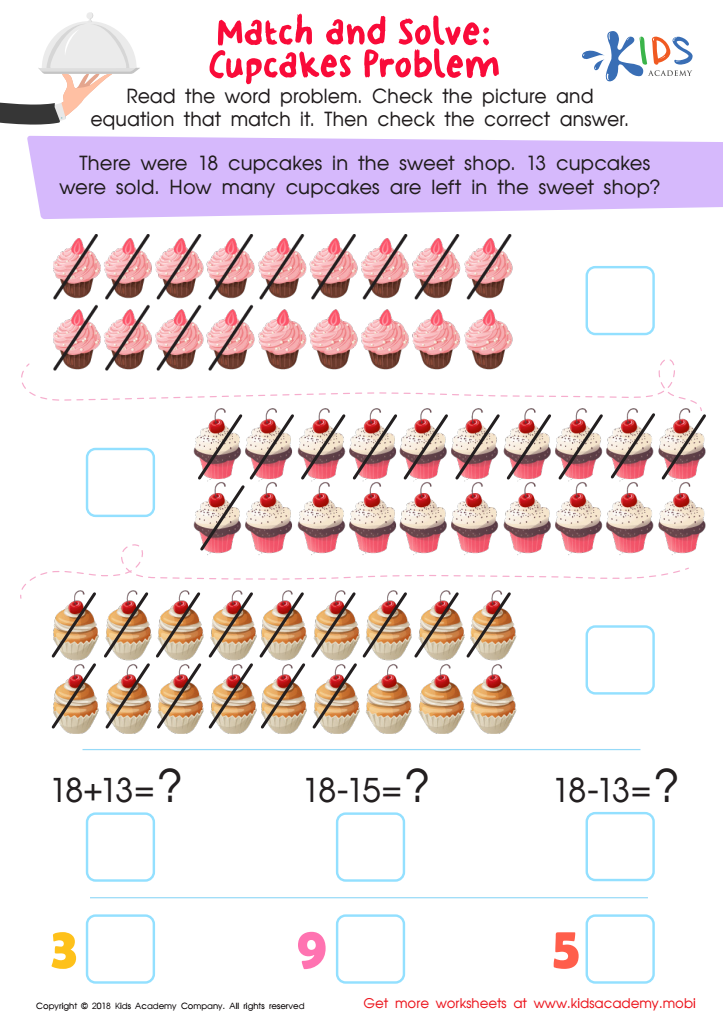
Match and Solve: Cupcakes Problem Worksheet
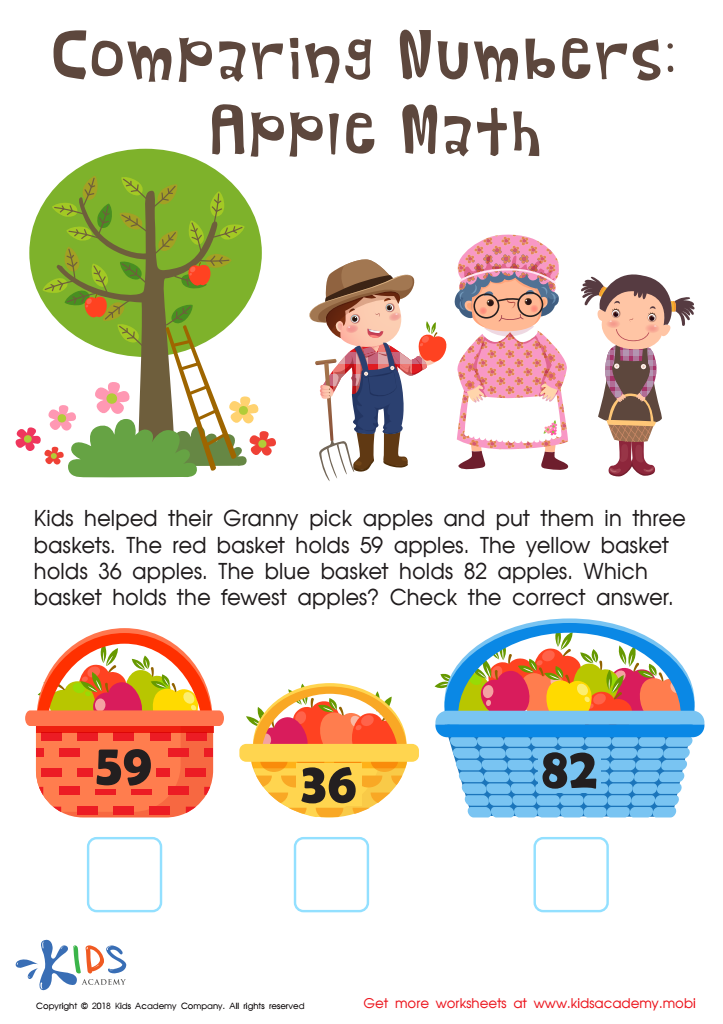
Apple Math Worksheet
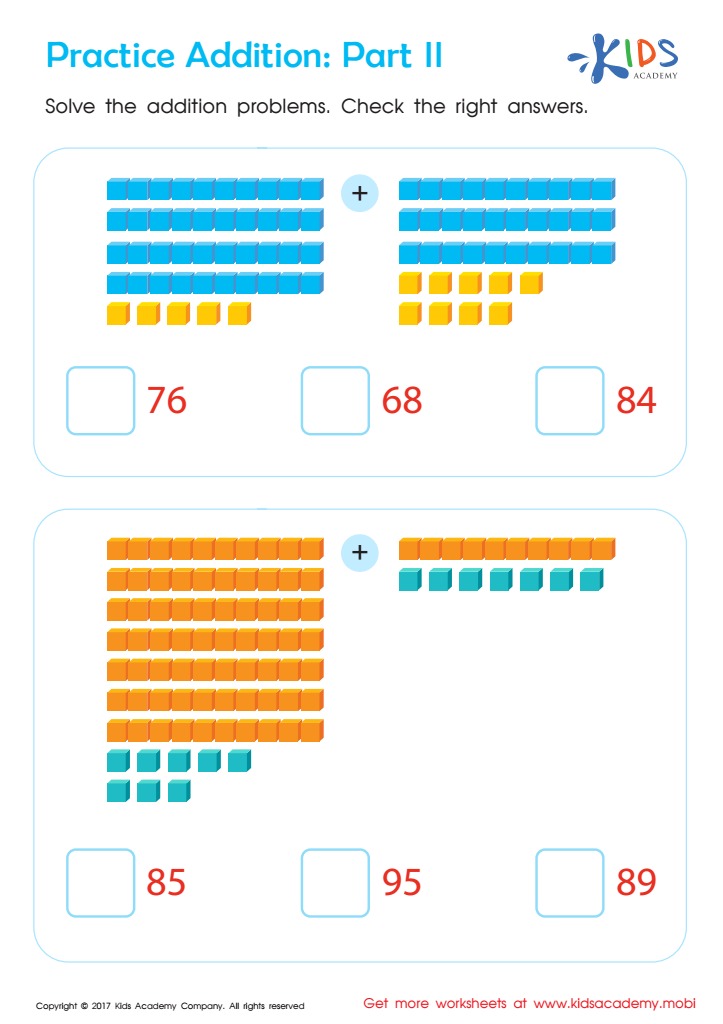
Practice Addition: Part 2 Worksheet






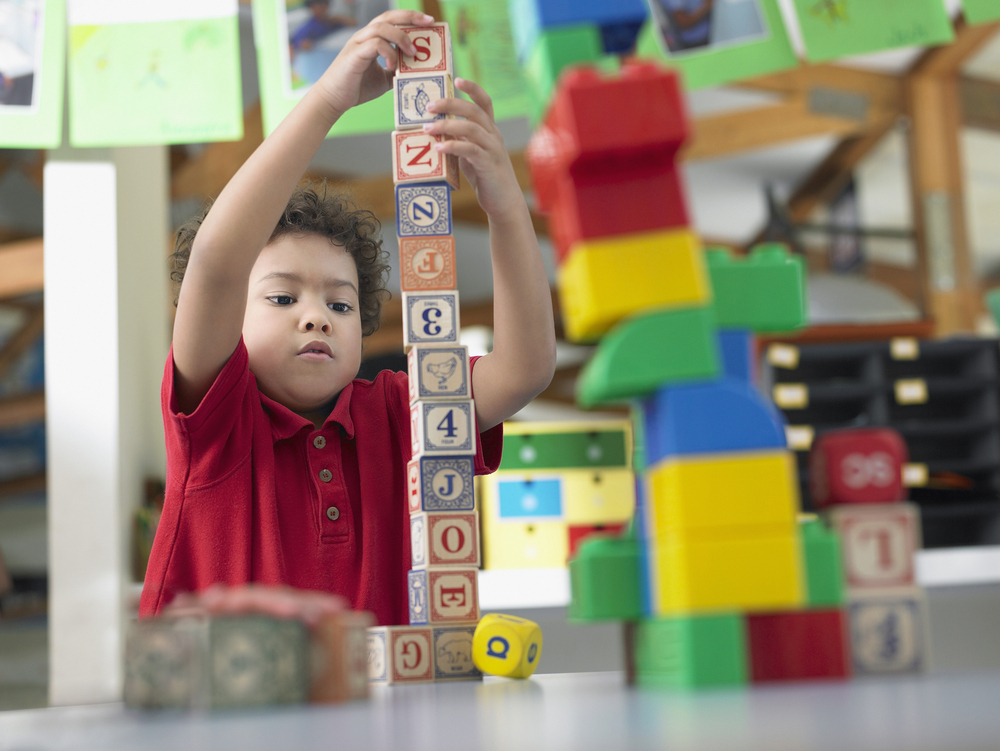

Basic arithmetic skills are fundamental for children aged 4-6 as they form the building blocks for future learning and everyday problem-solving. Understanding numbers and arithmetic concepts fosters cognitive development, enabling children to enhance their critical thinking and reasoning abilities. Early exposure to mathematics nurtures a sense of confidence and enjoyment in learning, positioning children for future academic success.
At this age, concepts like counting, addition, and subtraction are not just about numbers; they help children make sense of the world around them. For instance, recognizing quantities assists in basic life skills, such as sharing or managing time. When parents or teachers engage young learners in playful and relatable arithmetic activities, they promote a positive attitude towards math.
Additionally, basic arithmetic skills are linked to broader educational outcomes, such as reading proficiency and overall academic performance. Engaging kids at this early stage also lays the groundwork for more advanced mathematics concepts down the line.
Ultimately, instilling as well as reinforcing arithmetic skills in young children equips them with essential tools needed for their educational journey and daily lives, fostering both academic readiness and lifelong learning. Therefore, it is crucial for both parents and teachers to prioritize and nurture these early mathematical endeavors.








