Understanding subtraction Numbers Worksheets for Ages 4-6
4 filtered results
-
From - To
Discover our "Understanding Subtraction Numbers Worksheets" tailored for children ages 4-6! These engaging, colorful worksheets are designed to make learning subtraction fun and intuitive. Kids will develop critical thinking skills, gain confidence in basic math, and build a strong numerical foundation through interactive activities and visual aids. Each worksheet is carefully crafted to introduce subtraction concepts step-by-step, ensuring young learners grasp the fundamentals with ease. Perfect for preschool and kindergarten students, these resources are great for both classroom and at-home practice. Join our learning community and watch your child's math skills flourish with joy!
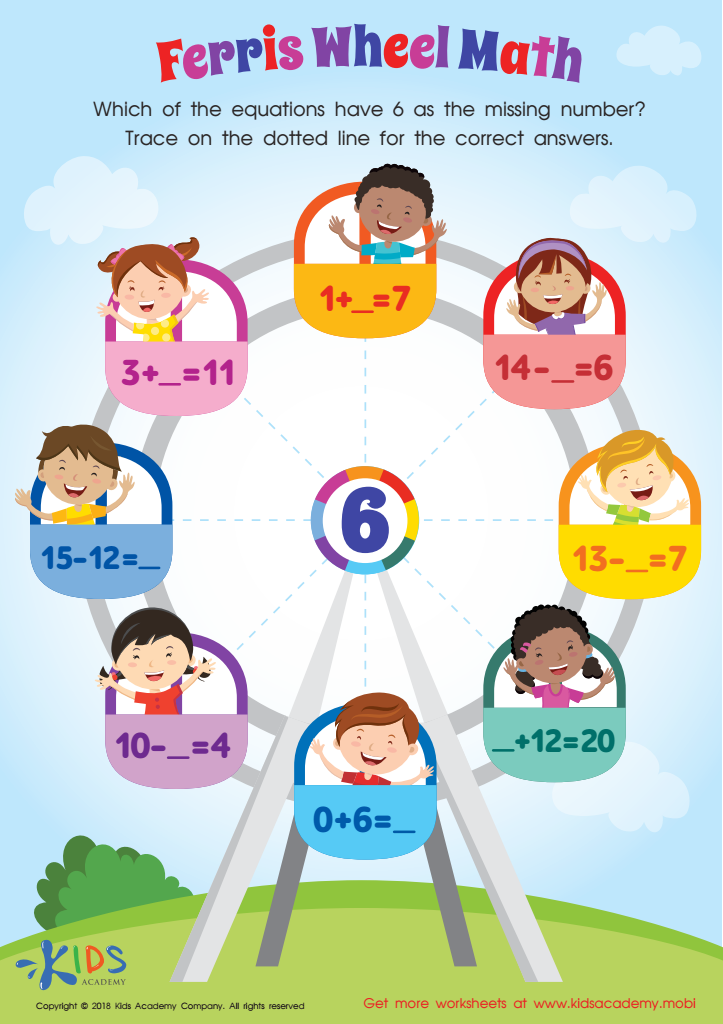
Missing Number: Ferris Wheel Math Worksheet
 Assign to My Students
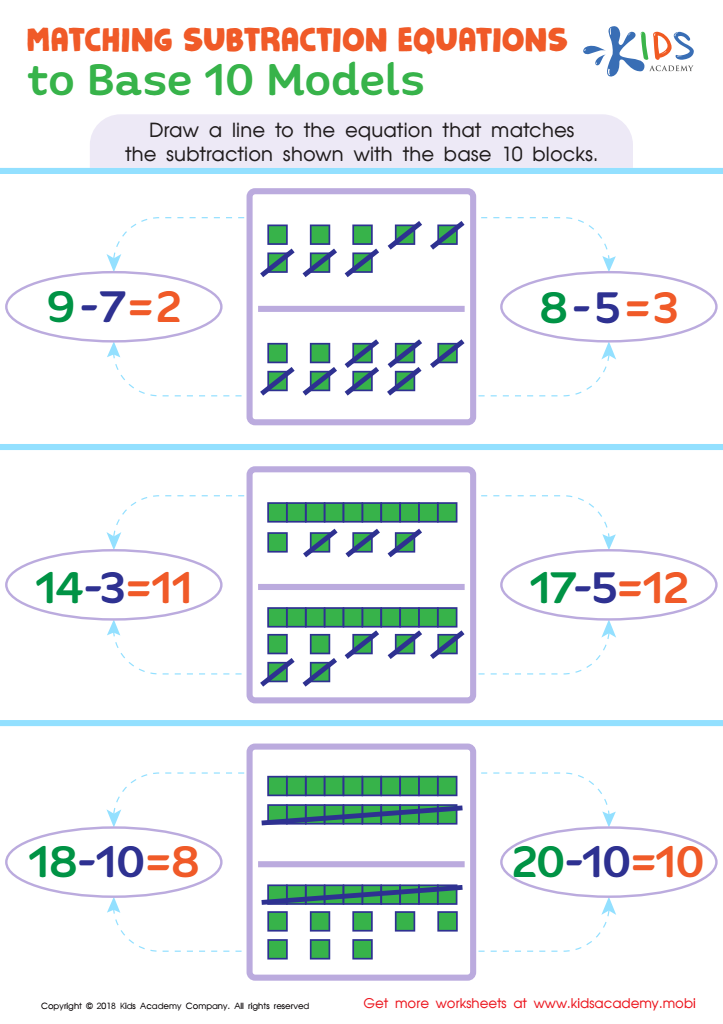
Matching Subtraction Equations To Base 10 Models Worksheet
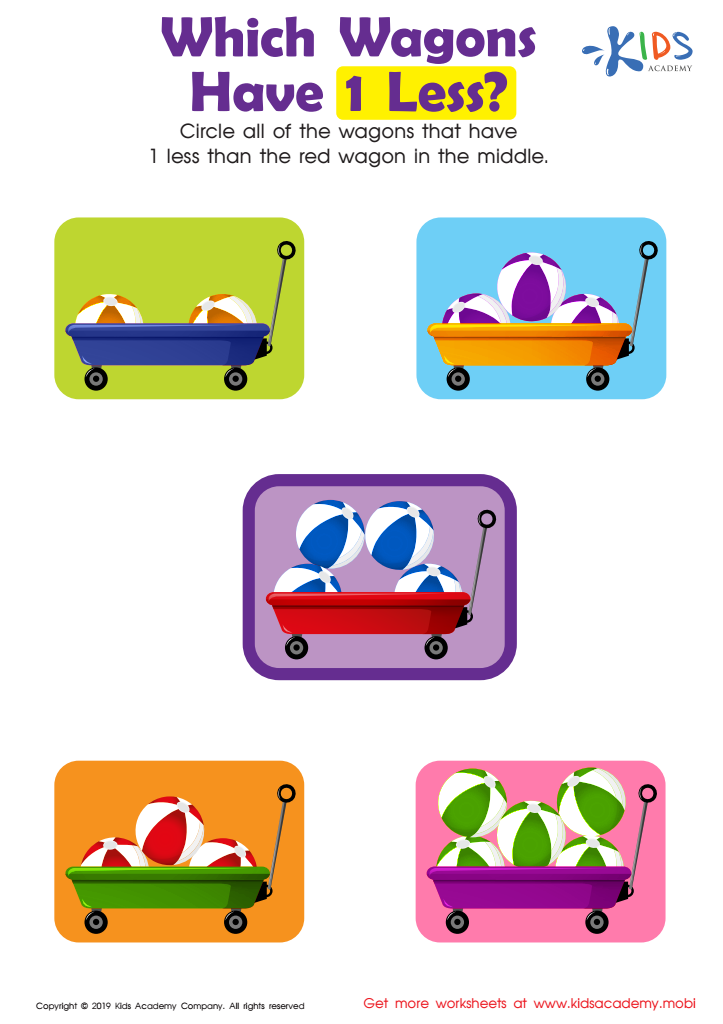
Which Wagons Have 1 Less? Worksheet
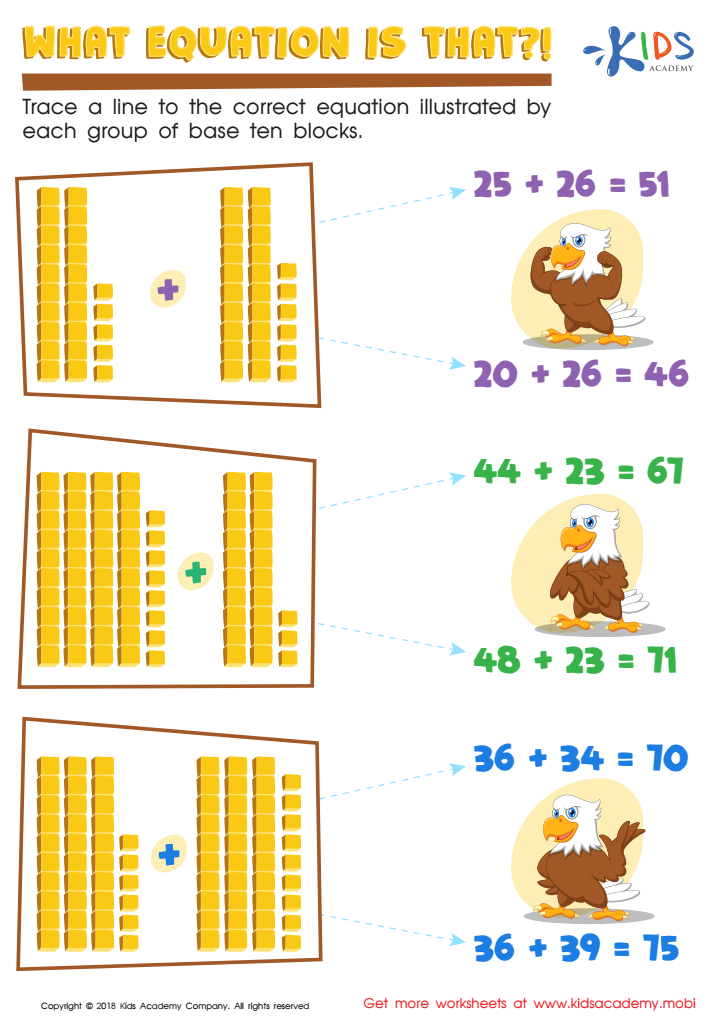
What Equation Is That? Worksheet





.jpg)


Understanding subtraction at an early age is crucial as it forms the foundation for future mathematical skills. For children ages 4-6, mastering subtraction is not merely about learning how to perform operations; it helps develop critical thinking, problem-solving abilities, and comprehension of numerical relationships.
When we introduce young learners to subtraction, we foster a deeper understanding of concepts like comparison, difference, and the inverse relationship with addition. This foundational knowledge is essential for grasping more complex mathematical ideas they will encounter later.
Moreover, learning subtraction enhances children's ability to handle everyday tasks and make decisions involving quantity, such as evenly distributing items among friends or understanding what "less than" means in practical situations. This cognitive development is crucial for activities that require logical reasoning and analytical thinking.
From a socio-emotional perspective, succeeding in early mathematical concepts like subtraction also boosts children's confidence and promotes a positive attitude towards learning. It encourages perseverance and resilience, as kids learn to tackle problems methodically and derive solutions.
Parents and teachers serve pivotal roles in nurturing this development. By making learning engaging and offering real-life examples, they help demystify subtraction, making it accessible and enjoyable, thus laying down the stepping stones for academic success and everyday competence.








