Filters

104 filtered results

Clear all filters
Favorites
With answer key
Interactive

104 filtered results

Difficulty Level

Grade


Check out this FREE Trial Lesson on Math for age 4-6!

Classifying Objects and Count the Number of Objects in Each Category CCSS.Math.Content

Favorites
With answer key
Interactive
  • 4-6
  • Basic Math Skills
  • Math
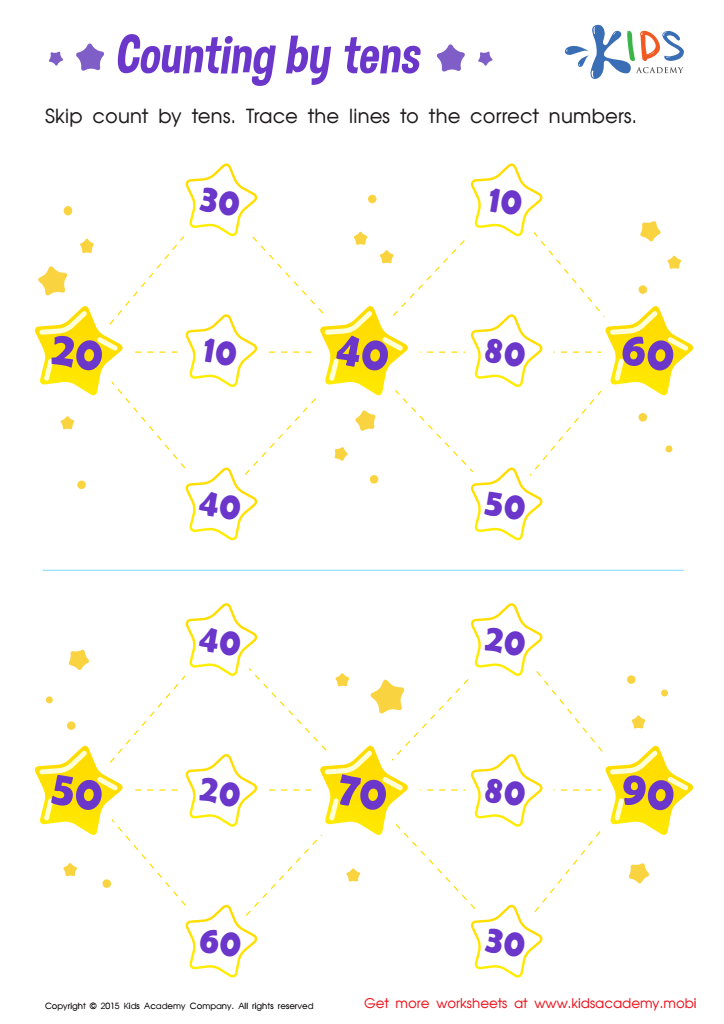
Kindergarten Counting by Tens

Learn Dozens: Counting by Tens Printable

Kindergartners need to learn skip counting - counting in number groups - to increase number sense and be ready for more advanced math. Our kindergarten worksheet featuring a starry trip to outer space will help your child practice this valuable skill. Your child will choose correct answers to trace the lines to the stars, building fluency in skip counting. They'll also strengthen problem solving and see the pattern it creates. Get your little learner to the next level with this skip counting worksheet!
Learn Dozens: Counting by Tens Printable
Worksheet
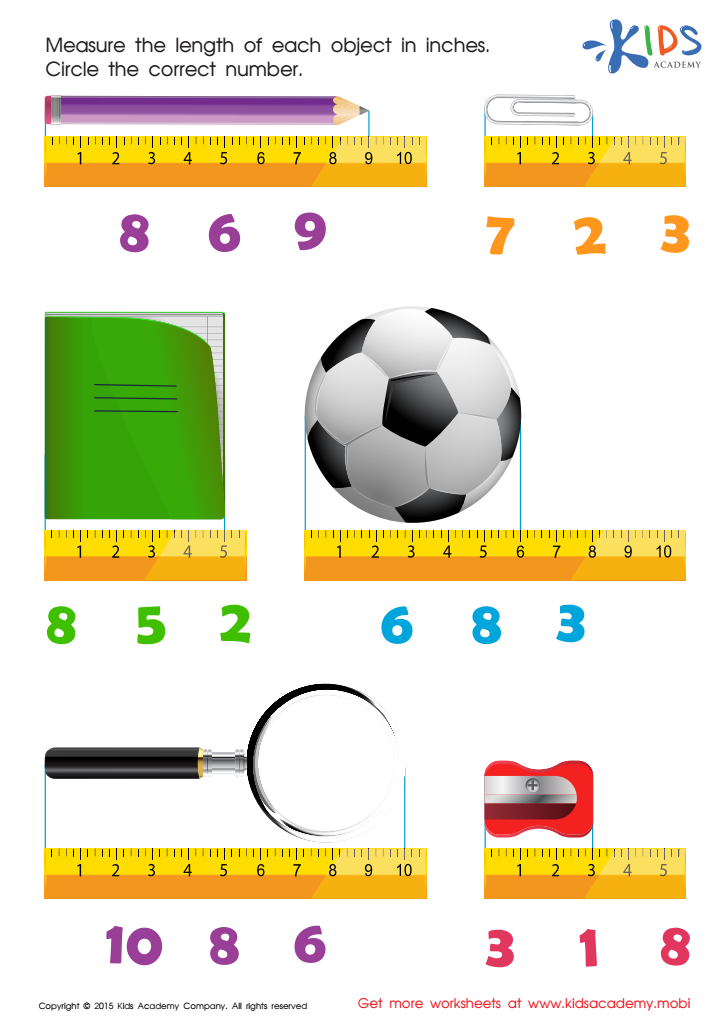
Math PDF Worksheets: Learning measuring objects in inches

Learning measuring objects in inches Worksheet
Help your little learners gain confidence in using a ruler! Print out our free worksheet, cut out the inch ruler, and let them measure and record objects' width and length. Kids Academy has a variety of math worksheets to make learning math fun! Check out our website for more free printables!
Learning measuring objects in inches Worksheet
Worksheet
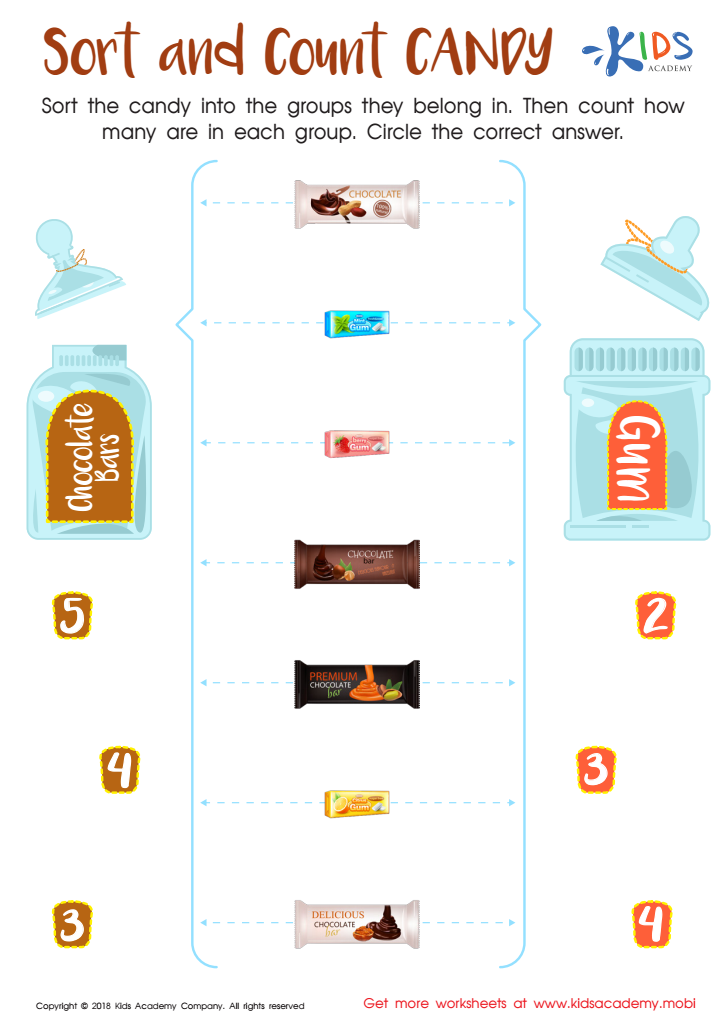
Sort and Count Candy Worksheet

Sort and Count Candy Worksheet

Sort chocolate and candy with your kids! Help them use recognizable items and pictures to sort, practice counting with one-to-one representation, and develop their fine motor skills with the traceable lines. Download this free worksheet to get started. Yum!
Sort and Count Candy Worksheet
Worksheet
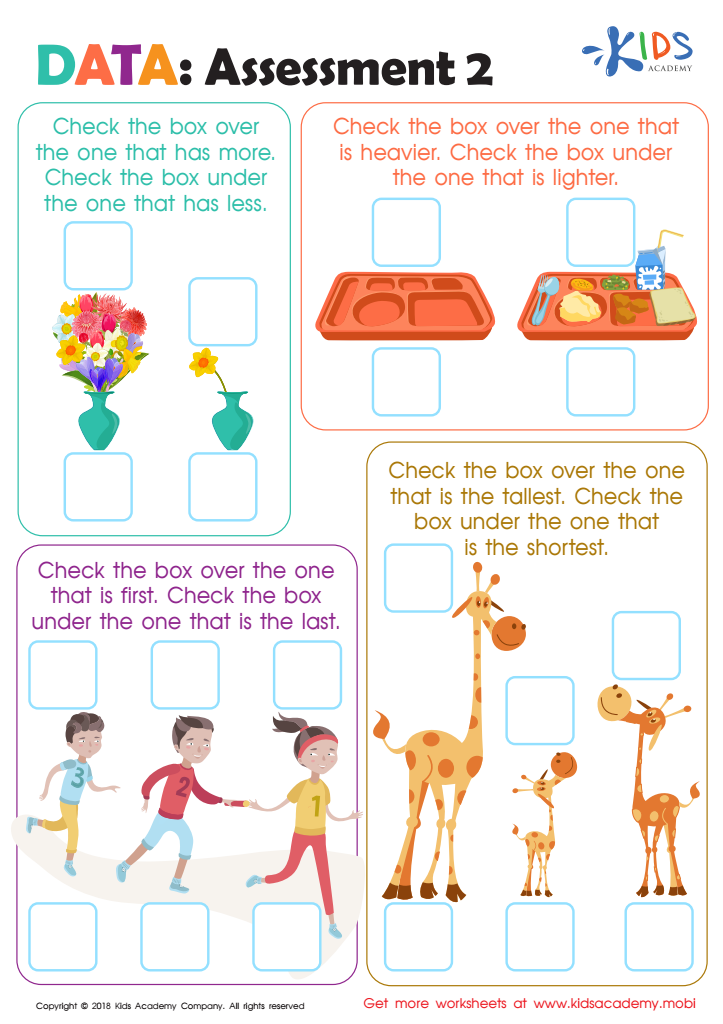
Data: Assessment 2 Worksheet
Data: Assessment 2 Worksheet

This printable worksheet tests students' understanding of words related to quantity and measurement, such as "more", "less", "heavy", "light", "first", "last", "tall", and "short". It helps children compare and contrast when solving measurement problems. Ideal for math classes, it encourages students to gain the essential skills needed in subjects like math, science, and reading.
Data: Assessment 2 Worksheet
Worksheet
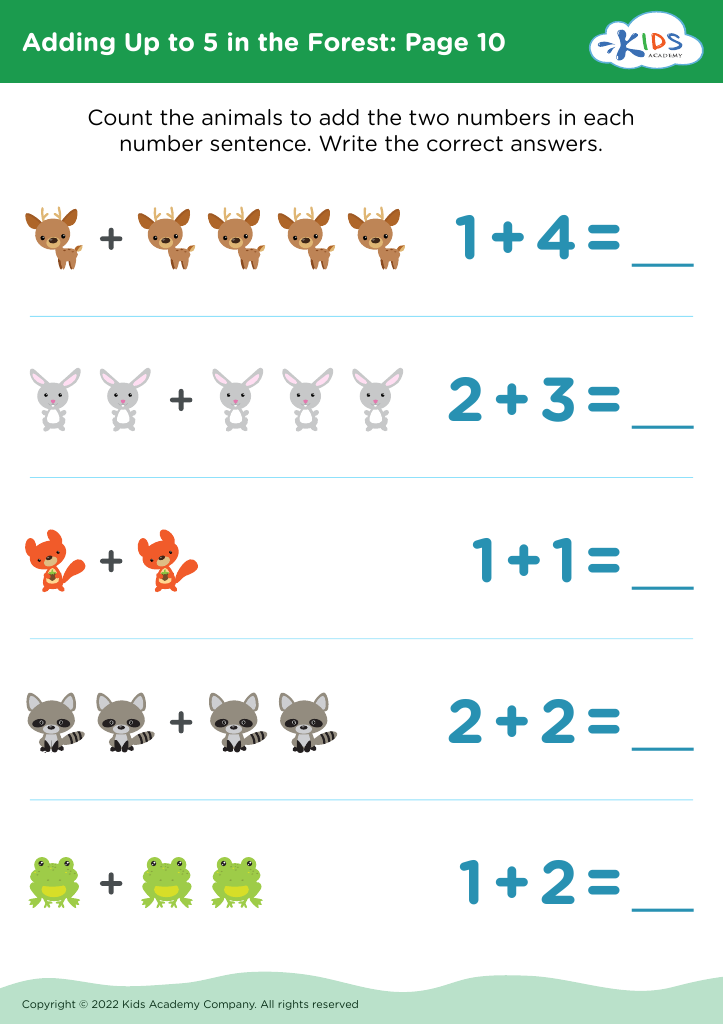
Adding Up to 5 in the Forest: Page 10
Worksheet
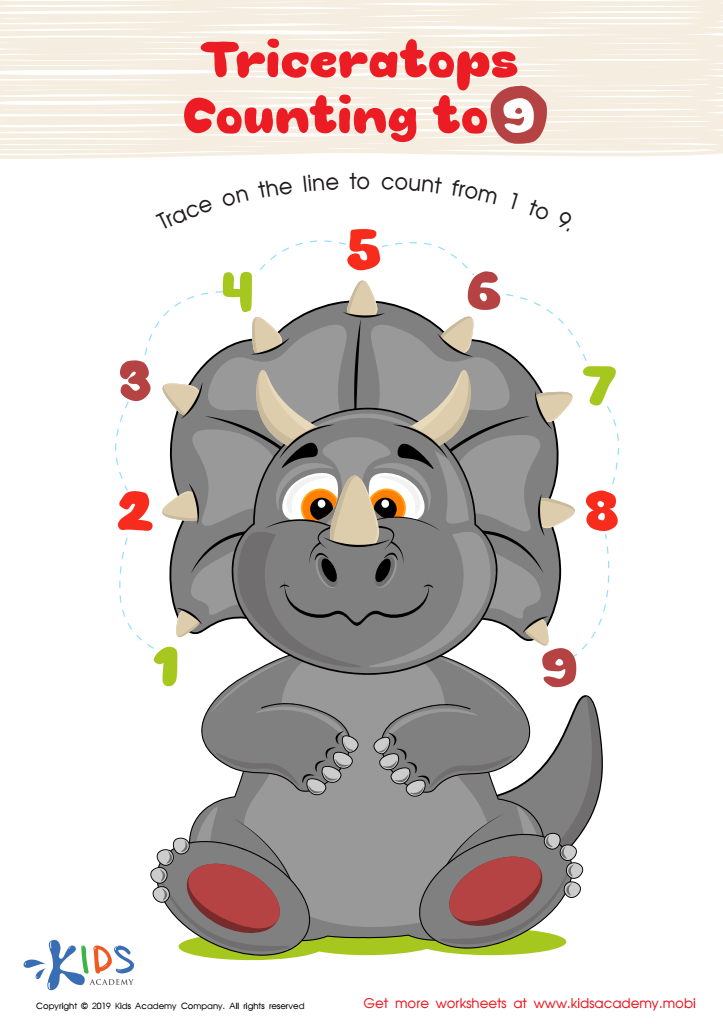
Triceratops Counting to 9 Worksheet
Triceratops Counting to 9 Worksheet

This little triceratops is here to help kids learn to count! Dinosaurs lived long before us and we've never seen one alive, but through research, we know a lot about them. Let the dinosaur help trace on the line from 1 to 9 for a fun counting practice.
Triceratops Counting to 9 Worksheet
Worksheet
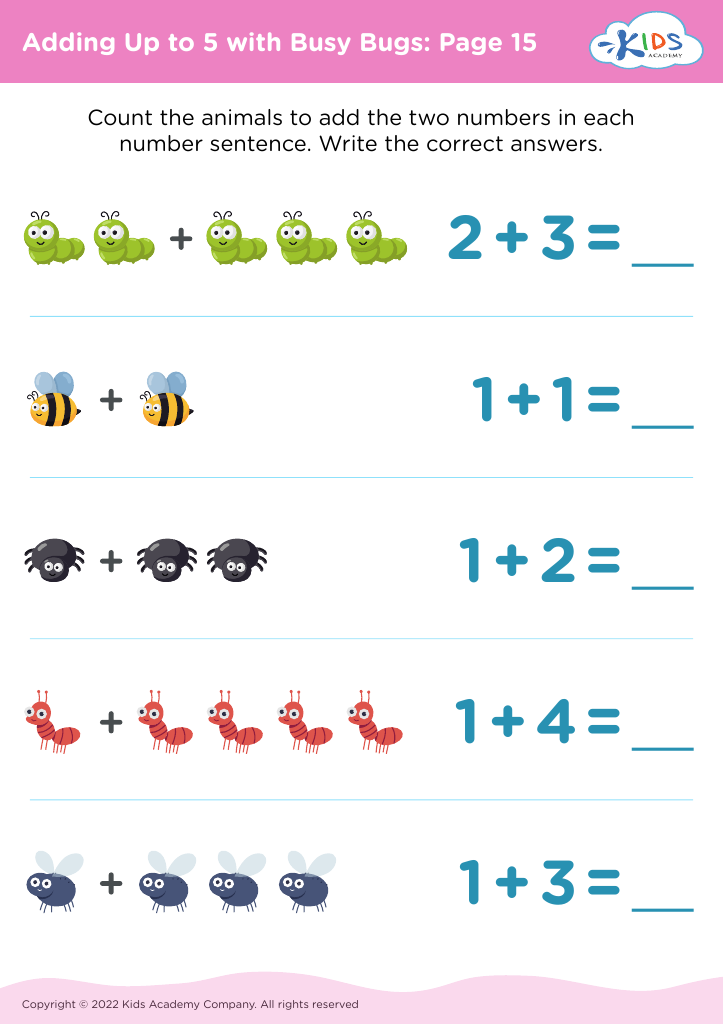
Adding Up to 5 with Busy Bugs: Page 15
Worksheet
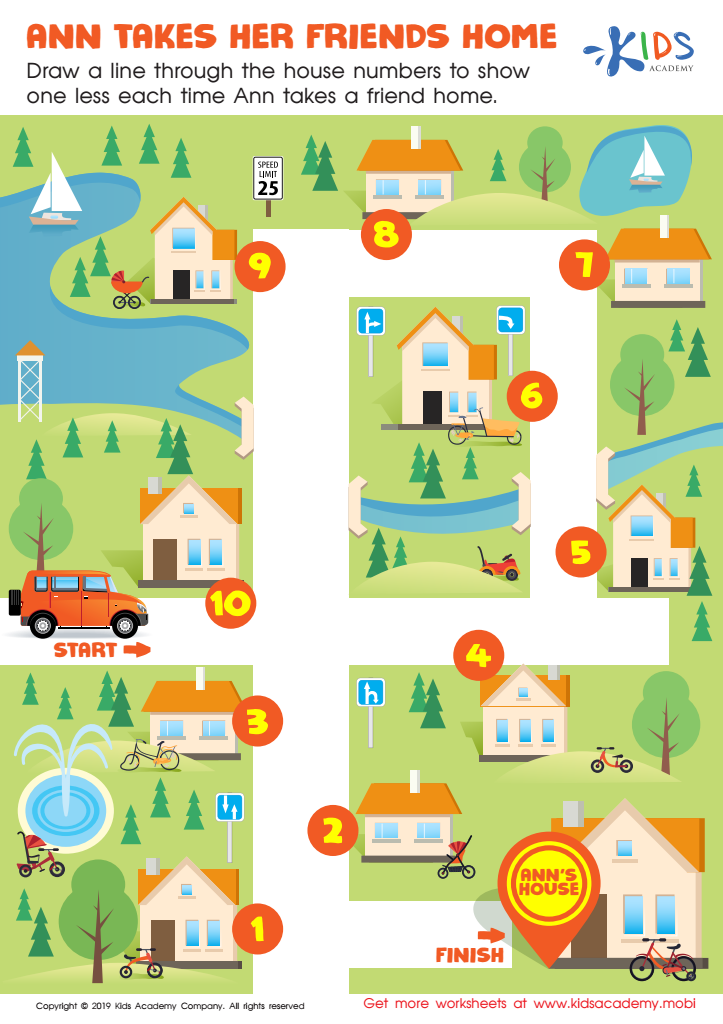
Ann Takes her Friends Home Worksheet


Ann Takes her Friends Home Worksheet

Get your kids to tell you what they enjoy doing with their friends in each other's homes. Then, encourage them to complete the worksheet. It shows Ann taking her friends to her house. Have them draw a line through the house numbers to show Ann taking one friend home at a time.
Ann Takes her Friends Home Worksheet

Worksheet


... 4 5

Basic math skills are foundational for children aged 4-6, and both parents and teachers play a crucial role in fostering these abilities. At this age, children are naturally curious, and engaging them in math helps develop critical thinking and problem-solving skills that are essential for later learning. Early math experiences encourage spatial awareness, number recognition, sorting, and counting, all of which are integral parts of their cognitive development.

When parents and teachers prioritize math learning, they create a positive environment that emphasizes exploration and discovery, making math enjoyable rather than intimidating. Strong foundational skills prepare children for more complex concepts later on, ensuring they are better equipped for academic success in elementary school and beyond. Furthermore, math skills are linked to everyday life, whether it’s counting money, cooking, or measuring for crafts, thus empowering children with practical abilities and enhancing their confidence.

Incorporating basic math through fun activities, games, and real-world applications engages children and makes learning relatable. By caring about and investing time in developing these skills, parents and teachers set the stage for lifelong learners who appreciate and excel in mathematics, ultimately contributing to their overall educational journey.