Practical math application Math Worksheets for Ages 4-6
6 filtered results
-
From - To
Explore our engaging "Practical Math Application Worksheets" designed specifically for children ages 4-6. These printable resources help young learners apply fundamental math concepts to real-world situations, making learning both fun and relevant. Through colorful activities, children will develop essential skills such as counting, addition, and problem-solving while interacting with everyday scenarios. Our worksheets encourage critical thinking and enhance numeracy, ensuring a solid foundation for future math success. Whether at home or in the classroom, these activities provide a perfect way for young minds to grasp practical math applications. Start your child's mathematical journey and watch their confidence soar!
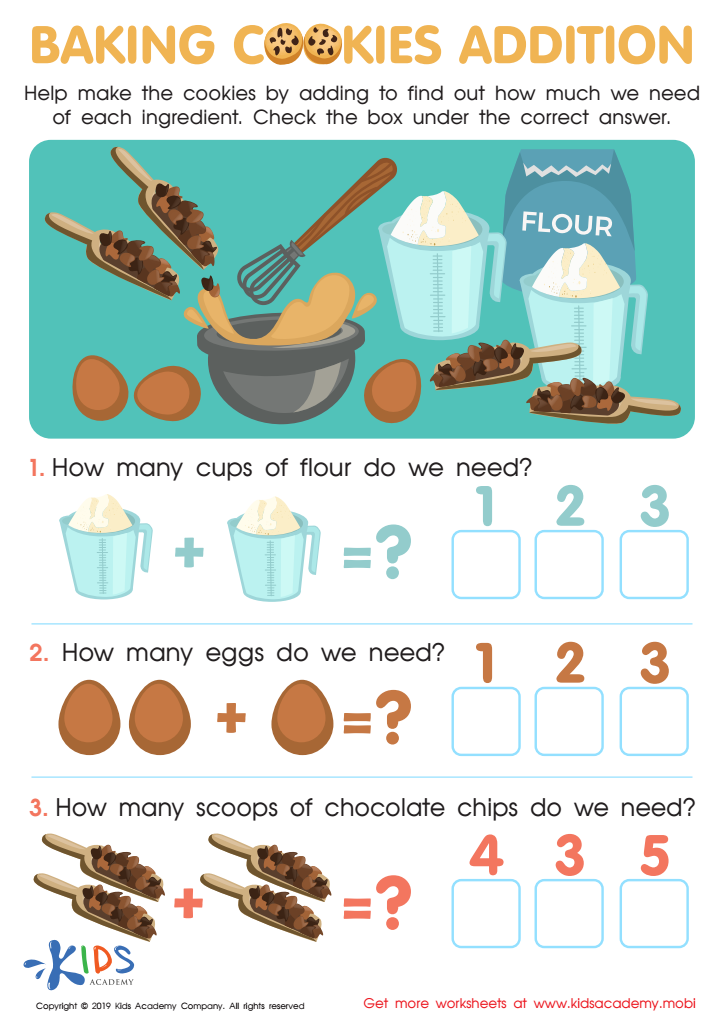
Baking Cookies Addition Worksheet
 Assign to My Students
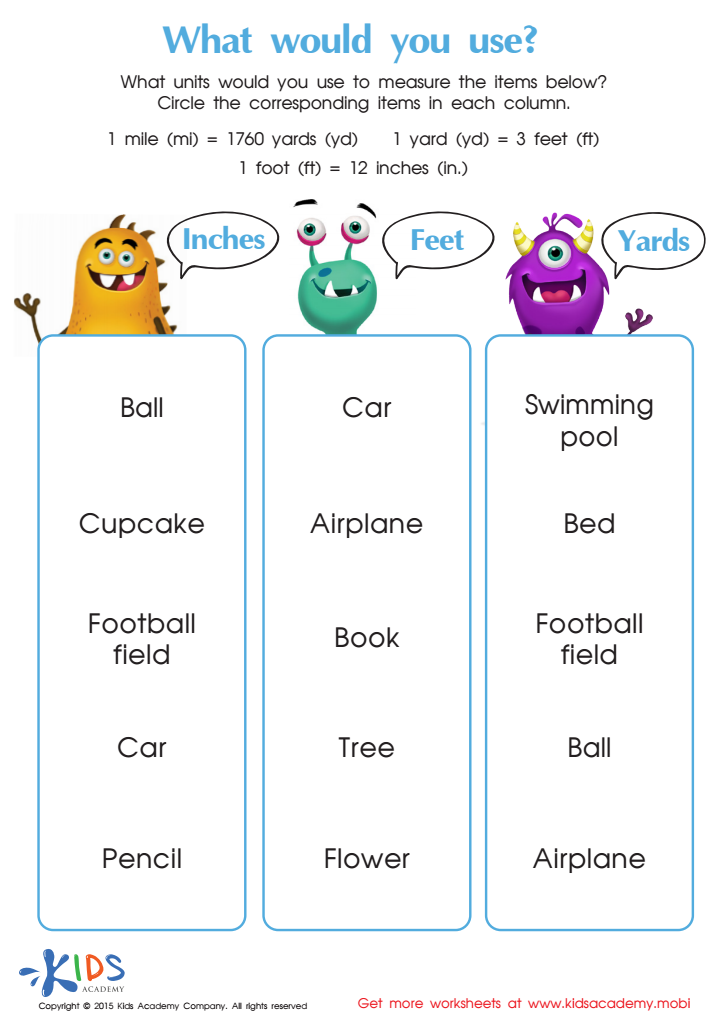
Learning about measuring objects in inches, feet and yards Worksheet
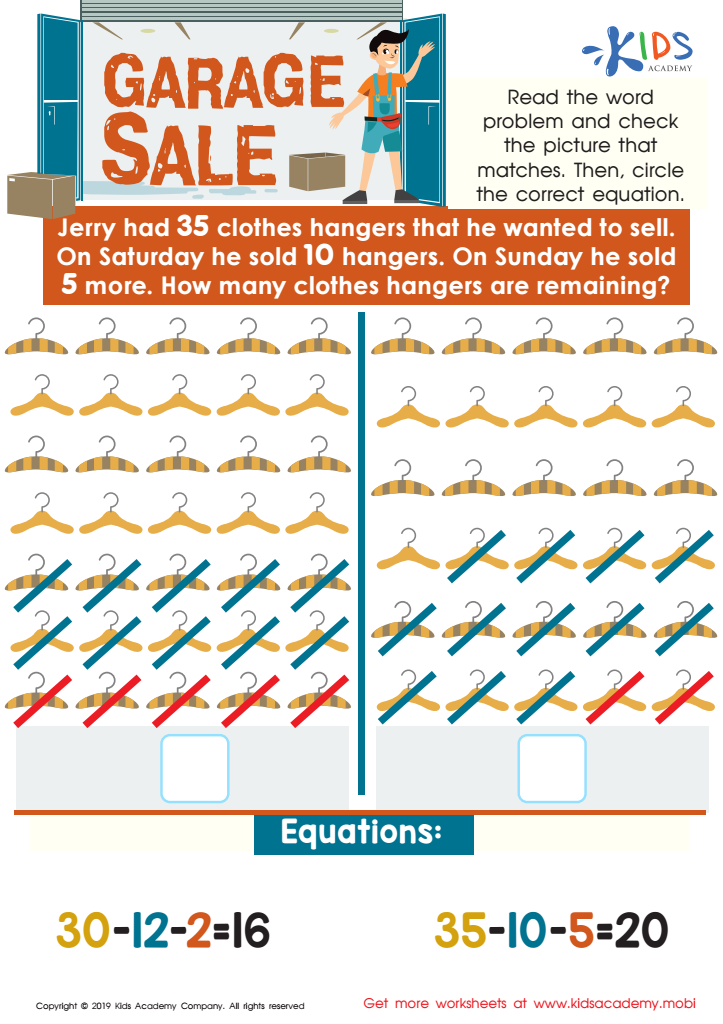
Garage Sale Worksheet
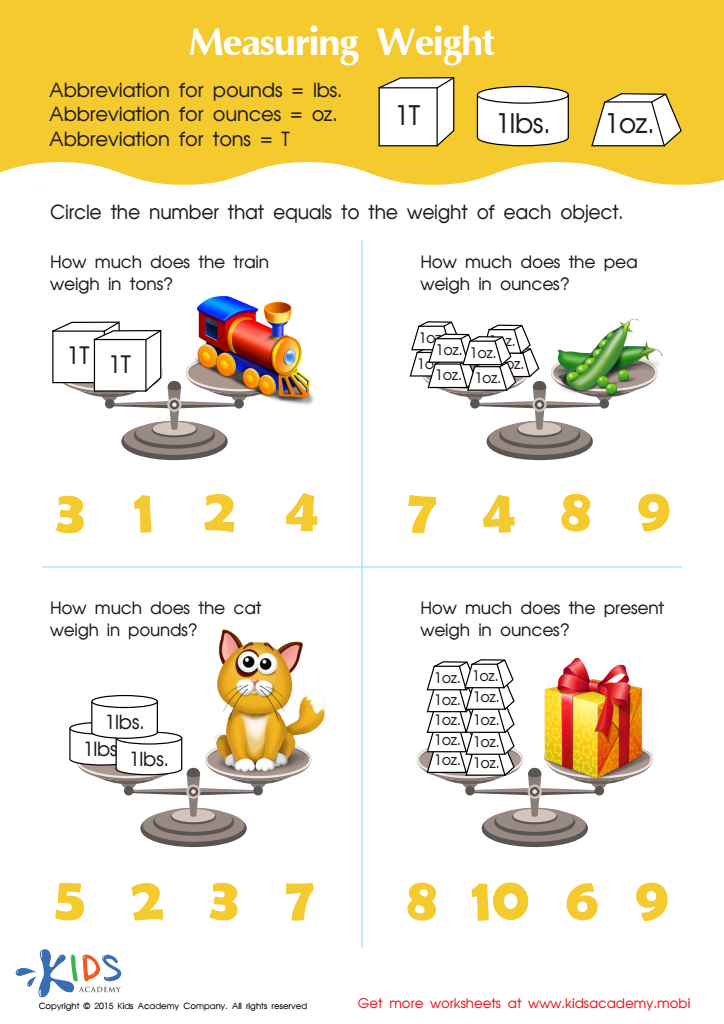
Measuring Weight in Ounces, Pounds and Tons Worksheet
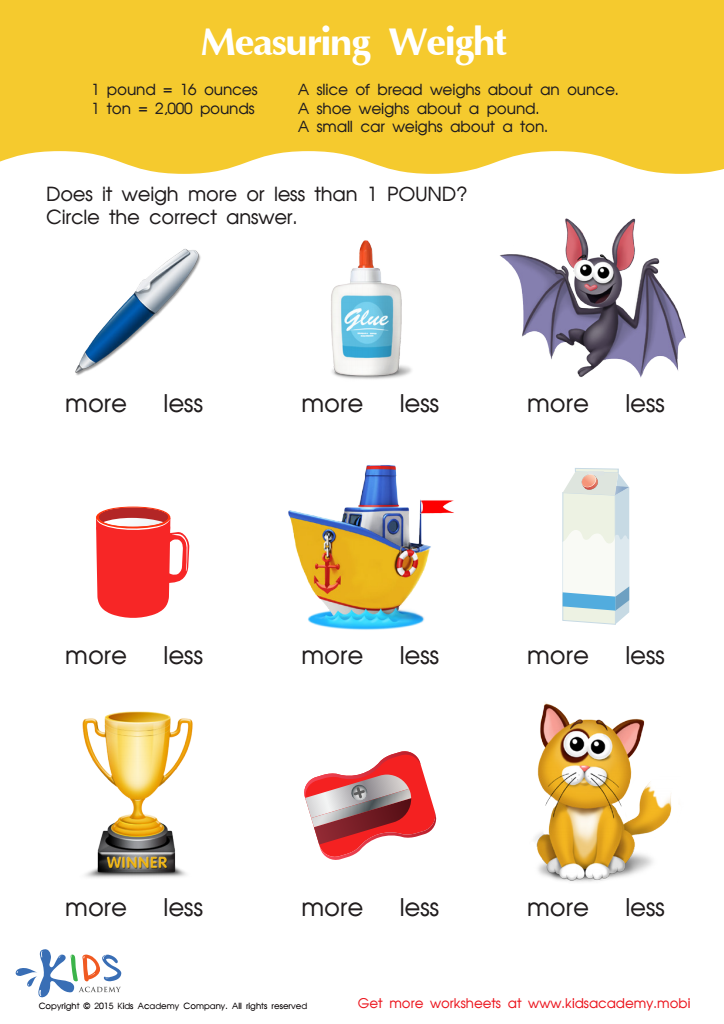
Measuring weight in pounds Worksheet
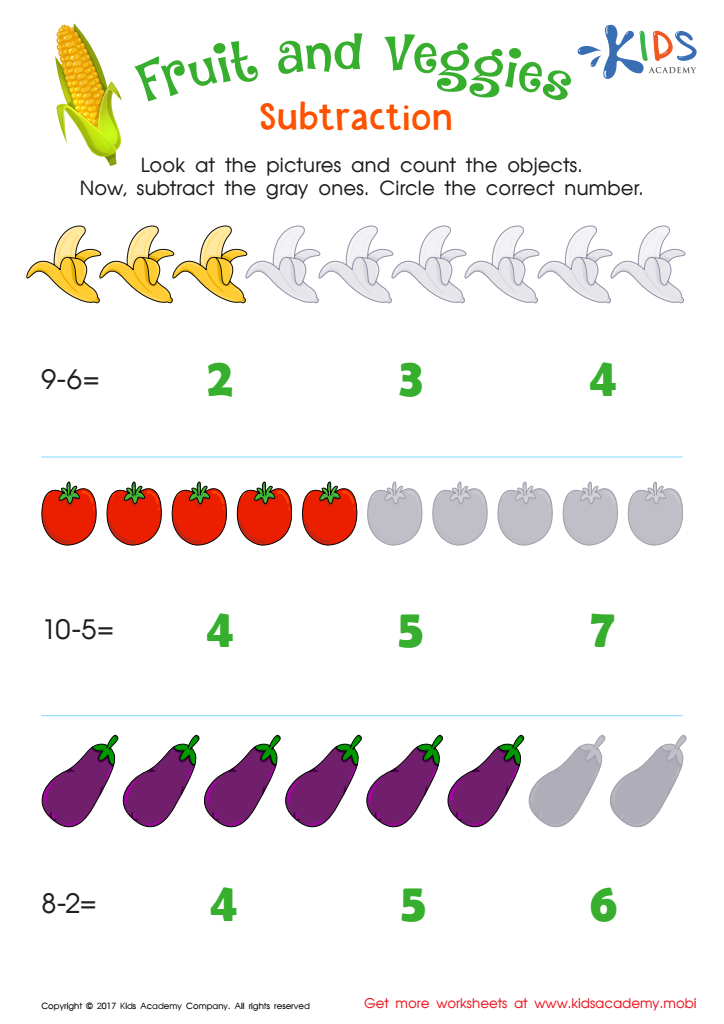
Fruit and Veggies Subtraction Worksheet






Parents and teachers should prioritize practical math applications for children aged 4-6 because these foundational experiences can significantly influence a child’s lifelong relationship with math. At this age, children are naturally curious and learn best through play and hands-on activities. Integrating math into everyday situations—such as cooking, shopping, or measuring—makes the subject relatable and enhances cognitive development.
Practical math helps children understand key concepts like counting, comparisons, and patterns in meaningful ways. For example, counting fruits during snack time reinforces number recognition, while sorting toys can introduce early concepts of categorization and units of measure. When kids see the real-life relevance of math, they are more likely to be engaged and motivated.
Moreover, such activities foster problem-solving skills, critical thinking, and autonomy. These early experiences diminish math anxiety in later years, as children learn through positive reinforcement instead of fear or frustration. The development of these early skills also promotes collaboration and communication when working in pairs or groups during math-related play.
Ultimately, a strong mathematical foundation nurtured through practical applications prepares children for future academic success and develops essential life skills, making it an invaluable focus for parents and educators alike.








