Understanding comparisons Math Worksheets for Ages 4-6
5 filtered results
-
From - To
Enhance your child's mathematical skills with our "Understanding Comparisons Math Worksheets for Ages 4-6." Tailored for young learners, these printable worksheets focus on fundamental comparison concepts such as greater than, less than, and equal to. Engaging visuals and fun exercises aid in developing critical thinking and analytical skills in a playful manner. Perfect for home or classroom use, these worksheets make learning enjoyable and effective, helping kids build a solid foundation in early math. Equip your children with the tools they need for their educational journey with our expertly crafted comparison activities. Download now for endless learning fun!
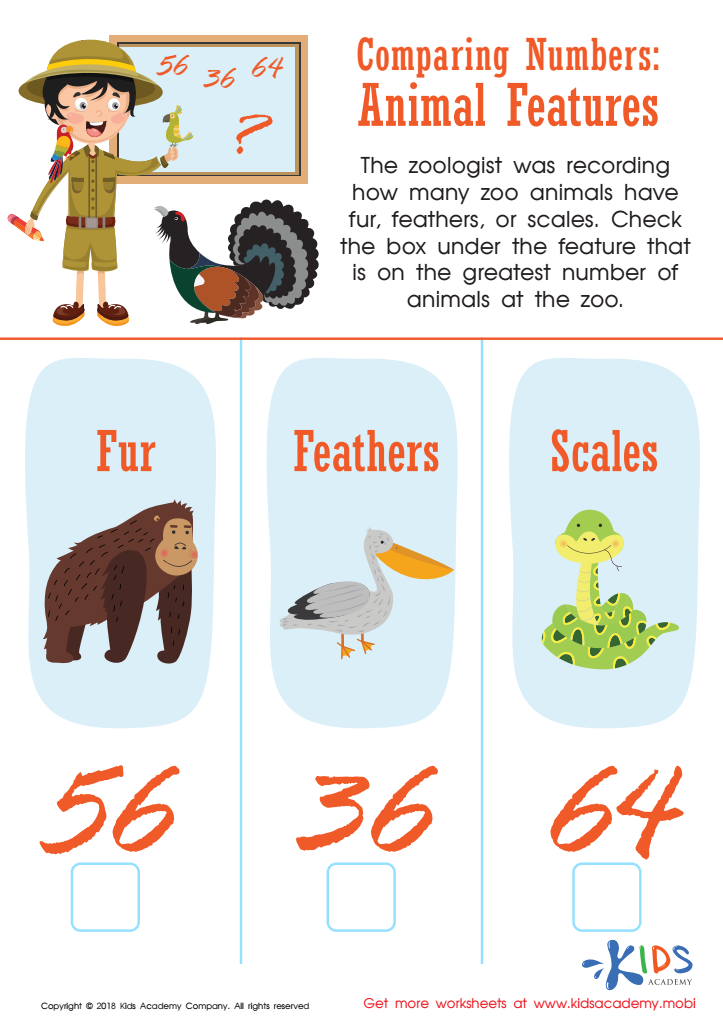
Animal Features Worksheet
 Assign to My Students
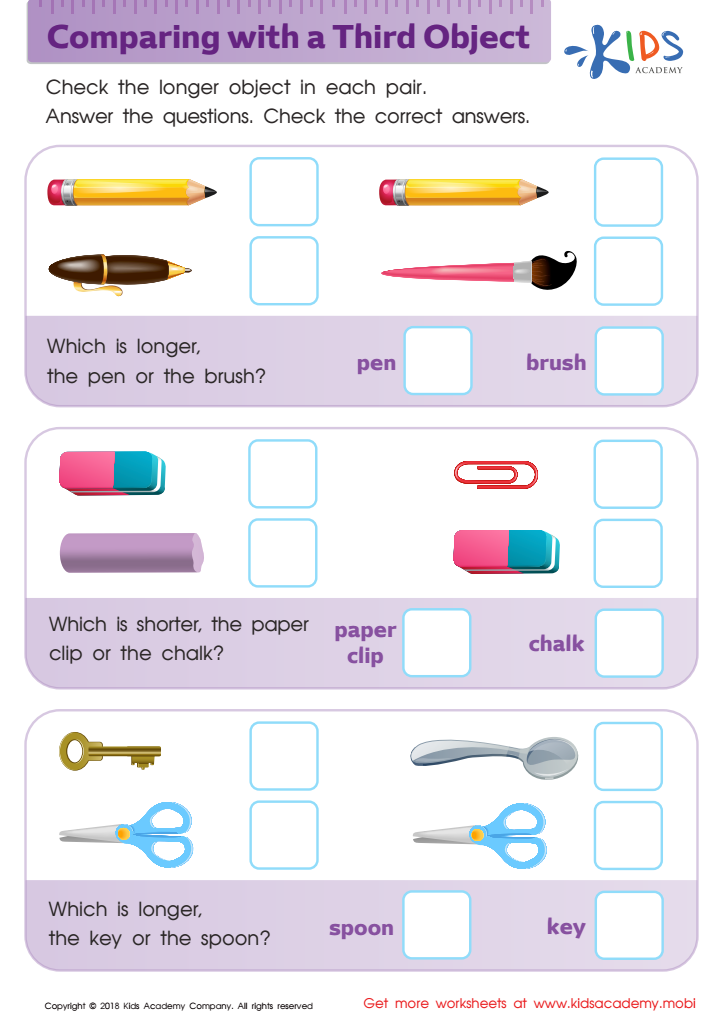
Comparing with a Third Object Worksheet
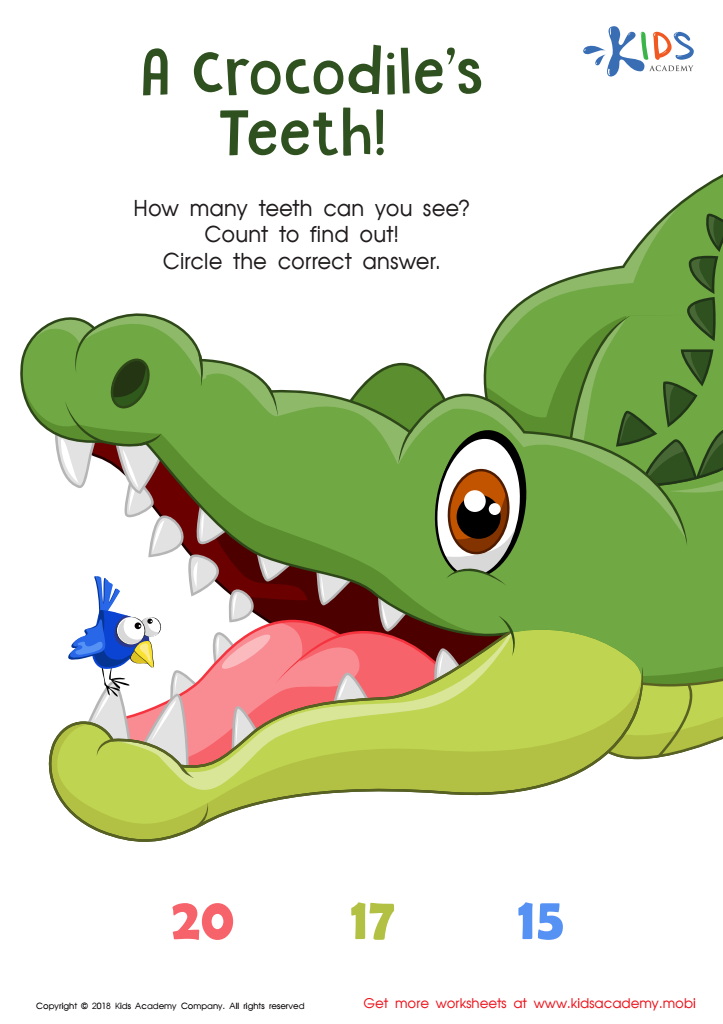
A Crocodile's Teeth Worksheet
Matching: Classifying Toys by Size Worksheet
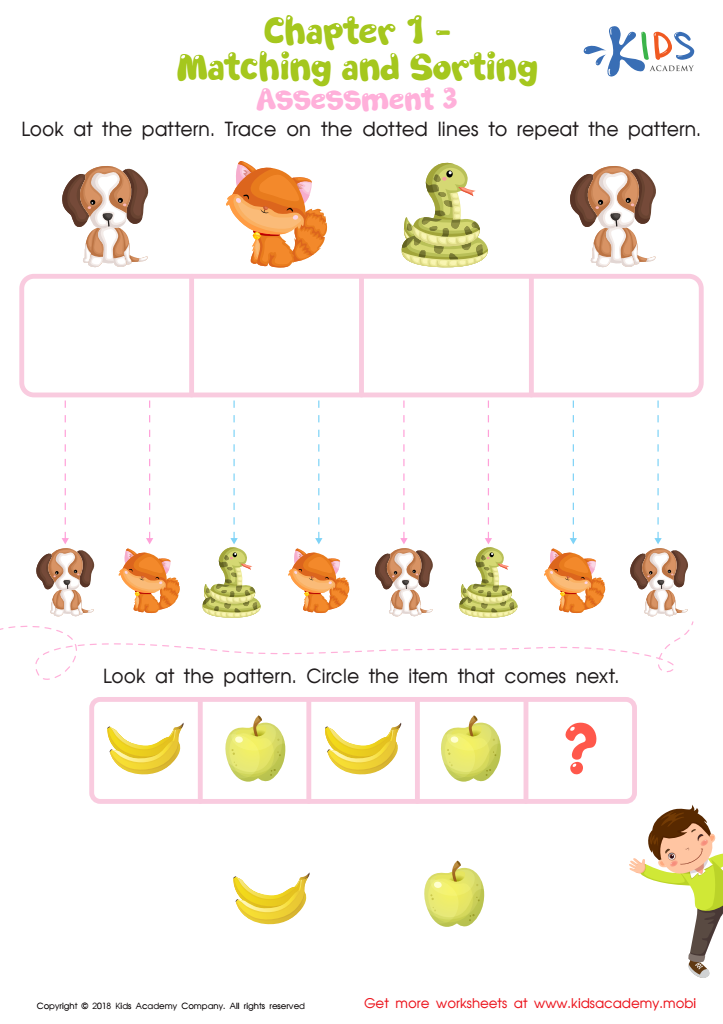
Matching and Sorting for Preschool: Assessment 3 Worksheet





Understanding comparisons in math is crucial for children aged 4-6 as it lays the foundation for essential cognitive and mathematical skills. Comparing objects based on attributes like size, quantity, and length helps develop critical thinking and problem-solving abilities. For instance, when children decide whether an apple is bigger than an orange or which basket has more apples, they are exercising their observational and analytical skills.
Early comprehension of comparisons prepares kids for more complex mathematical concepts, such as measurements, arithmetic, and data interpretation. These foundational skills are instrumental when they later encounter fractions or algebra, where understanding relative differences and relationships between numbers and objects is key.
Furthermore, mastering comparisons fosters language development. Describing how one object relates to another enhances vocabulary with words like “bigger,” “smaller,” “more,” and “less.” This learning stage also builds confidence and a positive attitude toward mathematics, which can have long-term educational benefits.
For parents and teachers, incorporating comparisons in daily activities and discussions offers children hands-on, concrete experiences. Whether sorting toys by size or measuring ingredients for a recipe, these activities make learning relevant and engaging. Ultimately, a strong grasp of comparisons equips young children with the cognitive tools necessary for academic success and real-world problem-solving.








