Matching skills Matching Worksheets for Ages 4-6
6 filtered results
-
From - To
Enhance your child's learning experience with our engaging Matching Skills Matching Worksheets, designed specifically for ages 4-6! These worksheets are perfect for helping young learners develop critical cognitive skills as they build connections between images, objects, and concepts. Our fun and interactive exercises promote image recognition, concentration, and memory retention, making learning enjoyable and effective. Each worksheet is tailored to foster a love for learning while encouraging independent thinking. Ideal for classroom use or at-home learning, these matching worksheets provide a strong foundation in early education. Start your child's journey towards confidence and success with our delightful matching activities today!
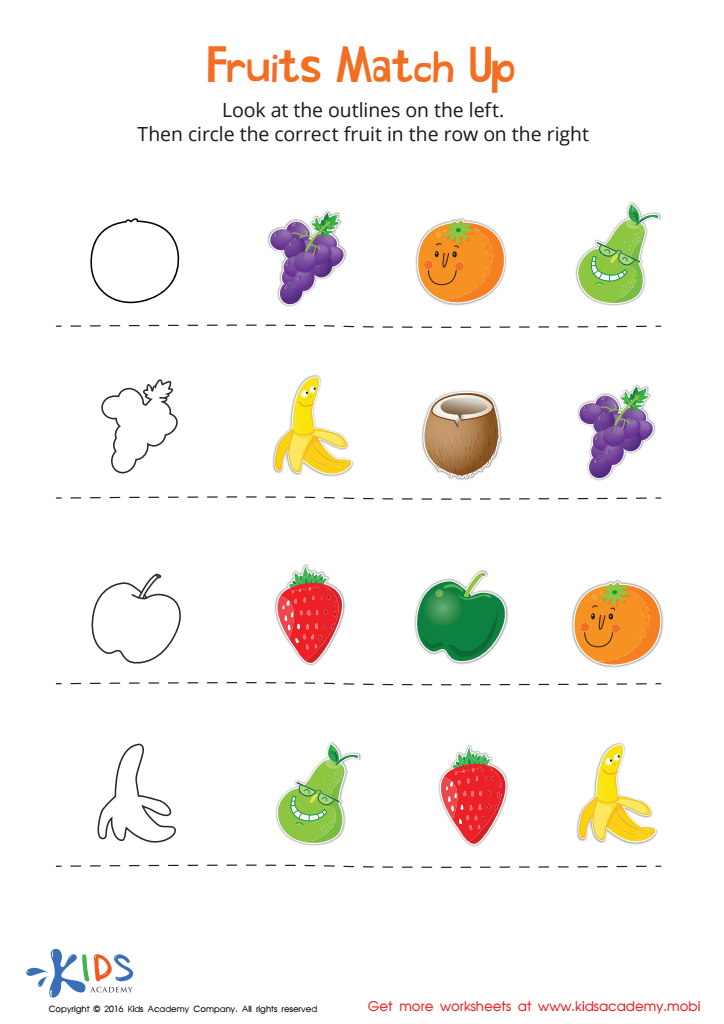
Fruits Match Up Worksheet
 Assign to My Students
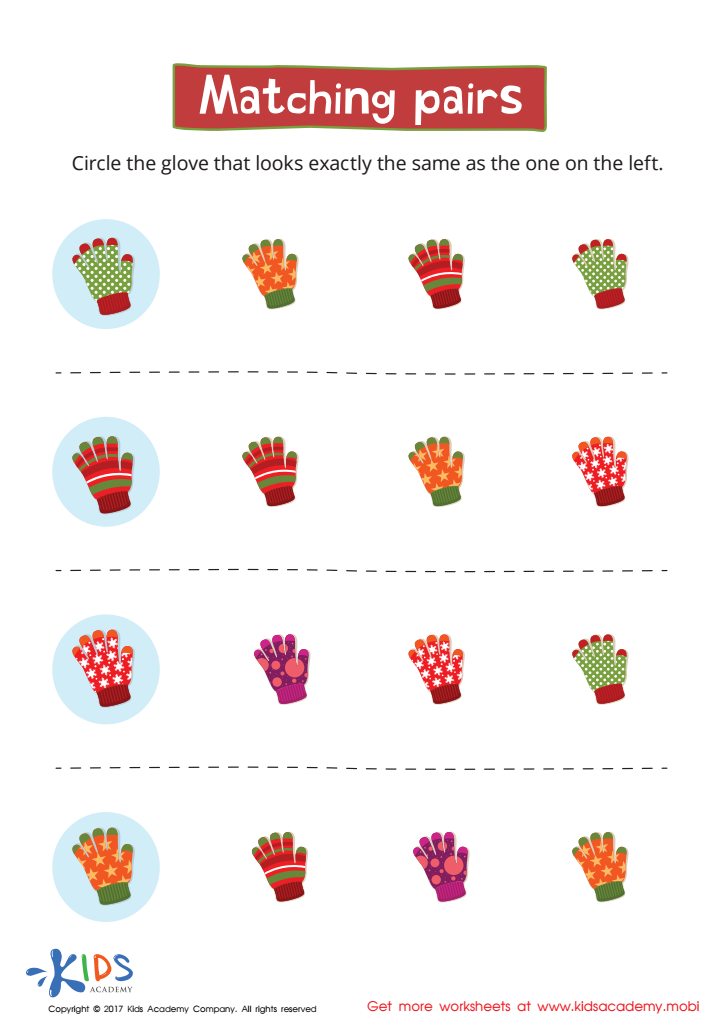
Matching: Matching Pairs Worksheet
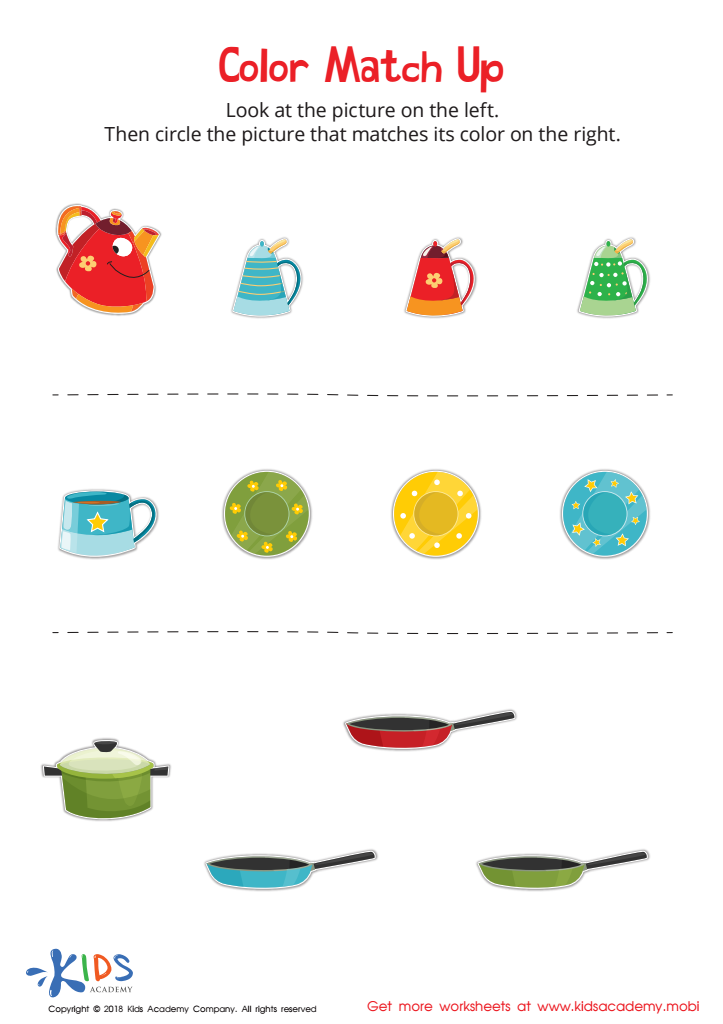
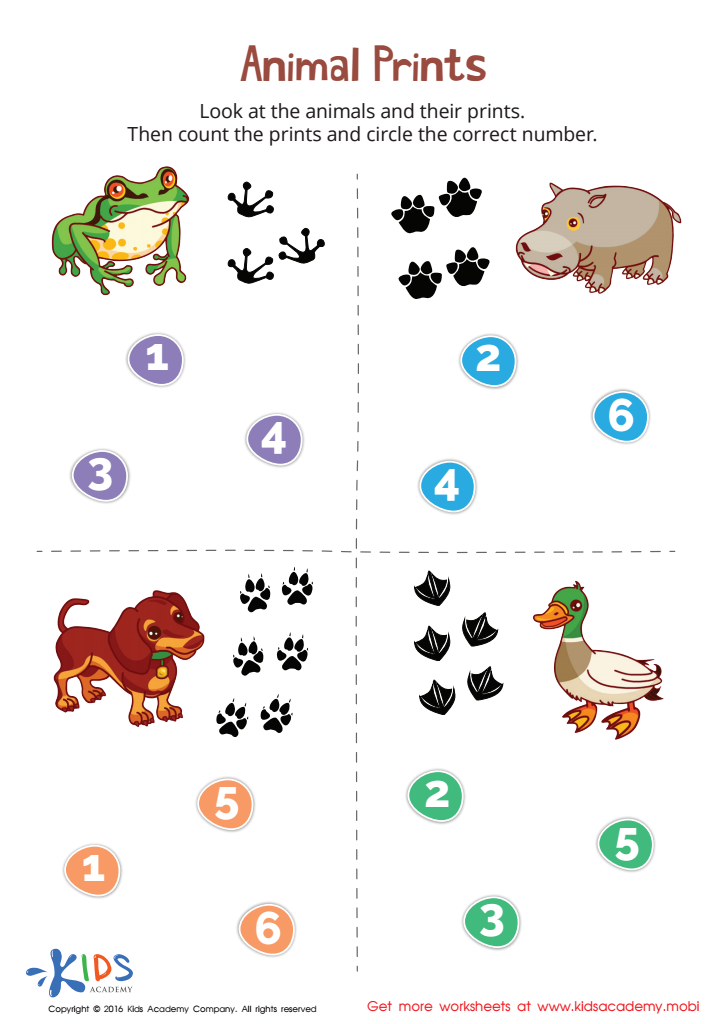
Animal Prints Match-Up Worksheet
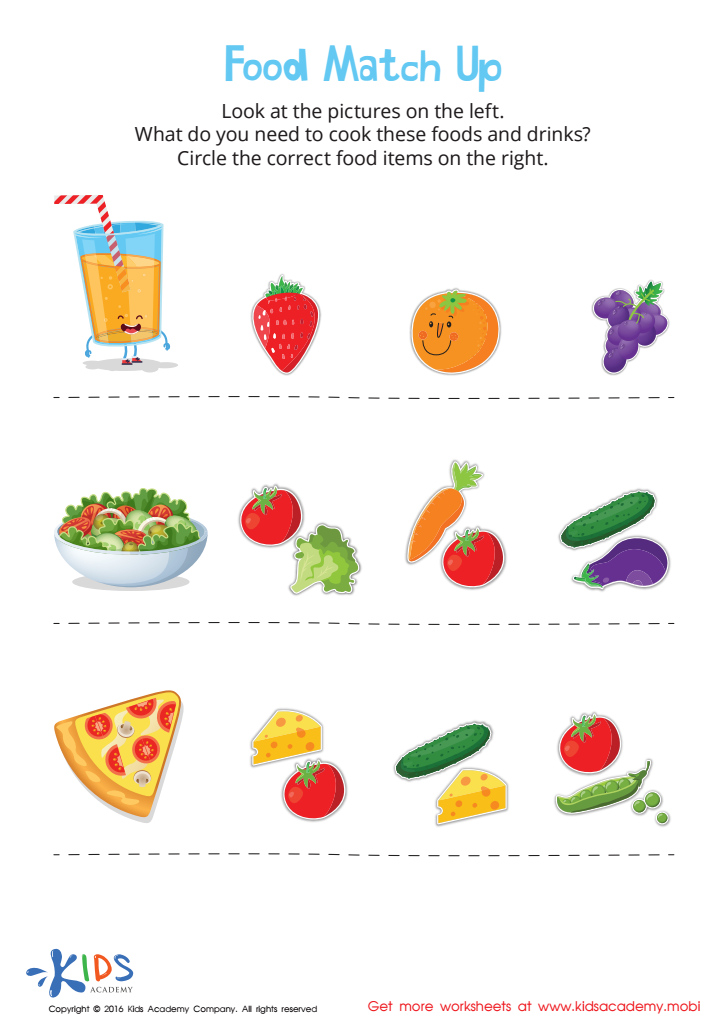
Food Match Up Worksheet
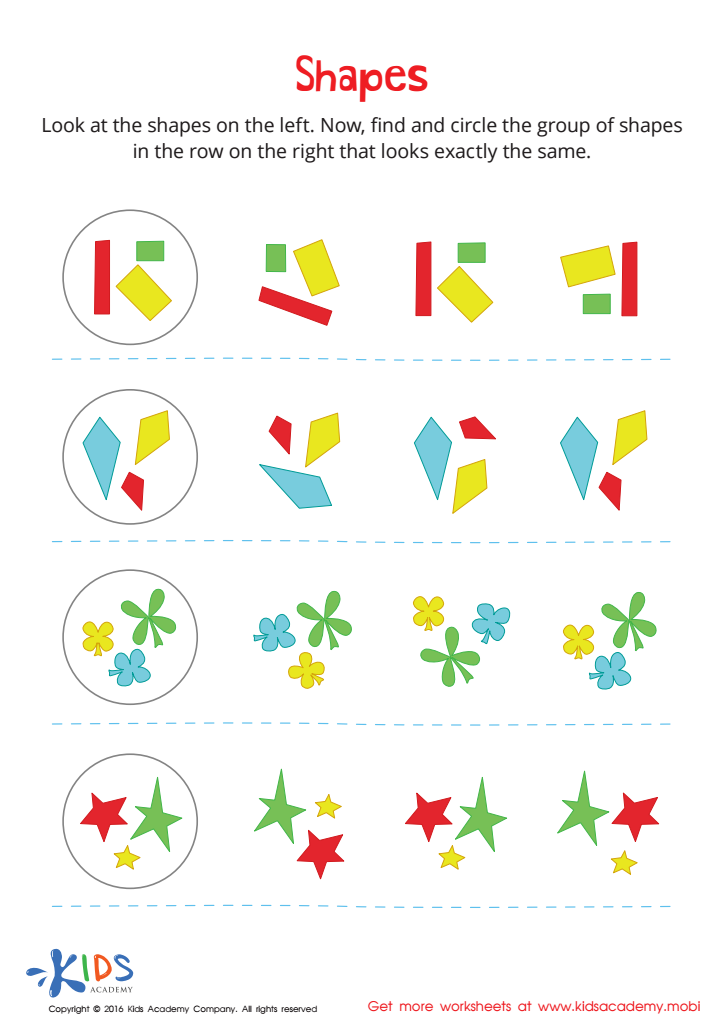
Shapes Worksheet








Matching skills are crucial for children aged 4-6 as they form the foundation for various developmental competencies. Engaging in matching activities enhances cognitive abilities, fosters problem-solving skills, and strengthens memory retention. At this age, children are naturally inclined to explore and categorize their world, making matching games a perfect tool for learning.
Parents and teachers should care about these skills because they are not solely about recognizing similarities but also about developing critical thinking. For instance, matching reinforces concepts like shapes, colors, numbers, and letters. This early engagement lays the groundwork for more complex learning, such as pattern recognition and categorization.
Moreover, mastering matching activities promotes social skills. Collaborative matching games encourage teamwork, sharing, and communication among peers. This collaborative aspect helps build emotional intelligence, teaching children how to navigate social interactions respectfully.
Also, matching skills often manifest in various subjects, including math and language arts. Strong matching abilities can lead to increased confidence in academic abilities and facilitate a smoother transition into formal schooling.
In sum, emphasizing matching skills in early childhood education supports cognitive, social, and emotional development, setting children up for future academic and personal success. Thus, parents and teachers should prioritize these experiences within their curriculum.








