Problem-Solving Skills Sorting Worksheets for Ages 4-6
4 filtered results
-
From - To
Enhance your child's problem-solving skills with our engaging sorting worksheets designed specifically for ages 4-6. These interactive activities encourage critical thinking and cognitive development as young learners sort various items based on different attributes such as size, shape, and color. Our worksheets foster independence and creativity, providing a fun way for children to practice categorization and make connections. With vibrant visuals and age-appropriate challenges, these resources create a solid foundation for future math and reasoning skills. Download our Problem-Solving Skills Sorting Worksheets today and watch your little one's confidence and abilities grow as they tackle each exciting task!
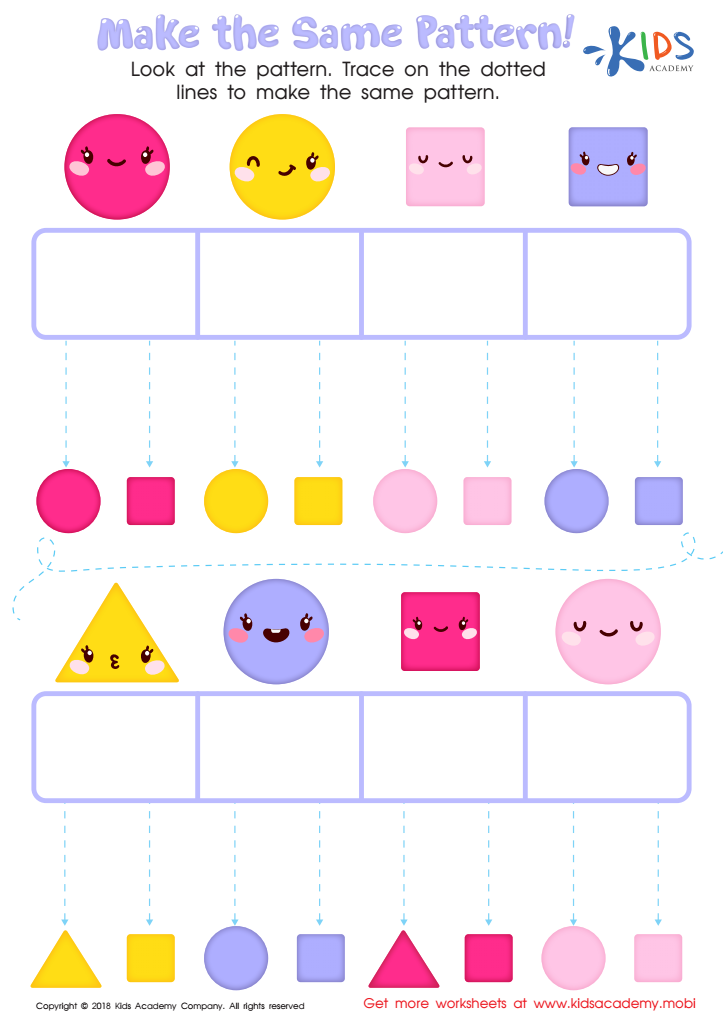
Make the Same Pattern Worksheet
 Assign to My Students
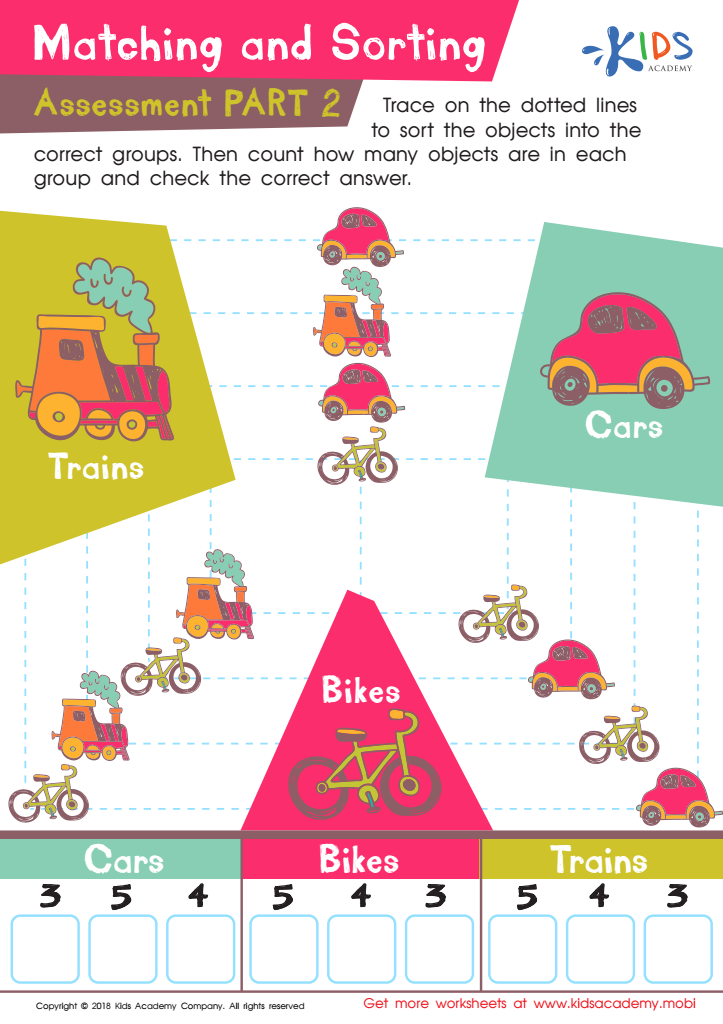
Matching and Sorting for Kindergarten: Assessment 2 Worksheet
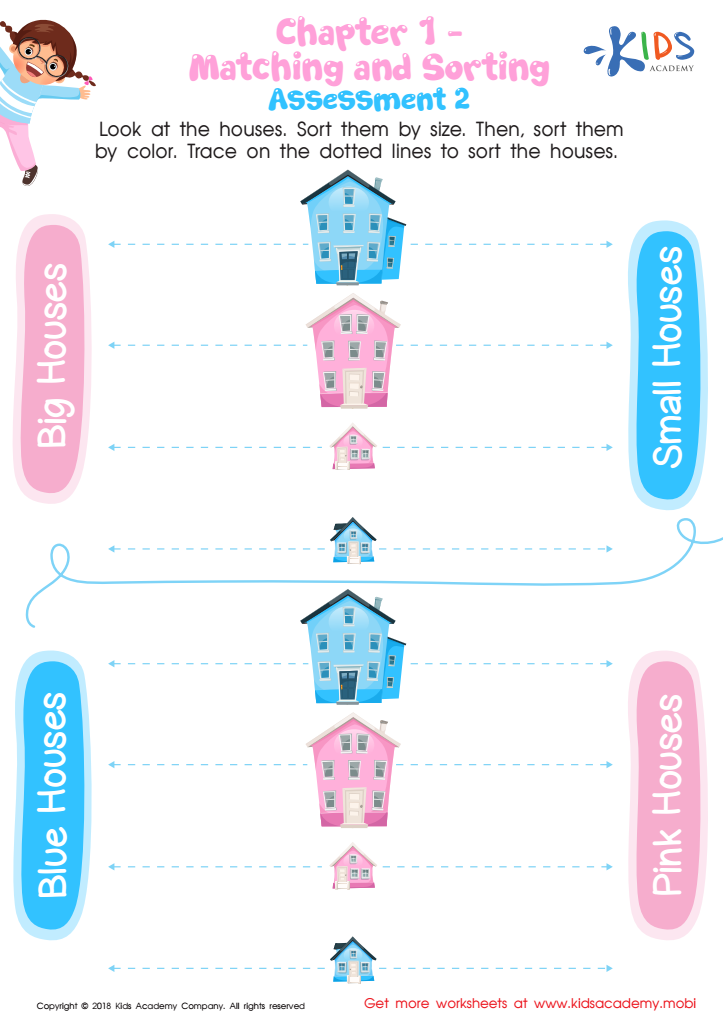
Matching and Sorting for Preschool: Assessment 2 Worksheet
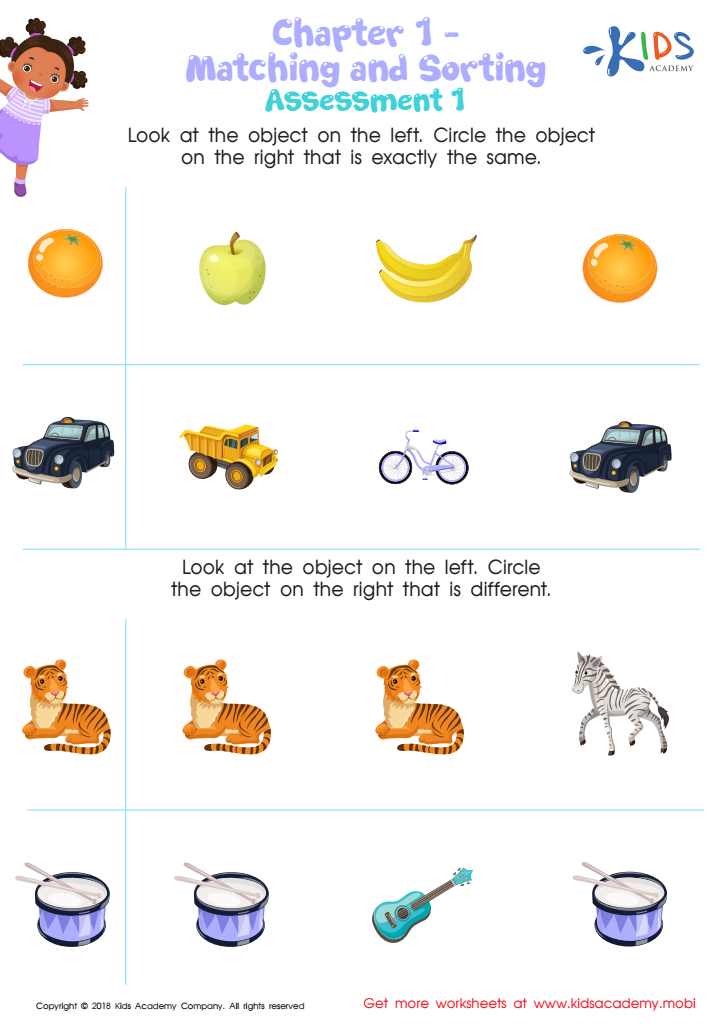
Matching and Sorting for Preschool: Assessment 1 Worksheet








Parents and teachers play a crucial role in fostering problem-solving skills in young children, especially between the ages of 4-6. This developmental stage is characterized by significant cognitive growth, making it an ideal time to cultivate these skills. Problem-solving involves more than just finding answers; it encompasses critical thinking, creativity, and resilience. By engaging children in sorting activities, parents and teachers promote analytical thinking as children learn to categorize objects based on varying attributes like size, color, and shape.
Activities that involve sorting help children develop foundational skills such as comparison, classification, and reasoning—cornerstones of effective problem-solving. When children engage in these tasks, they learn to approach challenges systematically, make decisions, and understand perspectives, which are essential for academic and life success.
Moreover, problem-solving activities can enhance social skills, as children often work in groups, negotiating and discussing outcomes. This cooperative environment fosters communication and collaboration, vital for future interactions. In summary, nurturing problem-solving skills through sorting activities enriches children's learning experiences, empowers them to handle challenges confidently, and sets the stage for lifelong problem-solving abilities. For parents and teachers, successfully guiding children in these early stages is an invaluable gift.








