
Critical thinking development Science Worksheets for Ages 4-6
3 filtered results
Difficulty Level
Grade
Age
-
From - To
Subject
Activity
Standards
Introducing our "Critical Thinking Development Science Worksheets for Ages 4-6," designed to spark curiosity and foster analytical skills in young learners. These engaging worksheets encourage children to explore scientific concepts through fun activities that promote observation, reasoning, and problem-solving. Aligned with early education standards, our resources incorporate imaginative scenarios and hands-on exercises that captivate children's attention while enhancing their understanding of the world around them. Ideal for home or classroom use, these worksheets support parents and educators in cultivating critical thinkers from an early age. Equip your little ones with essential skills that will benefit them throughout their educational journey!
Favorites
With answer key
Interactive
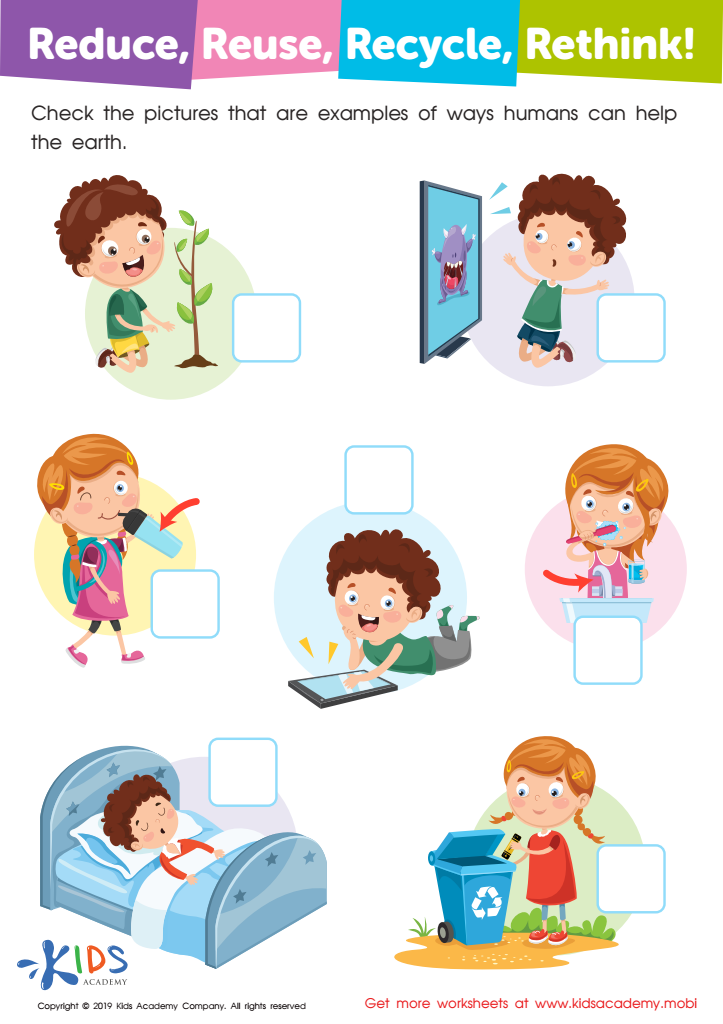
Reduce, Reuse, Recycle, Rethink Worksheet
Recycling is a great way to reduce waste and help our planet — instead of throwing away a can of soda, recycle it! Look at the pictures in the worksheet — what are the kids doing? They're learning about ways to help the environment. Check the pictures for examples of how to help the earth.
 Assign to My Students
Reduce, Reuse, Recycle, Rethink Worksheet
Worksheet
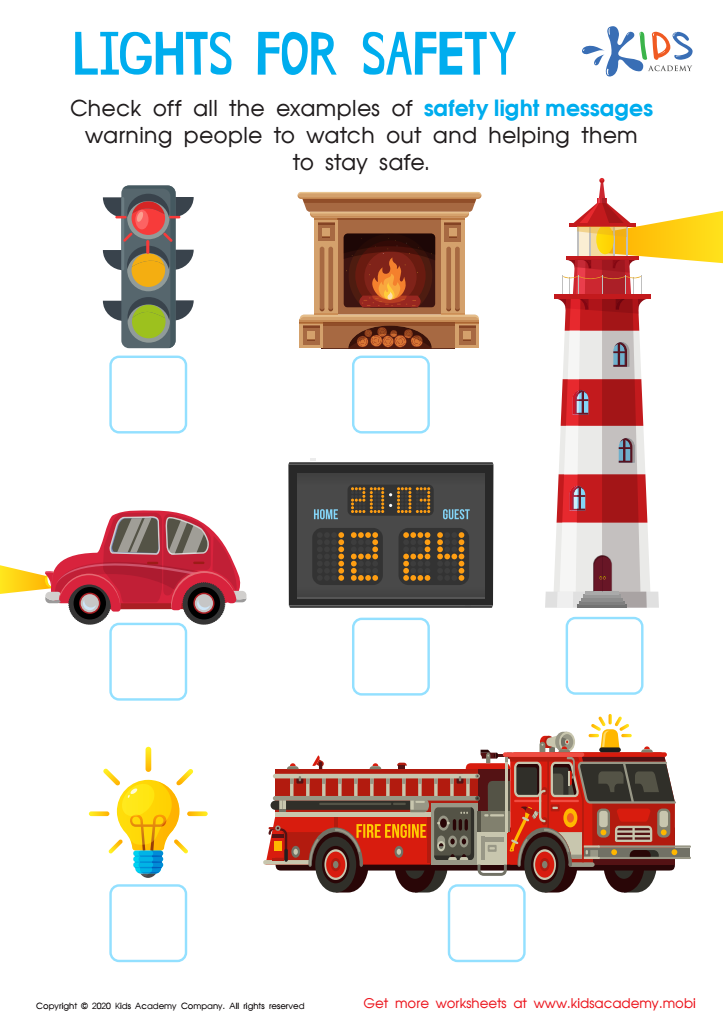
Lights for Safety Worksheet
Teach kids safety light messages to stay safe. Print this worksheet and ask students to identify the objects in the pictures. Then, ask them to check off the safety light messages which warn people to watch out. This helps keep kids safe at all times.
Lights for Safety Worksheet
Worksheet
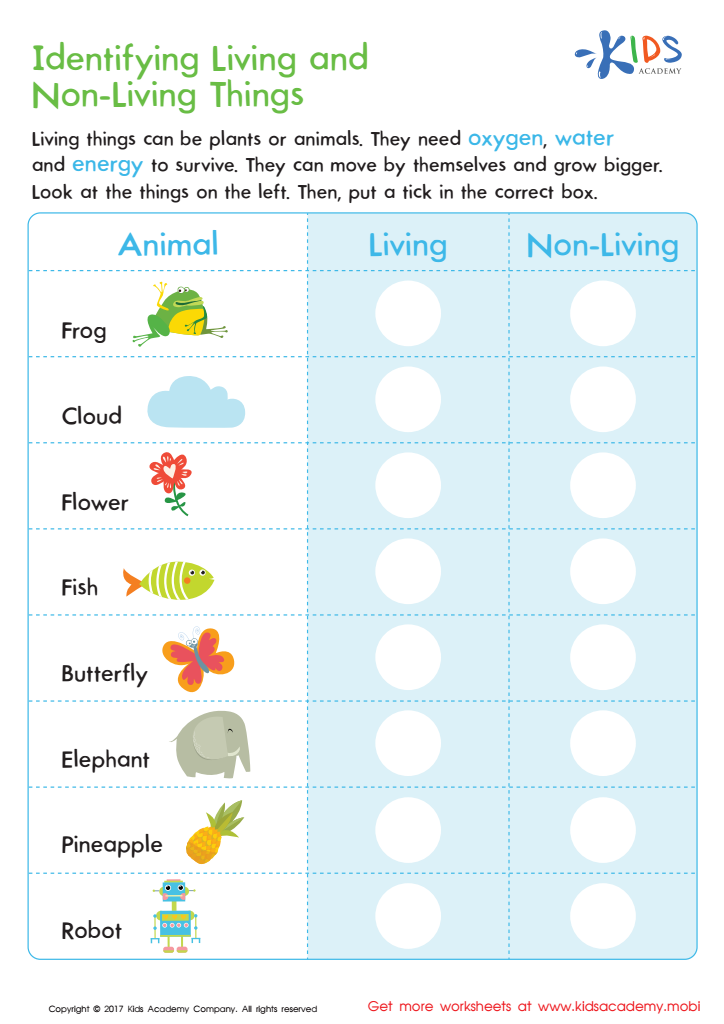
Identifying Living or Non–living Worksheet
Help your child learn to sort and categorize in a new way! Teach them to classify things as living or non-living using this worksheet. It's the perfect way to build their scientific understanding, and to have some learning fun! Print this worksheet and watch them discover the world of science!
Identifying Living or Non–living Worksheet
Worksheet
Join Kids Academy for Free
Who is primarily going to use this learning content?








Critical thinking development in young children, particularly ages 4 to 6, is vital for their overall growth and learning. At this stage, children are naturally curious and enthusiastic about exploring the world around them. Teaching them critical thinking skills enhances their ability to ask questions, solve problems, and engage in scientific inquiry, which lays a strong foundation for future academic success.
Parents and teachers should care about fostering these skills because they empower children to think independently and make informed decisions. By encouraging observation, experimentation, and reasoning, adults can help children develop a mindset that values inquiry and open-mindedness. Scientific experiences tailored for this age group can captivate children's imaginations, build resilience in the face of challenges, and teach them to evaluate information critically.
Moreover, critical thinking is not confined to science; it contributes to social skills and emotional intelligence. Children learn to articulate their thoughts, engage in discussions, and respect different viewpoints. This holistic development equips them for lifelong learning and adaptability in an ever-changing world. Ultimately, investing in critical thinking in early childhood fosters a generation of learners who are not only knowledgeable but also thoughtful, innovative, and capable of navigating complex issues.







