
Enhancing vocabulary Science Worksheets for Ages 4-6
5 filtered results
Difficulty Level
Grade
Age
-
From - To
Subject
Activity
Standards
Discover our "Enhancing Vocabulary Science Worksheets" designed specifically for ages 4-6! These engaging worksheets provide a fun and interactive way to boost young learners' vocabulary in a science context. Featuring colorful illustrations and easy-to-follow activities, children will explore essential science concepts while expanding their language skills. Each worksheet encourages curiosity and critical thinking, helping kids connect words with their meanings. Perfect for classroom use or at-home learning, our resources make science vocabulary accessible and enjoyable. Foster a love for learning and set the foundation for future scientific exploration with our thoughtfully crafted worksheets! Join us in inspiring the next generation of young scientists.
Favorites
With answer key
Interactive
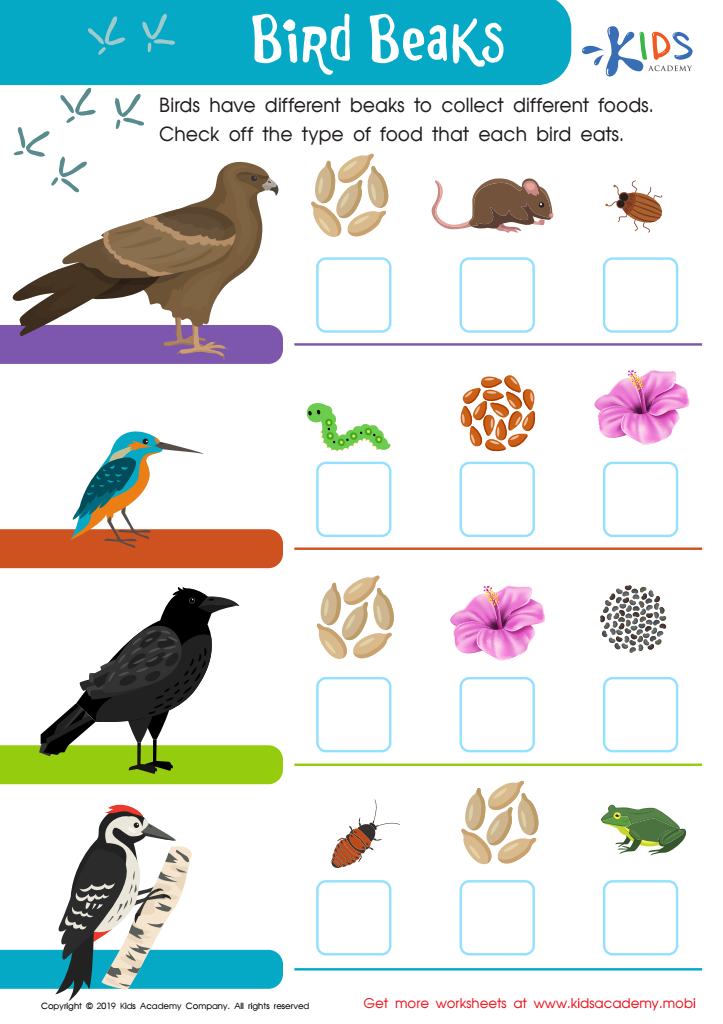
Bird Beaks Worksheet
Birds have beaks to eat different types of food. Let your little nature lover explore why with this free worksheet! They'll learn about different beak shapes and match them to the food that's best for them. Be an adorable bird watcher together!
 Assign to My Students
Bird Beaks Worksheet
Worksheet
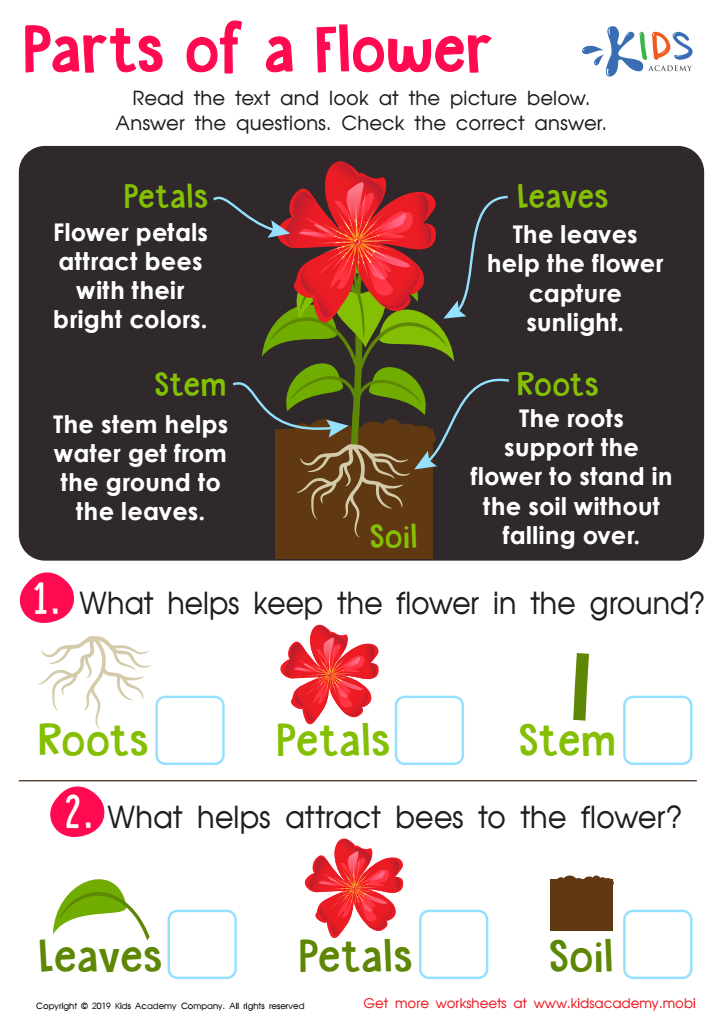
Parts of Flower Worksheet
Learning how to dissect info from graphics is essential. This free worksheet on the parts of a flower is a great learning tool for kids. It offers info, picture clues and comprehension questions. Plus, it gives them a visual reference for building on their knowledge of plants.
Parts of Flower Worksheet
Worksheet
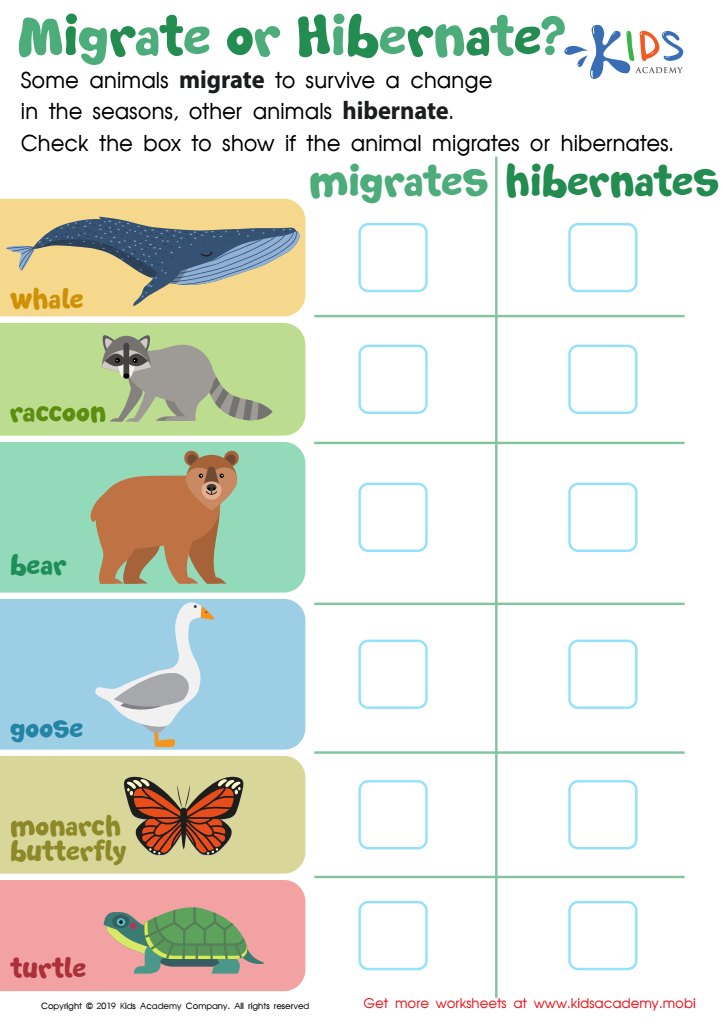
Migrate or Hibernate? Worksheet
Many animals survive by either migrating or hibernating when the weather changes. Migration involves traveling in flocks or herds to a more temperate climate, while hibernation is when animals stay in their homes and eat and sleep for a long period of time. Show your kids this worksheet and help them decide which strategy animals use to cope with the changing weather.
Migrate or Hibernate? Worksheet
Worksheet
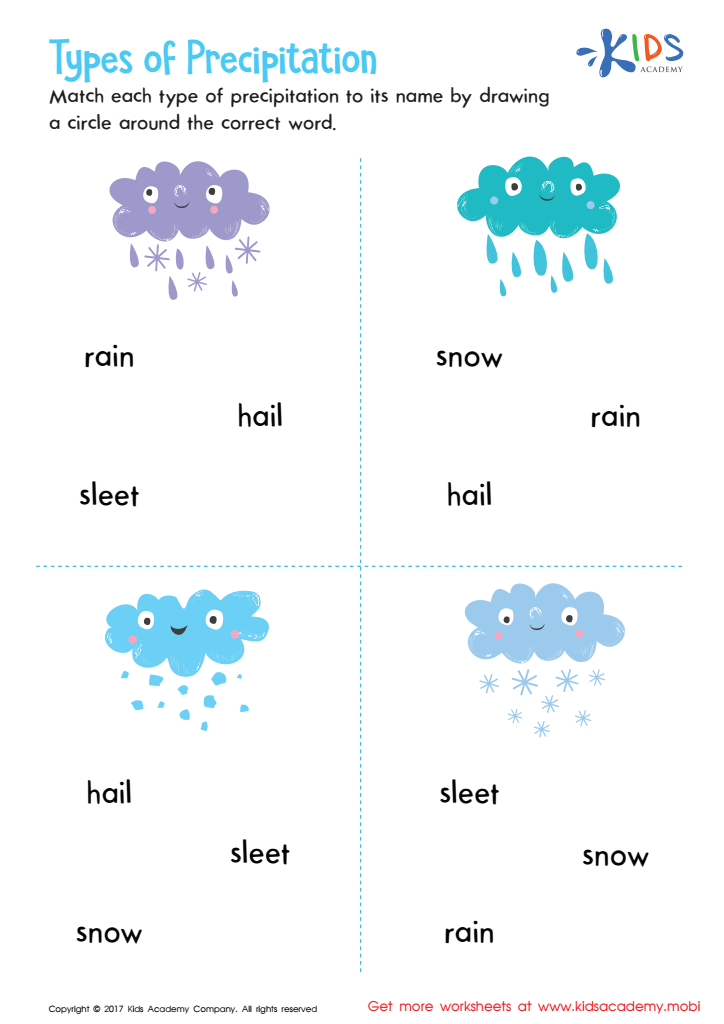
Types of Precipitation Printable
Science has a big impact on our world, and teaching kids about weather helps them understand how their learning applies to their lives. Our worksheet reviews different types of weather, so kids can look out the window and know what's happening. It covers familiar types of precipitation and more challenging ones like sleet or hail. Kids can use this to build a mental library of scientific knowledge for the future, even from places that don't get much snow.
Types of Precipitation Printable
Worksheet
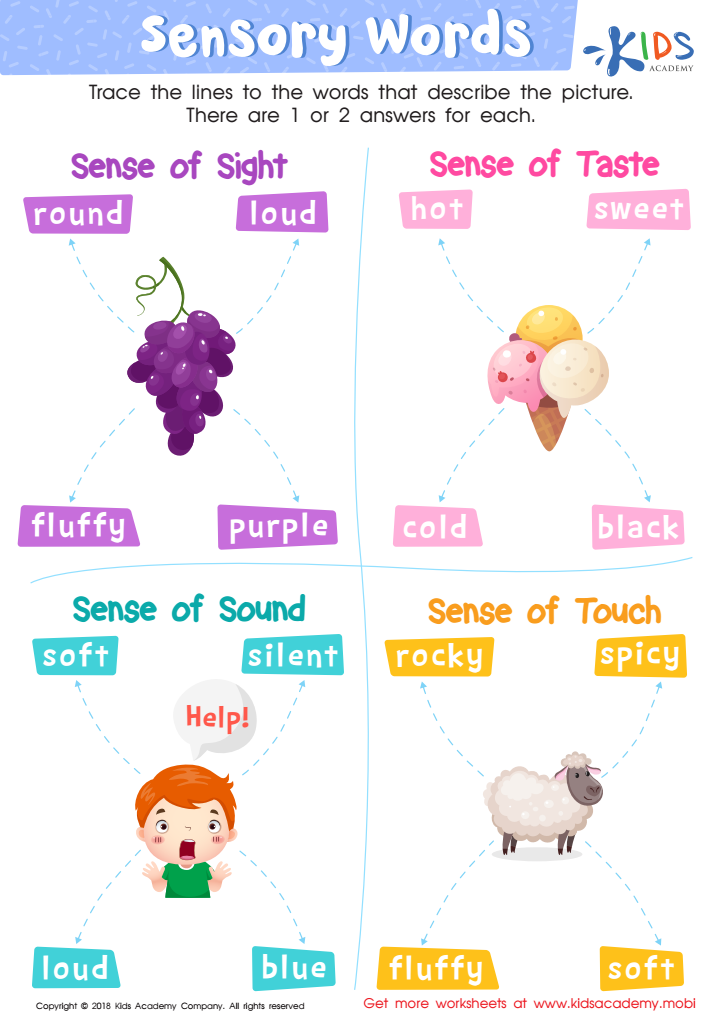
Sensory Words Worksheet
This worksheet helps students explore sensory words by looking at pictures and selecting one or two words to describe how it looks, feels, tastes, smells or sounds. Adding sensory words to texts makes them more interesting and helps students comprehend stories and articles better.
Sensory Words Worksheet
Worksheet
Join Kids Academy for Free
Who is primarily going to use this learning content?







Enhancing vocabulary in young children, particularly in science, is crucial for their cognitive and linguistic development. For ages 4-6, a rich vocabulary lays the foundation for successful communication and comprehension skills that are essential for academic achievement. In science, familiarity with specific terms and concepts nurtures curiosity about the natural world and builds a framework for critical thinking.
Parents and teachers play a vital role in making scientific vocabulary engaging and accessible. By introducing age-appropriate terms through interactive activities and play, they can spark children's interest and wonder about biological, physical, and Earth sciences. This engagement fosters a love for learning that can last a lifetime.
Furthermore, having a strong scientific vocabulary enables children to express their observations and thoughts clearly, facilitating richer classroom discussions and collaborative learning. As they articulate their understanding, they develop confidence in sharing ideas and asking questions.
Ultimately, enhancing vocabulary in science helps create informed, inquisitive learners. It prepares them for more complex concepts in higher grades and, most importantly, cultivates a sense of exploration and connection to the world around them. Investing in vocabulary development early on sets the stage for lifelong success in both science and everyday life.







