
Understanding photosynthesis Science Worksheets for Ages 4-6
3 filtered results
Difficulty Level
Grade
Age
-
From - To
Subject
Activity
Standards
Welcome to our "Understanding Photosynthesis Science Worksheets" page designed for young learners aged 4-6! These engaging worksheets introduce the fascinating world of photosynthesis in a fun and accessible way. Children will explore how plants make their food using sunlight, water, and carbon dioxide. Activities include coloring, matching, and simple comprehension questions to reinforce key concepts. These hands-on resources are perfect for developing observation skills while sparking curiosity about nature. Suitable for both home and classroom use, our worksheets encourage interactive learning and pave the way for a deeper appreciation of science in young minds! Join us in cultivating tomorrow’s scientists!
Favorites
With answer key
Interactive
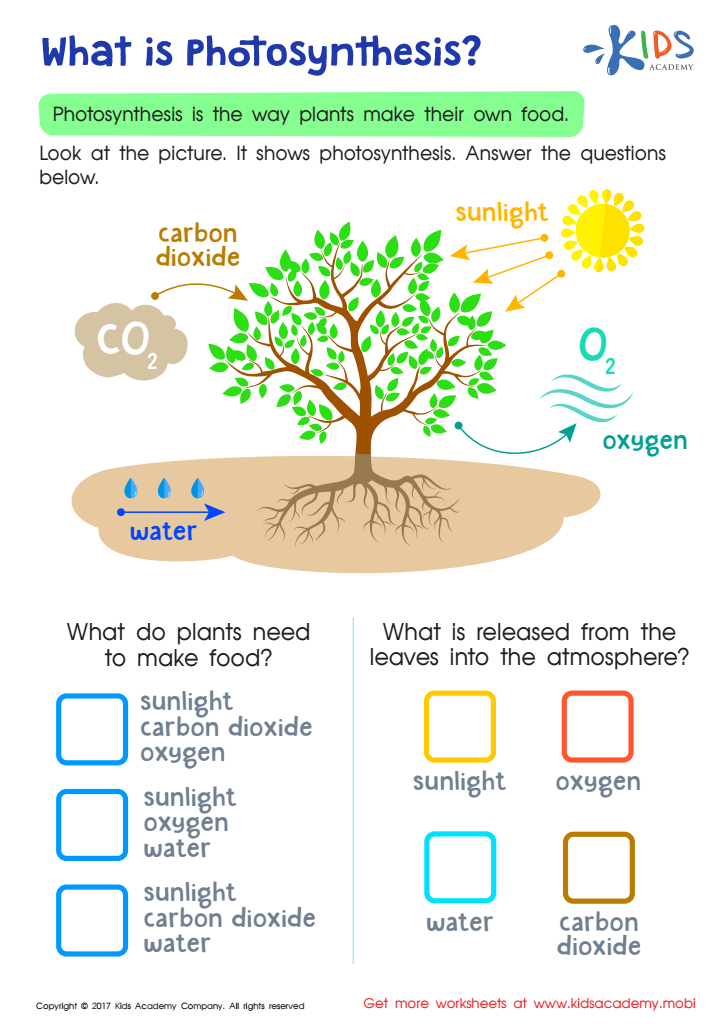
What is Photosynthesis Printable
Plants need to eat too; they make their own food from the air. Introduce them to photosynthesis with this fun worksheet!
 Assign to My Students
What is Photosynthesis Printable
Worksheet
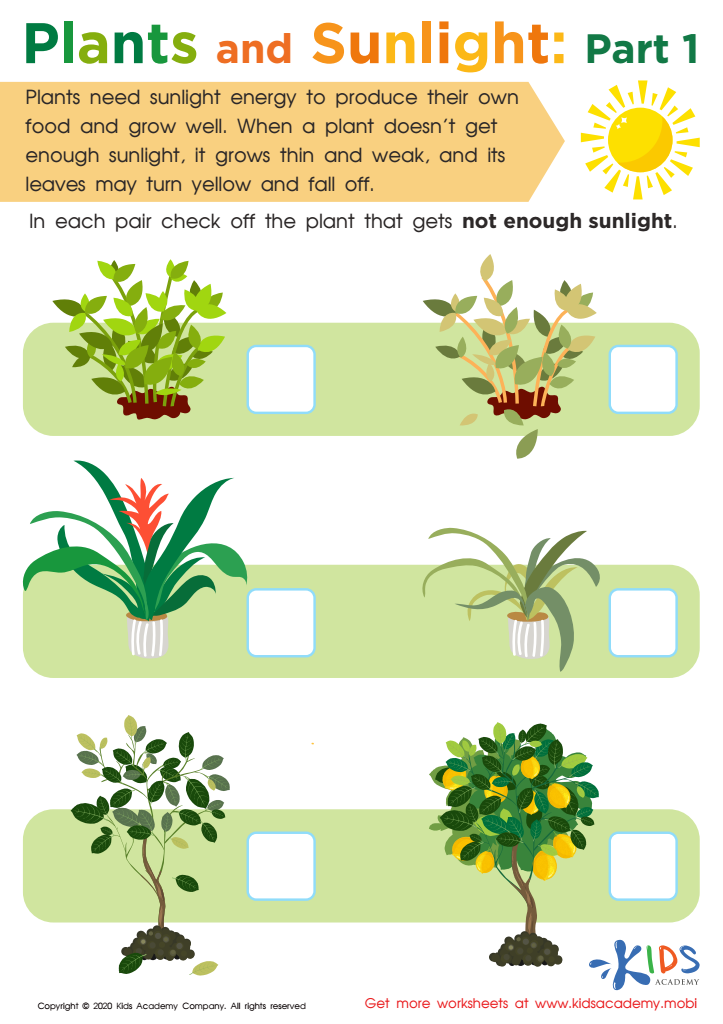
Plants and Sunlight: Part 1 Worksheet
Plants need the sun to grow big and strong, just as much as they need water. Without sunlight, plants can’t grow or flower. Use this worksheet to teach your child the importance of sun for plants. Have them read the passage and analyze the pictures to determine which plants are struggling due to lack of sunlight.
Plants and Sunlight: Part 1 Worksheet
Worksheet
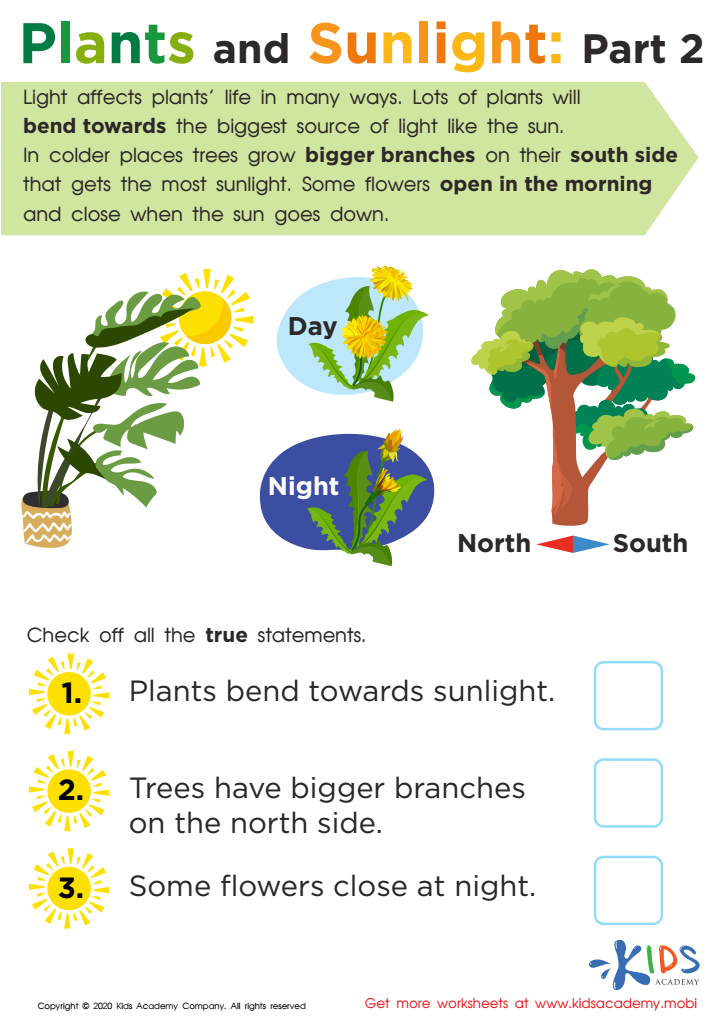
Plants and Sunlight: Part 2 Worksheet
Place a houseplant near the window and observe how it bends to get more sunlight! The sun's effects on plants and trees are amazing - flowers opening and closing, trees growing stronger branches on the south side. Let your child learn with this free Kids Academy printable science worksheet!
Plants and Sunlight: Part 2 Worksheet
Worksheet
Join Kids Academy for Free
Who is primarily going to use this learning content?






.jpg)
Understanding photosynthesis is crucial for young children, as it lays the foundation for their comprehension of nature and the environment. For parents and teachers, introducing this concept to ages 4-6 helps cultivate an early appreciation for science and the interconnectedness of life. Through simple explanations and engaging activities, children learn how plants produce food using sunlight, water, and carbon dioxide, demonstrating the significance of plants in our ecosystem.
At this age, children are naturally curious about the world around them. Engaging them in basic lessons about photosynthesis fosters inquiry-based learning, sparking questions about how plants grow and support life on Earth. This understanding can be tied into broader topics such as nutrition and sustainability, teaching kids the importance of caring for plants and protecting the environment.
Additionally, integrating photosynthesis in early education can promote hands-on learning experiences, whether through gardening activities or interactive storytelling. These experiences help reinforce the concept and encourage responsibility and teamwork. Overall, parents and teachers play a vital role in shaping environmentally conscious individuals by introducing scientific principles like photosynthesis in an age-appropriate manner, ensuring that children develop a lasting connection with the world around them.







