
Weather identification Science Worksheets for Ages 4-6
5 filtered results
Difficulty Level
Grade
Age
-
From - To
Subject
Activity
Standards
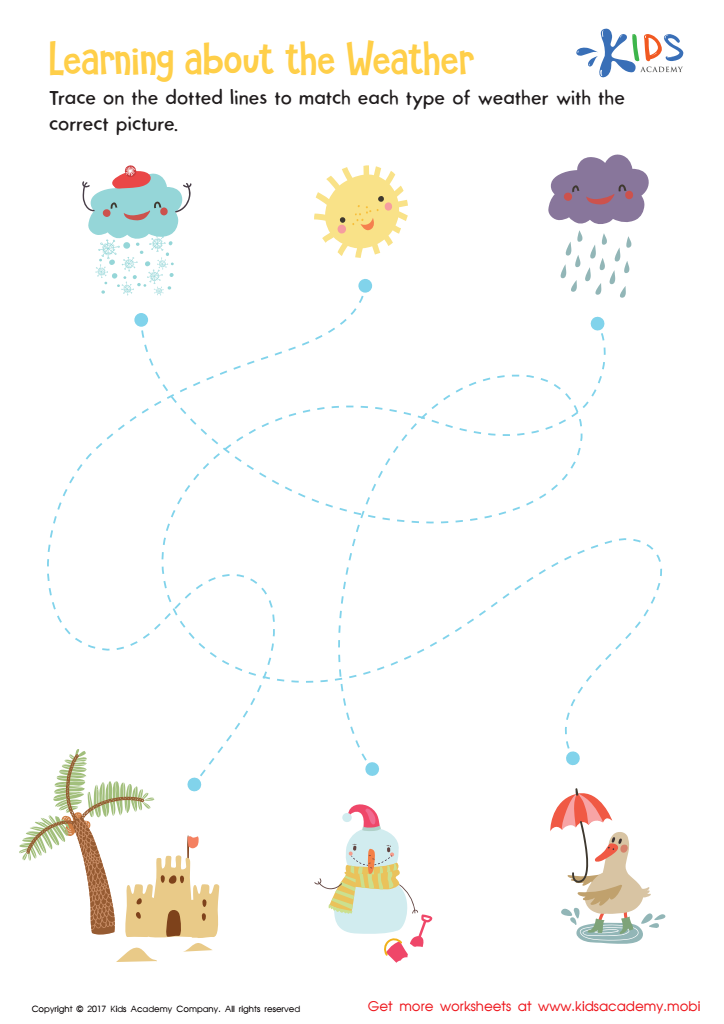
Our "Weather Identification Science Worksheets for Ages 4-6" offer engaging, hands-on activities designed to introduce young learners to the world of weather. These printable worksheets help children recognize and understand various weather conditions including sunny, rainy, snowy, and windy days. Through fun and colorful exercises, kids will develop observational skills, vocabulary, and critical thinking. Perfect for both classroom use and at-home learning, these resources provide a solid foundation in early science education. Stimulate your child’s curiosity and watch as they become budding weather experts with our expertly crafted, age-appropriate science worksheets.
Favorites
With answer key
Interactive
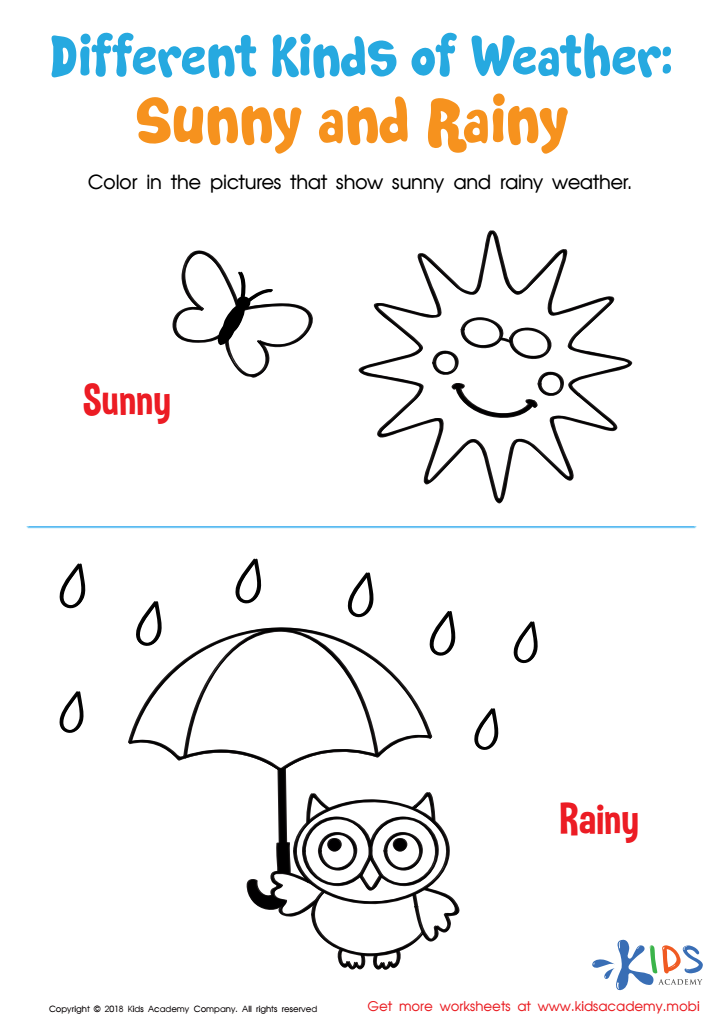
Different Kinds of Weather: Sunny and Rainy Worksheet
Kids will love coloring this fun worksheet that helps them learn about different types of weather. They'll hone their fine motor skills while reinforcing the cyclical nature of natural events. Download this free PDF to give kids a basic understanding of weather concepts and lay the groundwork for further learning.
Download (PDF)
 Assign to My Students
Assign to My Students
Different Kinds of Weather: Sunny and Rainy Worksheet
Worksheet
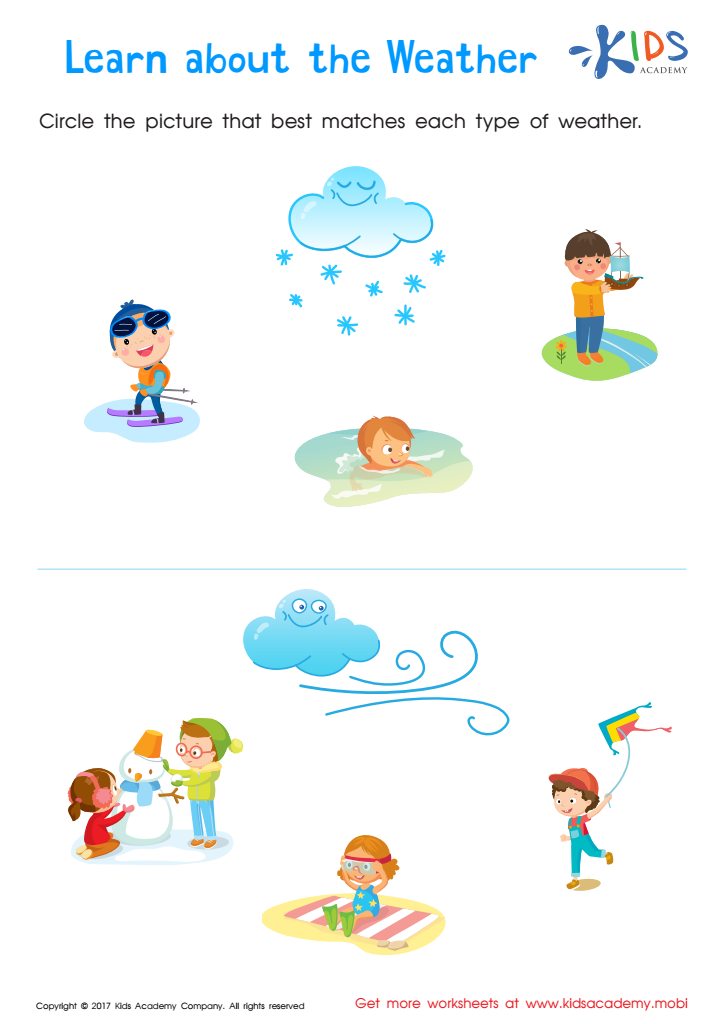
About the Weather Printable
This worksheet is perfect for reinforcing knowledge about changing weather and activities that suit each season. Help your child use their life experiences to observe the weather and complete the worksheet. Fun and colorful, it's a great way to learn about weather and seasons. Let's get started!
About the Weather Printable
Worksheet
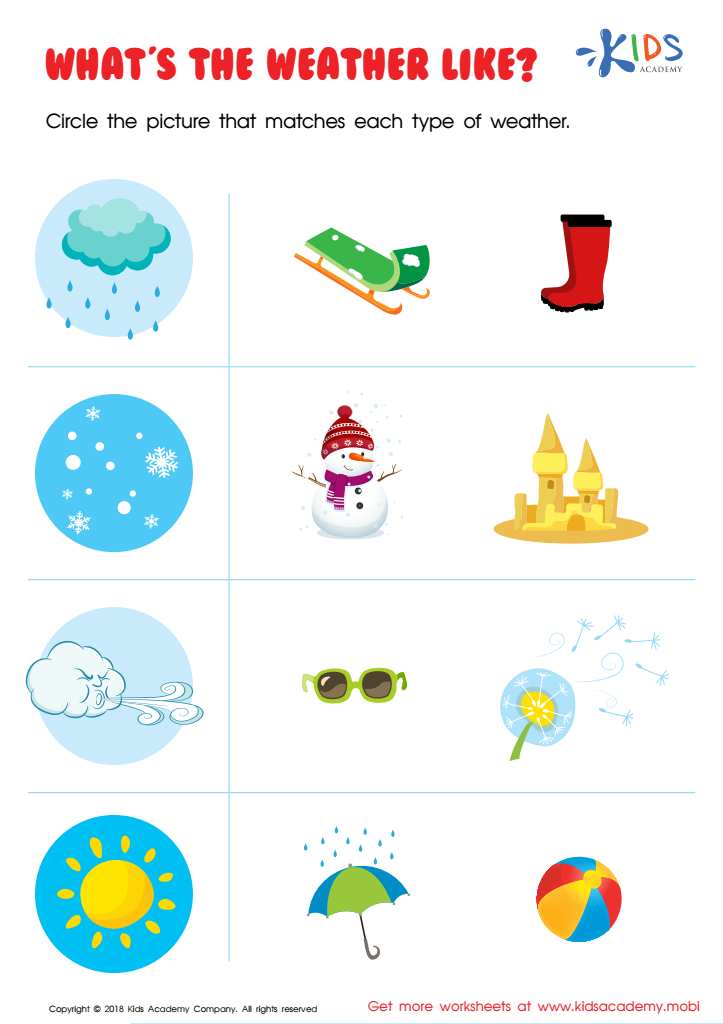
What's the Weather Like? Worksheet
Help budding meteorologists practice matching weather to seasons with this PDF worksheet. Picture clues help identify seasons and fine motor skills are practiced circling the correct weather patterns. Bright and engaging characters make learning fun and reinforce weather knowledge.
What's the Weather Like? Worksheet
Worksheet
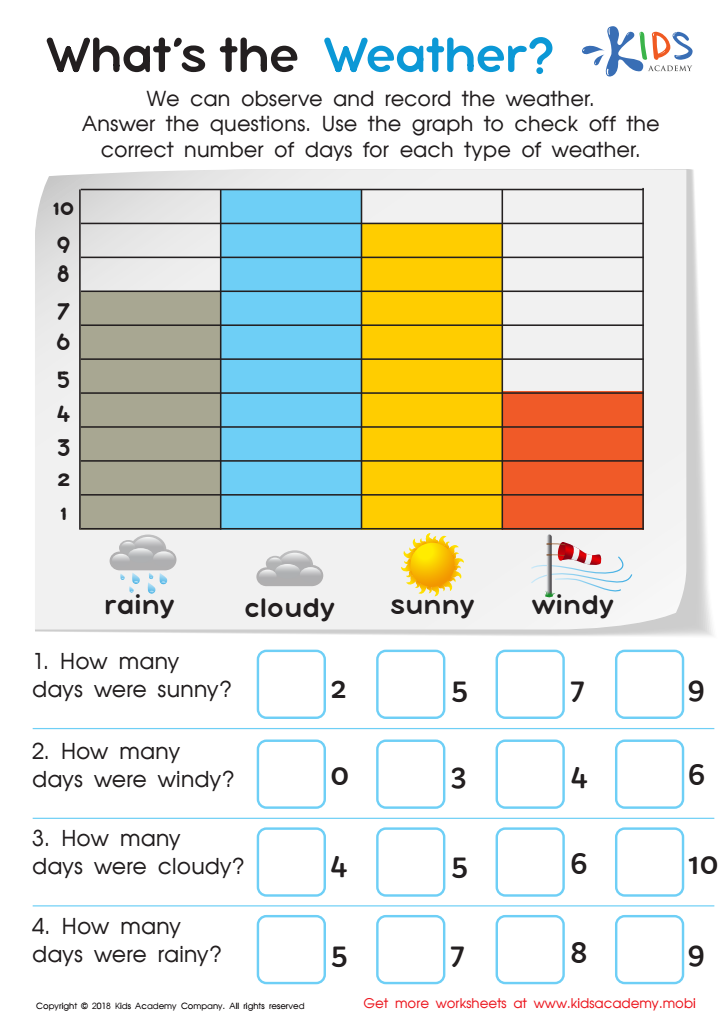
What's the Weather? Worksheet
Check the weather outside. Help kids learn and practice science and math by tracking different types of days using this printable worksheet. Have them count bars next to weather types like cloudy, sunny, windy, and rainy. Answer the questions and take the lesson further by creating a bar graph to show the monthly weather.
What's the Weather? Worksheet
Worksheet
Join Kids Academy for Free
Who is primarily going to use this learning content?







Weather identification is crucial for children aged 4-6, fostering early scientific curiosity and practical understanding of their environment. At this developmental stage, kids are naturally curious and keen observers. Introducing them to weather concepts taps into this curiosity and lays a foundation for scientific thinking and inquiry skills.
From a safety perspective, understanding basic weather patterns teaches children to recognize and respond to different weather conditions appropriately. Knowing that rain requires a raincoat or that they should seek shade during sunny days encourages valuable habits that cater to their well-being.
Additionally, weather learning integrates seamlessly with other educational domains. It enhances vocabulary as children learn new words like "cloudy," "sunny," or "breezy." It also provides a basis for simple mathematical concepts through activities like measuring rainfall or charting sunny vs. rainy days. Weather observation stimulates critical thinking by prompting children to ask questions and make predictions.
Socially and emotionally, lessons on weather foster a connection to the natural world, nurturing a sense of wonder and exploration. Collaborative activities, like tracking weather or sharing observations, boost social skills and cooperative learning.
Ultimately, weather identification in early childhood is vital—it keeps children safe, enriches their academic growth, and ignites a passion for lifelong learning.







