Weather Vocabulary Science Worksheets for Ages 4-6
3 filtered results
-
From - To
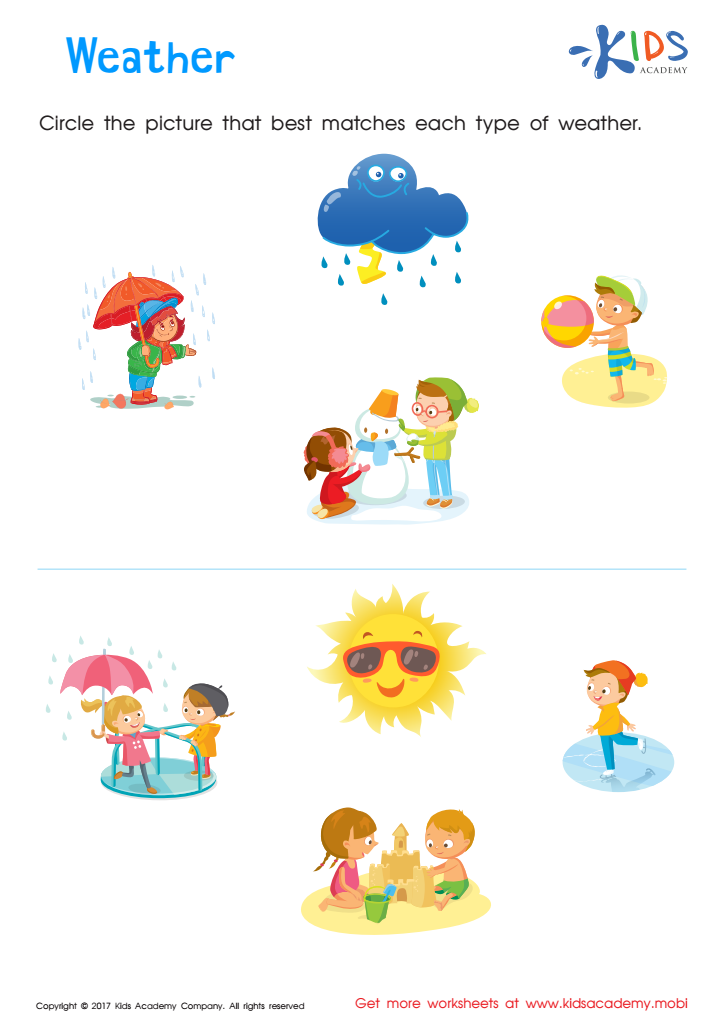
Explore our engaging Weather Vocabulary Science Worksheets designed specifically for ages 4-6. These interactive resources introduce young learners to essential weather terms, enhancing their vocabulary while sparking curiosity about the natural world. Each worksheet is thoughtfully crafted to provide fun activities that promote understanding of different weather conditions, facilitate language development, and encourage observation skills. Perfect for classrooms or at-home learning, these worksheets incorporate colorful illustrations and simple instructions, making learning enjoyable for preschoolers and kindergarteners. Start your child's journey into the exciting world of weather with our educational and entertaining resources today!
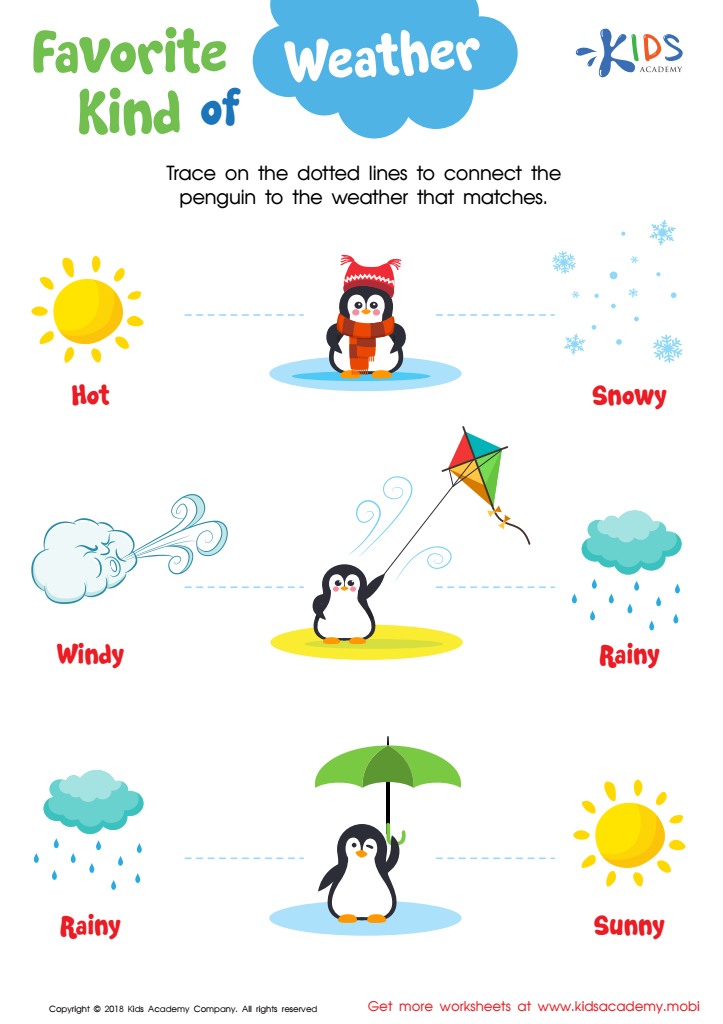
Favorite Kind of Weather Worksheet
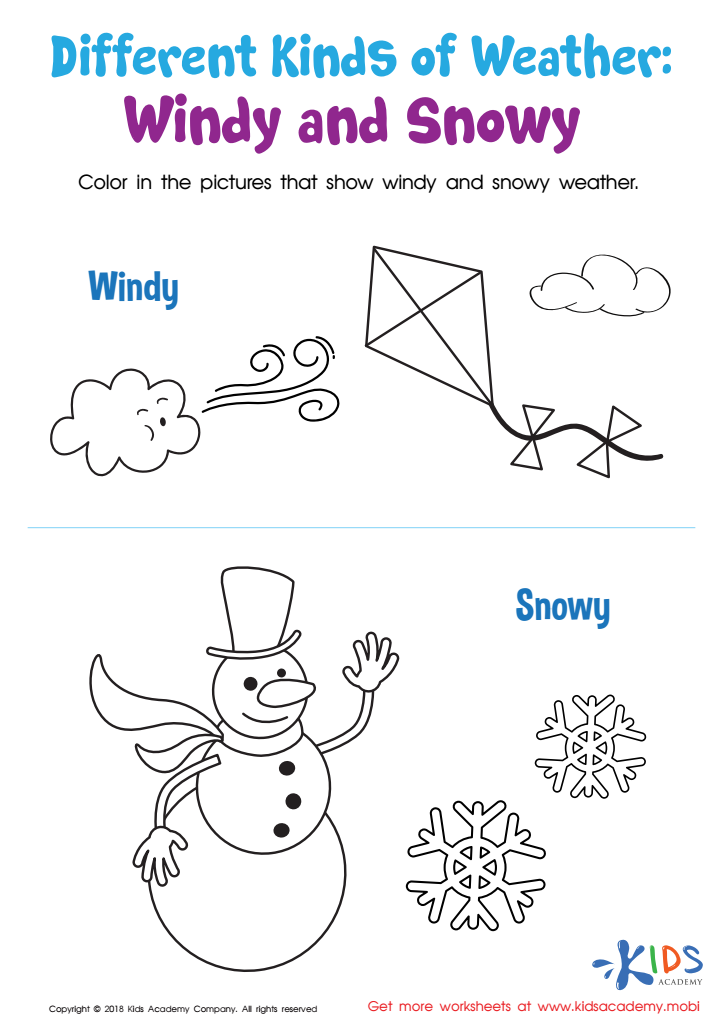
Different Kinds of Weather: Windy and Snowy Worksheet
 Assign to My Students







Parents and teachers should prioritize weather vocabulary science for children ages 4-6 because it lays the foundation for essential literacy and comprehension skills. At this age, children are naturally curious about their environment, making it an ideal time to introduce concepts related to weather. Understanding basic weather vocabulary—such as "rain," "sunny," "cloudy," and "snow"—enables preschoolers to describe their experiences, enhancing their communication skills.
Furthermore, weather influences daily life, affecting clothing choices, activities, and even mood. By learning about weather, children can make informed decisions, fostering independence and critical thinking. Engaging with weather-related activities, such as observing clouds or discussing seasonal changes, encourages exploration and connection to the world around them.
Introducing weather vocabulary also intertwines with broader educational themes, such as vocabulary development, science concepts, and environmental awareness. As they learn about weather patterns, children develop early scientific reasoning. This knowledge not only supports early education metrics but also prepares them to understand more complex scientific topics as they progress.
Ultimately, weather vocabulary science helps cultivate well-rounded, inquisitive learners, equipping them with important tools for communication, observation, and interaction with the environment—all critical skills for their lifelong growth and learning journey.







