
Reading comprehension Writing Worksheets for Ages 4-6
57 filtered results
Difficulty Level
Grade
Age
-
From - To
Subject
Activity
Standards
Discover our engaging Reading Comprehension Writing Worksheets designed specifically for ages 4 to 6! These resources promote early literacy skills, helping young learners develop critical thinking and comprehension. Each worksheet features vibrant illustrations and age-appropriate texts to captivate children’s interest. Our interactive activities encourage kids to answer questions, identify key details, and enhance their understanding of the stories they read. Perfect for home or classroom use, these worksheets foster a love for reading while strengthening writing skills. Join us on a journey of imagination and learning—download your Reading Comprehension Writing Worksheets today and watch your child's reading skills flourish!
Favorites
With answer key
Interactive
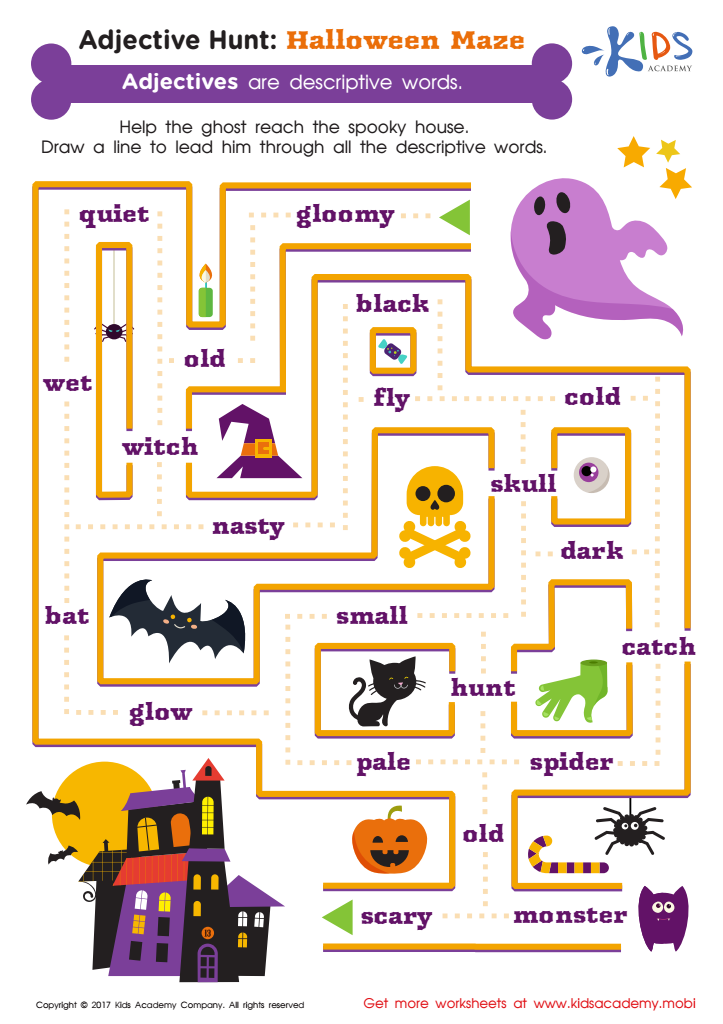
Adjective Hunt Printable
This spooky maze is perfect for Halloween! Kids will be both haunted and delighted while they figure out which words are descriptive or not. Get them excited for learning grammar with this fun and frightful worksheet!
 Assign to My Students
Adjective Hunt Printable
Worksheet
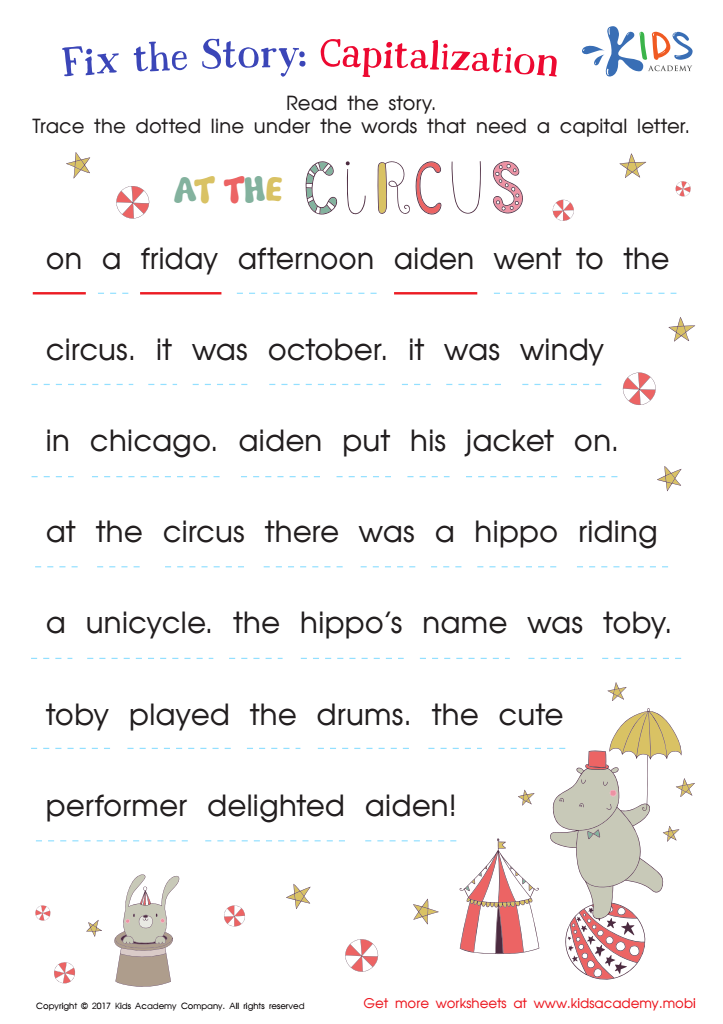
Capitalization: Fix the Story Worksheet
This worksheet is perfect for mastering capitalization in stories: Fix the Story. Read along with your child and help them find all the words that require capitalization. It's sure to be a fun and engaging challenge!
Capitalization: Fix the Story Worksheet
Worksheet
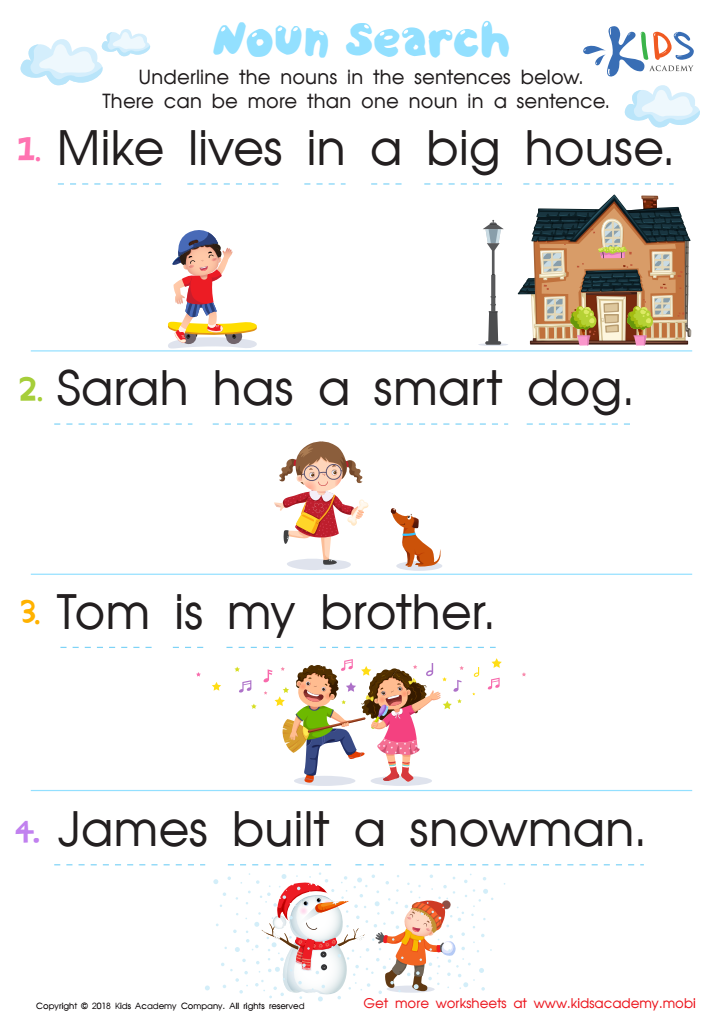
Noun Search Worksheet
To help your children learn the basics of grammar, start with nouns, verbs, adverbs and adjectives. This noun search worksheet will help your child understand the most common part of speech - the noun. Ask them to underline the nouns in each sentence. This is a great way to start learning proper grammar.
Noun Search Worksheet
Worksheet
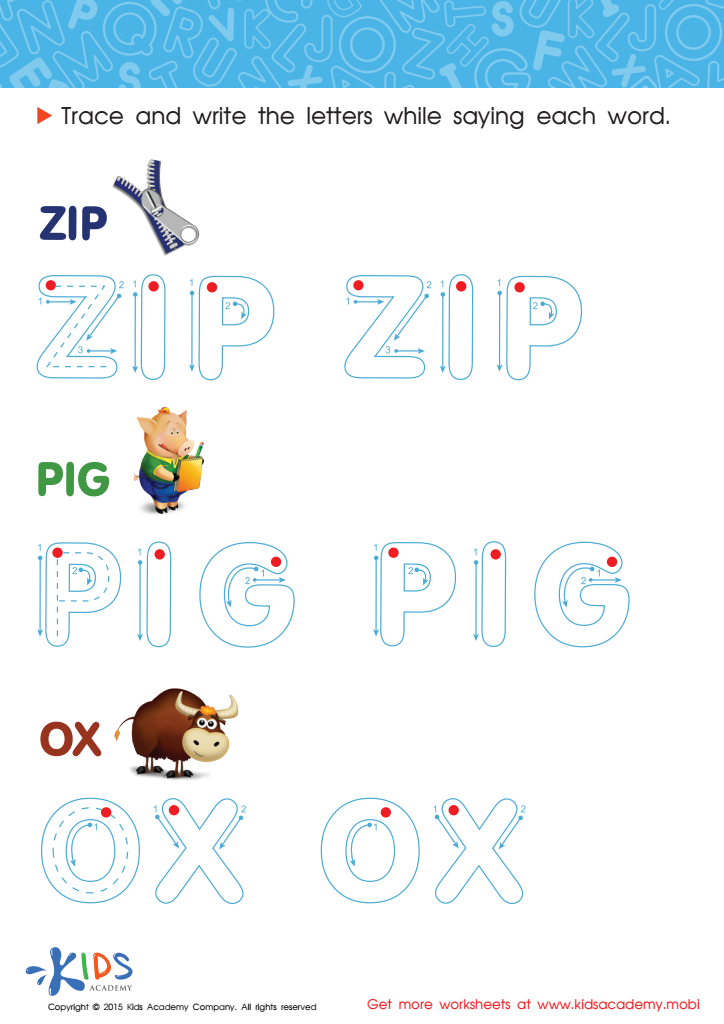
A Zip, a Pig and an Ox Spelling Worksheet
Check out this vocabulary building worksheet with three new words. Learn to say them, then trace and write them. Have fun with Kids Academy's writing practice worksheets and build your vocab! Do the tasks with care.
A Zip, a Pig and an Ox Spelling Worksheet
Worksheet
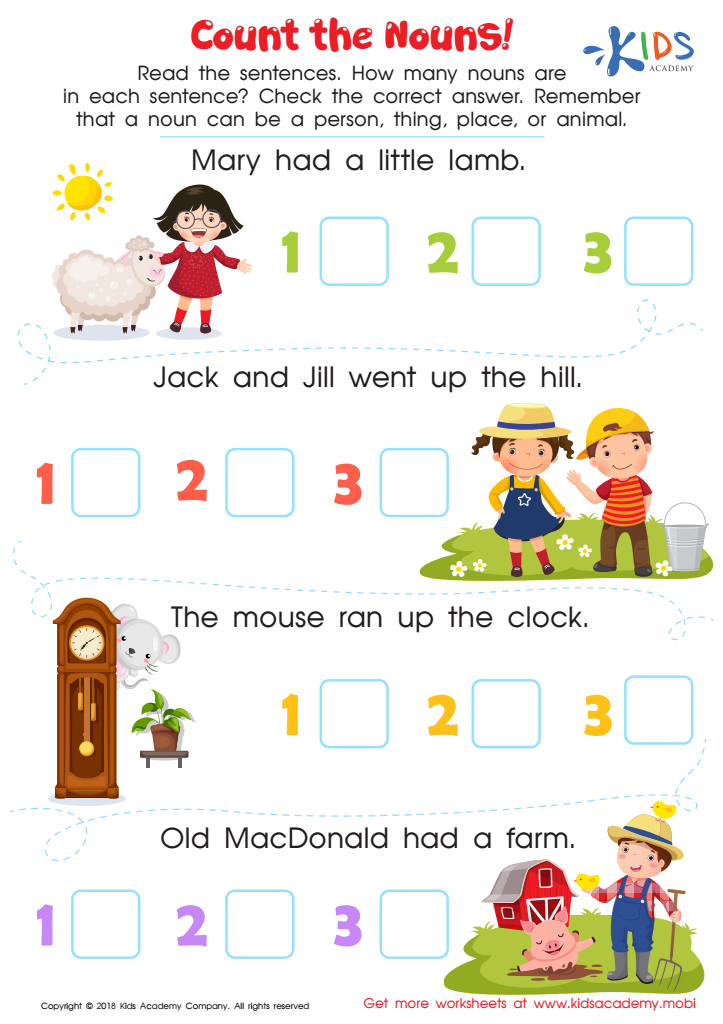
Count the Nouns Worksheet
Read the sentences with your children and ask them to find the nouns. Explain that nouns are names of people, animals, places or things. Point out the boxes with the answers to check.
Count the Nouns Worksheet
Worksheet
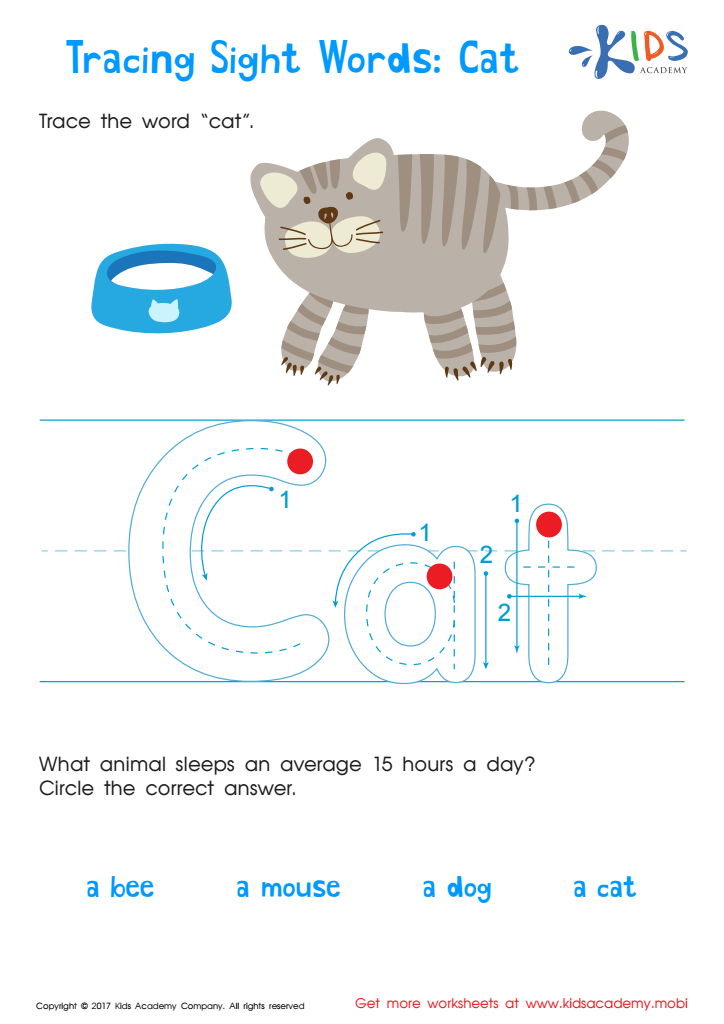
Cat Printable Sight Words Worksheet
Encourage your child's literacy with this fun sight words worksheet: cat PDF! It helps build a solid foundation for reading, featuring activities such as reading and tracing the word cat, and finding it amongst other sight words. With its cute cat, Kids Academy makes learning to read a delight!
Cat Printable Sight Words Worksheet
Worksheet
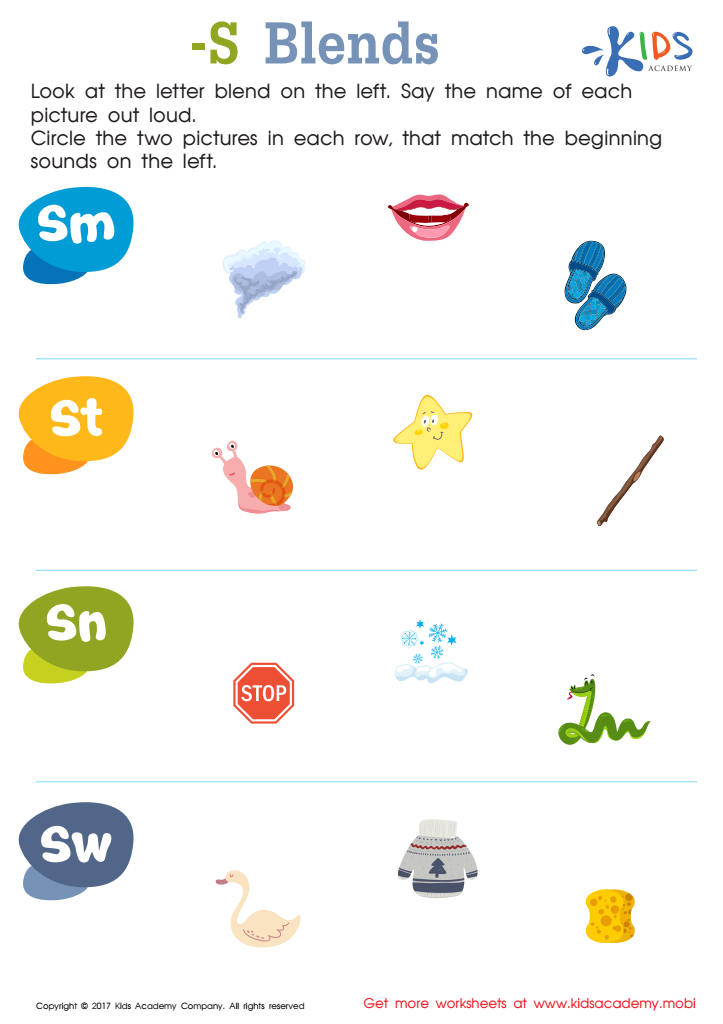
"s" Blends Spelling Printable
Treat your child to fun phonics practice with this worksheet: "s" blend words! They’ll enjoy discovering the different sounds and words that start with "s", from snakes to snails and all in between.
"s" Blends Spelling Printable
Worksheet
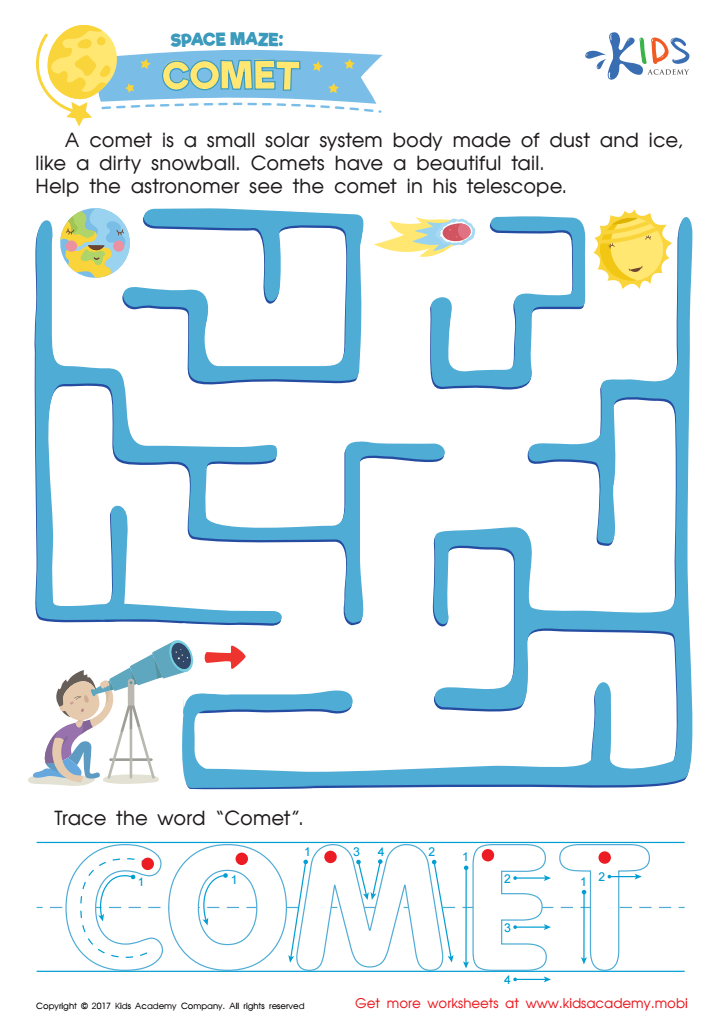
Space Maze: Comet Worksheet
Worksheet
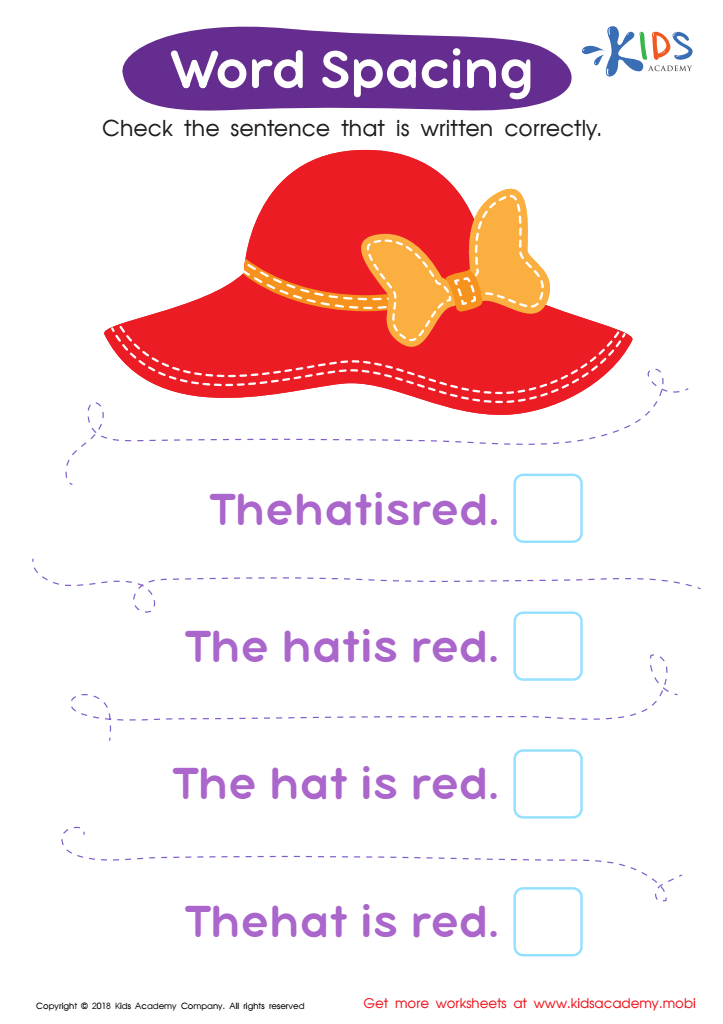
Word Spacing Worksheet
Can your child read and write simple sentences? Test their skills with this easy worksheet. Point to the four sentences under the picture; each conveying the same message but with different word spacing. Ask your child to select the sentence with proper spacing.
Word Spacing Worksheet
Worksheet
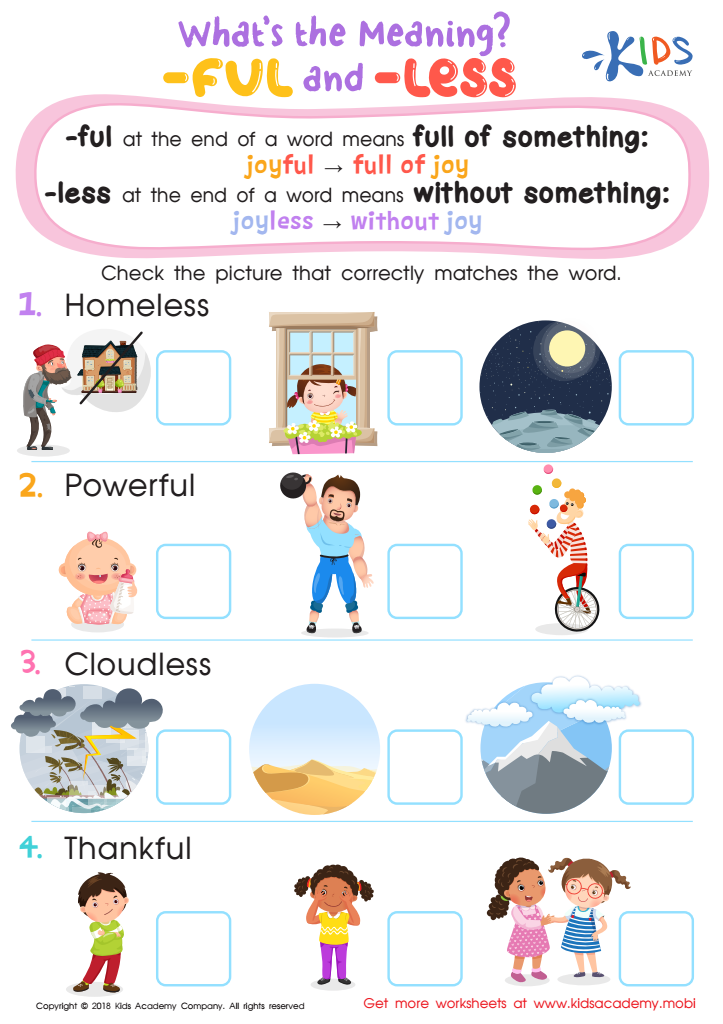
What's the Meaning? Worksheet
Look with your youngster through this colorful worksheet and match the pictures to the words at the top. These words have different meanings due to either a prefix or suffix being added, such as "ful" or "less".
What's the Meaning? Worksheet
Worksheet
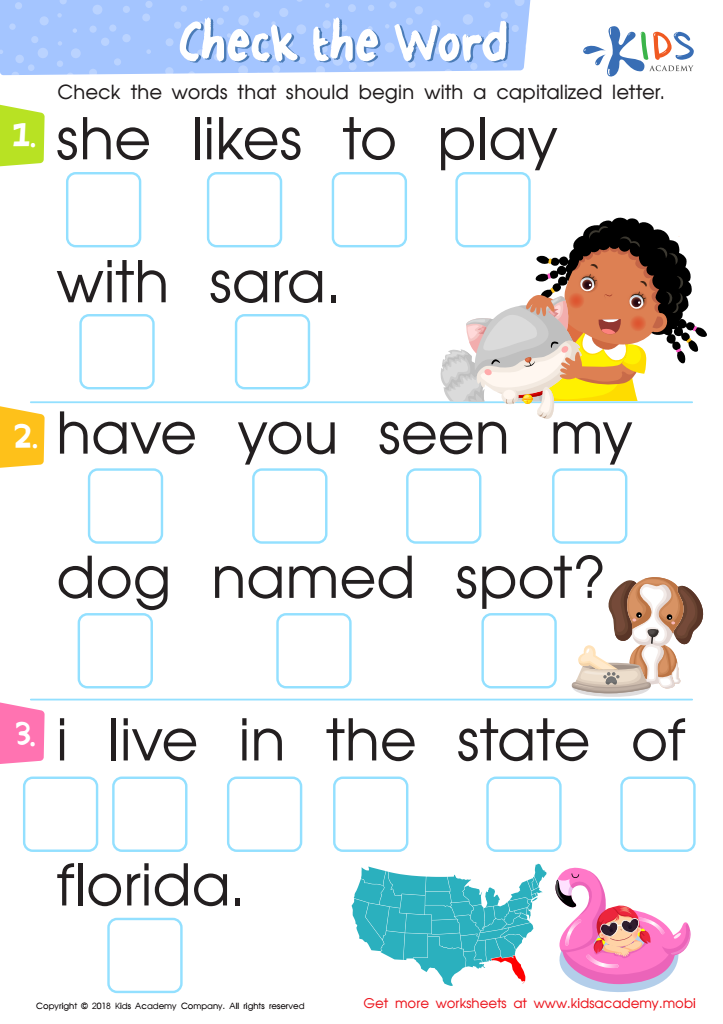
Check the Word Worksheet
Help your kids learn the rules of capitalisation - that the first word of each sentence and nouns must start with a capital letter. Use this worksheet to test their understanding: ask them to identify which words should begin with a capital.
Check the Word Worksheet
Worksheet
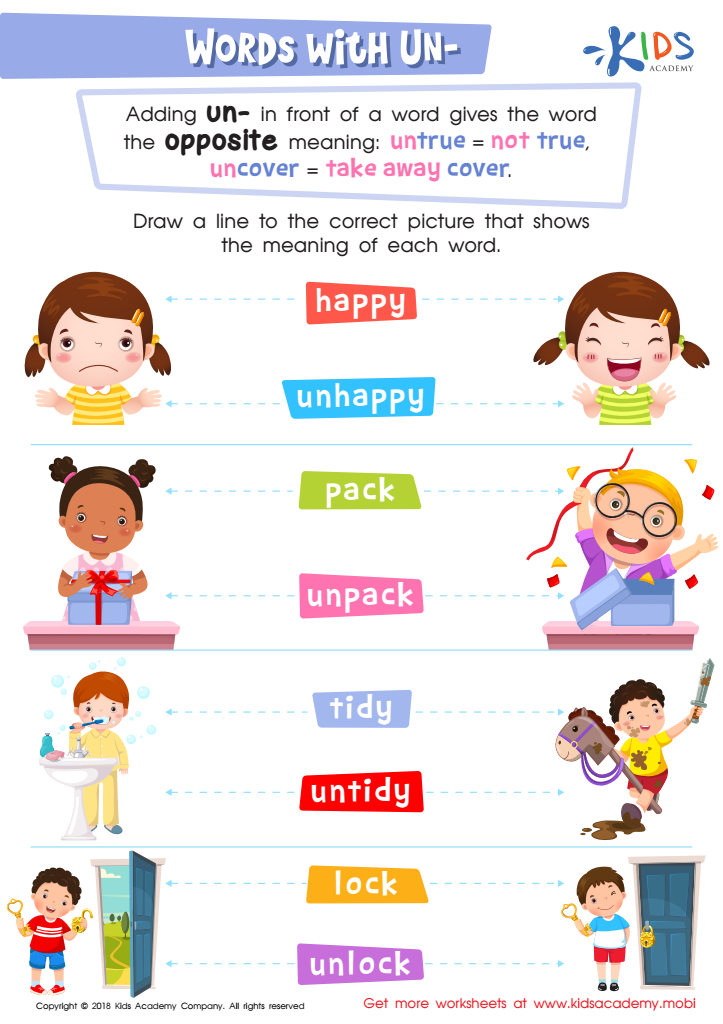
Words with Un– Worksheet
Prefixes can change the meaning of words. Adding "Un-" can give the opposite meaning, like Un-true, Un-happy, and Un-finish. Help your child learn with this worksheet. Draw a line to the picture that shows each word's meaning.
Words with Un– Worksheet
Worksheet
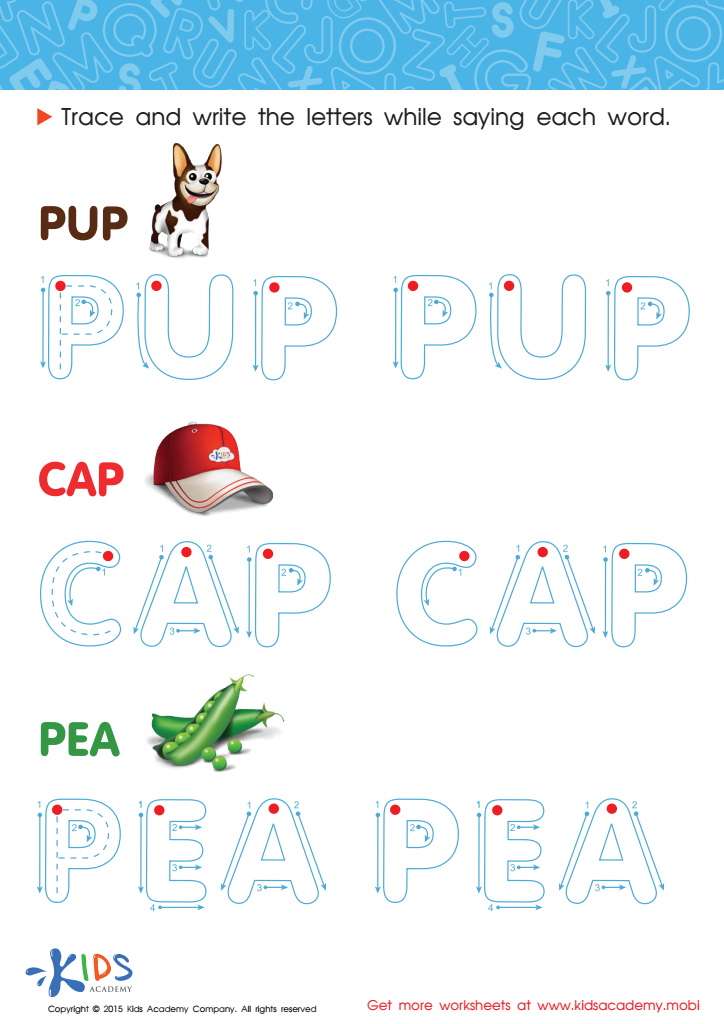
A Pup, a Cap and a Pea Spelling Worksheet
Practice tracing and writing with three new words. Carefully trace each word and try to remember it, then move on to the next one. Head to Kids Academy for more tracing worksheets!
Get your pencils ready! Let's practice tracing and writing three new words on Kids Academy's spelling worksheets. Carefully trace each line and remember the words. Pick more great worksheets on their website to continue practicing. Have fun!
A Pup, a Cap and a Pea Spelling Worksheet
Worksheet
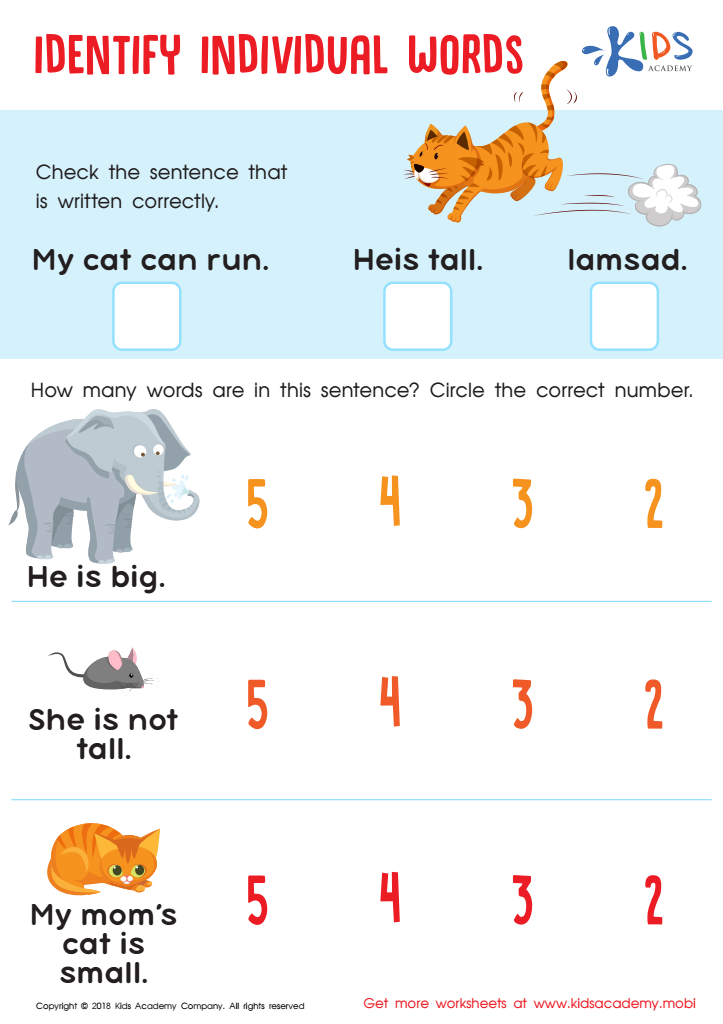
Identify Individual Words Worksheet
Does your child have trouble constructing sentences? Check out this worksheet! It will help them identify words that make up sentences and assess how well they can read and answer questions. The first part tests how well they can recognize a written sentence. The second part has them read questions and circle the correct number of words. Give it a try!
Identify Individual Words Worksheet
Worksheet
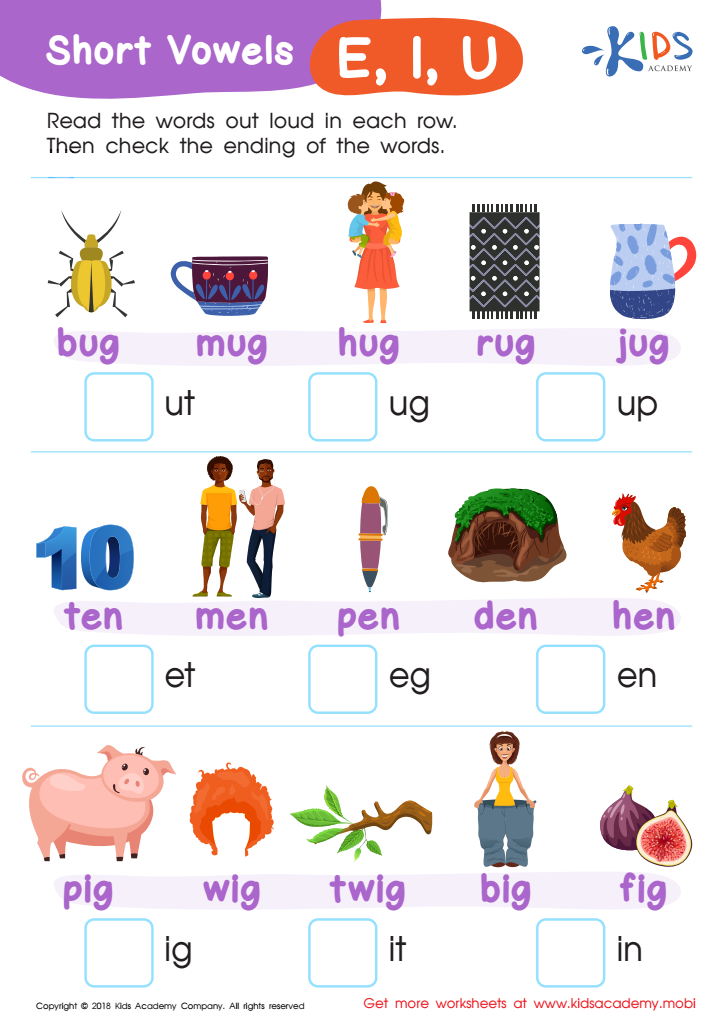
Short Vowels /e/, /i/, and /u/ Worksheet
Your emergent reader can have fun while practicing their short vowel sounds with this free, brightly colored worksheet. They'll identify one-syllable words by their pictures, then match the correct ending for each. They'll gain an understanding of how short vowel sounds vary in closed syllables with different endings, without even realizing it!
Short Vowels /e/, /i/, and /u/ Worksheet
Worksheet
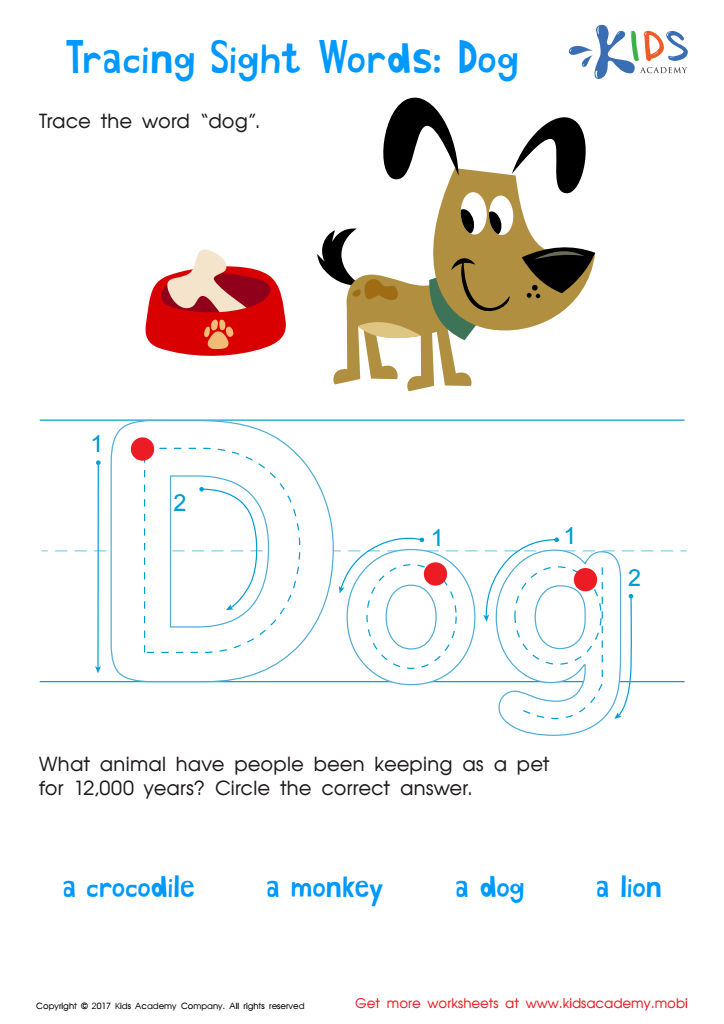
Dog Worksheet Sight Words Worksheet
Get your kids excited to read with our dog-themed sight words worksheet!
Excite your child to read with our sight words worksheet: dog edition! Featuring a lovable dog character to put a smile on any kid's face, this worksheet helps kids practice reading and writing the word "dog". Build a library of words they can read quickly and promote increasing literacy skills with early fluency! Get them ready for reading with our dog-themed sight words worksheet!
Dog Worksheet Sight Words Worksheet
Worksheet
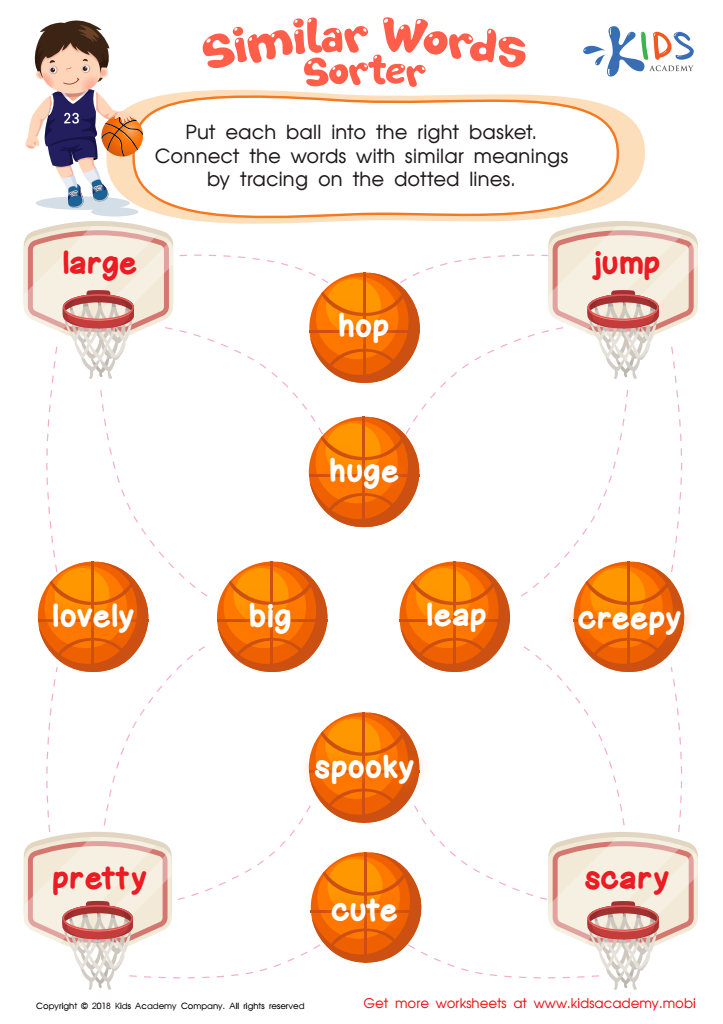
Similar Words Worksheet
Test your child's knowledge of synonyms by having them name five words for "up"! This tracing sheet is a fun way to do it: your child must trace the dotted lines to put each ball in its right basket. To do so, they must know the synonyms and trace them to the correct baskets.
Similar Words Worksheet
Worksheet
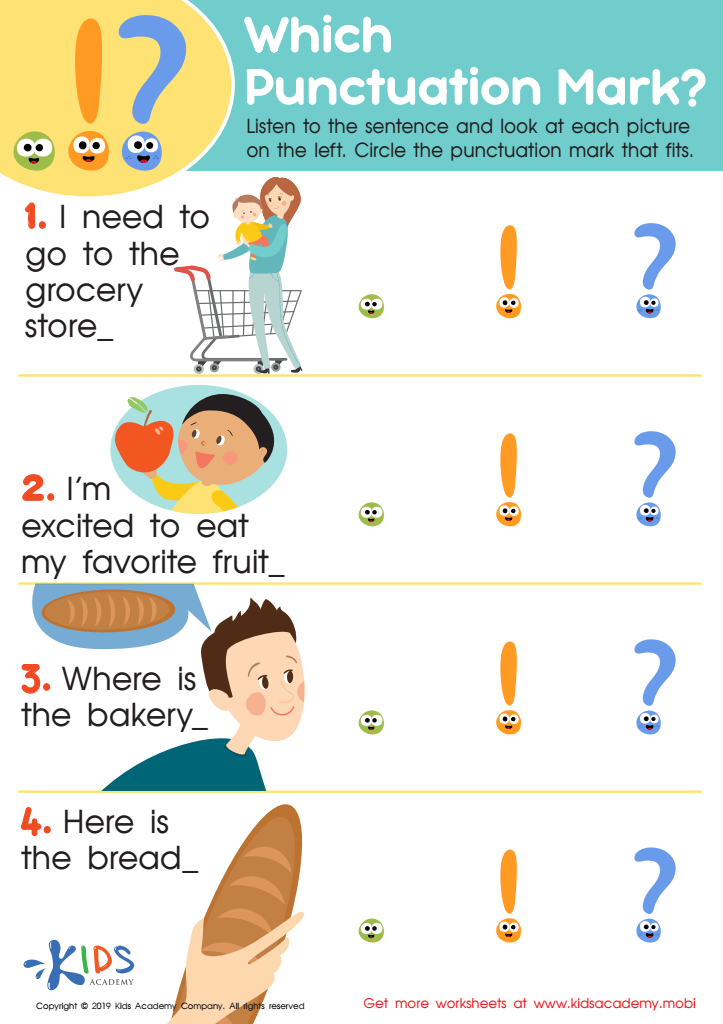
Which Punctuation Mark Worksheet
Punctuation marks are essential for expressing what we say. This worksheet asks your kindergarten student to circle the correct punctuation mark for each sentence. Read each sentence aloud and help them identify the expression needed. A picture accompanies each sentence. Enjoy! (79 words)
Which Punctuation Mark Worksheet
Worksheet
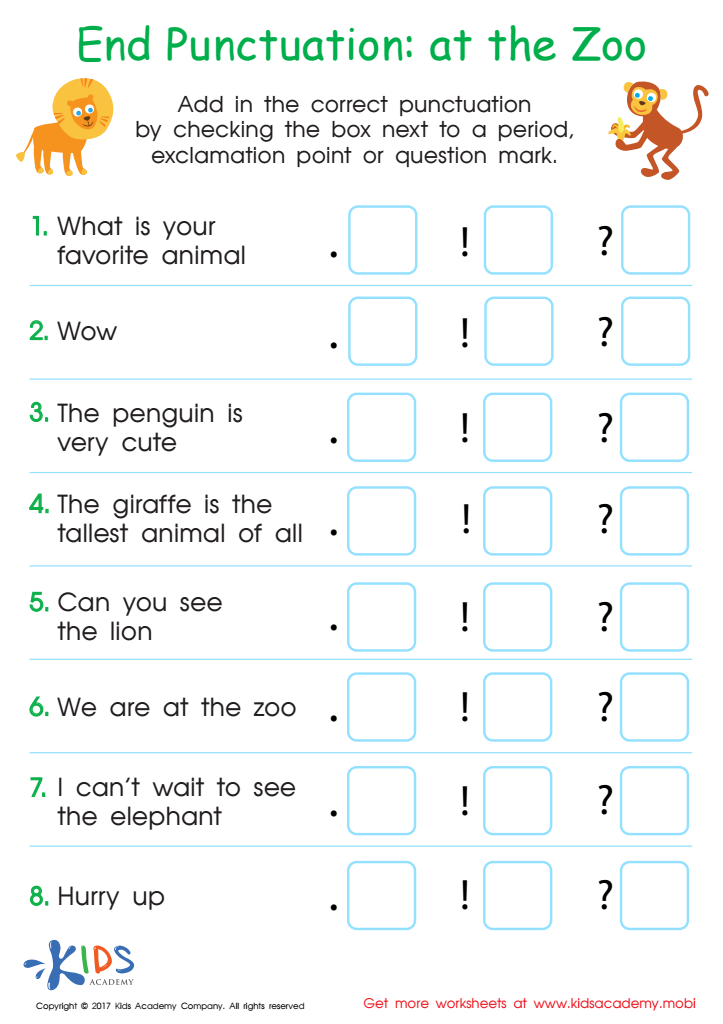
End Punctuation: At the Zoo Worksheet
Let your kid hone their sentence and punctuation skills with this cute At the Zoo worksheet. Read it out loud to provide guidance if needed, and help your child find the right punctuation mark for each sentence.
End Punctuation: At the Zoo Worksheet
Worksheet
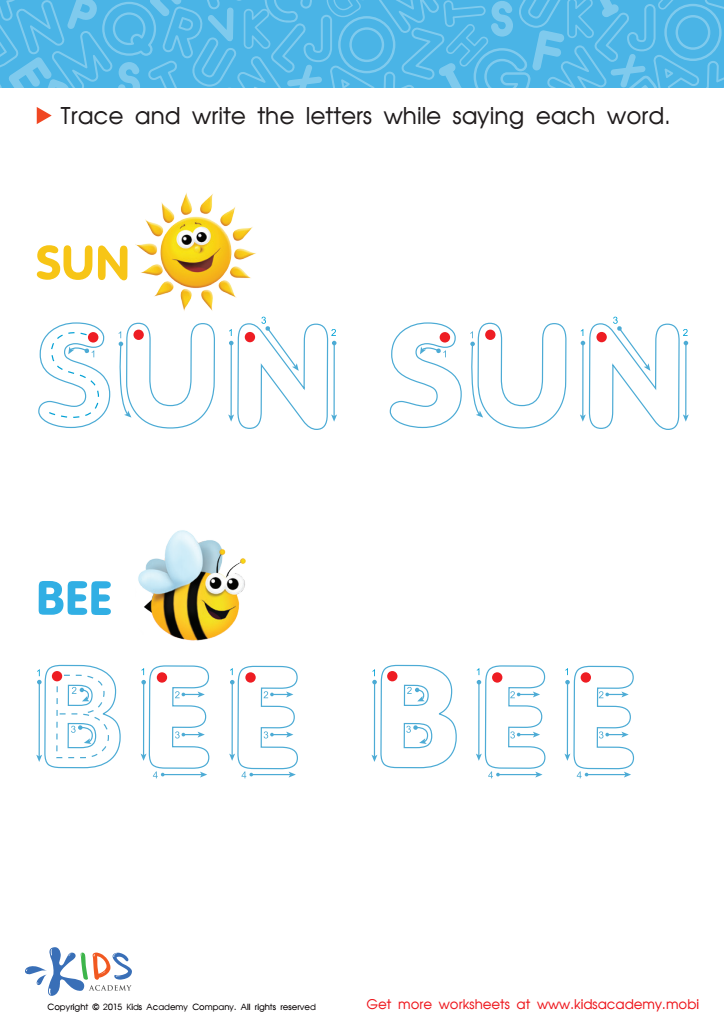
The Sun and a Bee Spelling Worksheet
Let's learn new words together - grab this free vocabulary worksheet and trace two words. We know you'll succeed! Get more worksheets at Kids Academy - all materials are free. Have fun learning!
The Sun and a Bee Spelling Worksheet
Worksheet
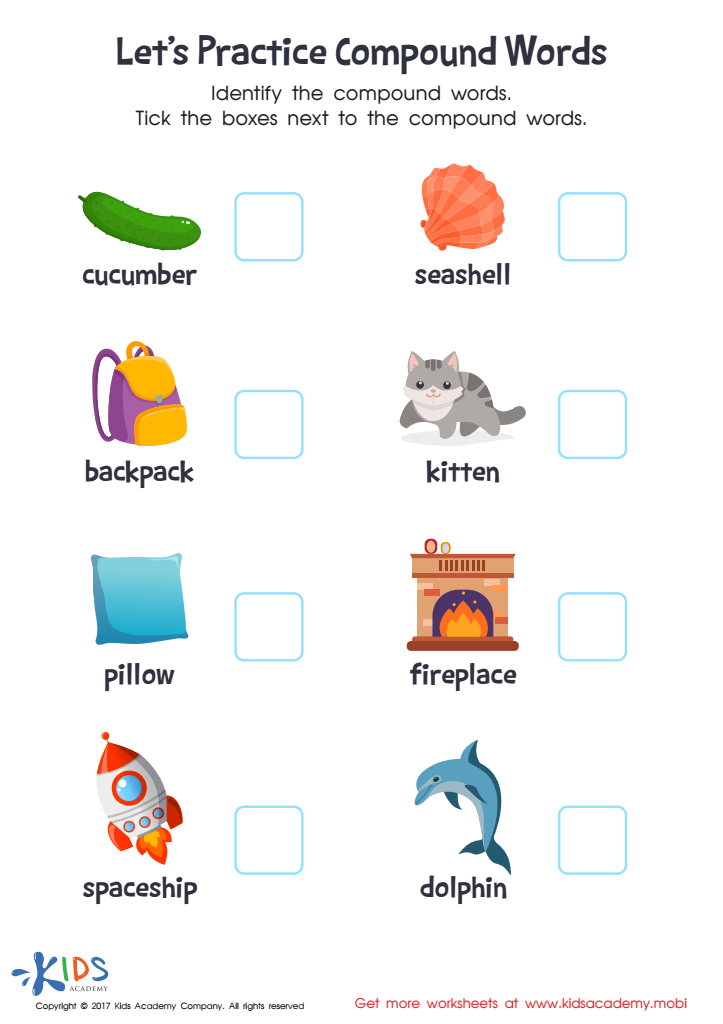
Let's Practice Compound Words Word Structure Worksheet
Test their knowledge of compound words with this fun worksheet and help them build their vocabulary. Have them say the words out loud as they work!
Let's Practice Compound Words Word Structure Worksheet
Worksheet
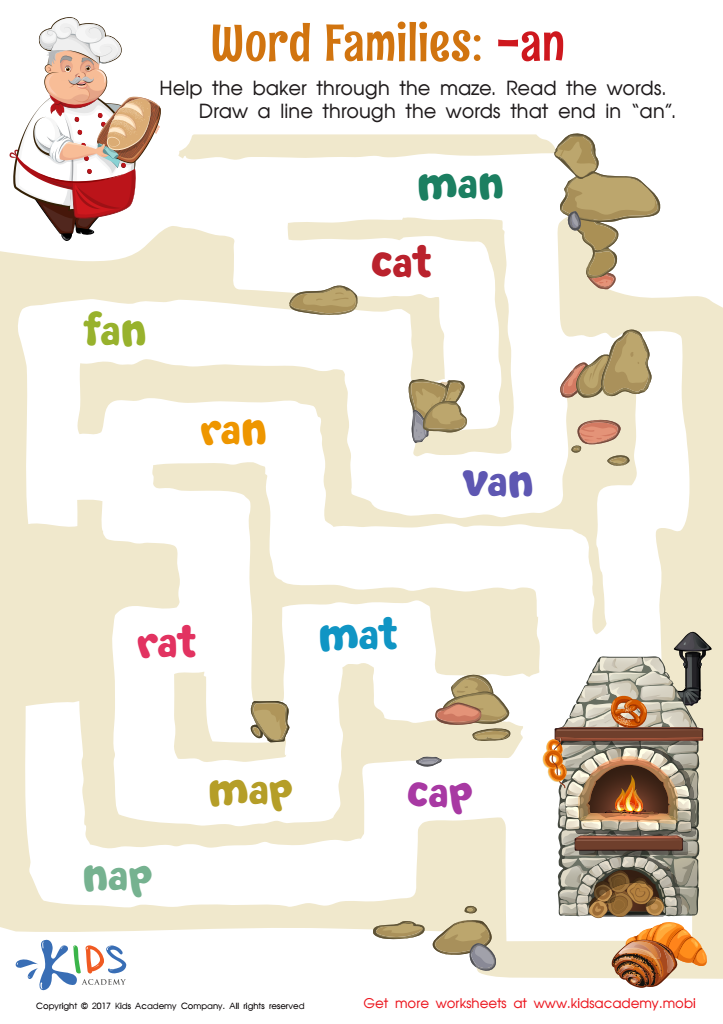
Words Families "an" Spelling Worksheet
Ace spelling with ease! Print this worksheet to explore words that end in "an". Enjoy a fun maze and learn this common ending!
Words Families "an" Spelling Worksheet
Worksheet
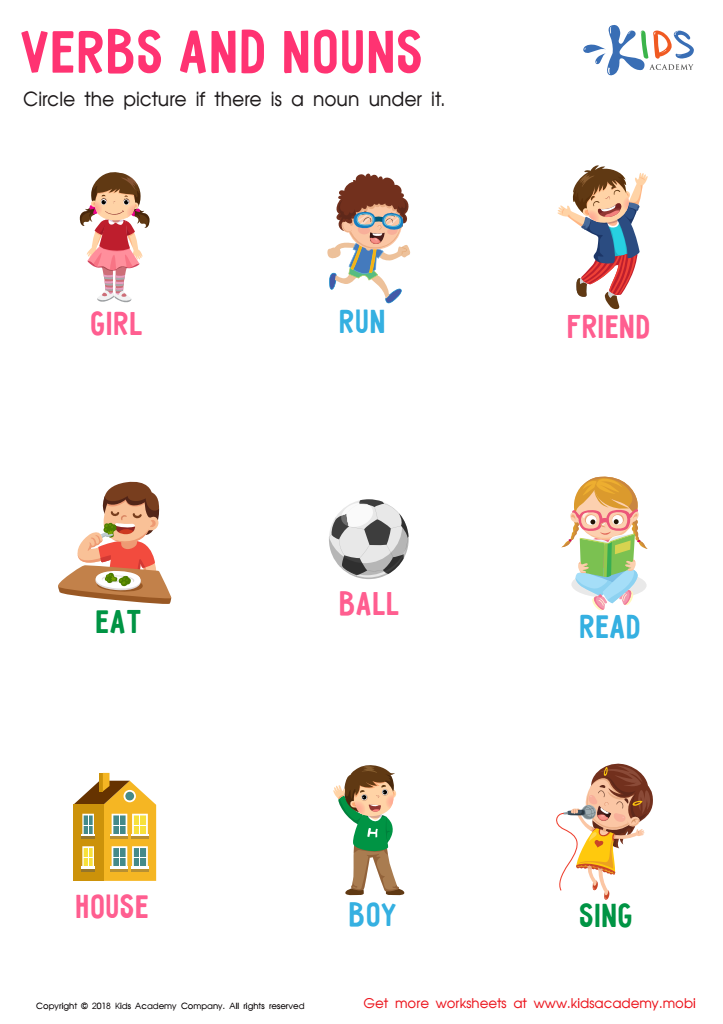
Verbs and Nouns Worksheet
Your child should have basic knowledge of verbs and nouns before starting this worksheet. Go through it with them and ask them to circle the pictures with nouns under them. This way, they'll become more familiar with parts of speech.
Verbs and Nouns Worksheet
Worksheet
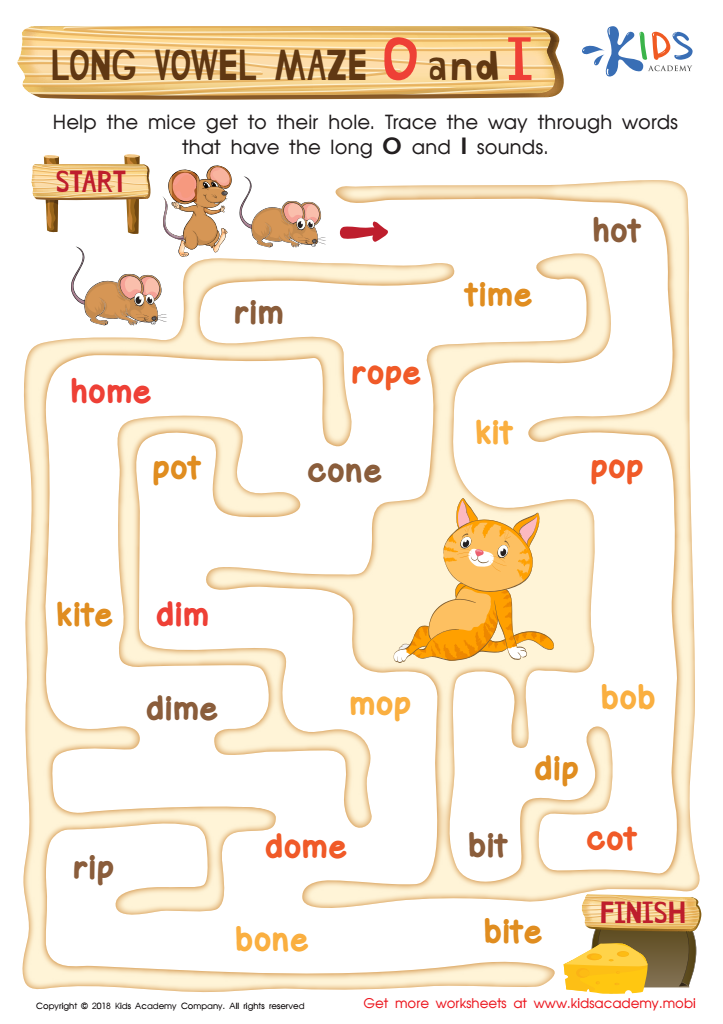
Long Vowel Maze /o/ and /i/ Worksheet
Help your new readers have fun and build their sight word vocabulary! Guide the mice to their prize cheese by having them trace the route on the worksheet, using words with the long o and long i sounds. But watch out for the kitty!
Long Vowel Maze /o/ and /i/ Worksheet
Worksheet
Join Kids Academy for Free
Who is primarily going to use this learning content?






Reading comprehension and writing skills at ages 4-6 lay the foundation for a child's future academic success. During these formative years, children not only learn to recognize letters and sounds but also begin to make sense of stories and communicate their ideas effectively. After mastering basic phonetics and vocabulary, they transition from learning to read to reading to learn. This critical shift enables children to extract meaning from texts, fostering intellectual curiosity and an appreciation for literature.
Furthermore, strong reading comprehension enhances overall literacy, which correlates with success in all subjects, including math and sciences. Writing skills developed at this age encourage children to express their thoughts, enhancing their creativity and critical thinking. It also promotes fine motor skills through writing practice and exposes children to various sentence structures and vocabulary, enriching their language use.
Parents and teachers must nurture these skills through interactive reading sessions, storytelling, and writing activities. Investing time and resources in fostering reading comprehension and writing at an early age ensures children develop essential communication skills, setting them up for academic success and a lifelong love of learning. By prioritizing these skills, parents and teachers can help shape confident, curious, and capable learners.








