Letter-sound recognition Phonics Worksheets for Ages 4-7
4 filtered results
-
From - To
Boost your child's reading journey with our Letter-Sound Recognition Phonics Worksheets, designed for ages 4-7. These engaging and educational worksheets help young learners develop crucial phonics skills by matching letters with their corresponding sounds. Each activity is crafted to make learning fun and interactive, encouraging children to recognize and pronounce letters accurately. Perfect for both classroom use and at-home practice, our worksheets aim to build a solid foundation in reading, paving the way for academic success. Explore our collection today to enhance your child's phonetic awareness and boost their confidence in reading.
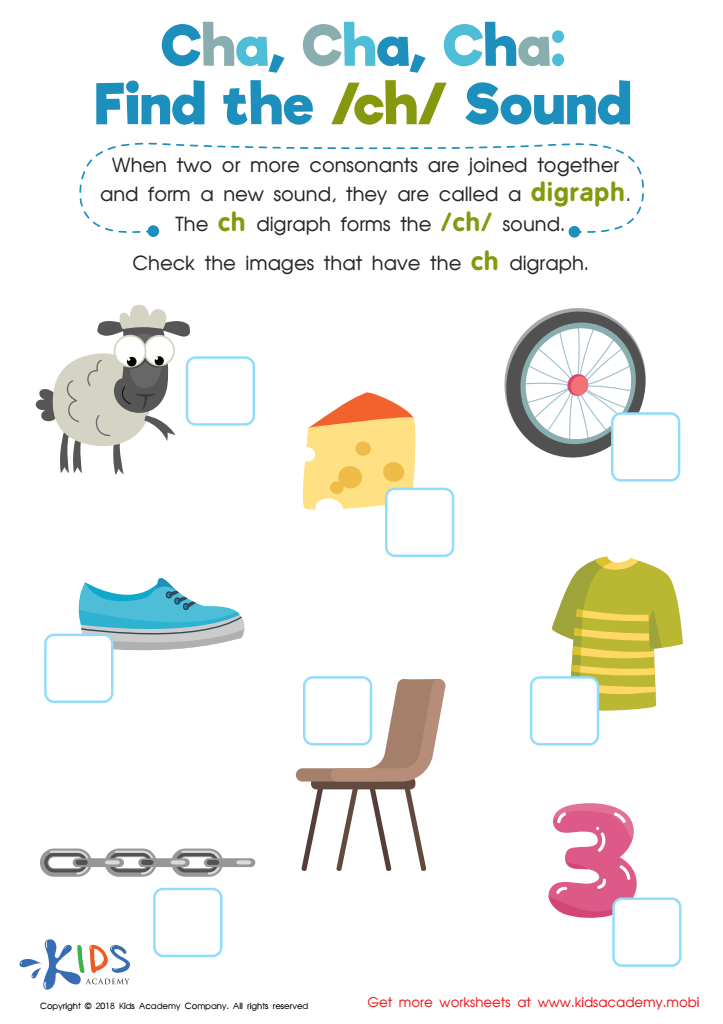
Cha, Cha, Cha: Find the /Ch/ Sound Worksheet
 Assign to My Students
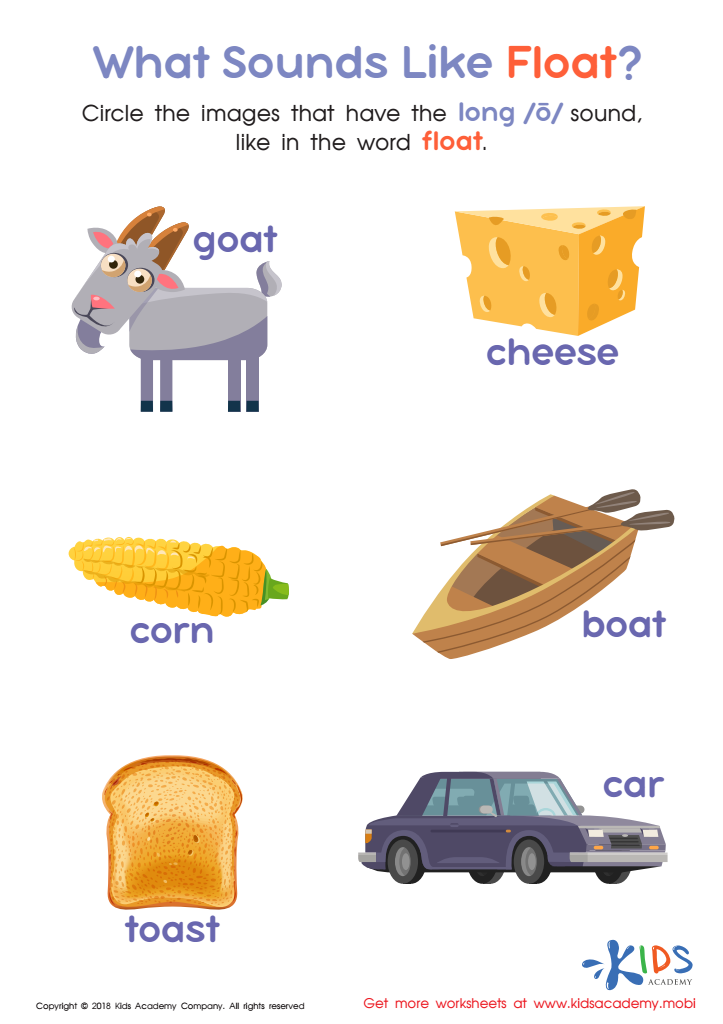
What Sounds Like Float? Worksheet
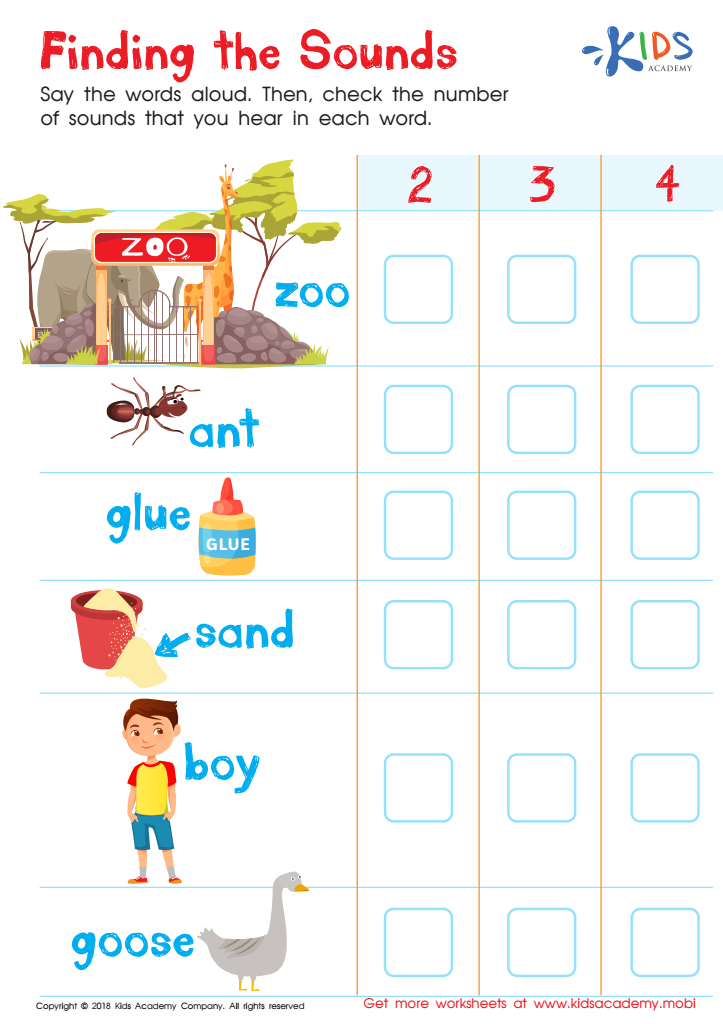
Finding the Sounds Worksheet
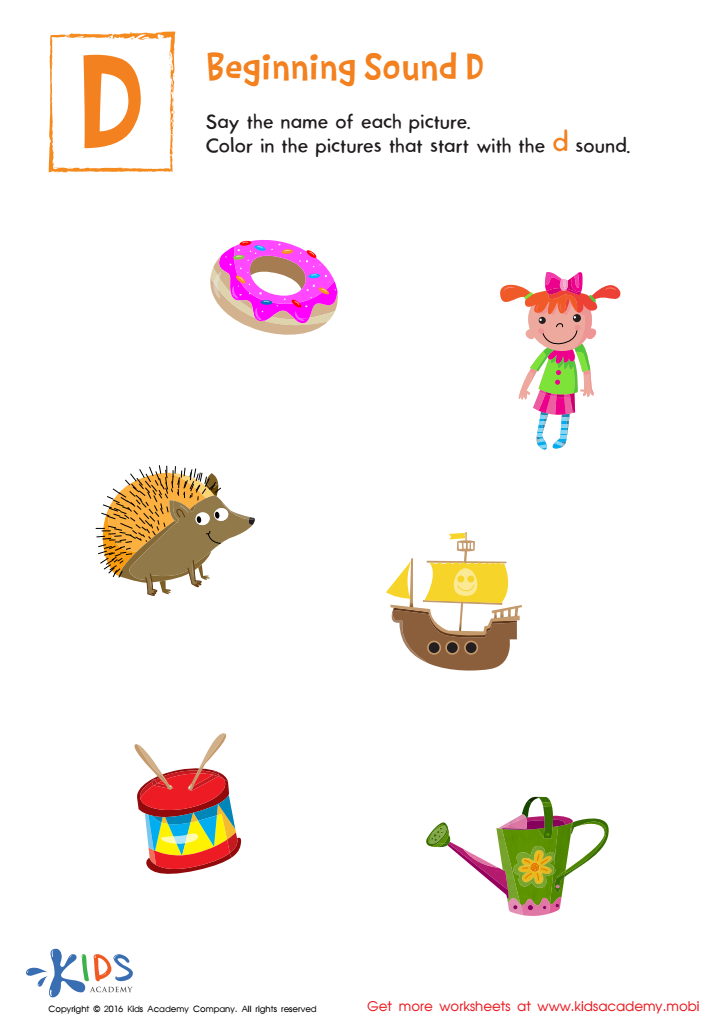
Beginning Sound D Worksheet








Letter-sound recognition and phonics are essential components of literacy development for children aged 4-7. At this crucial developmental stage, children start building the foundational skills needed for reading and writing. Understanding the direct correlation between letters and their corresponding sounds helps children decode words, paving the way for fluent reading.
Fluent reading, in turn, enhances comprehension, as children can focus on understanding the text rather than struggling with word recognition. Phonics education is structured to move progressively from simple to more complex patterns, equipping children with tools to tackle a wide array of words.
Additionally, strong phonics skills contribute to spelling and written expression. When children understand letter-sound relationships, they can spell words more accurately and express their thoughts in writing more clearly.
Early phonics instruction also boosts children’s confidence. Success in reading activities motivates them and fosters a love for learning. This enthusiasm carries forward into other academic areas, supporting overall academic success.
For parents and teachers, fostering letter-sound recognition and phonics serves not only as a critical educational strategy but also as a means to empower children with lifelong literacy skills. By investing in this early-stage instruction, we equip young learners with the tools they need for future academic achievements and personal growth.







