Word Recognition Vowels Worksheets for Ages 4-7
8 filtered results
-
From - To
Enhance your child's reading skills with our Word Recognition Vowels Worksheets designed for ages 4-7. These engaging worksheets focus on vowels, aiding young learners in identifying and understanding vowel sounds in words. Perfect for early readers, the activities incorporate fun and education, ensuring children become proficient in word recognition. Through vibrant imagery and interactive exercises, kids will develop crucial phonetic skills, laying a solid foundation for reading fluency. Ideal for both classroom and home use, our worksheets support a robust early learning curriculum, making reading a joyful and productive experience for your child. Try them today!
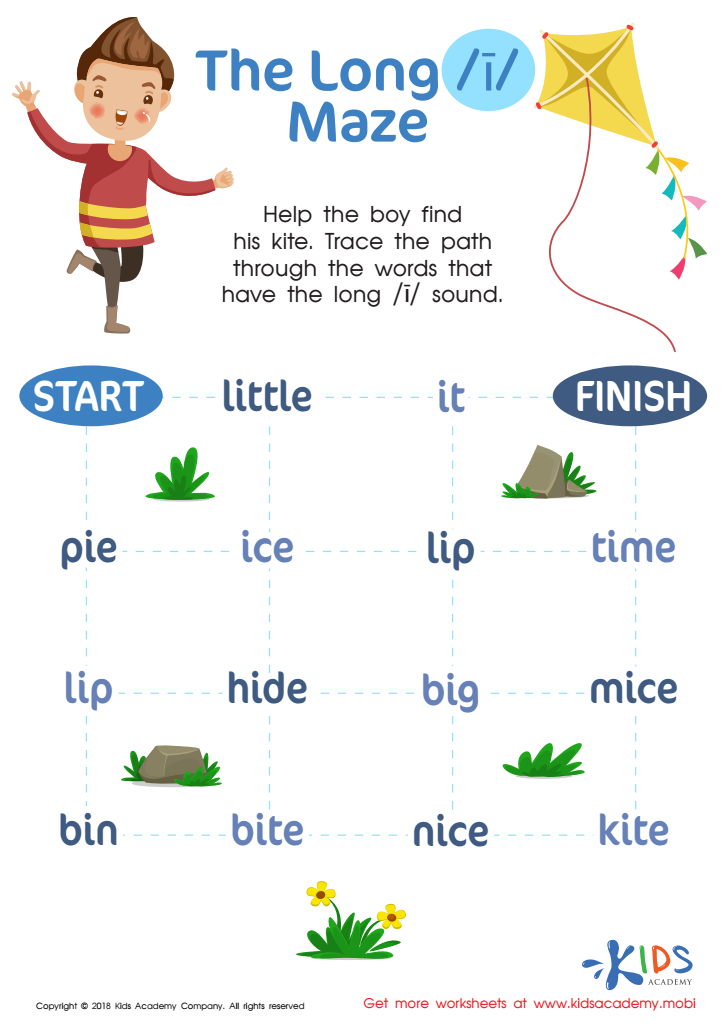
The Long I Maze Reading Worksheet
 Assign to My Students
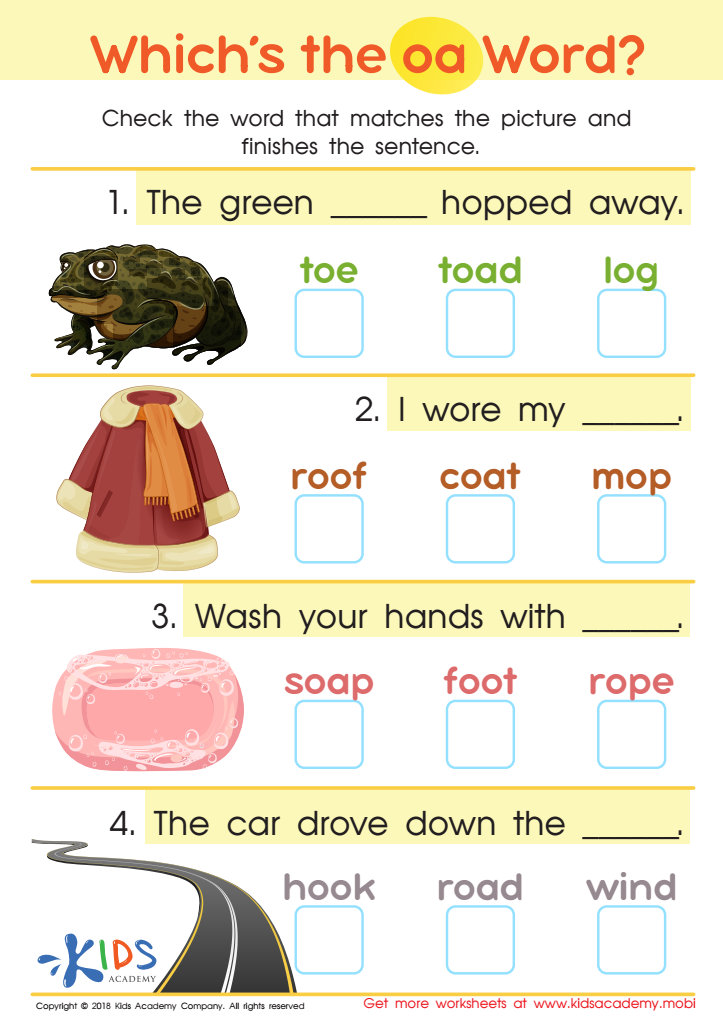
Which's the OA Word? Worksheet
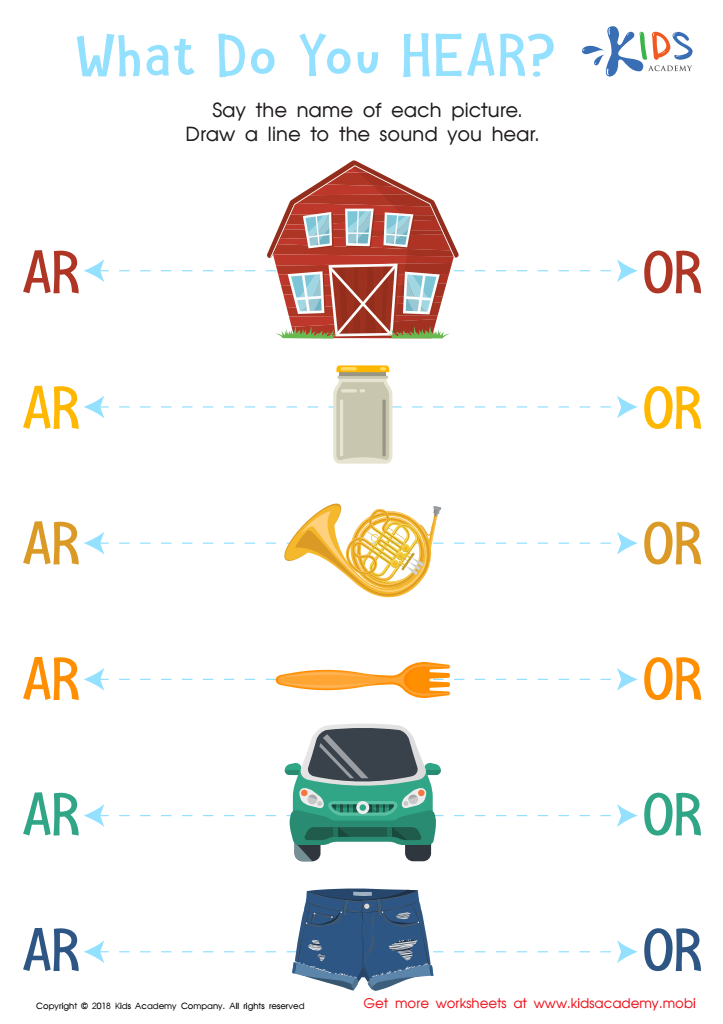
What do you hear Worksheet
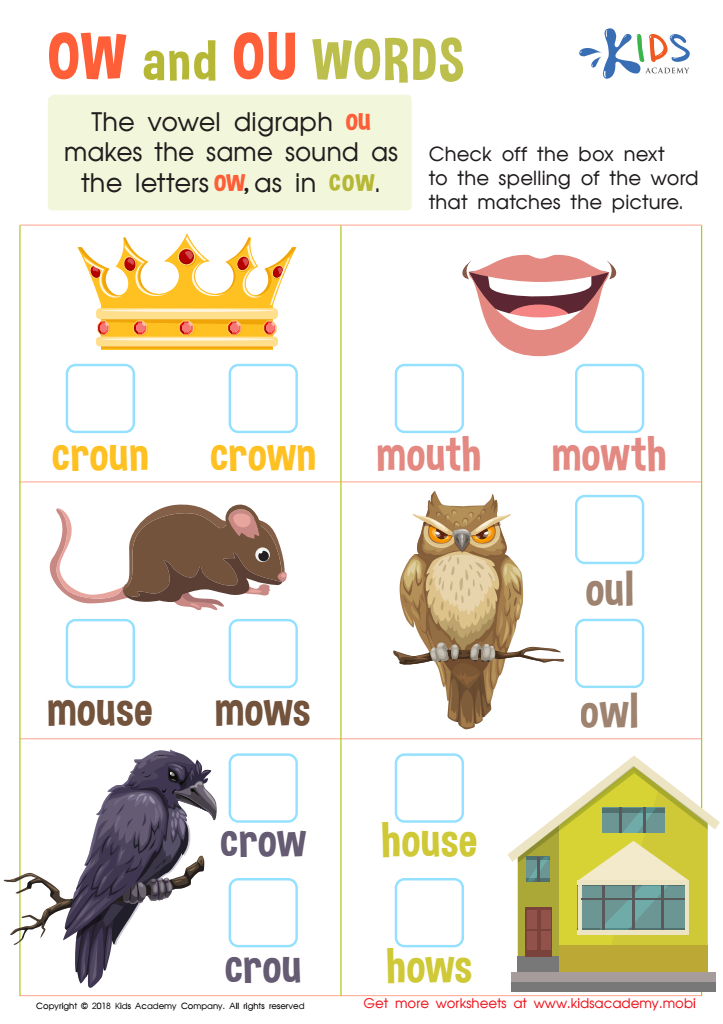
Reading: OW and OU Words Worksheet
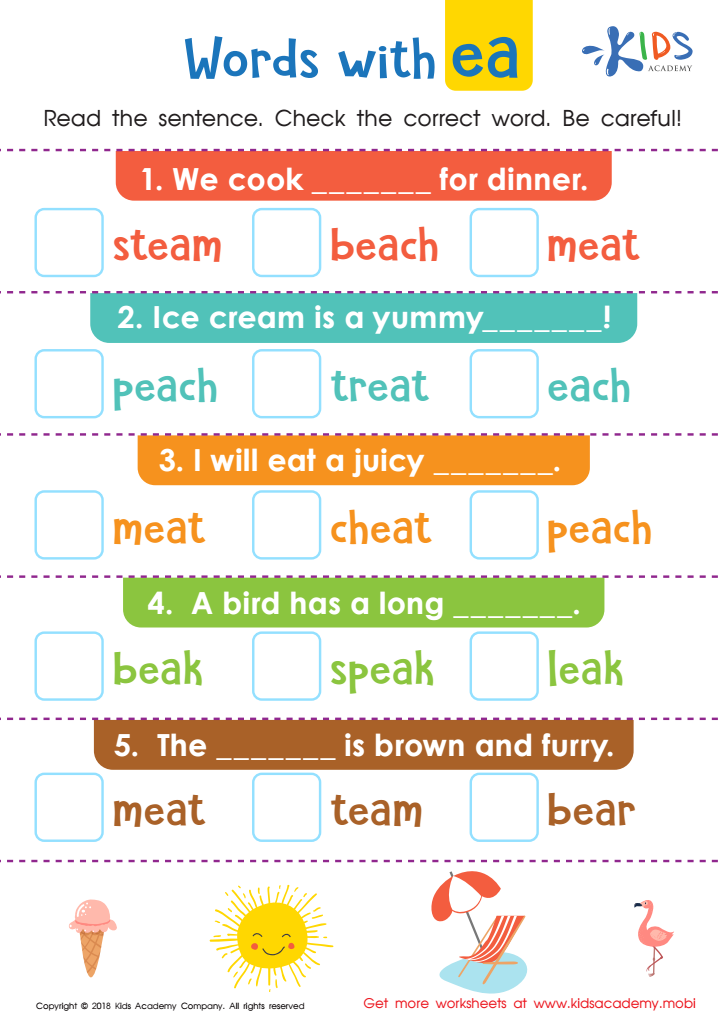
Words with ea Worksheet
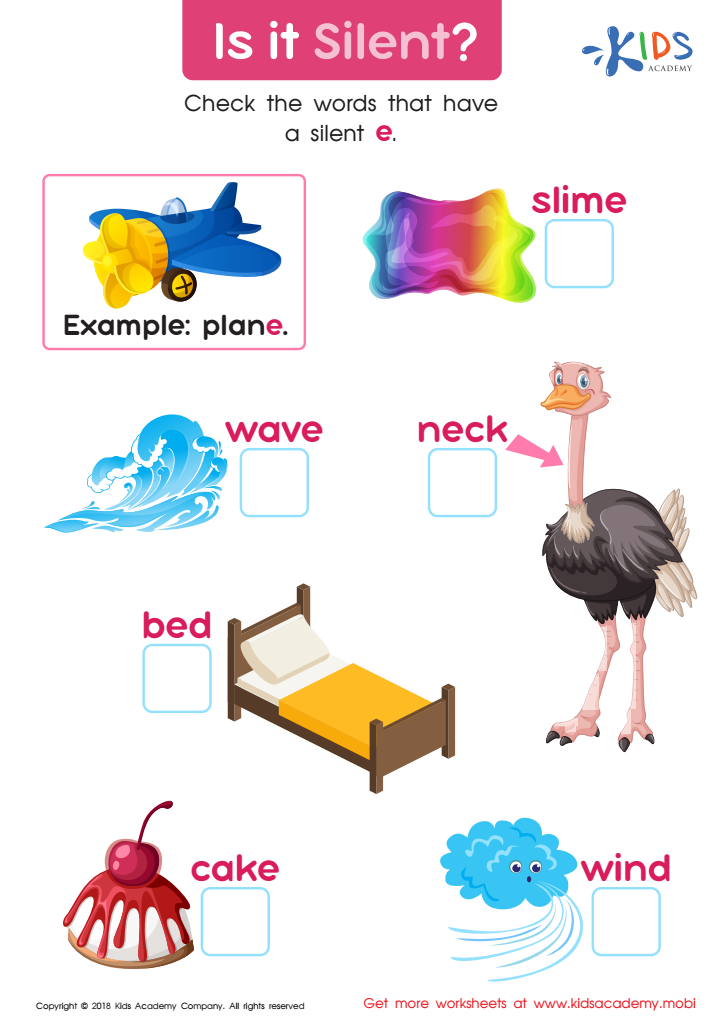
Is It Silent? Worksheet
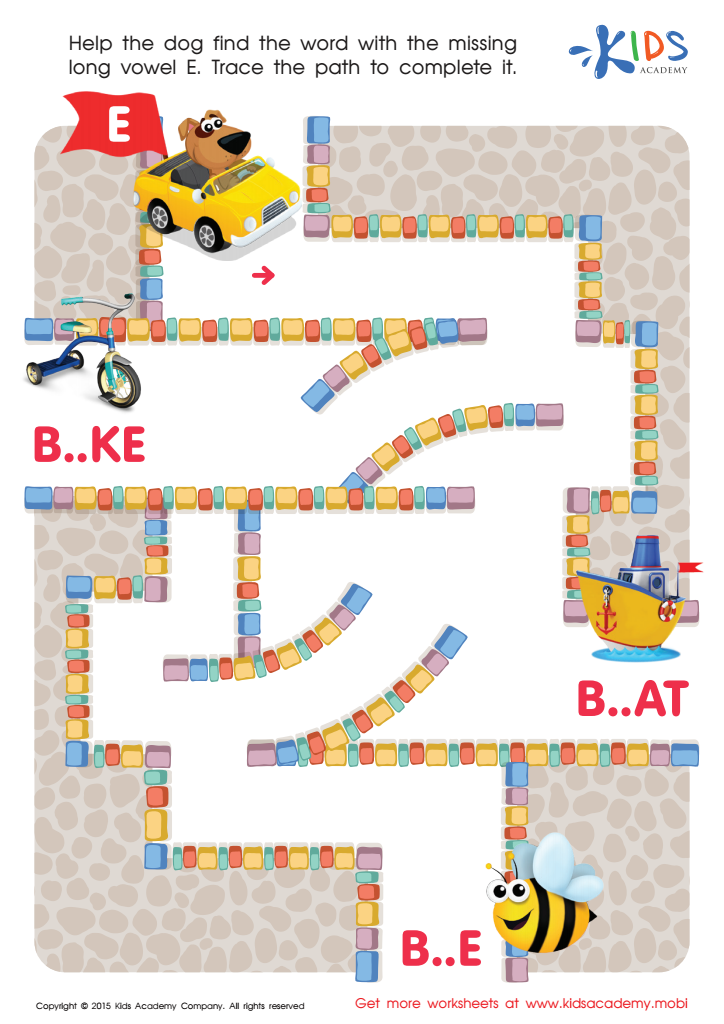
Long Vowel Sound E Worksheet
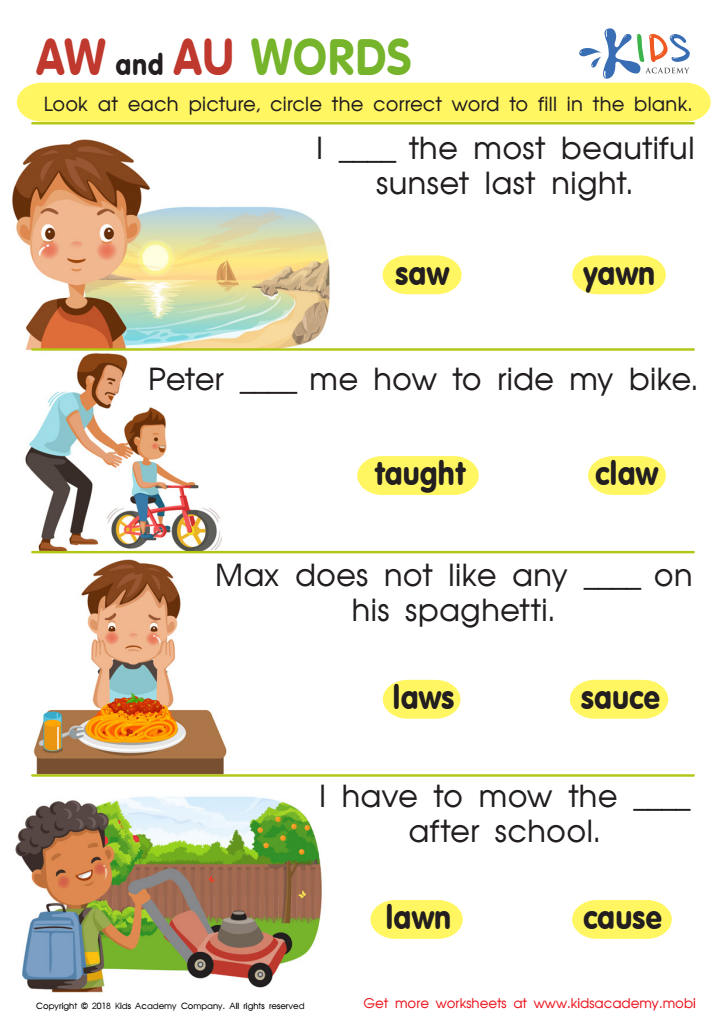
Reading: AW and AU Words Worksheet





Word recognition vowels play a pivotal role in early literacy development for children ages 4-7. During these formative years, learning to recognize and accurately pronounce vowels lays the foundation for successful reading and writing skills. Vowels form the core sounds of syllables, and understanding them allows children to grasp necessary phonetic concepts, which in turn aids in decoding new words. When children can effortlessly recognize vowel sounds, they are more capable of piecing together words and sentences, fostering fluency and confidence in reading.
Moreover, early vowel recognition enhances listening skills. As children learn to identify different vowel sounds, they sharpen their auditory discrimination abilities. This becomes crucial not only in reading comprehension but also in effective communication and language development. Misidentifying vowels can lead to misinterpretation of words, affecting both academic performance and daily interactions.
Additionally, an early mastery of vowel sounds helps minimize future learning challenges. Difficulties with word recognition can sometimes lead to frustration and disengagement from learning opportunities. Parents and teachers who focus on this fundamental aspect of literacy provide children with a strong toolkit to navigate their educational journeys. Interventions, supported through playful learning activities and consistent practice, can have far-reaching positive impacts on children's overall academic success and self-esteem.







