Chess rules understanding Chess Worksheets for Ages 4-7
4 filtered results
-
From - To
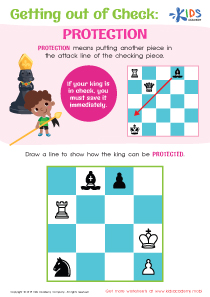
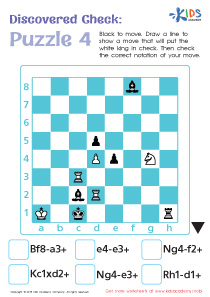
Unlock the world of chess for young learners with our engaging "Chess Rules Understanding Worksheets" tailored for ages 4-7. Designed to introduce foundational chess concepts, these worksheets provide fun and educational activities that make learning the rules enjoyable. Each worksheet features colorful illustrations, simple instructions, and interactive tasks that promote critical thinking and problem-solving skills. Perfect for classrooms or at-home learning, these resources help kids grasp essential chess rules, including piece movements and game objectives. Foster a lifelong love of chess while enhancing cognitive development. Start your child’s chess journey today with our user-friendly, printable worksheets!
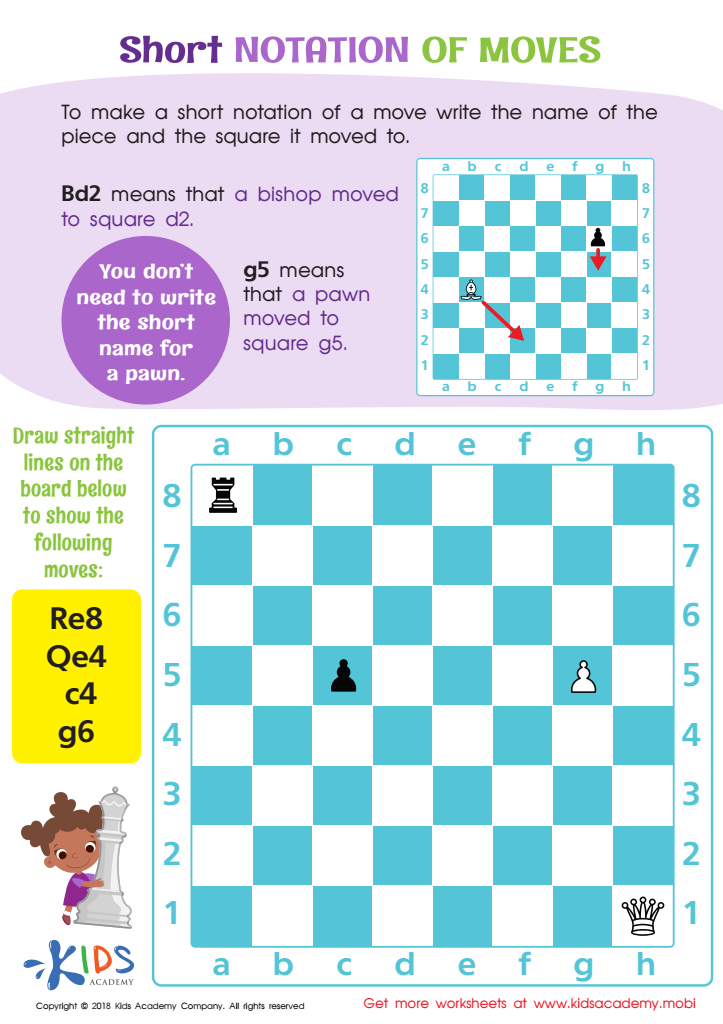
Short Notation of Moves Worksheet
 Assign to My Students
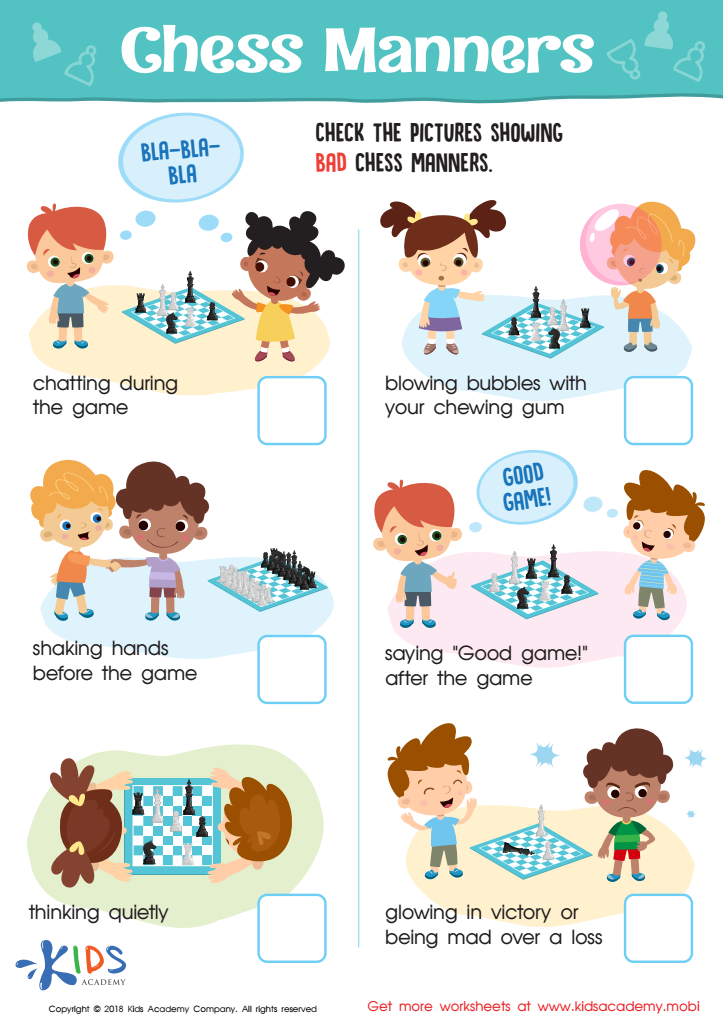
Chess Manners Worksheet
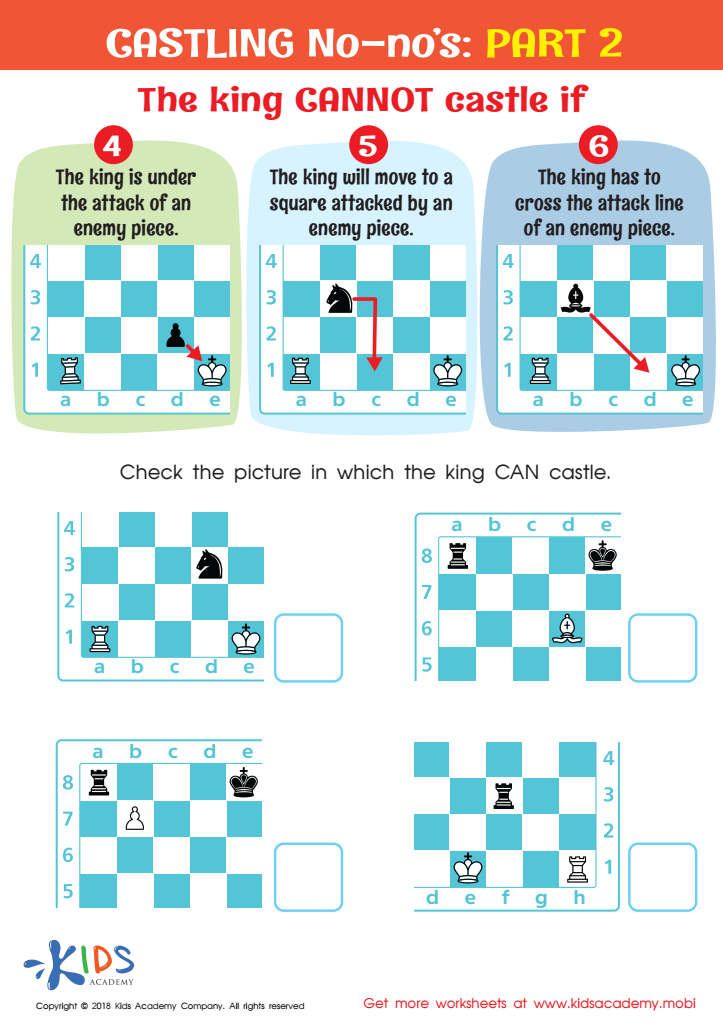
Castling No - no's: Part 2 Worksheet
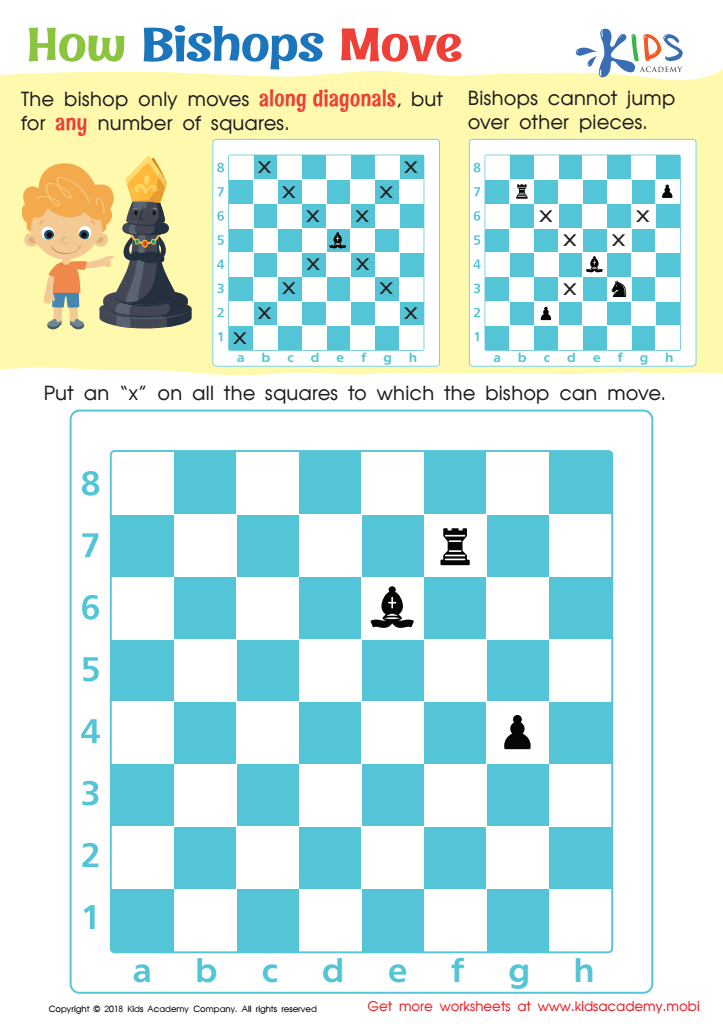
How Bishops Move Worksheet







Understanding chess rules is essential for parents and teachers of children ages 4-7 because it promotes cognitive development, discipline, and social skills. Chess is not just a game; it is an educational tool that enhances critical thinking and problem-solving abilities. For young children, learning chess helps develop patience and concentration as they focus on strategies, predict opponents' moves, and understand the importance of planning ahead.
When parents and teachers introduce the game at an early age, they also instill valuable lessons in sportsmanship and cooperation. Children learn to respect opponents, follow rules, and handle winning or losing with grace. These social skills are crucial for overall emotional development and interpersonal interactions in school and at home.
Chess can also enhance memory and mathematical thinking, as children deal with patterns, counting, and spatial recognition. Encouraging young learners to grasp the rules and strategies of chess fosters a love for learning and intellectual curiosity that benefits their educational journey. In engaging with chess, parents and teachers create an enriching environment that leads to improved academic performance while also having fun. This makes the understanding of chess rules a worthwhile investment in children's developmental journey.