Cognitive Development Chess Worksheets for Ages 4-7
5 filtered results
-
From - To
Unlock your child's potential with our Cognitive Development Chess Worksheets designed specifically for ages 4 to 7. These engaging worksheets introduce fundamental chess concepts while promoting critical thinking and problem-solving skills. Each activity is crafted to enhance cognitive abilities, encouraging pattern recognition, strategic planning, and memory retention. With colorful designs and age-appropriate content, your child will have a fun, interactive experience that makes learning chess enjoyable. Perfect for both classroom settings and at-home learning, these worksheets are a fantastic resource for young learners eager to develop their minds through the timeless game of chess. Explore the world of chess today!
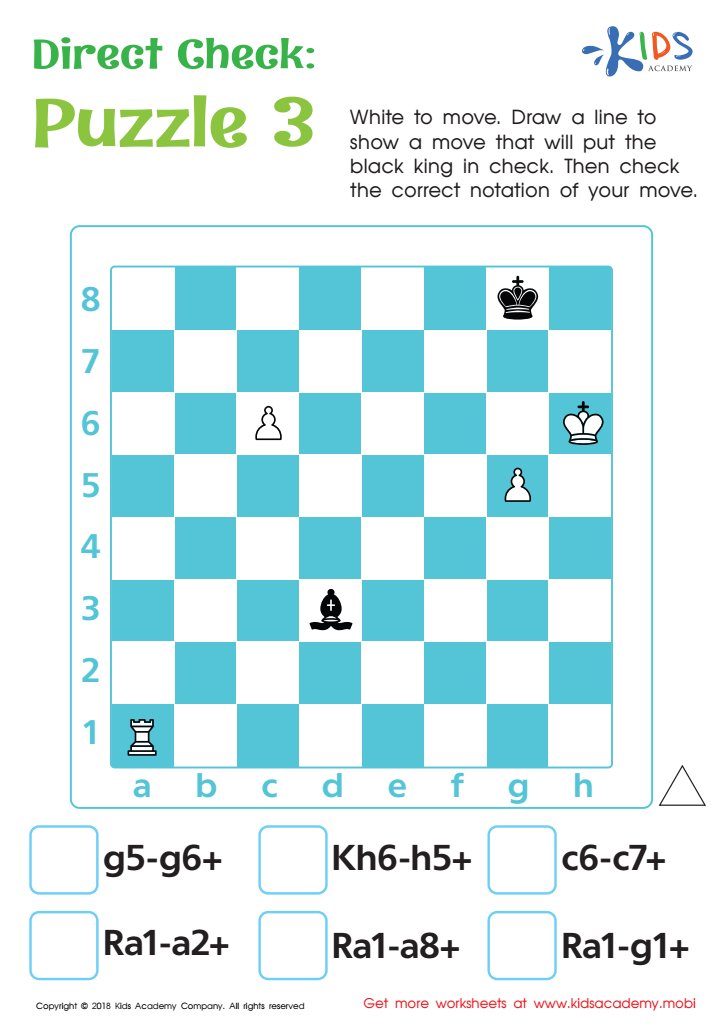
Direct Check: Puzzle 3 Worksheet
 Assign to My Students
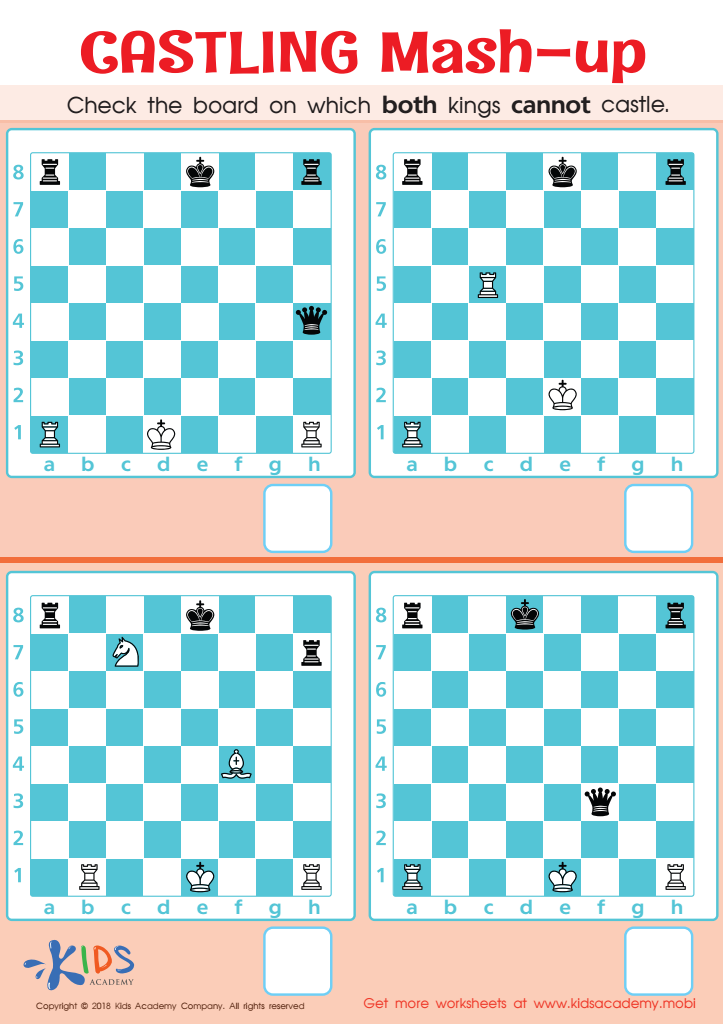
Castling Mash–up Worksheet
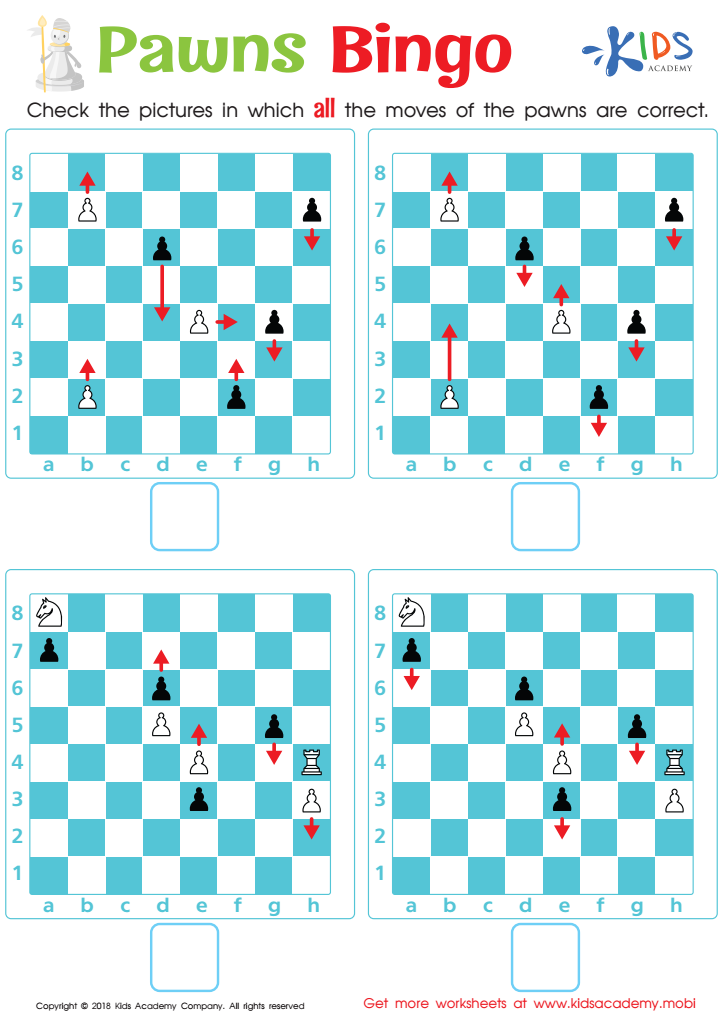
Pawns Bingo Worksheet
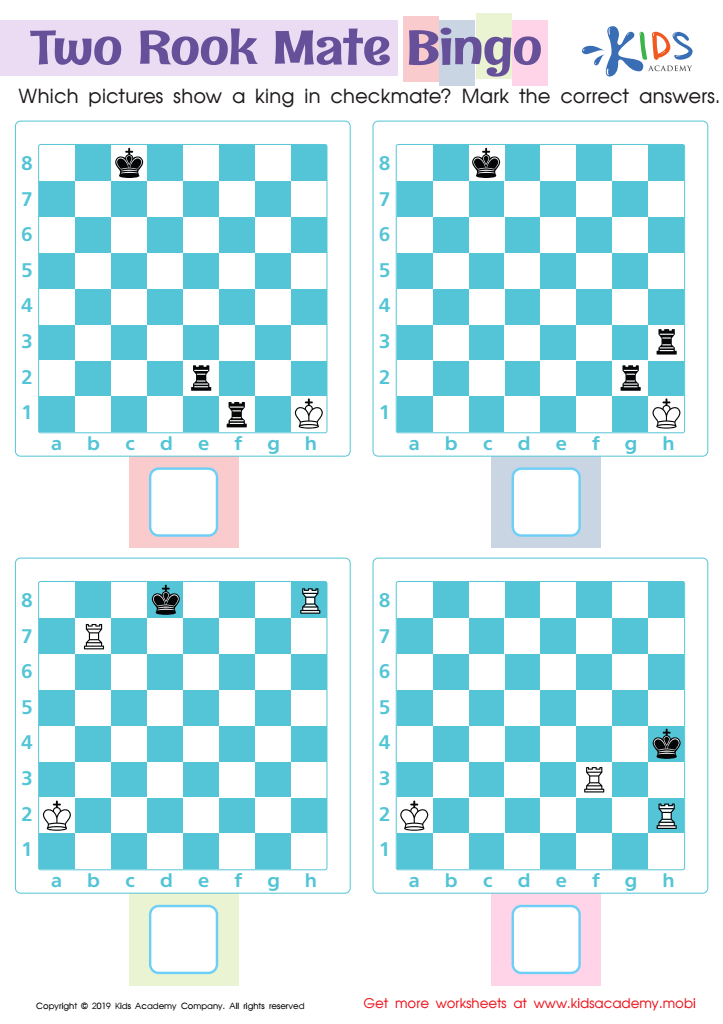
Two Rook Bingo Worksheet
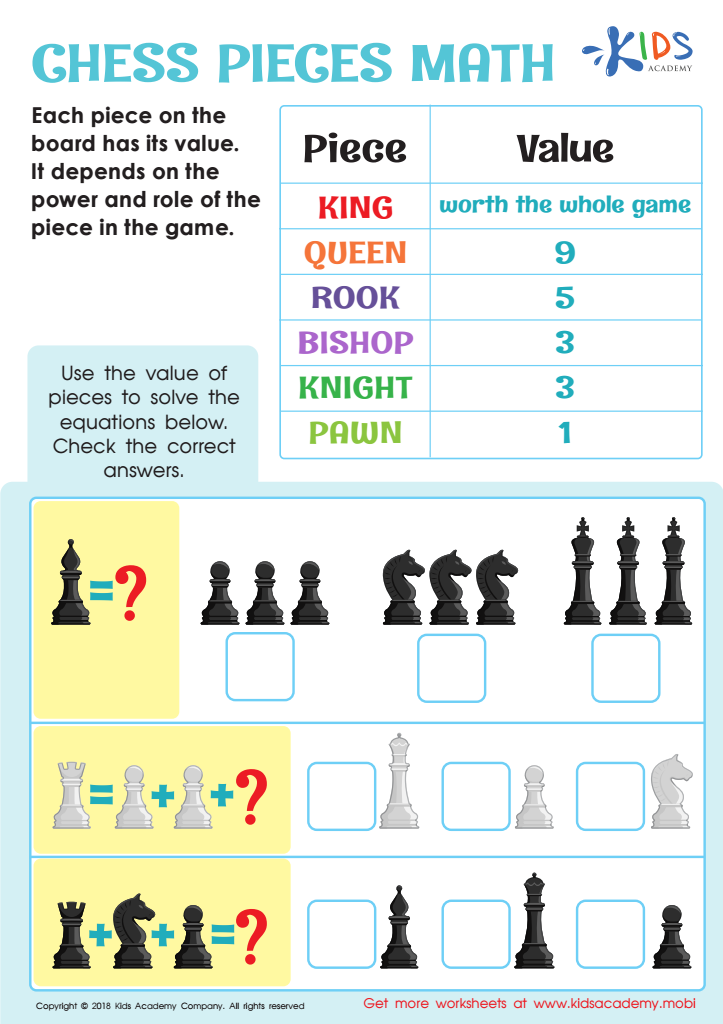
Chess Pieces Math Worksheet






Cognitive Development through chess for children ages 4-7 is vital for several reasons. Firstly, chess is a game that promotes critical thinking and problem-solving skills. At a young age, children develop essential cognitive abilities through strategic planning and foresight as they learn to anticipate opponents' moves and adapt their strategies.
Engaging in chess also enhances concentration and patience, skills that are crucial not only in the game but across all learning environments. Children must focus on the board, develop memory skills for recognizing patterns, and reflect on consequences before making decisions, all of which translate to improved academic performance.
Moreover, chess fosters social skills by encouraging interactions with peers, teaching concepts of good sportsmanship, teamwork, and respect for opponents. These interactions are vital for emotional development during early childhood.
Additionally, chess introduces basic mathematical concepts, such as geometry and spatial awareness, in a fun and engaging way. As they navigate an 8x8 grid, children inadvertently enhance their numerical skills.
Ultimately, parents and teachers should care about Cognitive Development Chess because it provides a multifaceted educational tool that promotes intellectual, social, and emotional growth, laying a robust foundation for lifelong learning.