Reading comprehension Phonics Coloring Pages Worksheets for Ages 4-7
3 filtered results
-
From - To
Discover an engaging way to boost reading comprehension for children aged 4-7 with our phonics coloring pages worksheets! These interactive resources seamlessly blend learning and creativity, allowing young learners to reinforce phonics skills while expressing their artistic talents. Each coloring page is designed to support early literacy development, helping kids decode words and understand meanings in a fun and stimulating environment. Parents and educators can easily print these worksheets, making them perfect for at-home practice or classroom activities. Inspire a love for reading and creativity together as children embark on a colorful journey toward mastering phonics and improving comprehension skills!
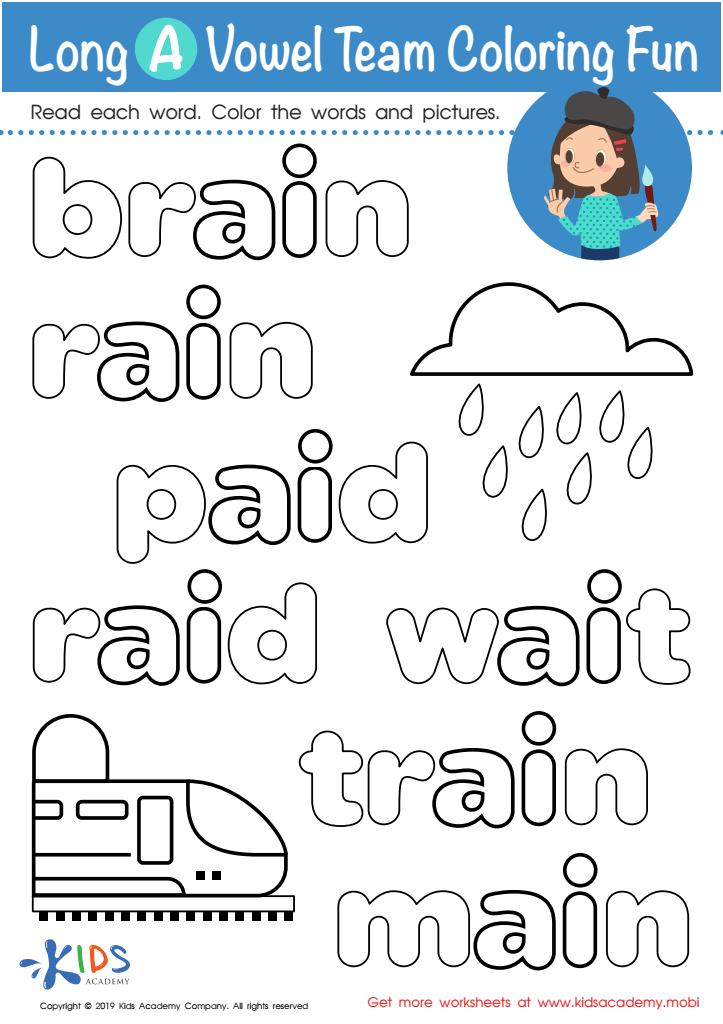
Long A Vowel Team Coloring Fun Worksheet
 Assign to My Students
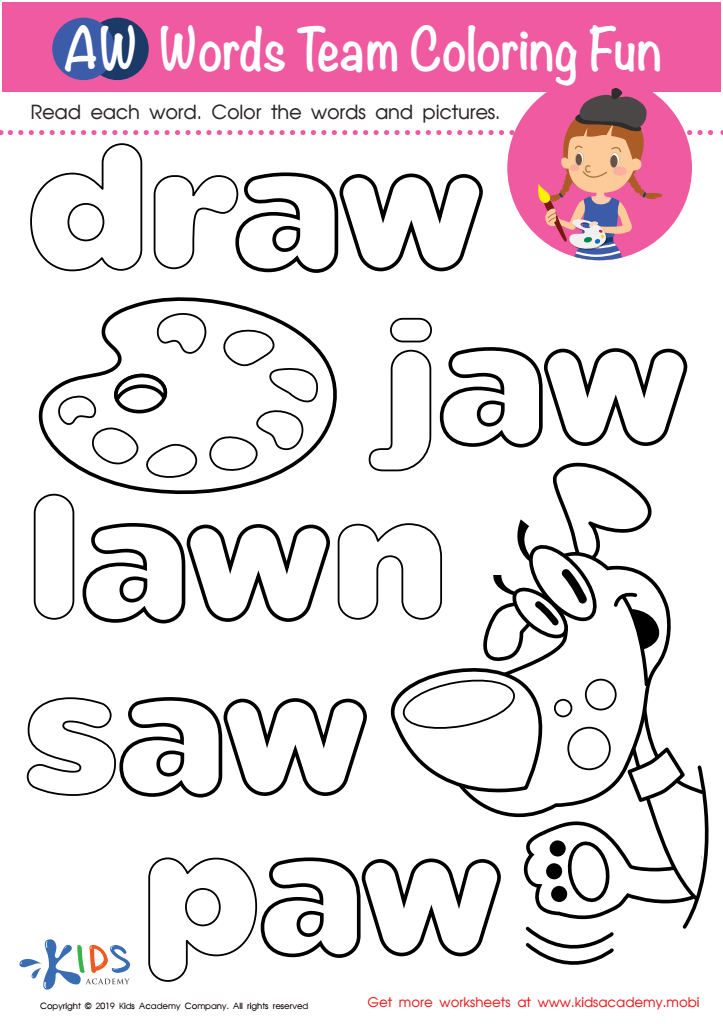
AW Words Team Coloring Fun Worksheet
Assign to My Students

Long and Short E Worksheet
Assign to My Students







Reading comprehension and phonics are foundational skills that significantly influence a child's literacy development. For parents and teachers, incorporating coloring pages themed around phonics for ages 4-7 can create an engaging, multi-sensory learning experience. These coloring activities not only enhance fine motor skills but also encourage cognitive connections between letters and sounds.
Children at this age learn best through play and creativity. Phonics coloring pages can make learning enjoyable, grabbing their attention and motivating them to grasp essential literacy concepts. As they color, they reinforce their understanding of letter recognition, phonemic awareness, and vocabulary. This playful interaction helps solidify their ability to decode words, laying the groundwork for future reading comprehension.
Furthermore, coloring can provide a calming effect, helping children focus and enhancing their ability to absorb information. Parents and teachers can use these activities as bonding moments, encouraging conversations about colors and letters, which further nurtures language development.
Investing time in phonics coloring pages is a purposeful approach to enhancing early literacy. It fosters a supportive learning environment where children feel confident and excited about reading—a crucial step toward their academic success and a lifelong love for literature.