Division practice Worksheets for Ages 4-7
7 filtered results
-
From - To
Discover engaging and interactive division practice worksheets tailored for children ages 4 to 7 at Kids Academy. Our resources are designed to make learning division fun and accessible, helping young learners build essential math skills in a playful way. Each worksheet encourages students to explore basic division concepts through colorful illustrations and age-appropriate problems that promote critical thinking. With a variety of exercises, from simple problems to visual aids, these worksheets cater to different learning styles and abilities. Enhance your child's mathematical foundation and boost their confidence in division with our thoughtfully crafted materials, available for instant download and easy printing!
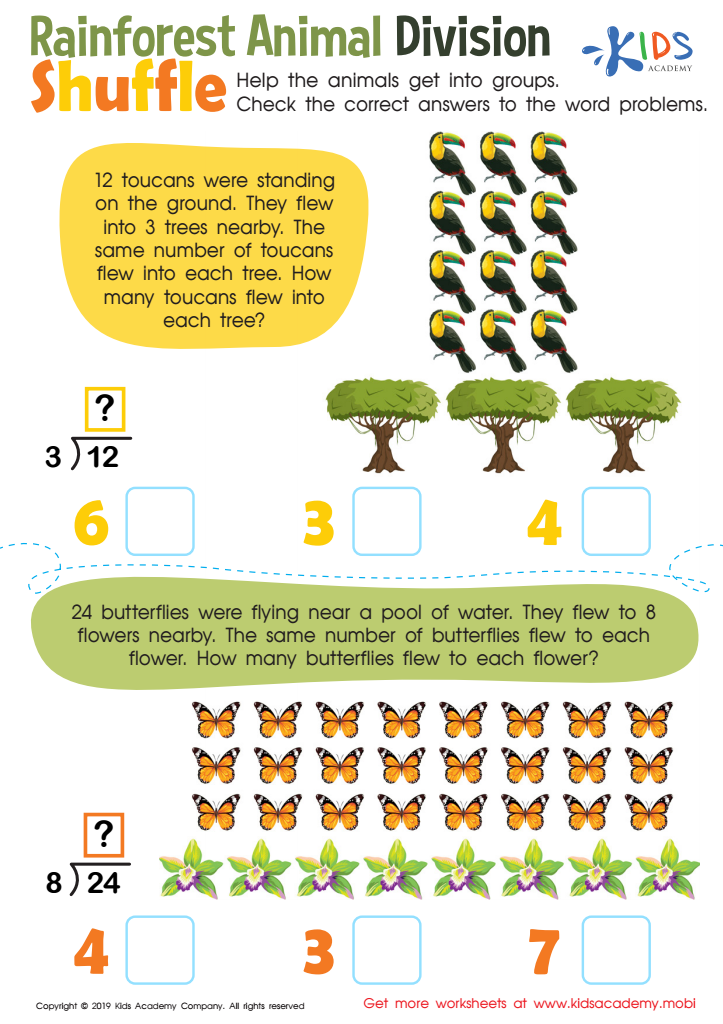
Rainforest Animal Division Worksheet
 Assign to My Students
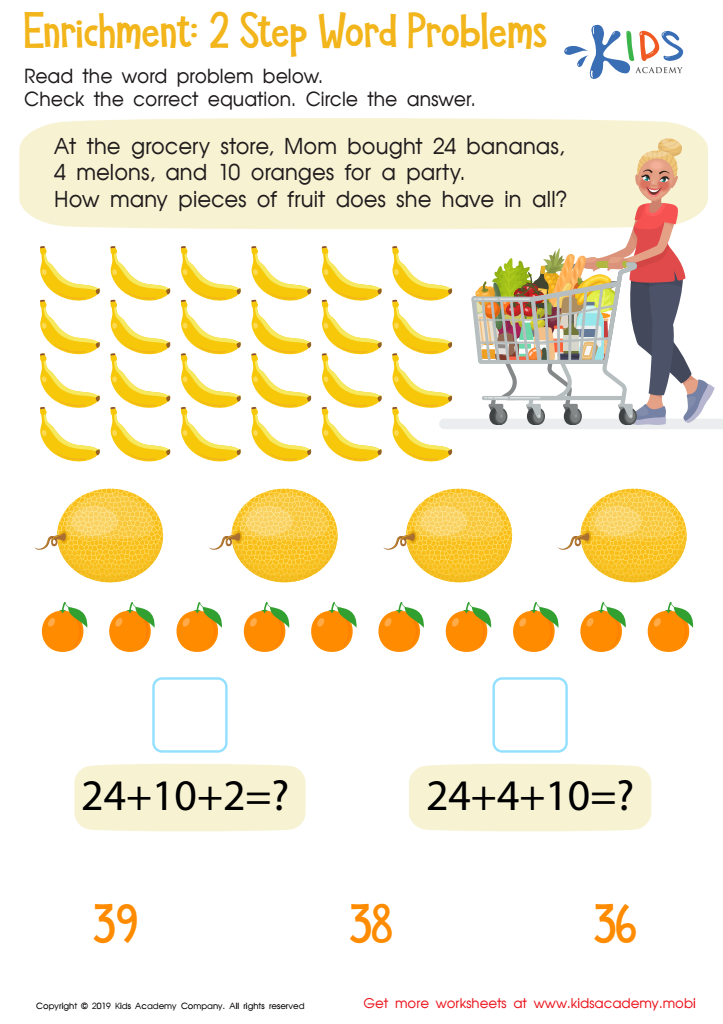
Enrichment -2 Step Word Problems Worksheet
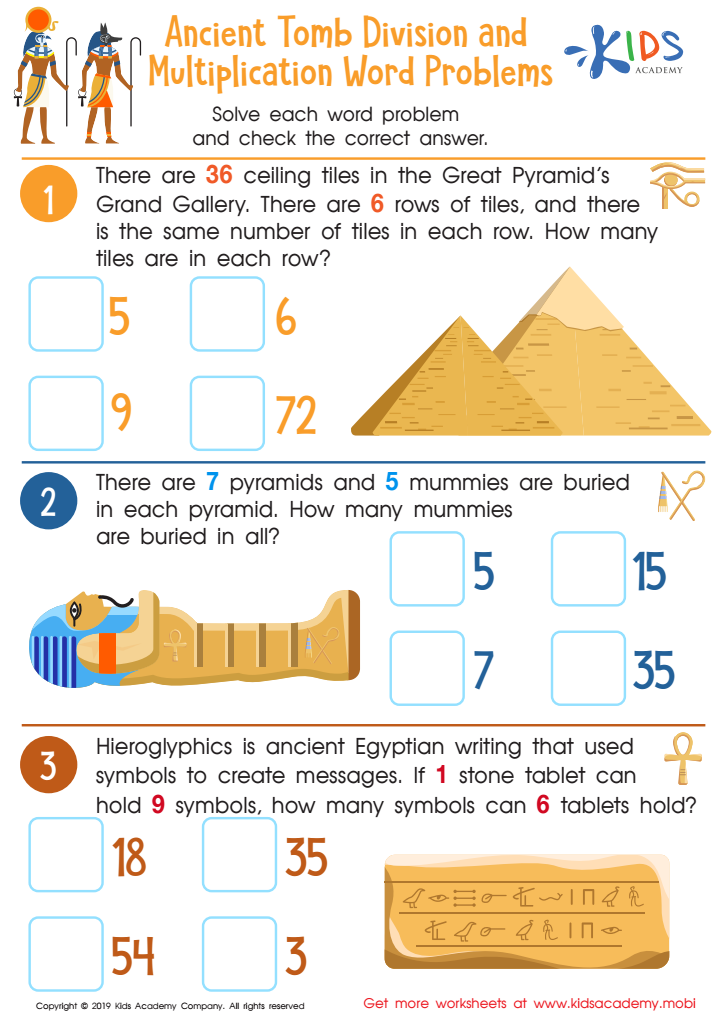
Ancient Tomb Division and Multiplication Word Problems Worksheet
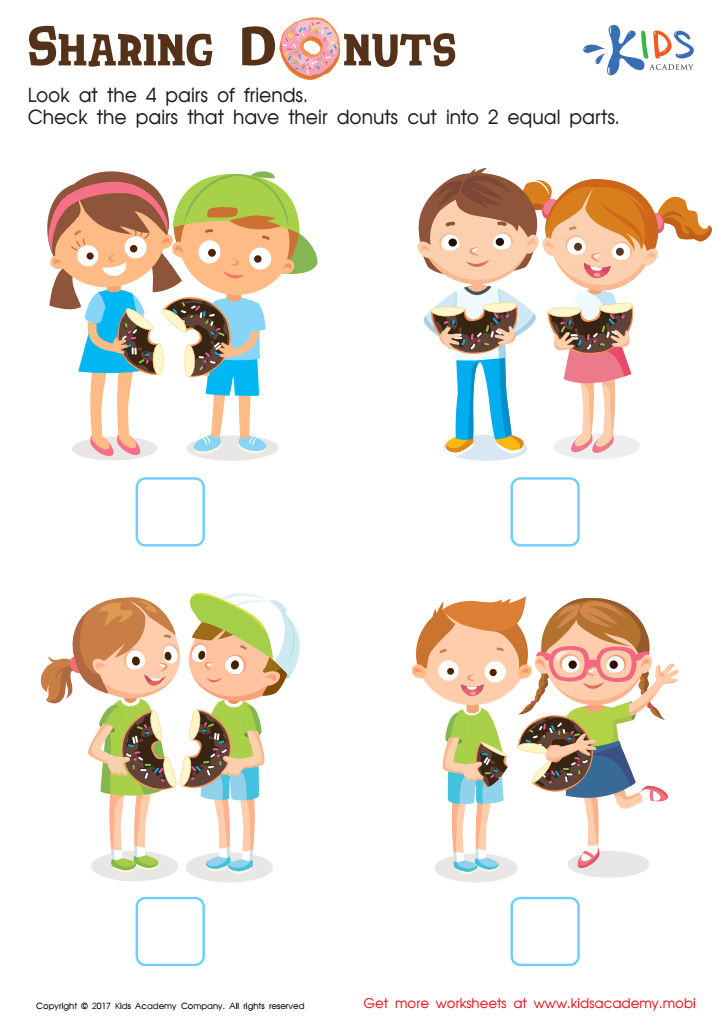
Sharing Donuts Worksheet
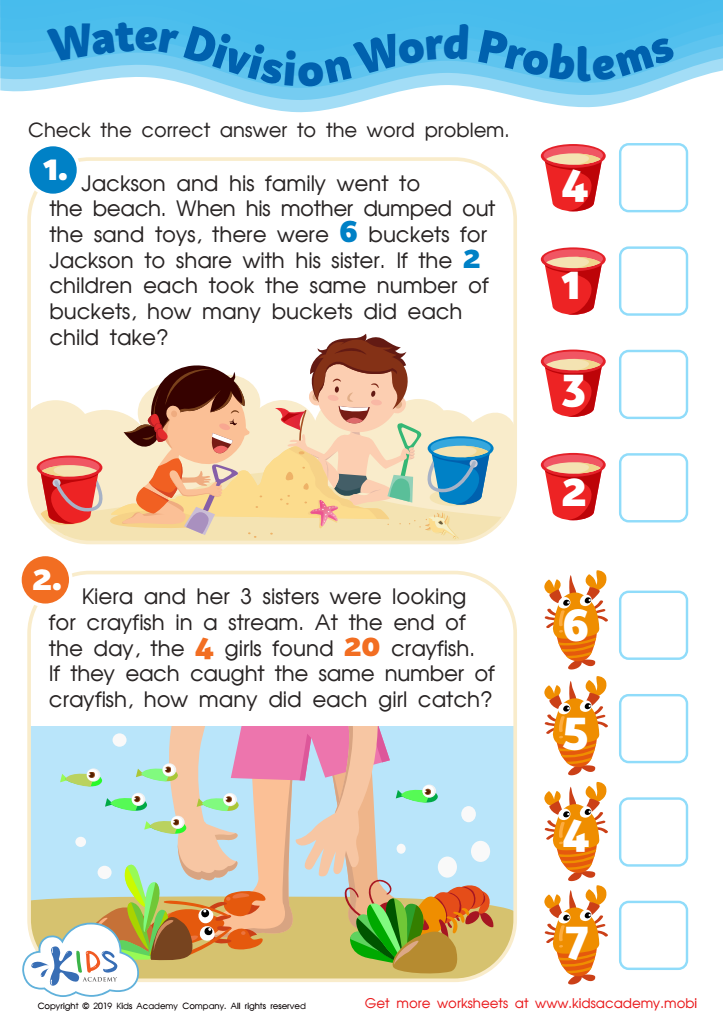
Water Division Word Problems Worksheet
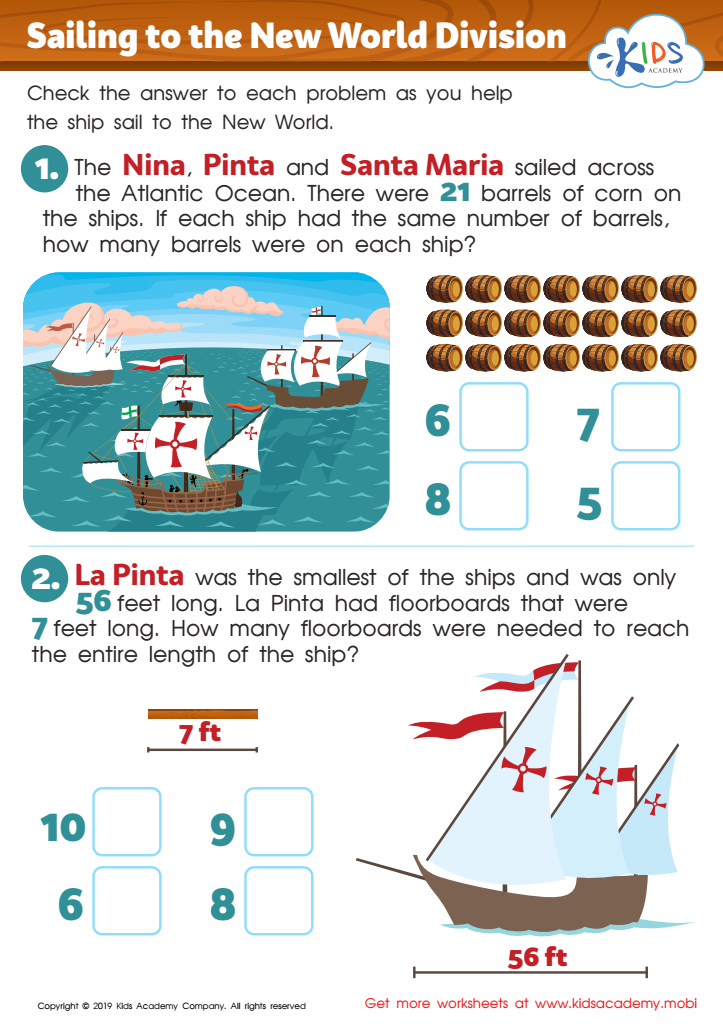
Sailing to the New World Division Worksheet








Division practice for children aged 4-7 is essential in building a strong mathematical foundation that supports later learning. At this age, children are naturally curious, and engaging them in division through playful, hands-on activities promotes cognitive development and critical thinking skills. Early exposure to division concepts, such as sharing equally or grouping items, helps children understand the basic idea of partitioning, which is vital for problem-solving.
Furthermore, division practice encourages the development of social skills. When children engage in group activities that involve dividing objects, they learn cooperation, collaboration, and negotiation. These skills are crucial for their overall socialization and emotional growth.
Moreover, when parents and teachers integrate division practice into daily activities, it enhances children's number sense and builds numerical fluency, laying the groundwork for more complex mathematical operations in the future. Approaching division in a fun, engaging manner fosters a positive attitude towards math, reducing anxiety and increasing confidence.
In summary, parents and teachers should care about division practice for this age group as it not only instills fundamental math skills but also cultivates social skills, promotes positive attitudes toward learning, and equips children with tools for future academic success.








