Lowercase identification Worksheets for Ages 4-7
5 filtered results
-
From - To
Welcome to our Lowercase Identification Worksheets for ages 4-7! Designed to foster early literacy skills, these engaging worksheets help young children recognize and identify lowercase letters through fun activities. Our resources feature colorful illustrations and interactive exercises that make learning enjoyable. Each worksheet includes essential practice to reinforce letter recognition, promoting confidence in early readers. Perfect for parents and educators, our materials are easily printable, allowing for flexible learning at home or in the classroom. Empower your child's learning journey with our carefully crafted worksheets, designed to make lowercase identification effortless and fun! Dive in and discover the joy of learning today!
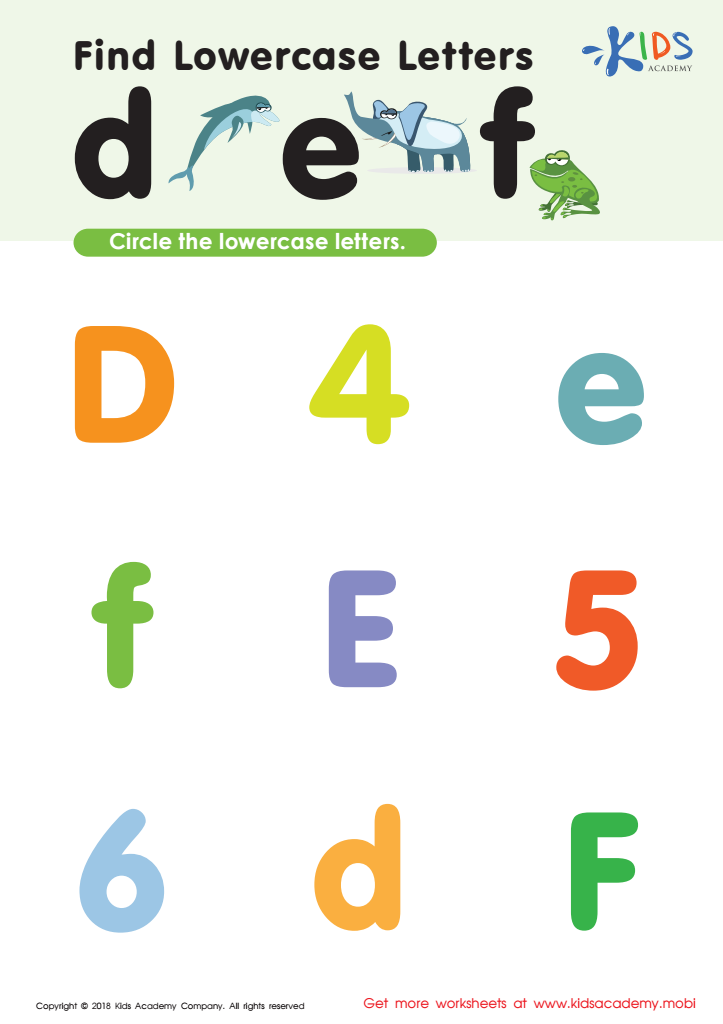
Find Lowercase Letters d e f Worksheet
 Assign to My Students
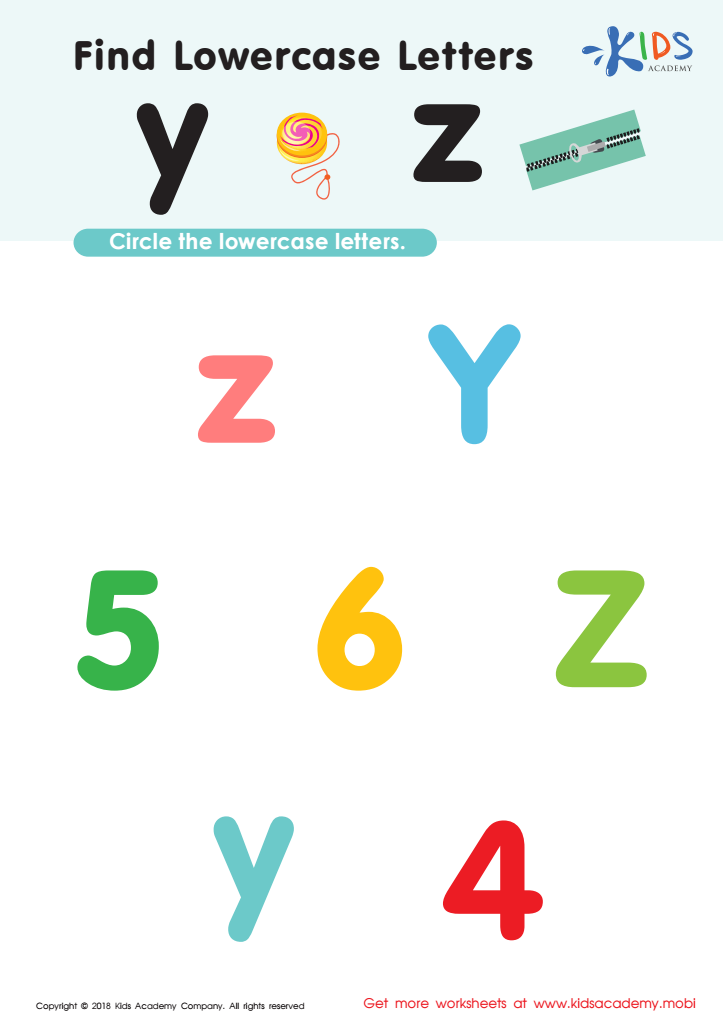
Find Lowercase Letters y z Worksheet
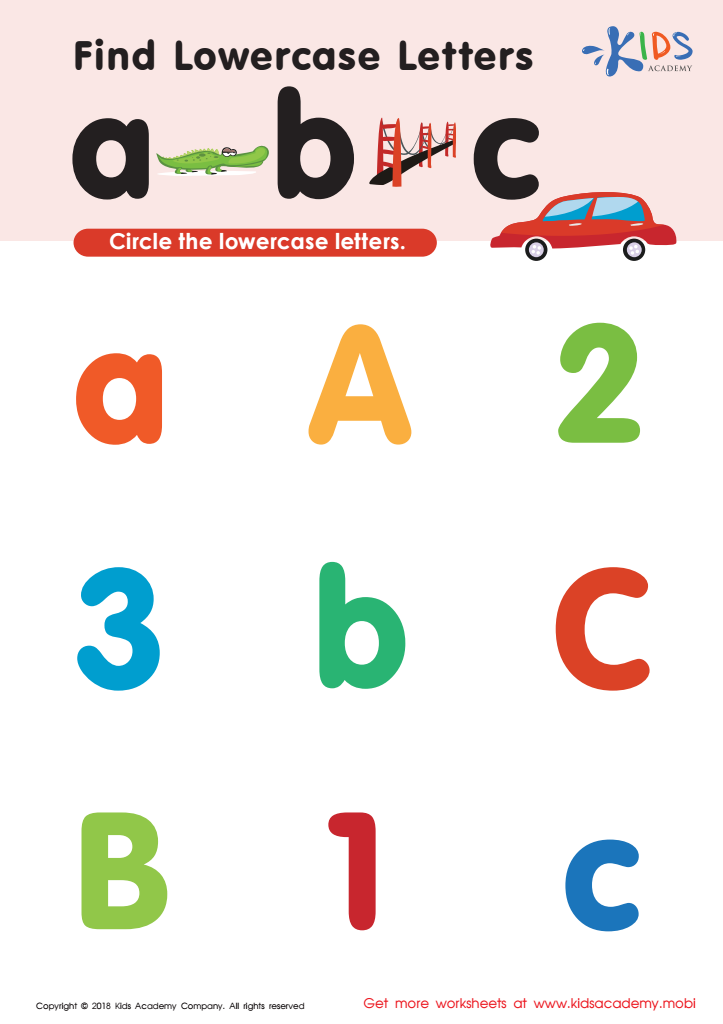
Find lowercase letters a b c Worksheet
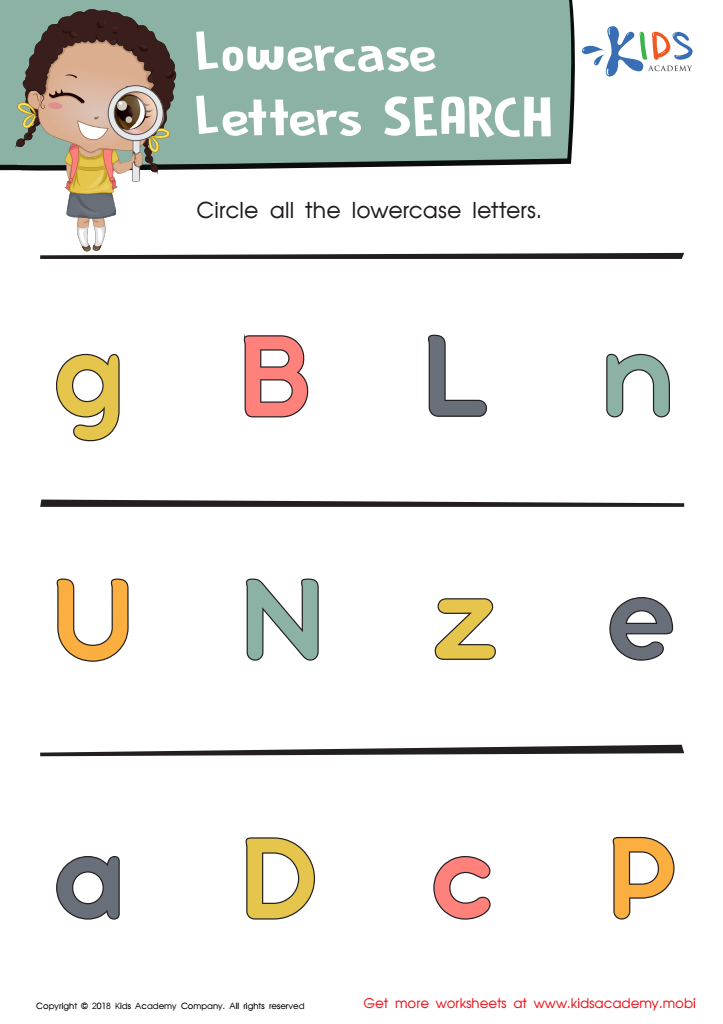
Lowercase Letters Search: Assessment Worksheet
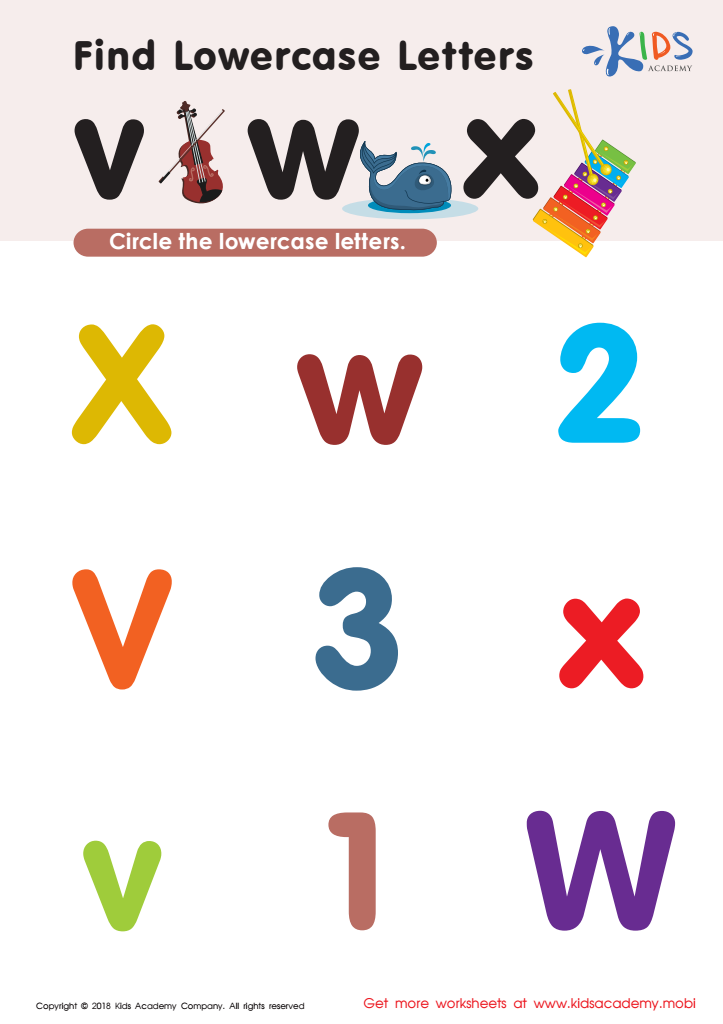
Find Lowercase Letters v w x Worksheet








Lowercase letter identification is a crucial skill for children aged 4-7, as it lays the foundation for reading and writing. At this developmental stage, children are typically learning to recognize letters and comprehend their sounds, forming the basis for literacy development. Lowercase letters account for a significant portion of written text that children encounter daily, making familiarity with these characters essential for effective reading.
Parents and teachers should care about lowercase identification because it directly impacts children's confidence and success in literacy. When children can easily recognize and distinguish lowercase letters, they become more engaged in reading activities. This skill enhances their phonemic awareness, allowing them to connect sounds with letters—an important step in learning to decode words.
Encouraging lowercase letter recognition also promotes early writing skills; children are more likely to write fluently when they can easily recall letter shapes and differentiate between uppercase and lowercase forms. Moreover, fostering this skill early helps address any developmental delays in literacy, ensuring children are prepared for more advanced reading tasks.
Ultimately, by prioritizing lowercase identification, parents and teachers can empower children with essential tools for communication, critical thinking, and lifelong learning.








