Time reading skills Worksheets for Ages 4-7
12 filtered results
-
From - To
Enhance your child's understanding of time with our Time Reading Skills Worksheets designed specifically for ages 4-7. Our engaging collection allows young learners to explore and practice reading clocks and understanding the concept of time through fun exercises. Each worksheet is tailored to develop key skills, reinforcing both analog and digital time comprehension. With vibrant illustrations and age-appropriate challenges, children will enjoy counting hours and minutes while building confidence in their time-telling abilities. Perfect for classroom or home learning, our worksheets foster essential skills that lay the groundwork for future academic success. Start your child’s journey towards mastering time today!
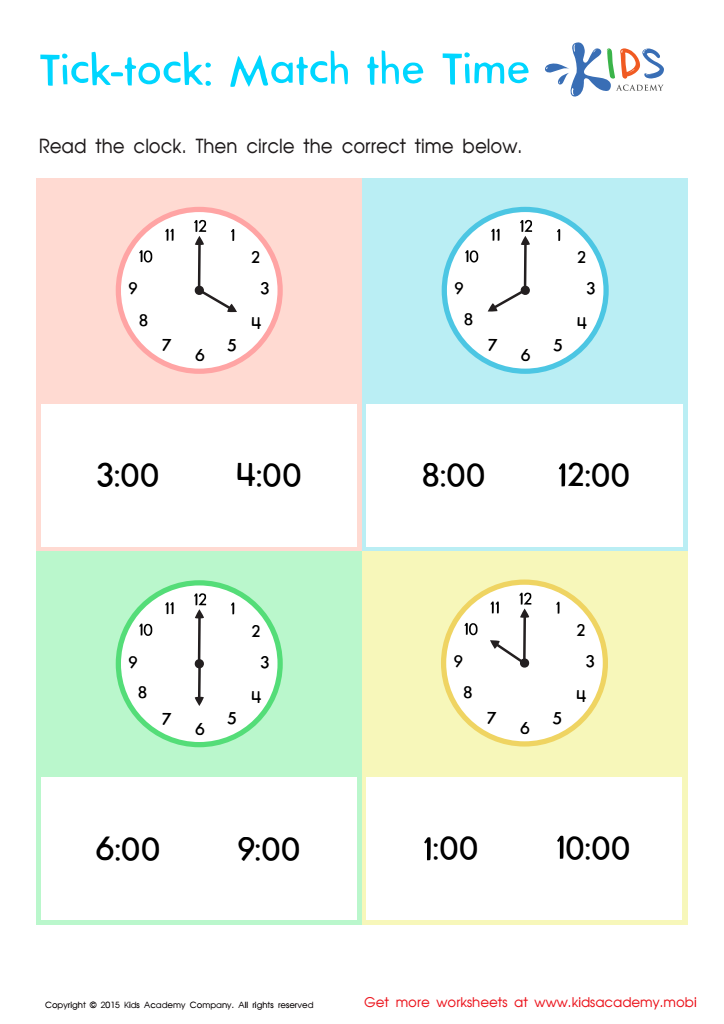
Telling The Time Worksheet: Part 4
 Assign to My Students
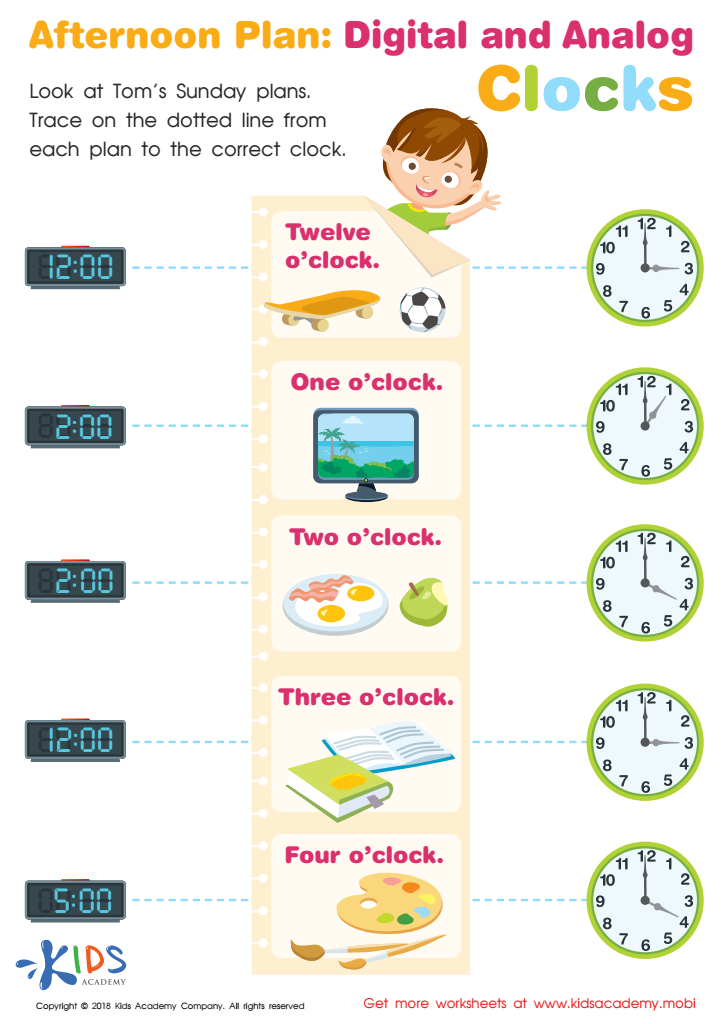
Afternoon Plan: Digital and Analog Clocks Worksheet
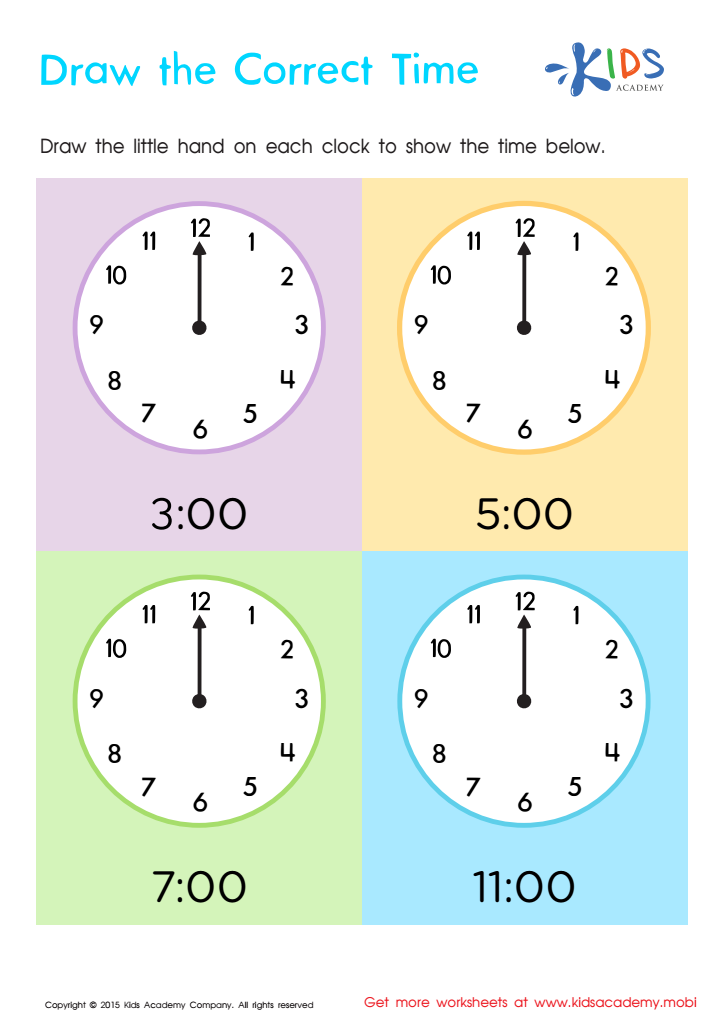
Telling The Time Worksheet: Part 1
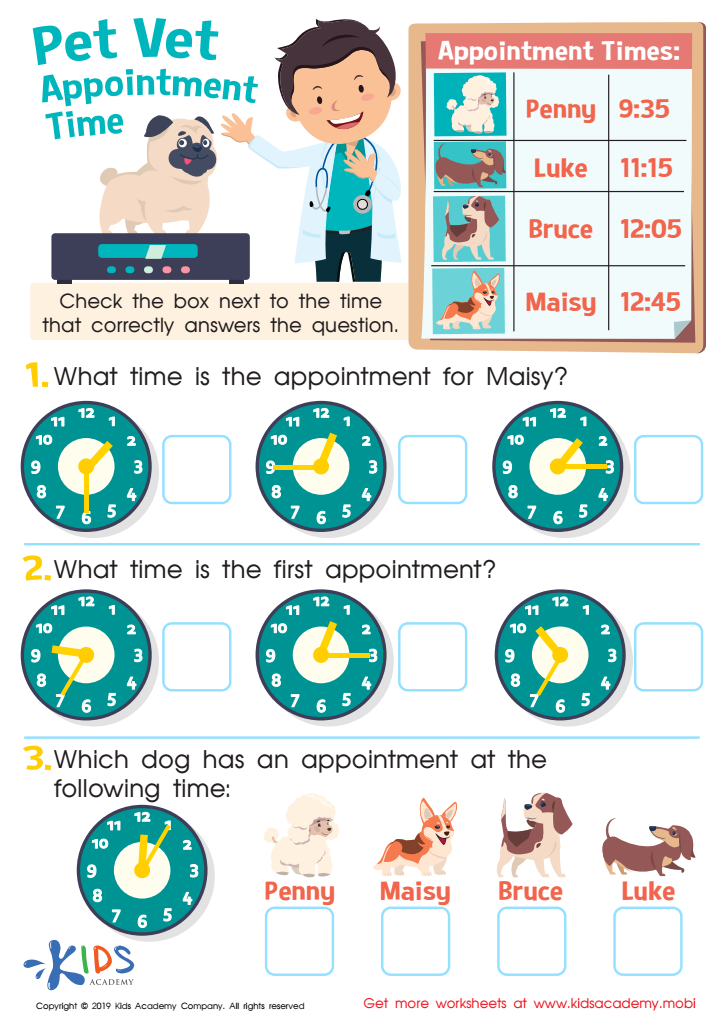
Pet Vet Appointment Time Worksheet
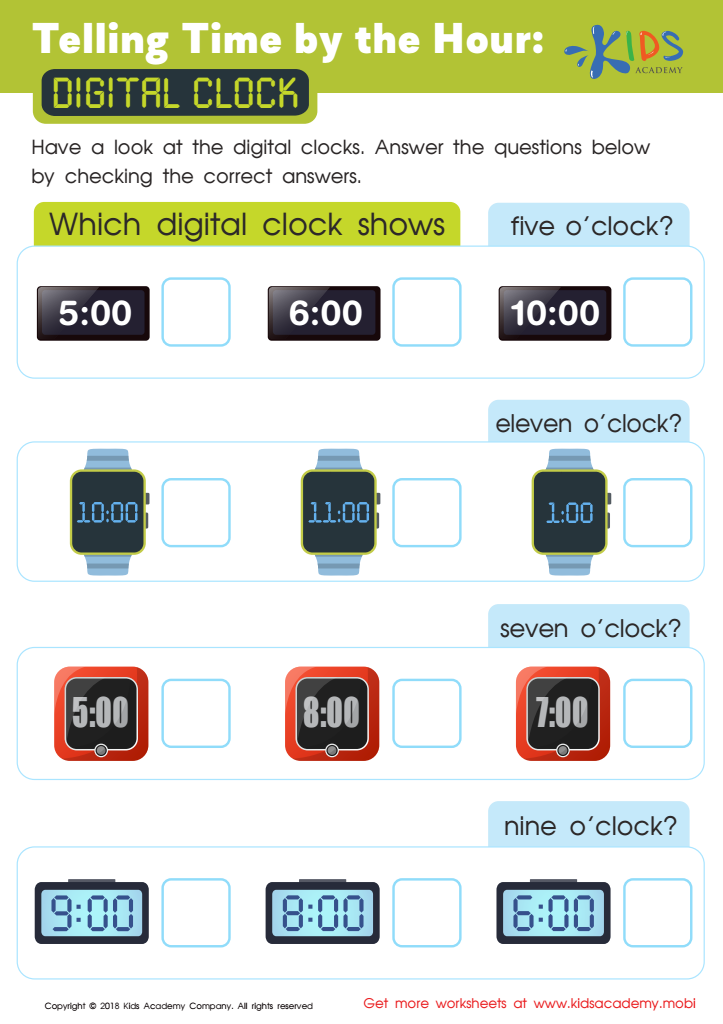
Telling Time by the Hour: Digital Clock Worksheet
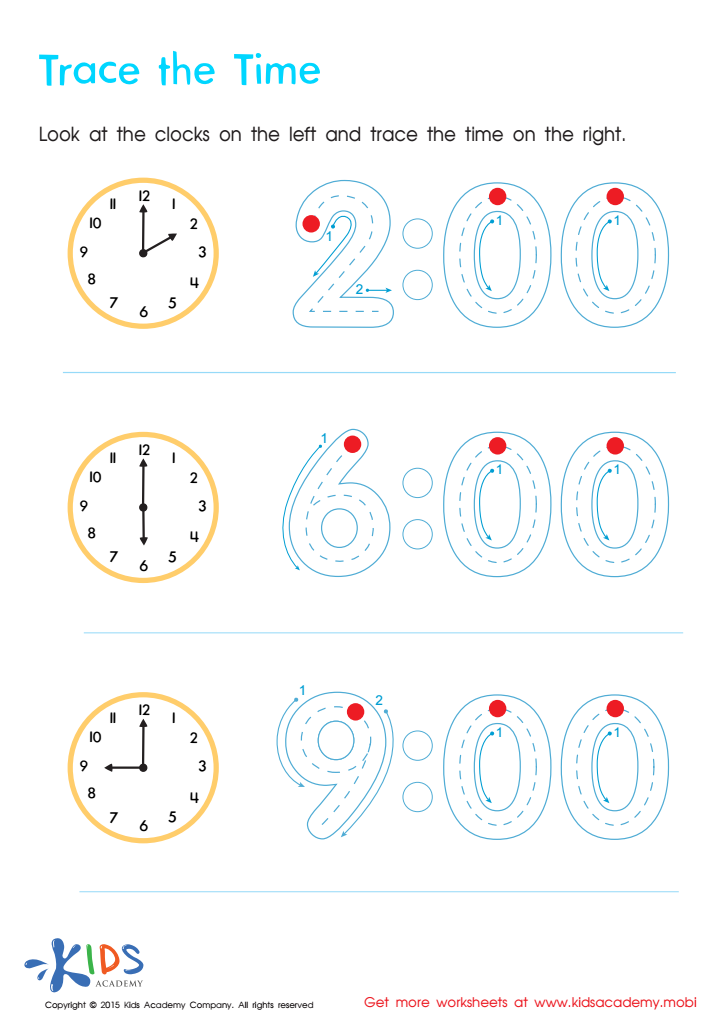
Telling The Time Worksheet: Part 2
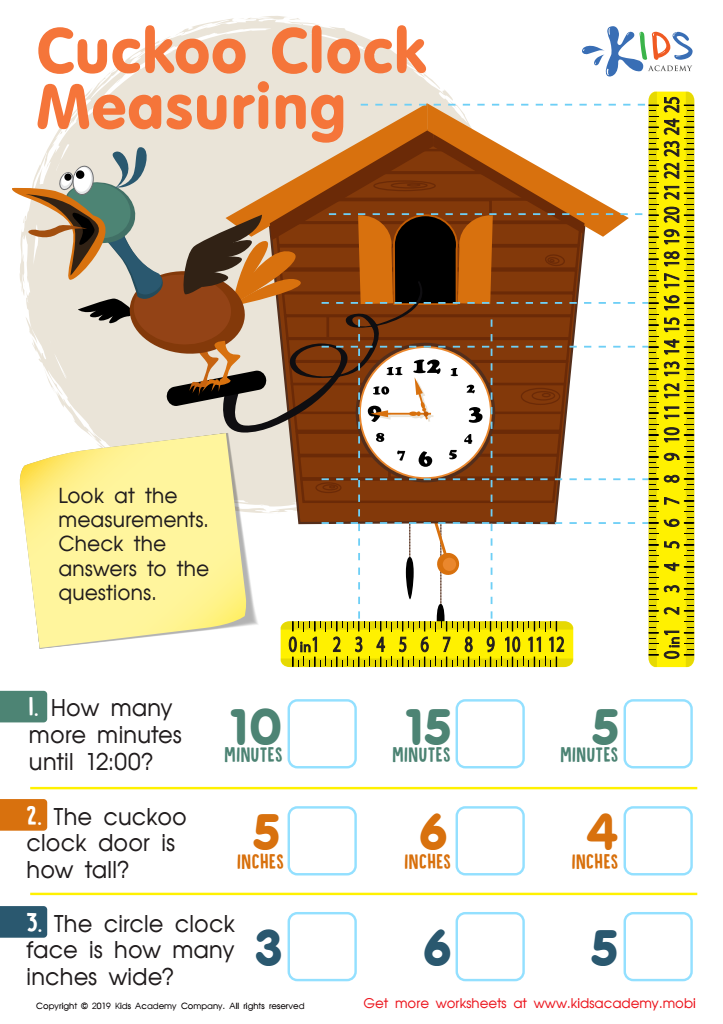
Cuckoo Clock Measuring Worksheet
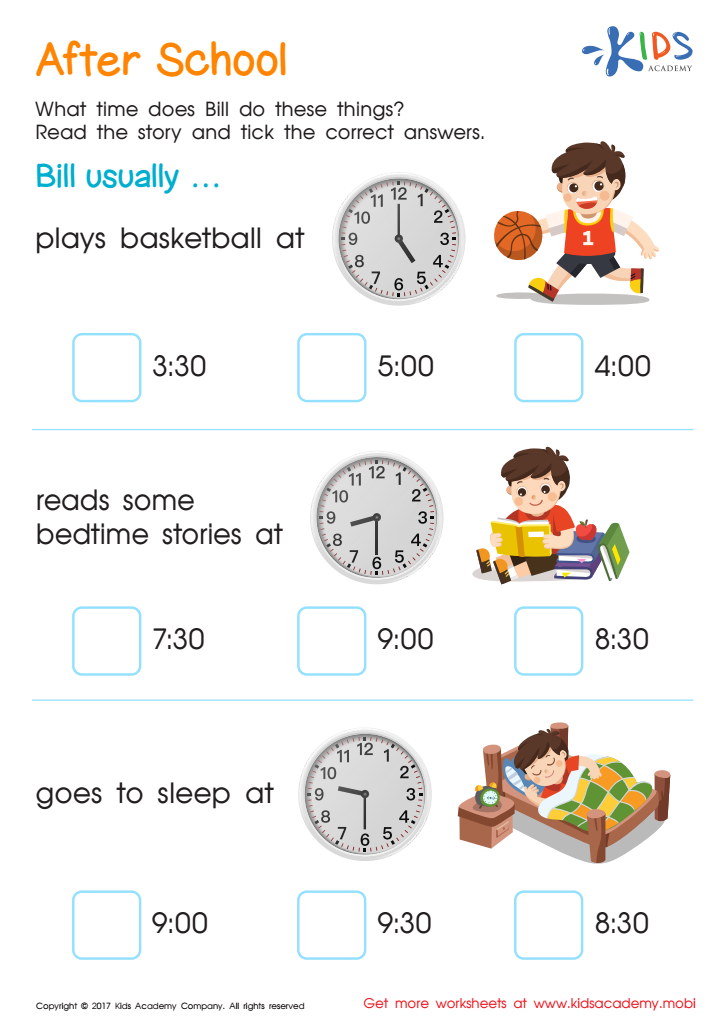
After School Time Printable
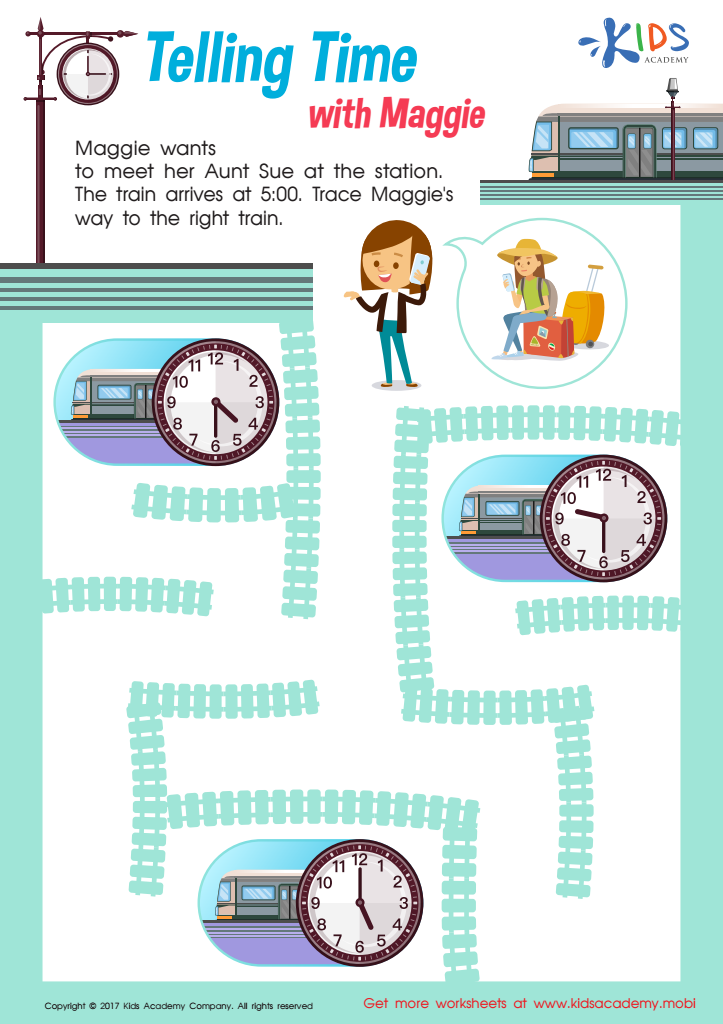
Telling Time With Maggie Time Worksheet
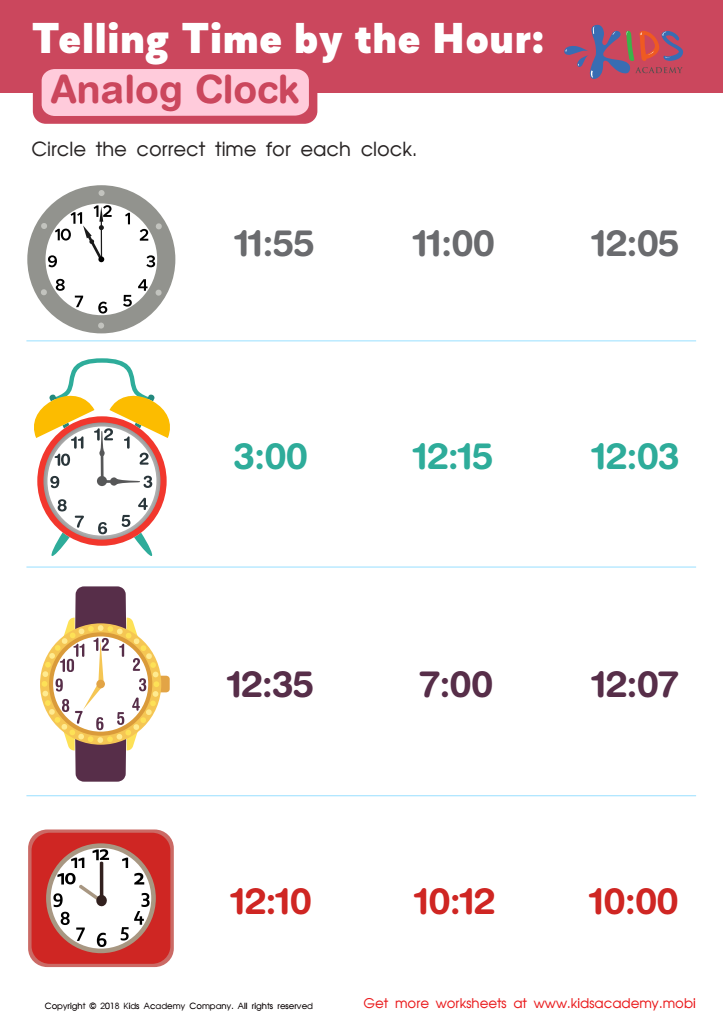
Telling Time by the Hour: Analog Clock Worksheet
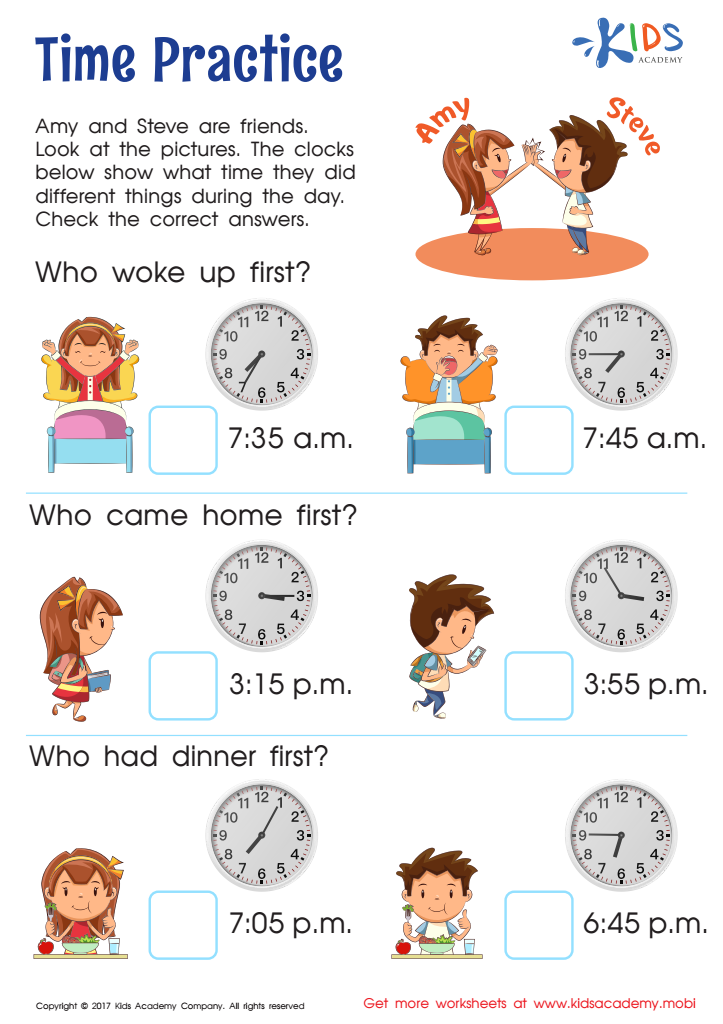
Time Practice Worksheet
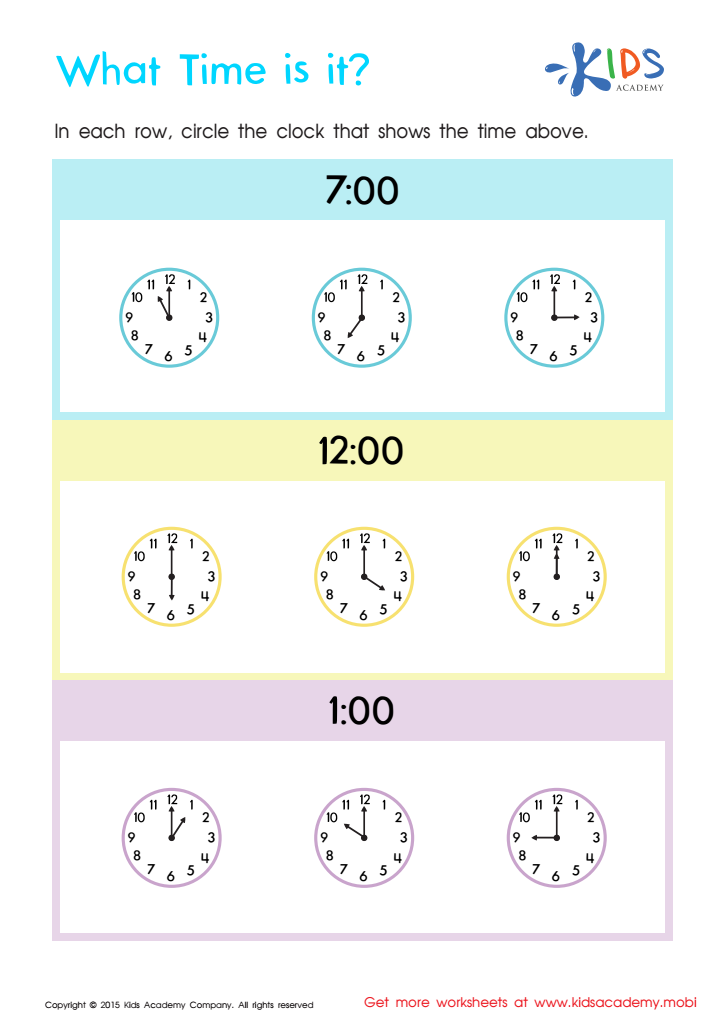
Telling The Time Worksheet: Part 3







Time reading skills are crucial for children aged 4-7 because they form the foundation for effective learning and daily living. At this young age, children are naturally curious and eager to make sense of the world around them. Developing the ability to read time helps them understand and manage their daily schedules, from school hours to playtime, promoting a sense of responsibility and independence.
Furthermore, good time-reading abilities enhance children’s literacy and numeracy skills. Learning to read clocks introduces concepts such as counting, sequences, and measurement, reinforcing important cognitive abilities.
As children gain proficiency in telling time, they develop critical thinking and problem-solving skills that are essential for later academic success. This skill also fosters social skills as children learn to navigate playdates, appointments, and family activities.
Involving parents and teachers in time-reading activities strengthens these skills even further. Engaging in activities like using timers or clock games offers fun and practical approaches to learning. Therefore, a focus on time-reading skills equips children with essential tools for their early educational journey, setting the stage for lifelong learning and time management. In short, it plays a significant role in their overall development and preparedness for future challenges.








