Time recognition Worksheets for Ages 4-7
6 filtered results
-
From - To
Our "Time Recognition Worksheets for Ages 4-7" are designed to make learning how to tell time fun and engaging for young learners. These carefully crafted activities introduce preschoolers and early elementary students to the basics of reading clocks. Featuring vivid illustrations and easy-to-follow exercises, kids will practice identifying hours and minutes, understanding concepts like morning, afternoon, and evening, and gain confidence in using both analog and digital clocks. Perfect for classroom or home use, these worksheets build foundational time-telling skills, promoting cognitive development and practical life skills, ensuring children are ready for real-world time management.
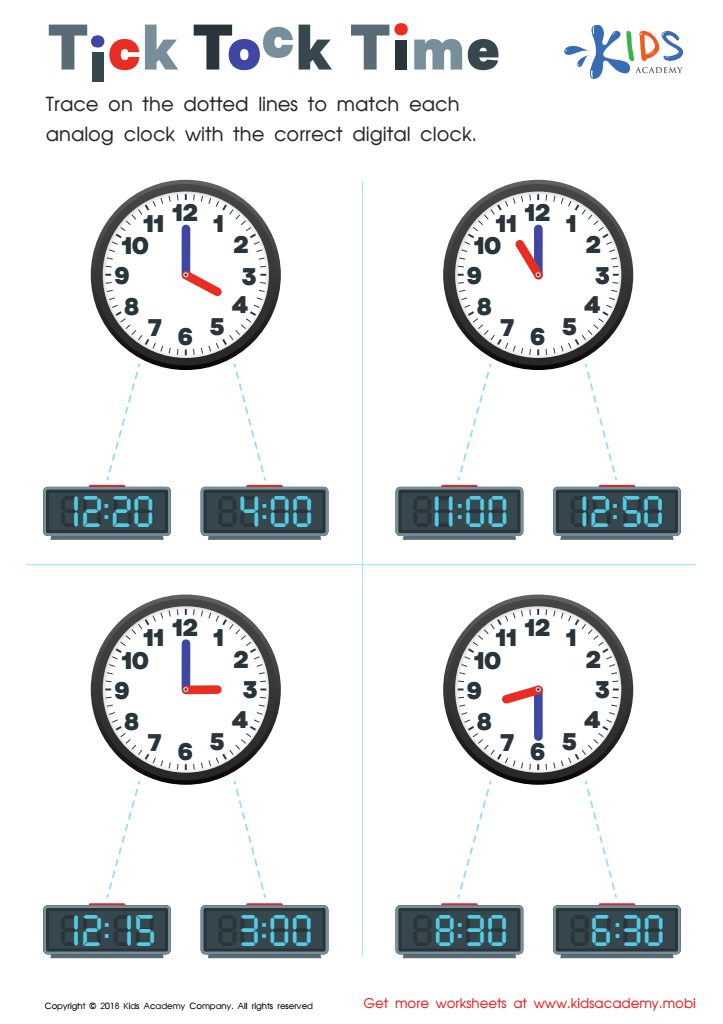
Tick Tock Time Worksheet
 Assign to My Students
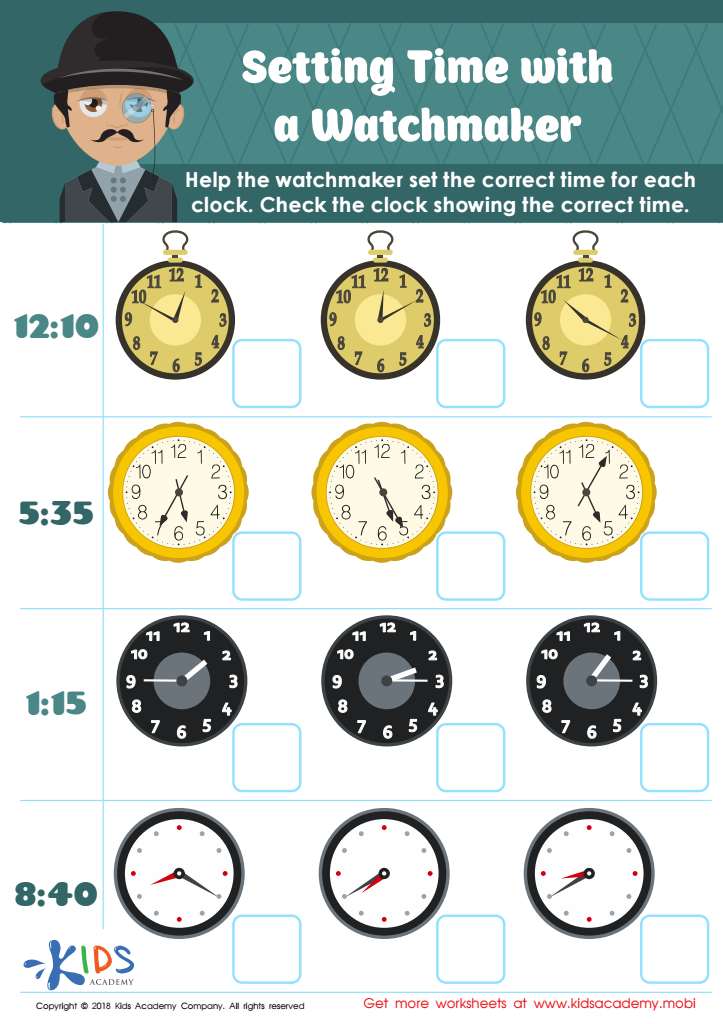
Setting Time with Watchmaker Worksheet
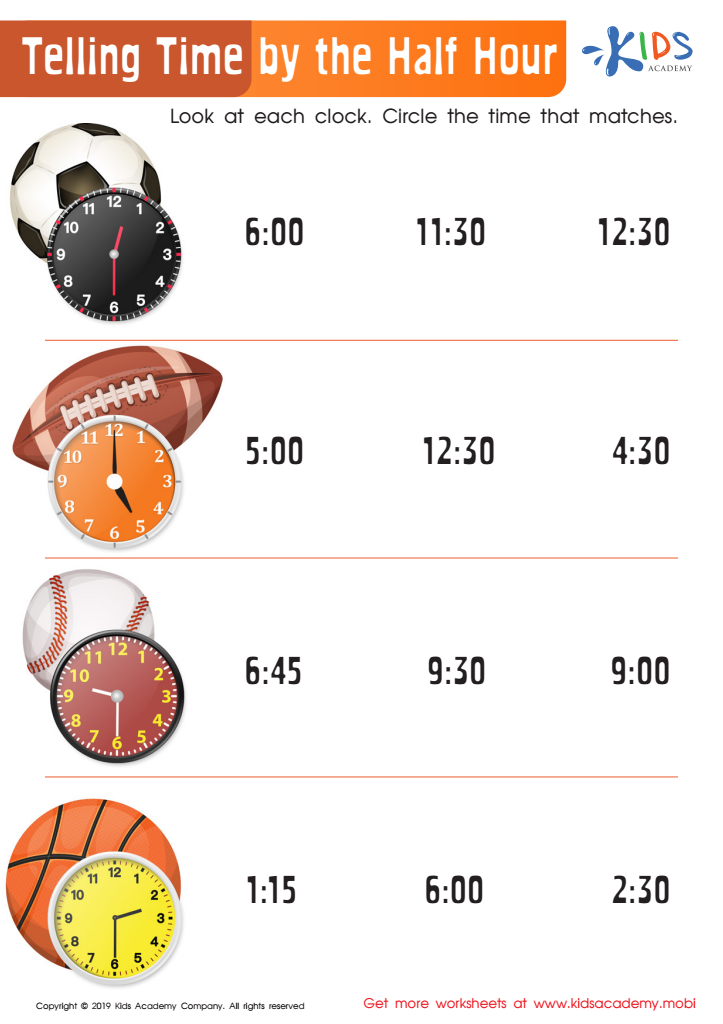
Telling Time by the Half Hour Worksheet
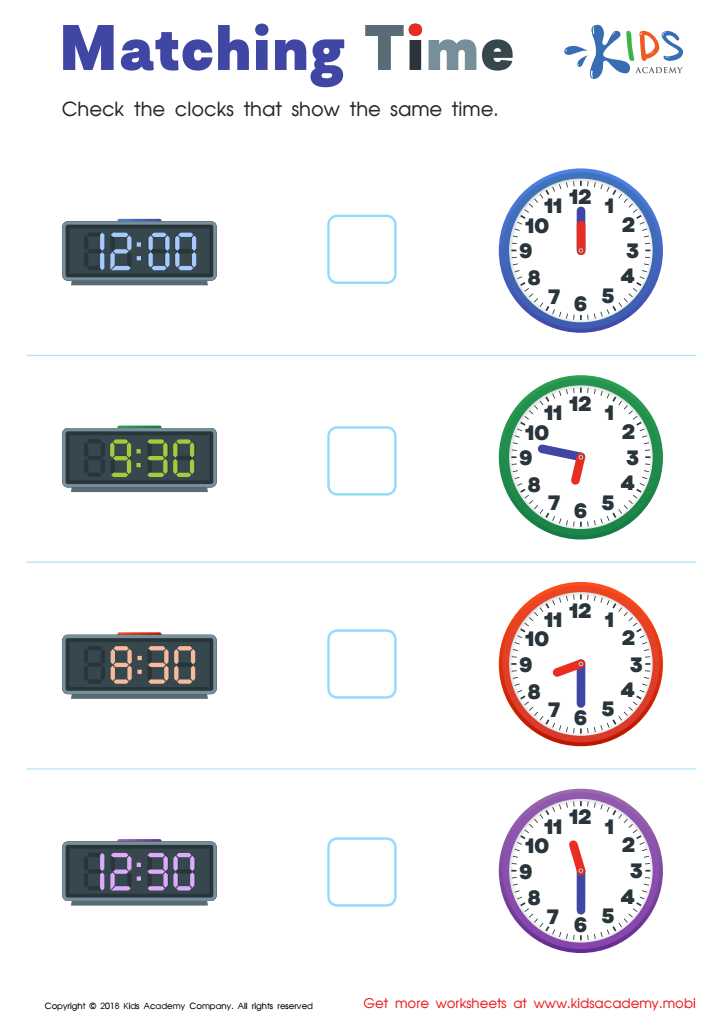
Matching Time Worksheet
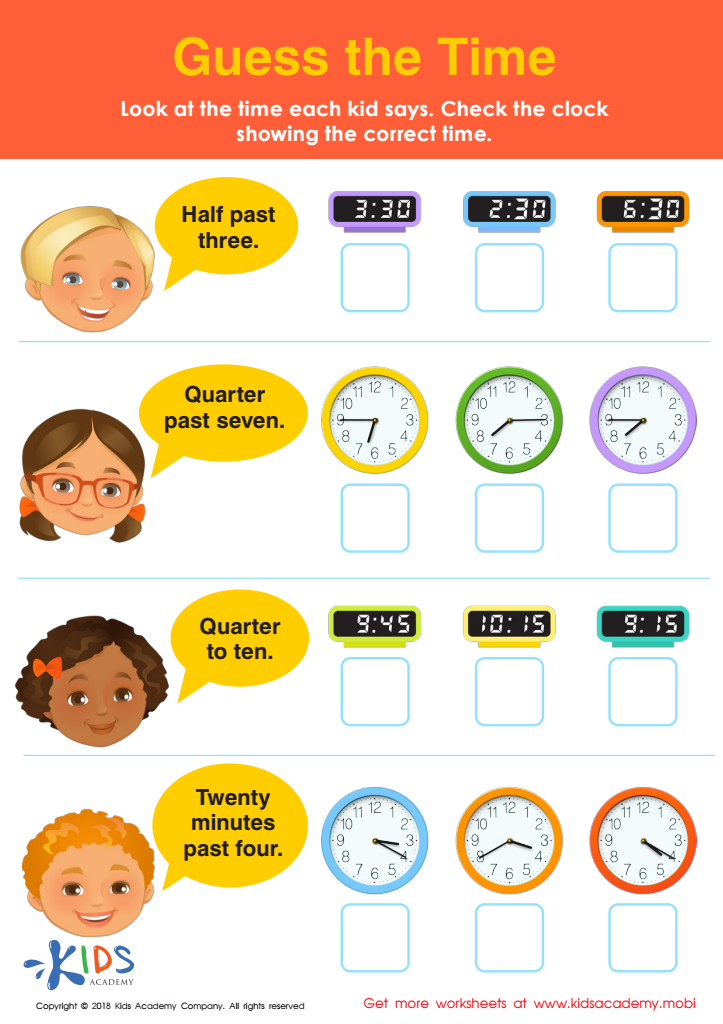
Guess the Time Worksheet
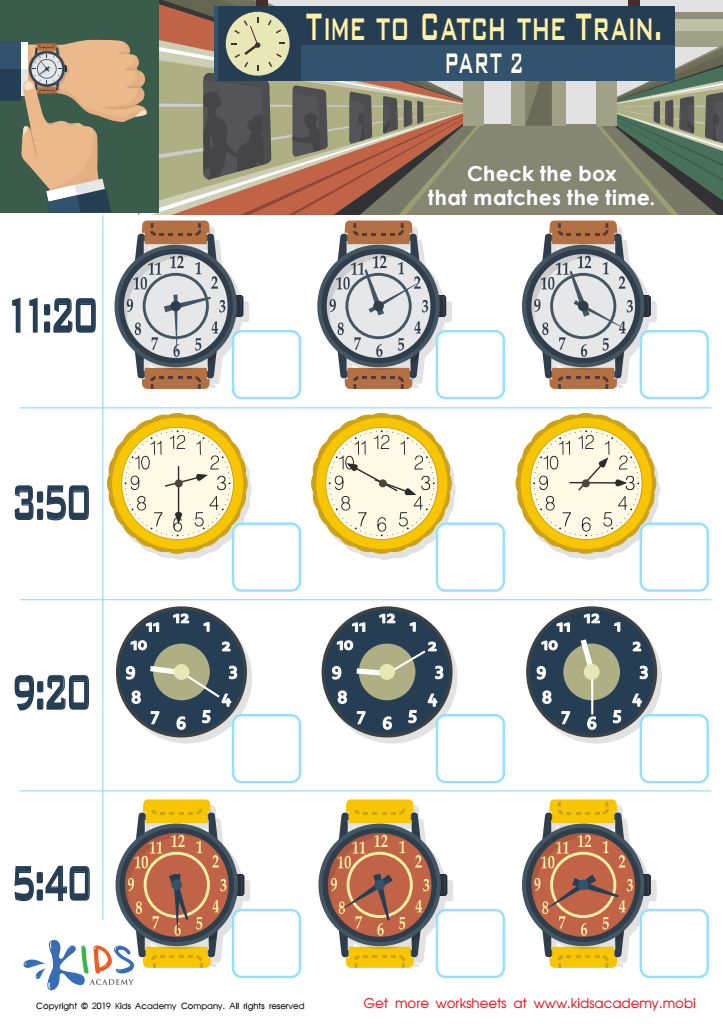
Time to Catch the Train Part 2 Worksheet








Time recognition in early childhood, specifically for ages 4-7, is a crucial developmental milestone that parents and teachers should prioritize for several compelling reasons. First and foremost, understanding time helps young children develop a sense of routine and structure. Knowing how to read a clock and grasp concepts like morning, afternoon, and evening can foster a sense of security and predictability, making transitions throughout the day smoother.
Moreover, time recognition enhances cognitive and mathematical skills. Learning to read both analog and digital clocks, as well as understanding the duration of activities, helps children develop early numeracy skills. This learning also lays the foundation for more complex mathematical concepts they will encounter later in their education.
In social contexts, recognizing time can improve a child’s ability to cooperate and engage with others. For instance, they learn to wait their turn, understand when playtime is over, and anticipate the start of group activities. This awareness aids in developing self-discipline and patience.
Finally, understanding time is indispensable for fostering independence. Children who can recognize time can start taking responsibility for their daily tasks, such as getting ready in the morning or knowing when it’s bedtime. Thus, parents and educators should actively engage in teaching time recognition, as it supports holistic growth and prepares children for future academic and life challenges.








