Understanding chess rules Worksheets for Ages 4-7
7 filtered results
-
From - To
Our "Understanding Chess Rules" worksheets are designed to introduce young children aged 4-7 to the exciting world of chess. These engaging and colorful worksheets make learning the basic rules and movements of each chess piece fun and accessible. By following simplified instructions and interactive activities, children can develop their critical thinking, problem-solving skills, and strategic planning abilities. Whether they're just beginning their chess journey or looking to improve their skills, these worksheets offer a great foundation. Perfect for parents, teachers, and young learners looking to spark an early interest in the timeless game of chess!
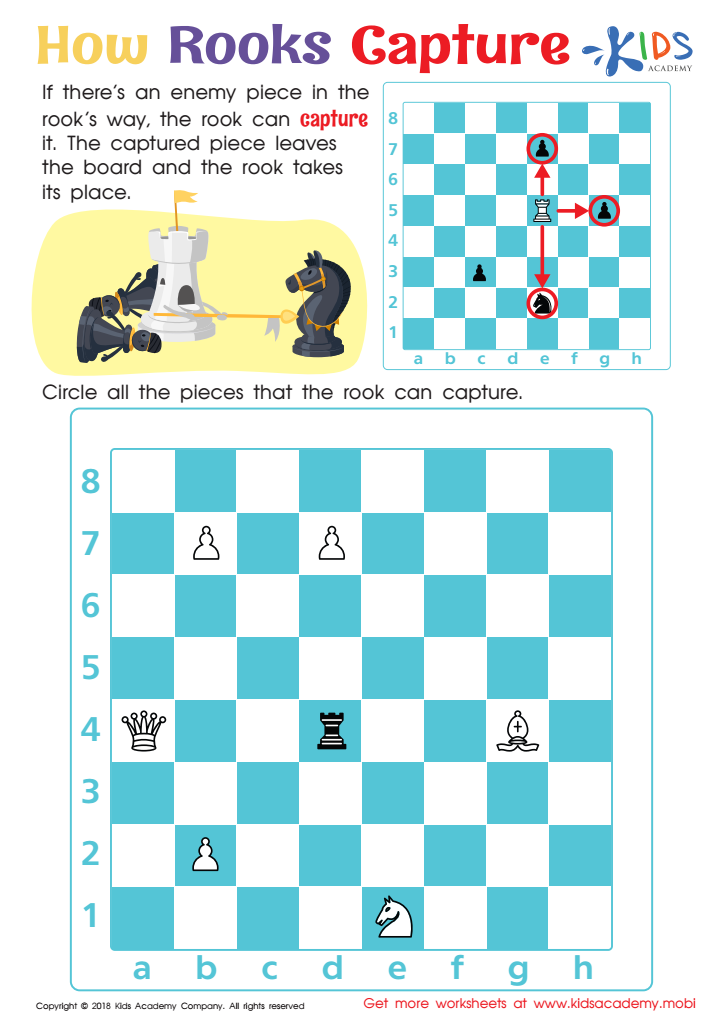
How Rooks Capture Worksheet
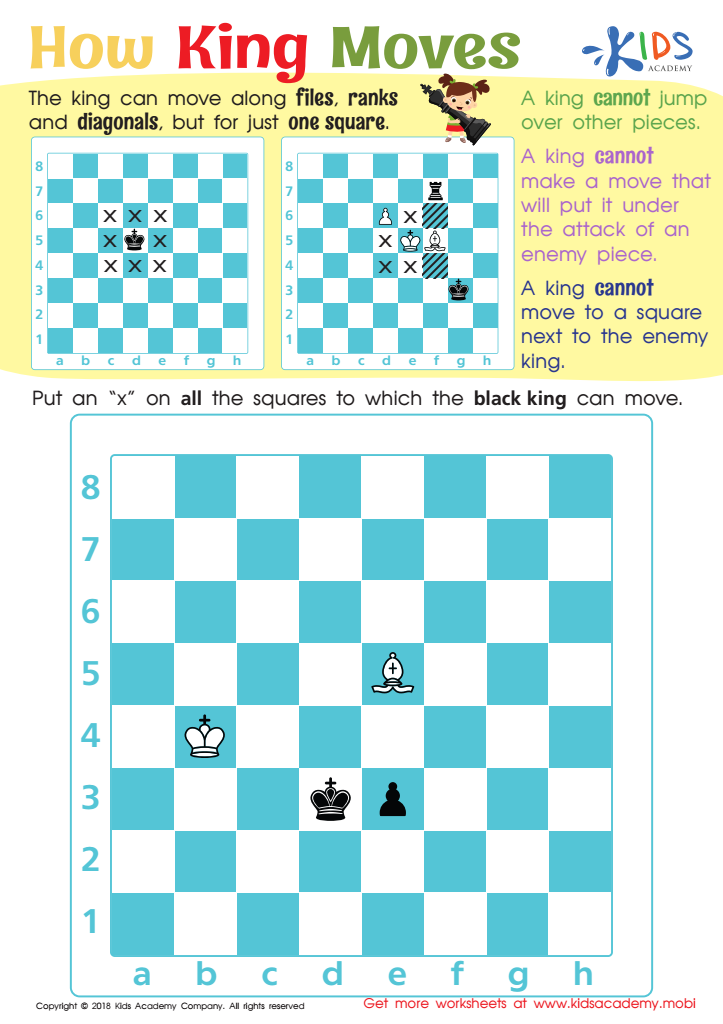
How King Moves Worksheet
 Assign to My Students
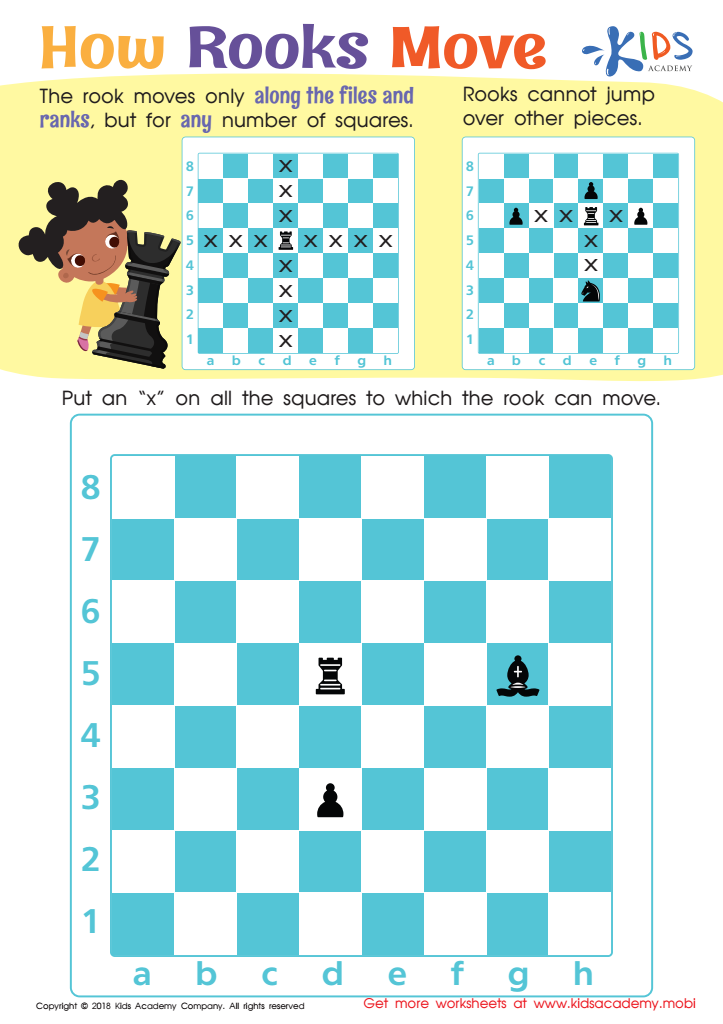
How Rooks Move Worksheet
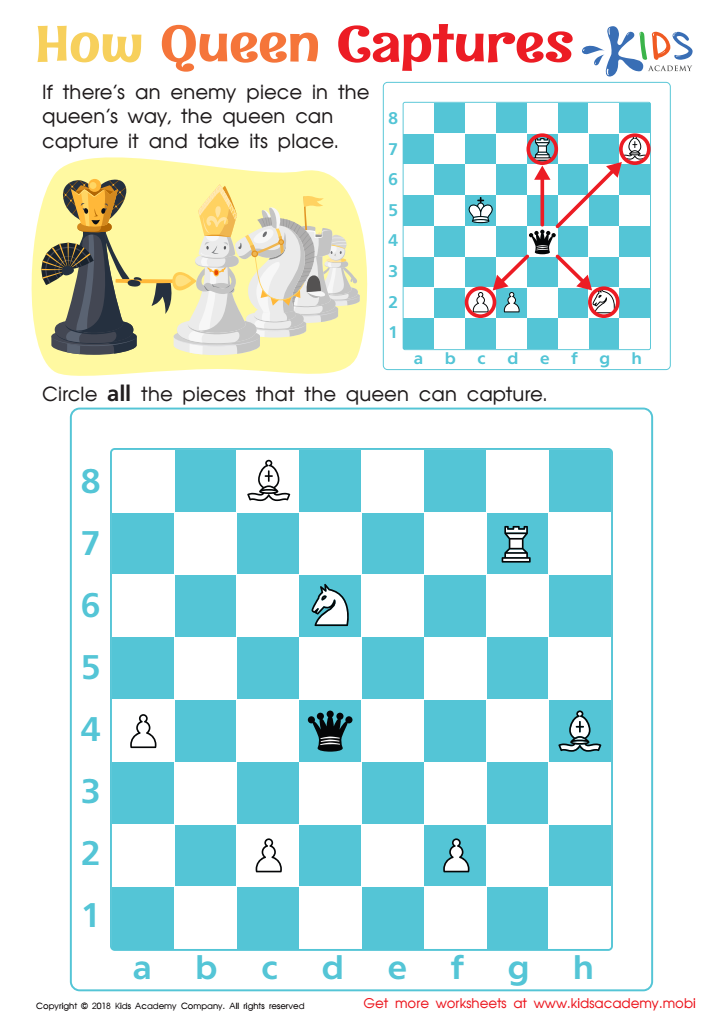
How Queen Captures Worksheet
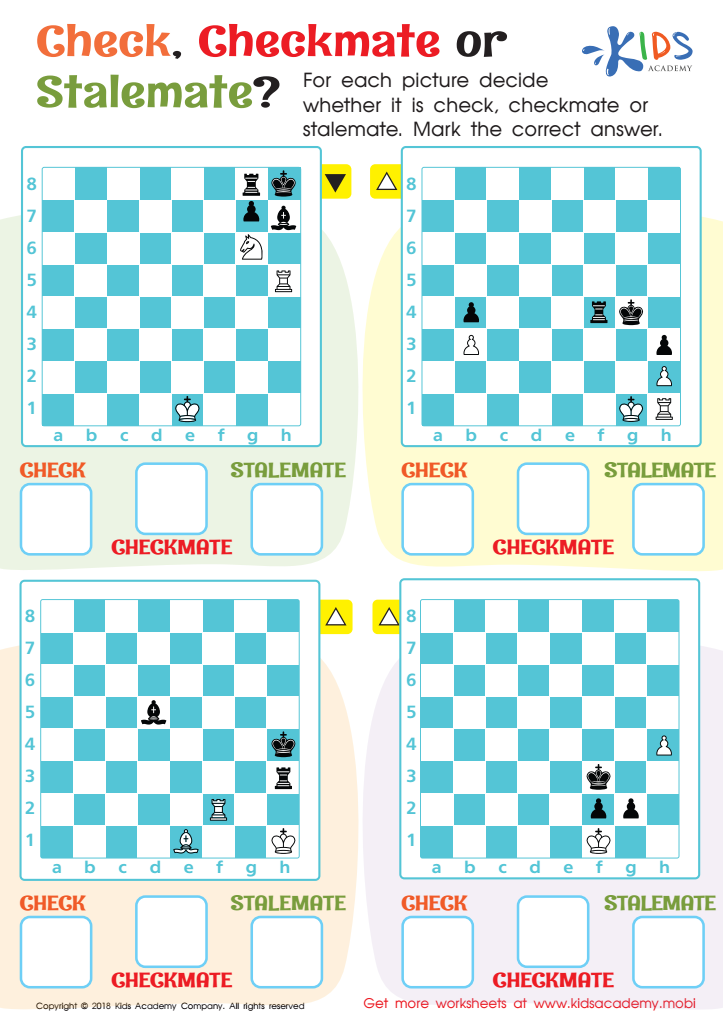
Check. Checkmate or Stalemate? Worksheet
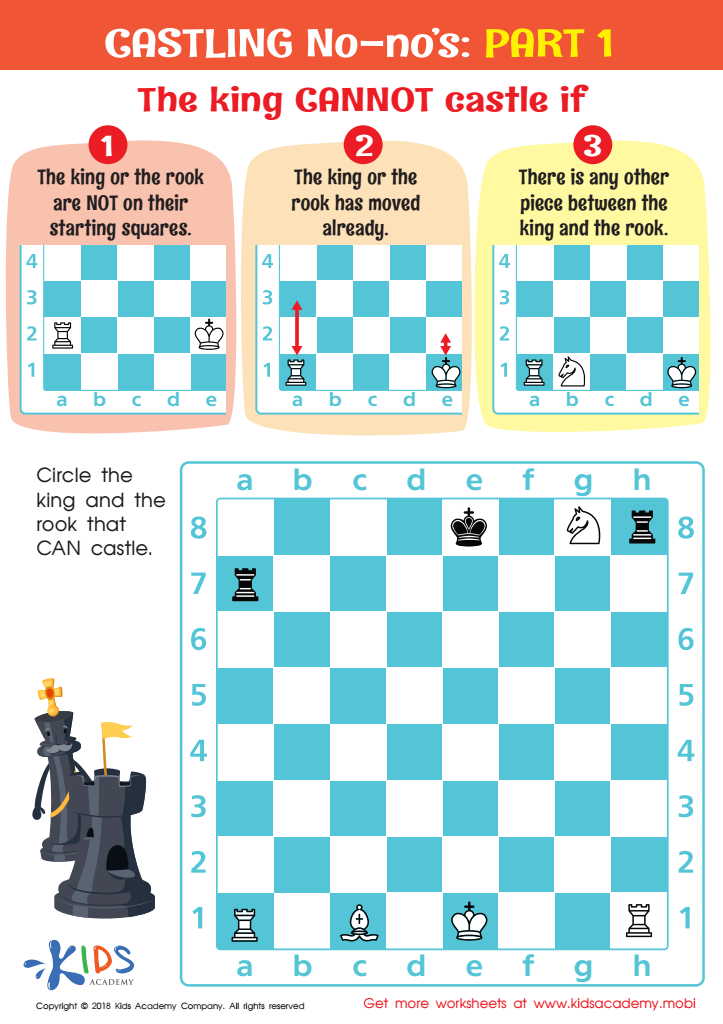
Castling No–no's: Part 1 Worksheet
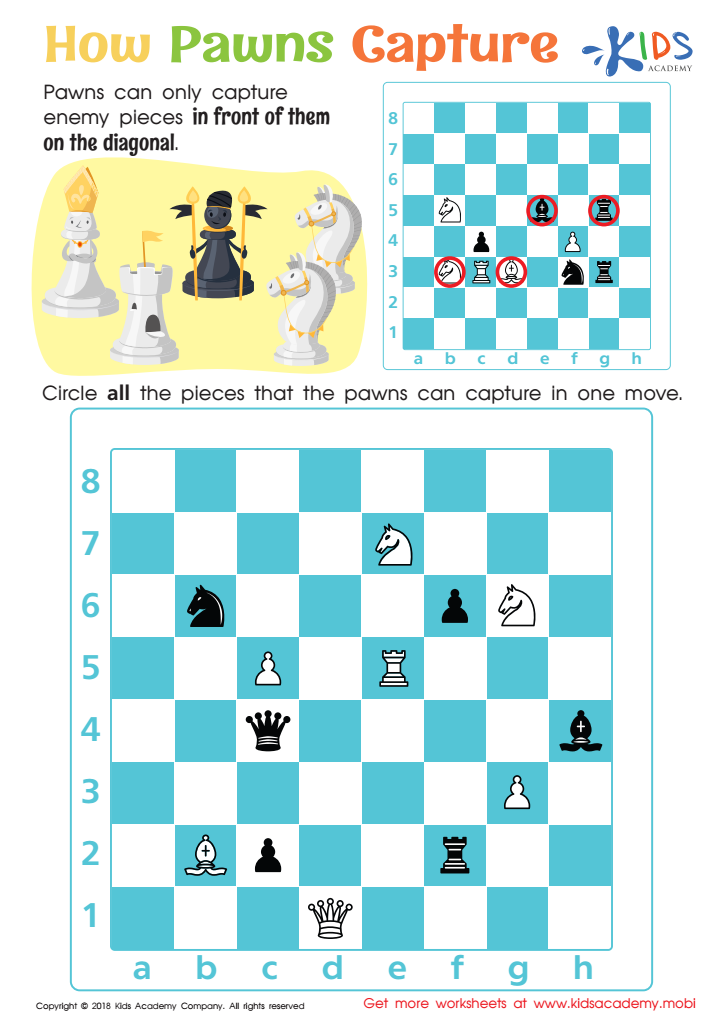
How Pawns Capture Worksheet








Understanding chess rules is crucial for children aged 4-7 for several compelling reasons. Firstly, playing chess helps develop cognitive skills such as critical thinking, problem-solving, and memory. For young minds, these benefits translate into better academic performance and an enhanced ability to tackle complex tasks effectively.
Secondly, chess teaches important life skills, including patience, perseverance, and strategic planning. As children learn the rules and work to improve their gameplay, they also learn to stay focused, handle frustration, and achieve long-term goals.
Moreover, chess fosters social skills and emotional intelligence. Playing with others requires communication, turn-taking, and graceful winning or losing. These interactions improve peer relationships and help children understand the value of sportsmanship and empathy.
It also boosts creativity and imagination, as each game is different and opens up countless possibilities for creative problem-solving. This flexibility in thinking can benefit children's performance in various activities and subjects, from mathematics to the arts.
Lastly, engaging in chess provides a constructive, screen-free pastime that promotes mental development in a fun and engaging way. By teaching them chess, parents and teachers are equipping children with valuable skills that will serve them well throughout their lives.








