
Understanding patterns Worksheets for Ages 4-7
48 filtered results
Difficulty Level
Grade
Age
-
From - To
Subject
Activity
Standards
Explore our engaging "Understanding Patterns" worksheets designed for children aged 4-7. These printable activities will help your child recognize, create, and extend patterns using shapes, colors, and objects. With our fun, interactive exercises, young learners can enhance their critical thinking, problem-solving skills and mathematical foundation. Perfect for home or classroom use, each worksheet is engineered to gradually increase in complexity, ensuring that kids remain challenged and excited about their learning journey. Give your little one a head start in math with our intuitive and enjoyable pattern worksheets! Start learning today with Kids Academy.
Favorites
With answer key
Interactive
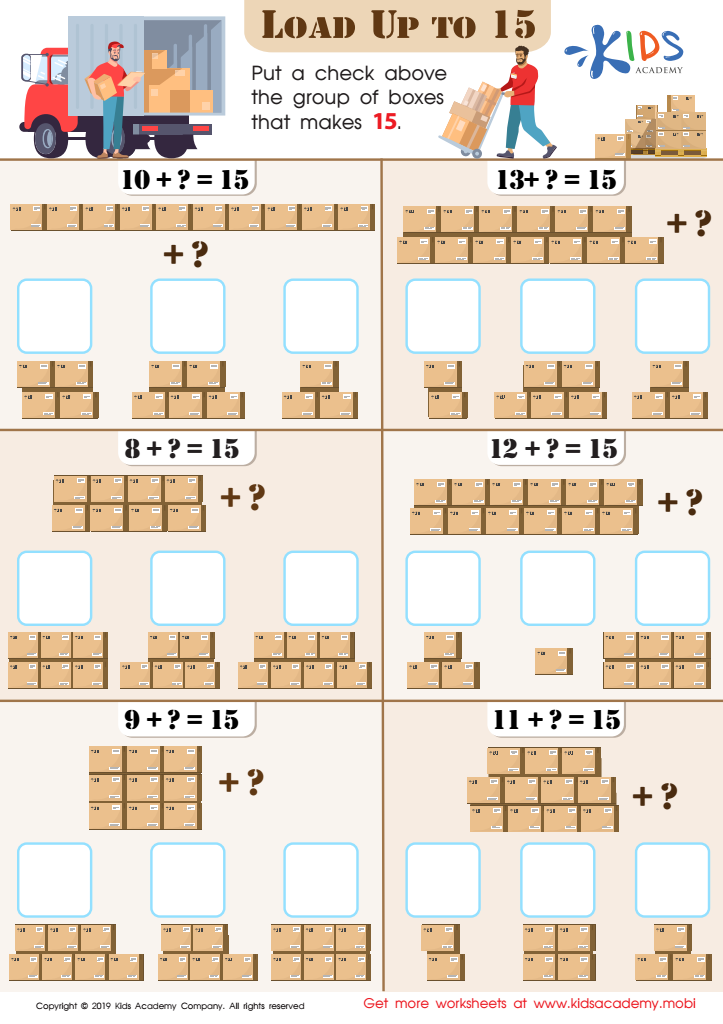
Load up to 15 Worksheet
Your students can practice addition and counting skills with this worksheet. Each equation has 6 boxes to count. Check the group that equals 15 to complete the exercise. Help your kindergartners if they need it.
 Assign to My Students
Load up to 15 Worksheet
Worksheet
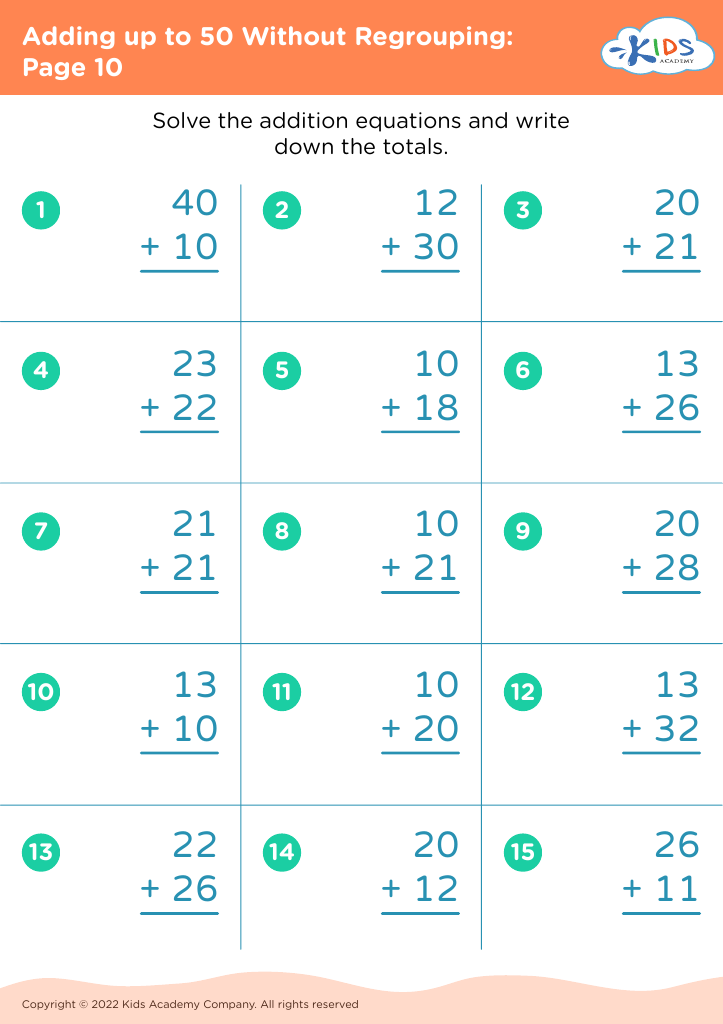
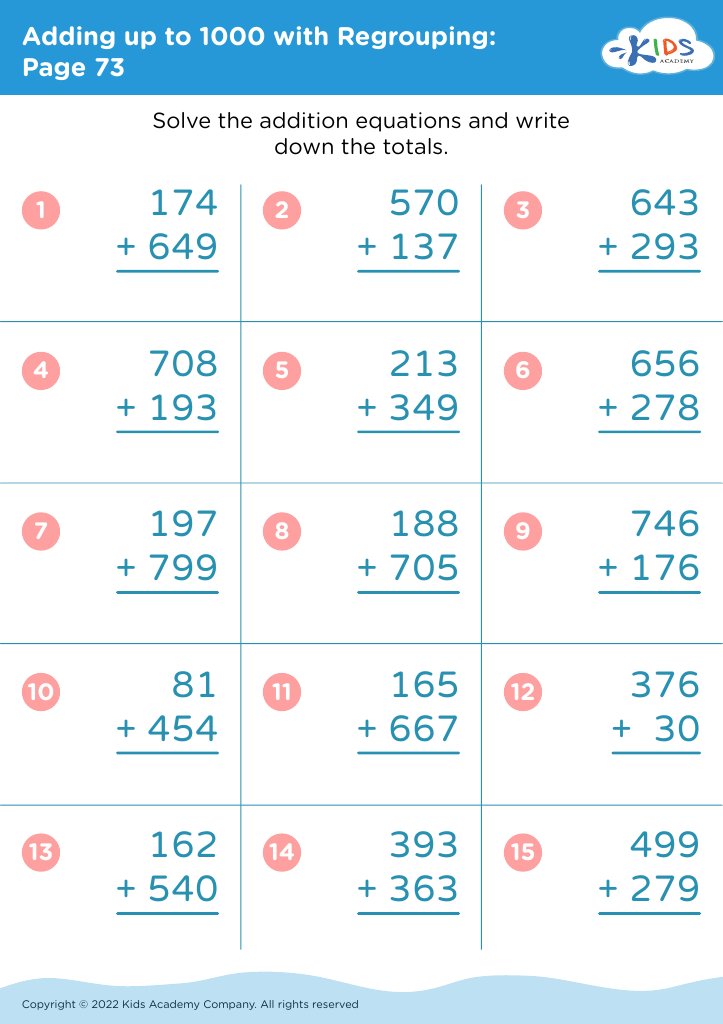
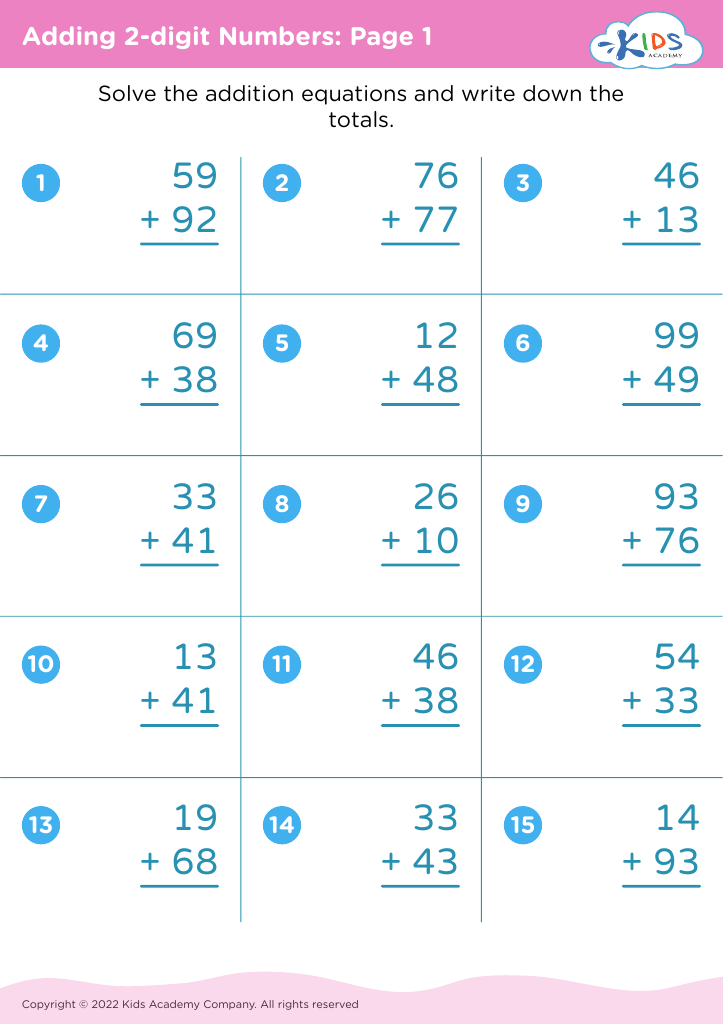
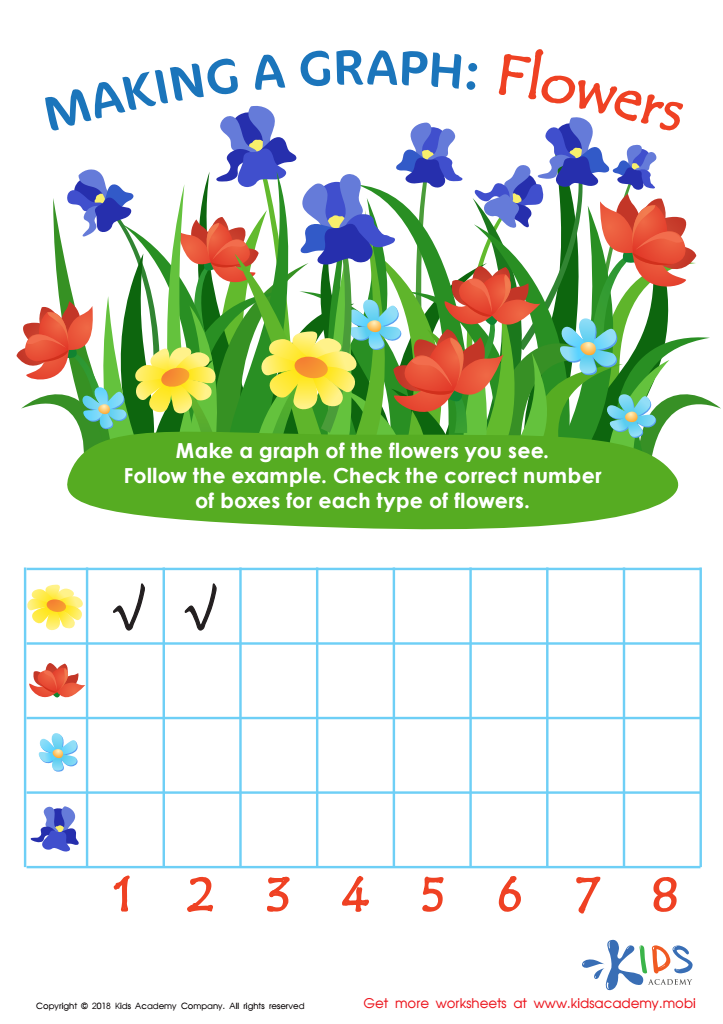
Making a Graph: Flowers Worksheet
Kids will love this engaging PDF graph. They'll count flowers and use checkmarks to represent the number on the graph, tangibly seeing the differences in an organized way they contributed to. All while developing their number representation and concrete number sense skills without even realizing it!
Making a Graph: Flowers Worksheet
Worksheet
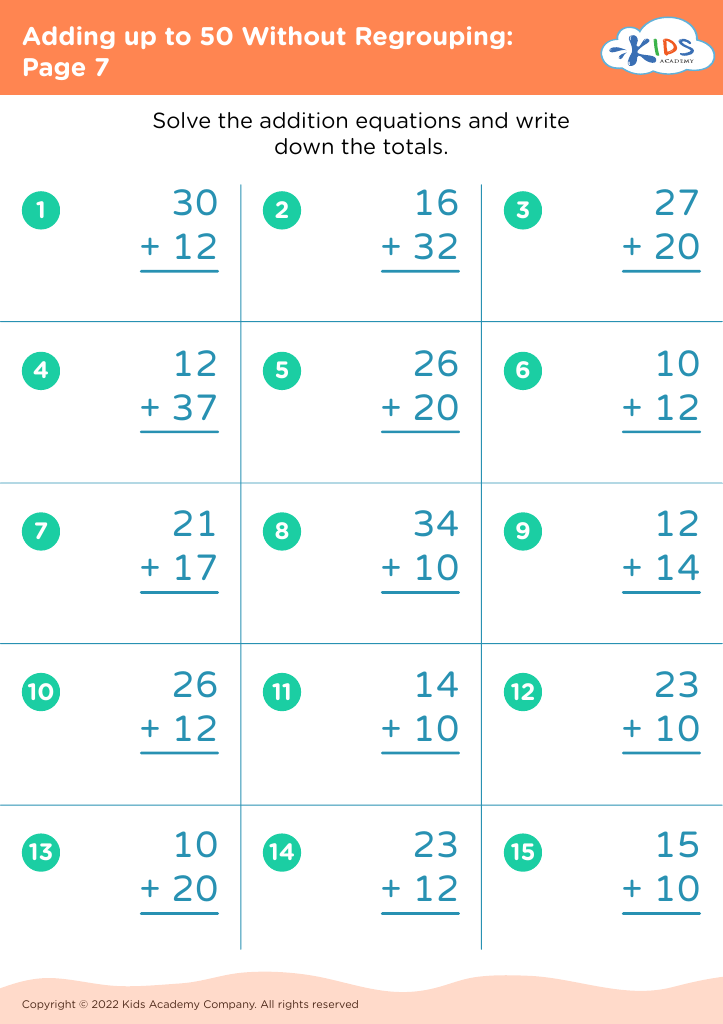
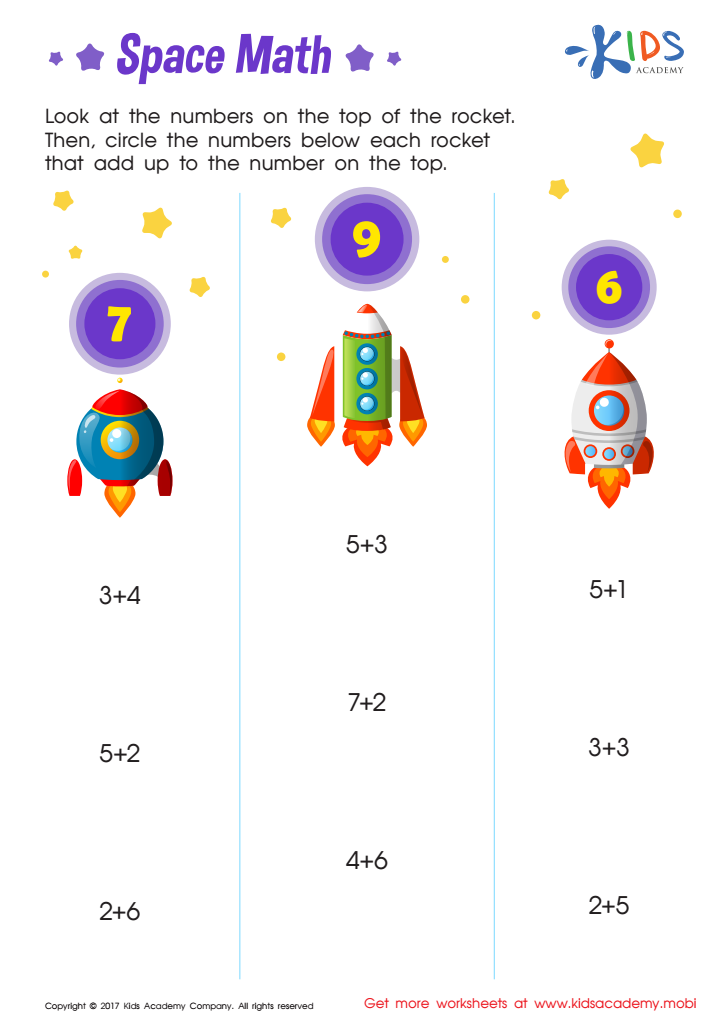
Addition: Space Math Worksheet
Fun and engaging space-themed practice with vivid pictures and matching numbers will make learning more meaningful. Take their math skills out of this galaxy today with Kids Academy!
Addition: Space Math Worksheet
Worksheet
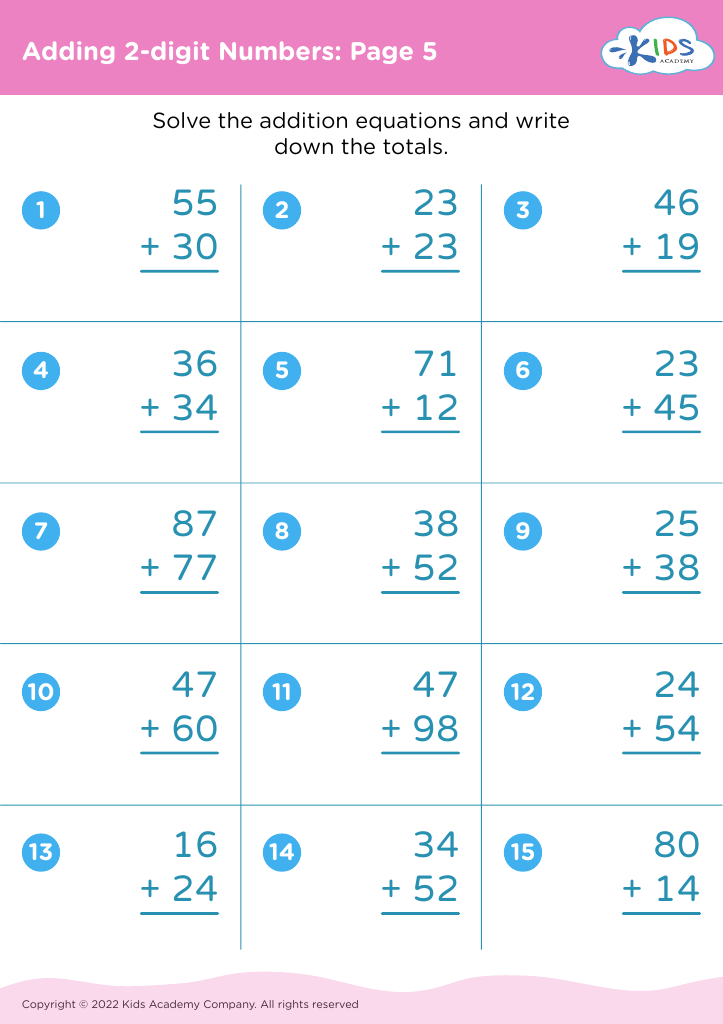
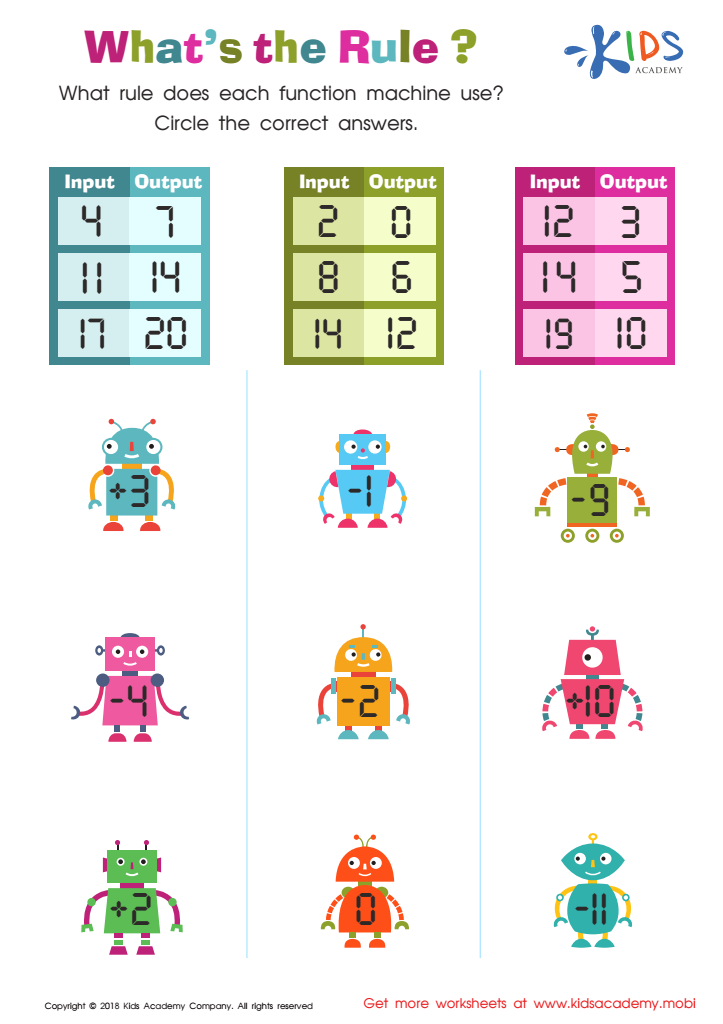
What's the Rule Worksheet
Robots are here to help your child find the relationship between each set of numbers! Adorably illustrated worksheets use vivid pictures that each contain a rule. Look at each function machine and find the pattern or relationship between the input and output. Then, complete the sheet by circling the correct answer!
What's the Rule Worksheet
Worksheet
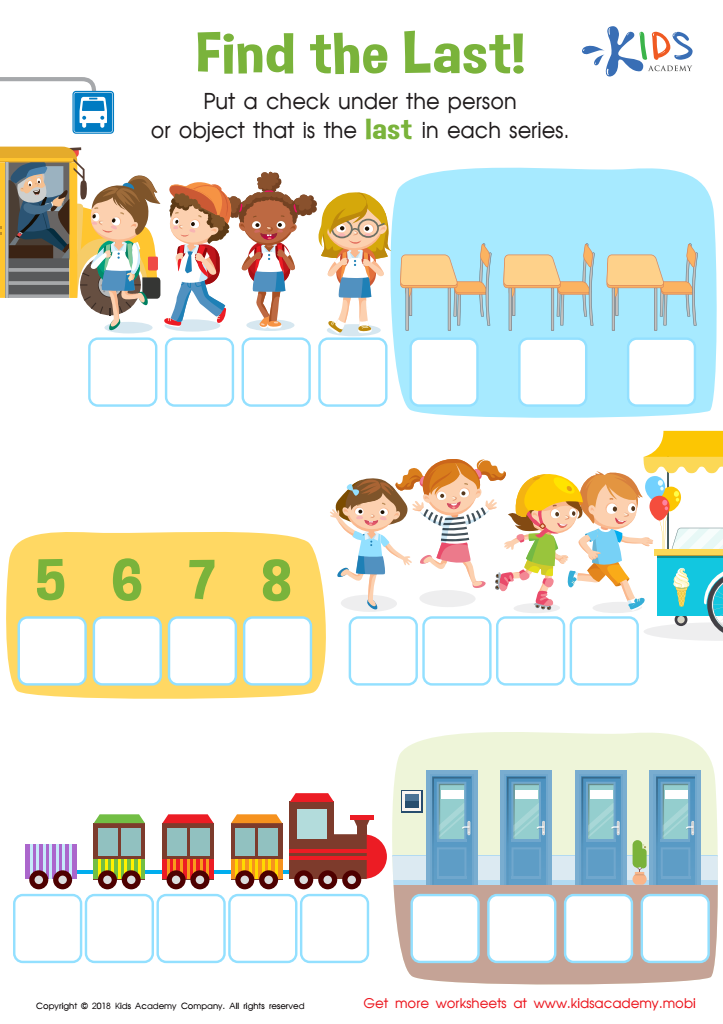
Find the Last! Worksheet
Teach young students about sequence words with this free worksheet. Have them look at sets of people or objects and choose the one that is last. Engage them further by having them describe or act out their day, and what happens last? Enjoy this printout and have fun!
Find the Last! Worksheet
Worksheet
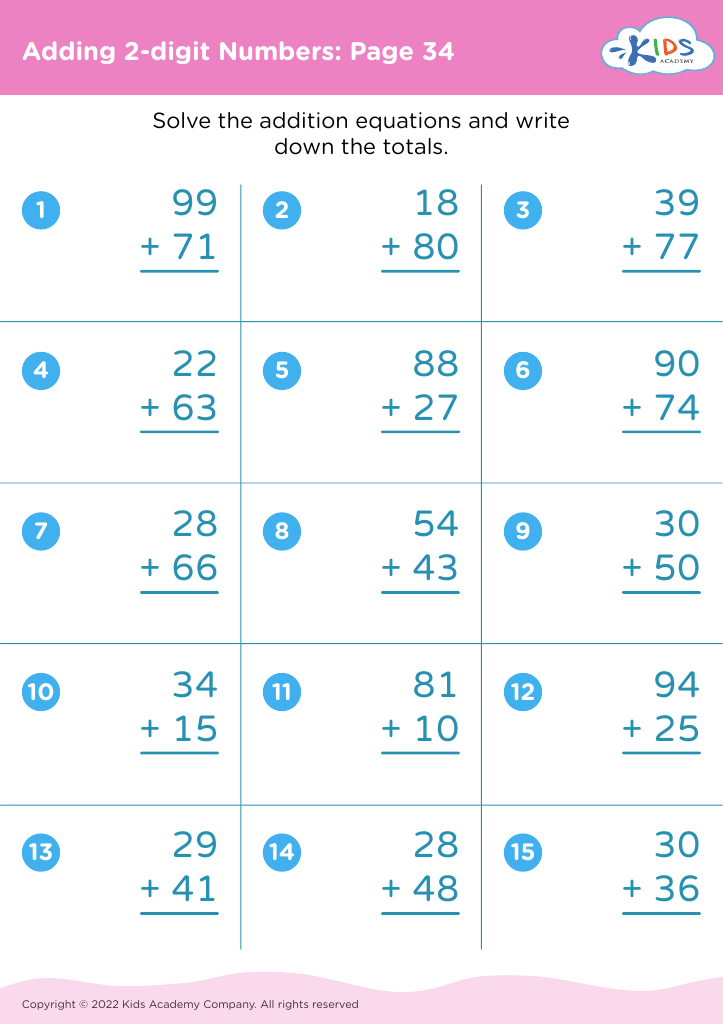
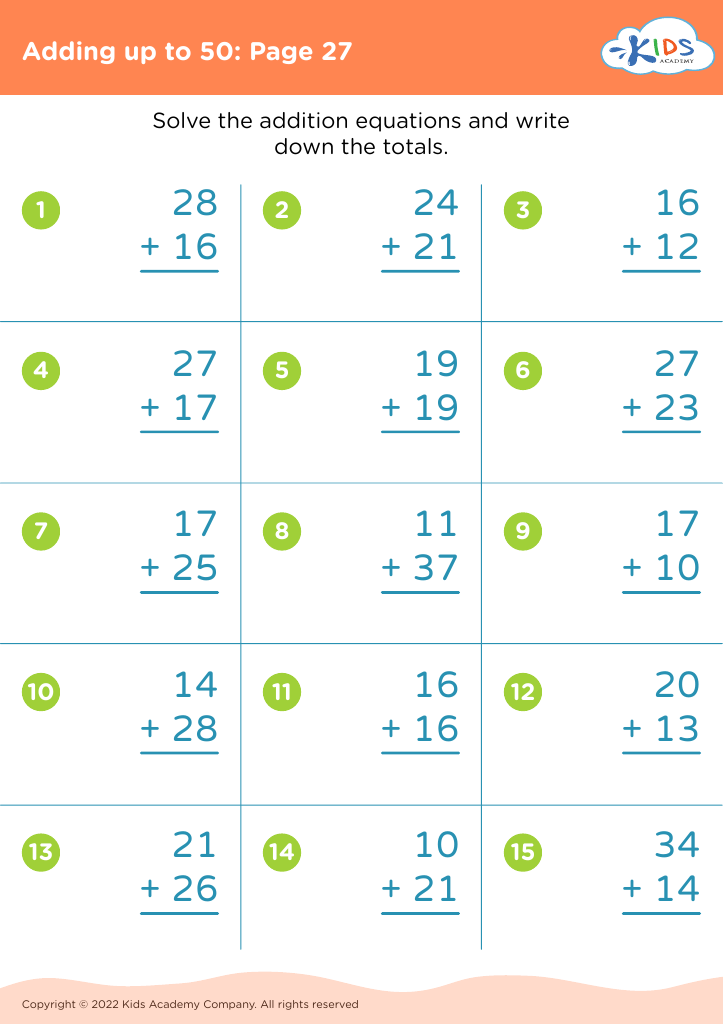
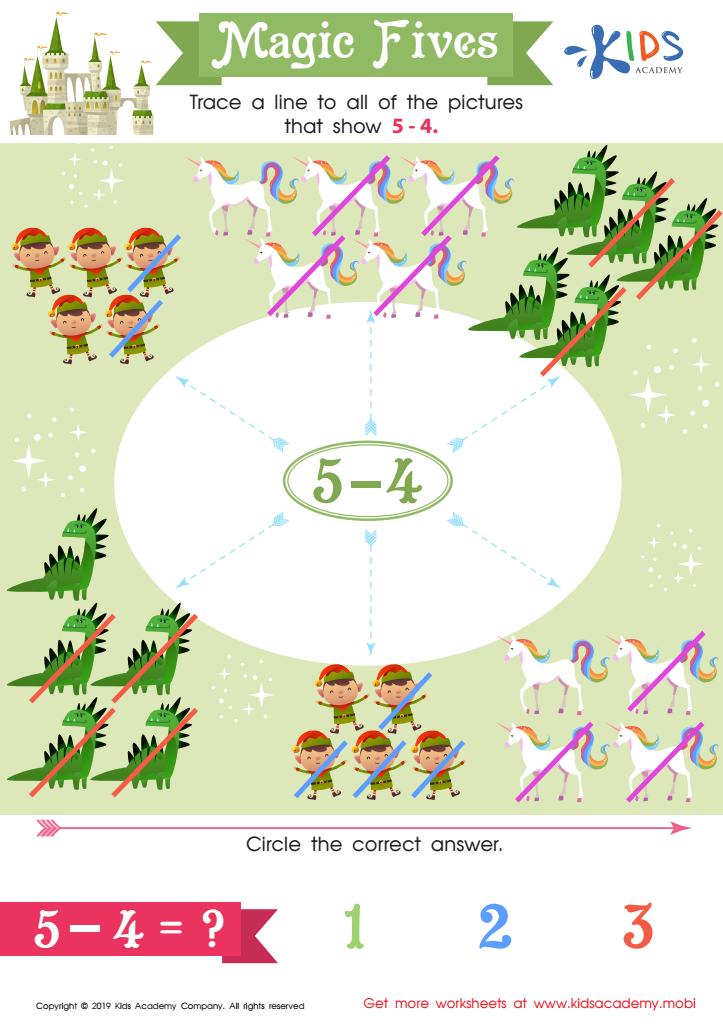
Magic Fives Worksheet
Help your students identify the objects & people in the worksheet. Point to the equation 5 -4 in the center, then get them to count the items and trace a line connecting those that add up to 5 - 4.
Magic Fives Worksheet
Worksheet
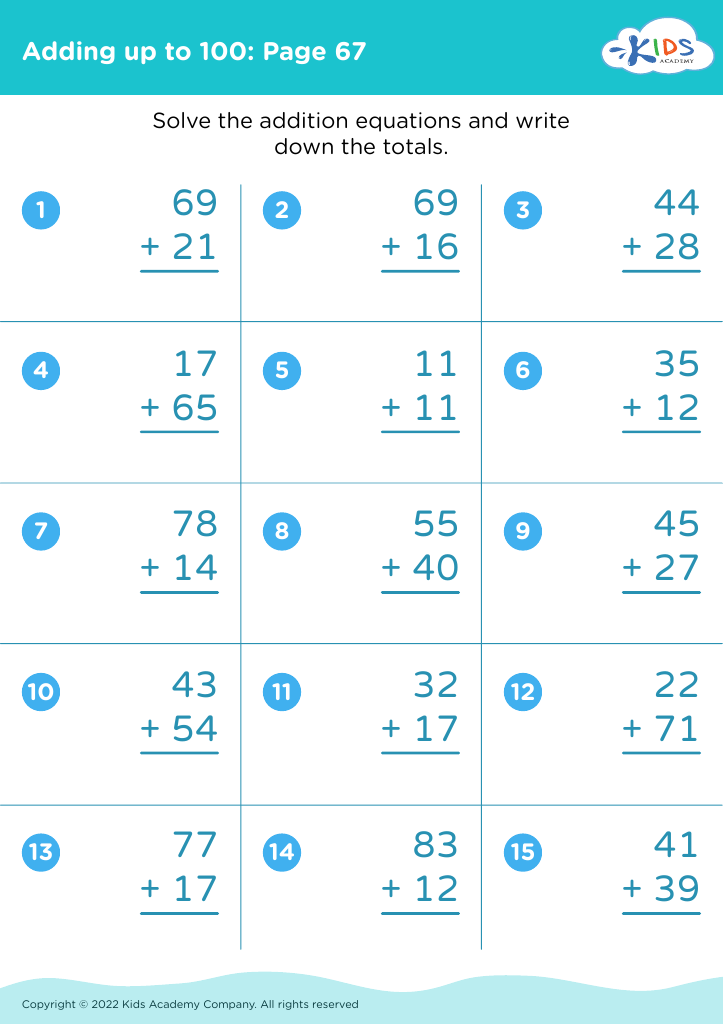
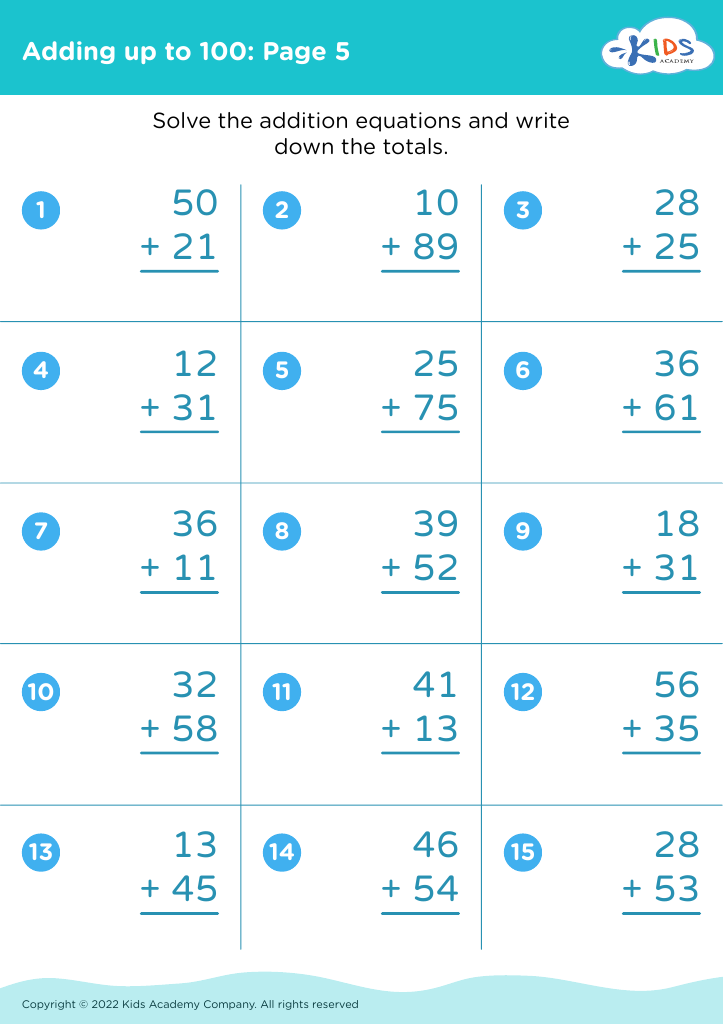
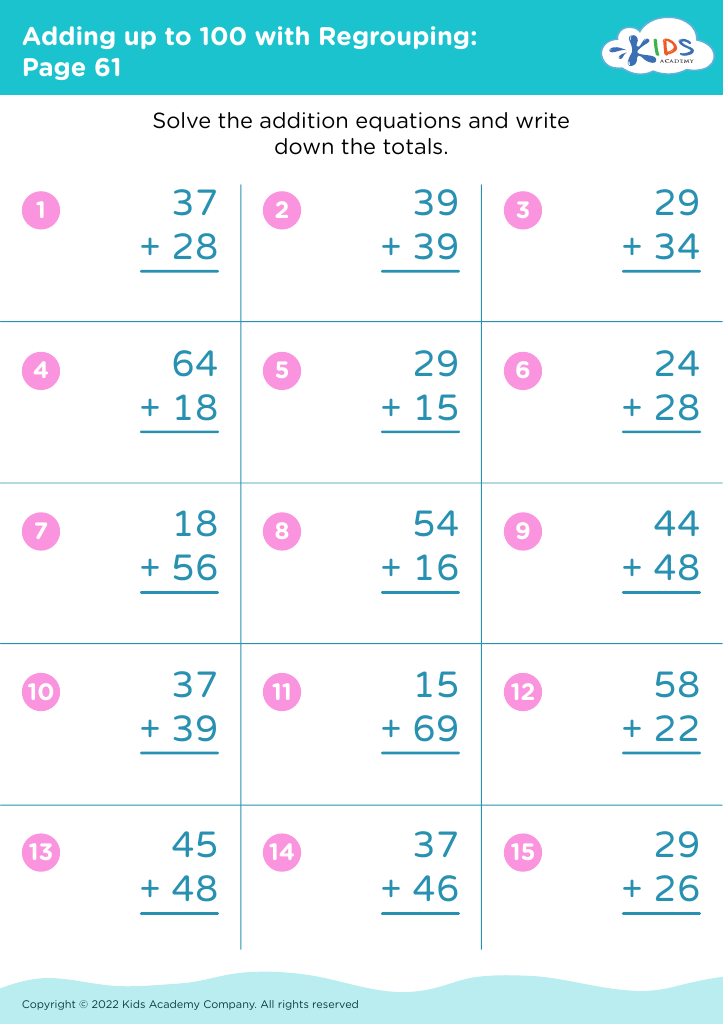
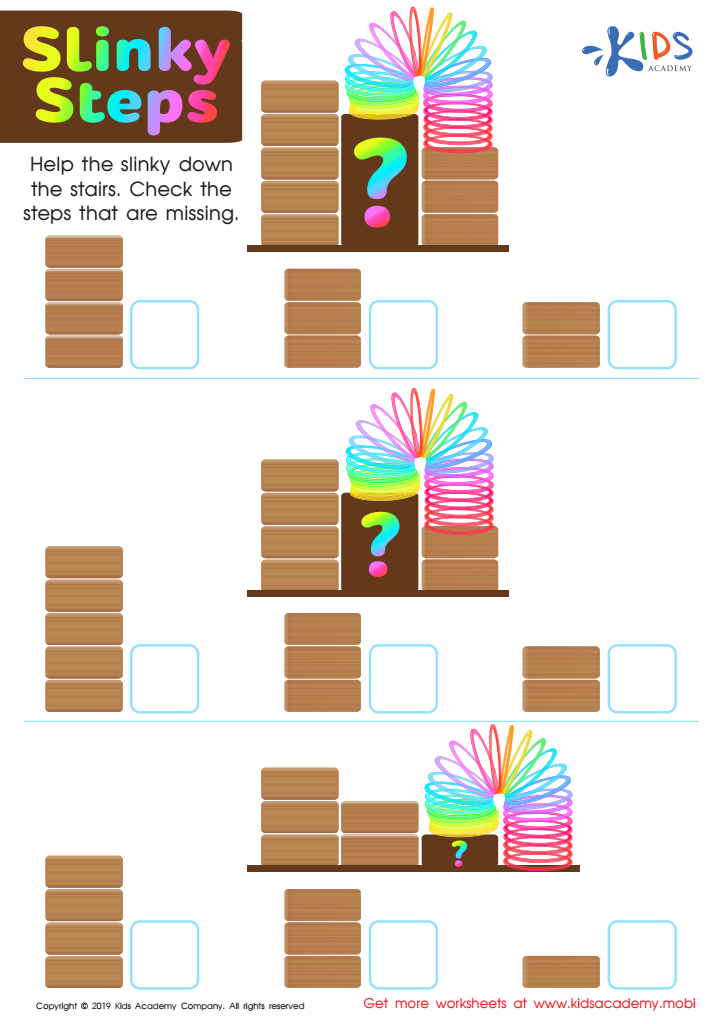
Slinky Steps Worksheet
Help your kids improve their counting and math skills with this fun worksheet! Challenge them to help the slinky make its way down the stairs by selecting and checking the missing steps. Your assistance is key - get the printout and let them practice. It's the best way to becoming better in maths!
Slinky Steps Worksheet
Worksheet
Join Kids Academy for Free
Who is primarily going to use this learning content?



.jpg)



.jpg)
Understanding patterns is an essential foundational skill for children aged 4-7, as it nurtures crucial cognitive abilities critical for their overall learning and development. Patterns, essentially predictable sequences, help young learners develop logical thinking and problem-solving skills because they start recognizing sequences and predicting what comes next, which is the bedrock of mathematical understanding.
When children engage in pattern recognition activities, they strengthen their ability to observe, compare, and classify, which are vital skills for more complex mathematical concepts they will encounter later. For instance, understanding numerical patterns can lead to a better grasp of operations like addition, subtraction, multiplication, and division.
Furthermore, pattern recognition extends beyond mathematics. It is an important skill for early literacy and comprehension. Recognizing patterns in rhymes, stories, and sounds helps children in decoding and spelling, thus fostering stronger reading skills. In day-to-day life, recognizing routines and sequences enables children to develop a sense of order and predictability, which contributes to their emotional and social stability.
Parents and teachers should invest in nurturing these abilities by incorporating pattern activities into daily routines and play. Be it through sorting toys by color, clapping in a rhythmic sequence, or identifying sequences in nature, these activities make learning engaging and support holistic educational development.








