Understanding pollination Worksheets for Ages 4-7
4 filtered results
-
From - To
Explore our engaging "Understanding Pollination Worksheets" designed for children aged 4-7. These interactive materials introduce young learners to the fascinating world of pollination, emphasizing its importance in nature. Through fun activities, kids will discover how flowers reproduce and the vital role of pollinators like bees and butterflies. With colorful illustrations and easy-to-follow tasks, our worksheets promote critical thinking and enhance their understanding of ecosystems. Perfect for homeschool or classroom settings, these resources encourage creativity and curiosity about the environment. Bring the beauty of nature into your lessons and inspire future scientists with our captivating pollination worksheets!
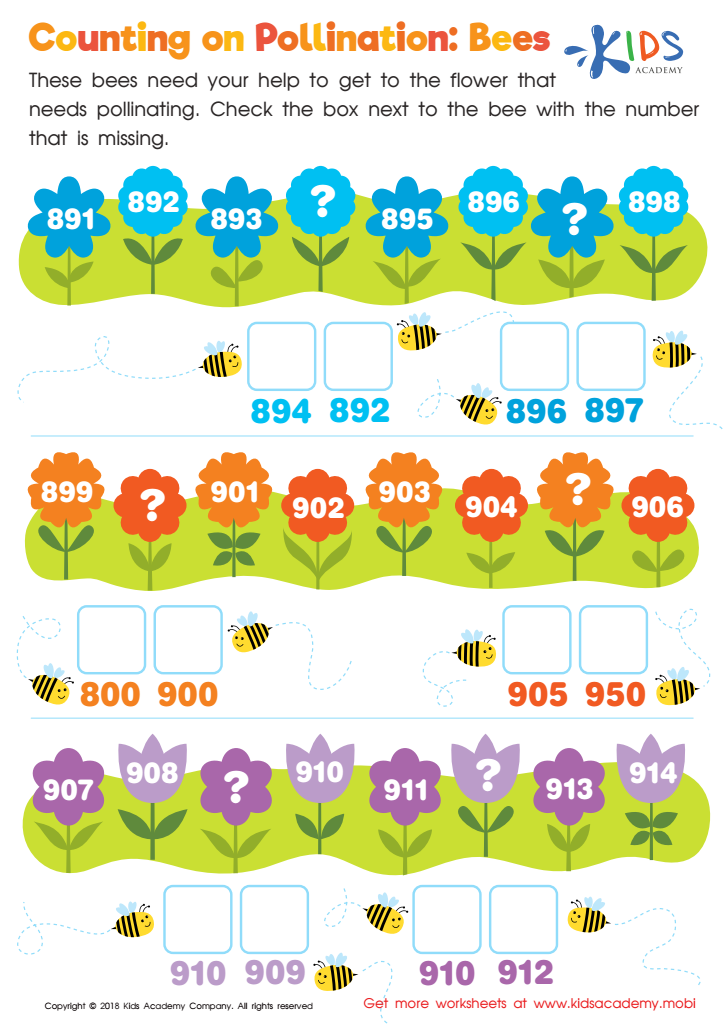
Counting on Pollination: Bees Worksheet
 Assign to My Students
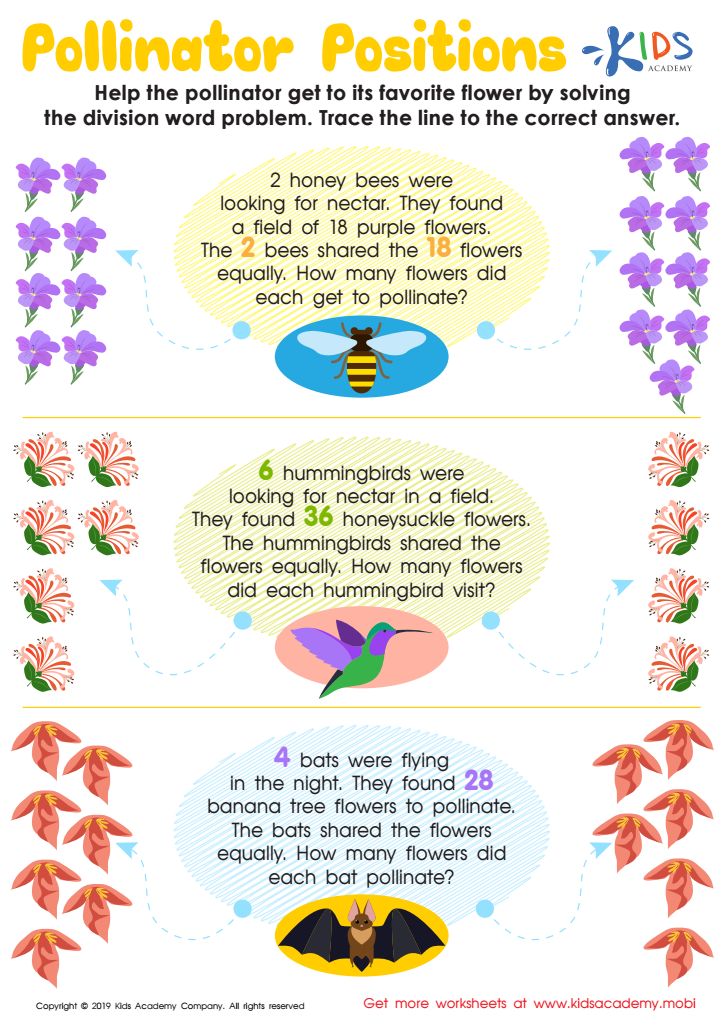
Pollinator Positions Worksheet
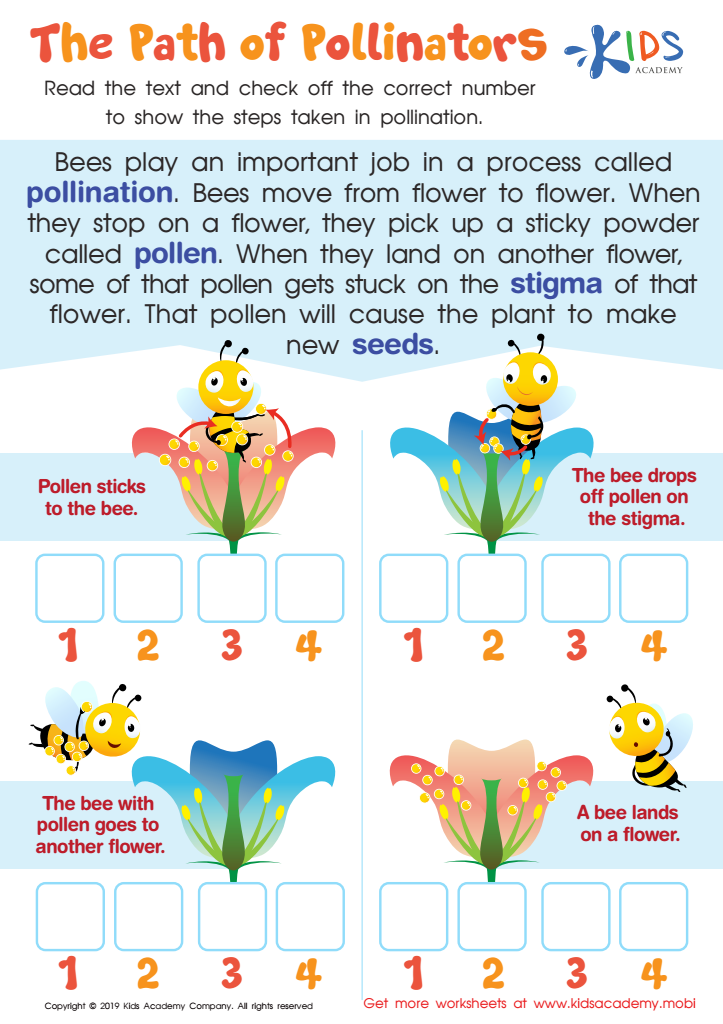
The Path of Pollinators Worksheet
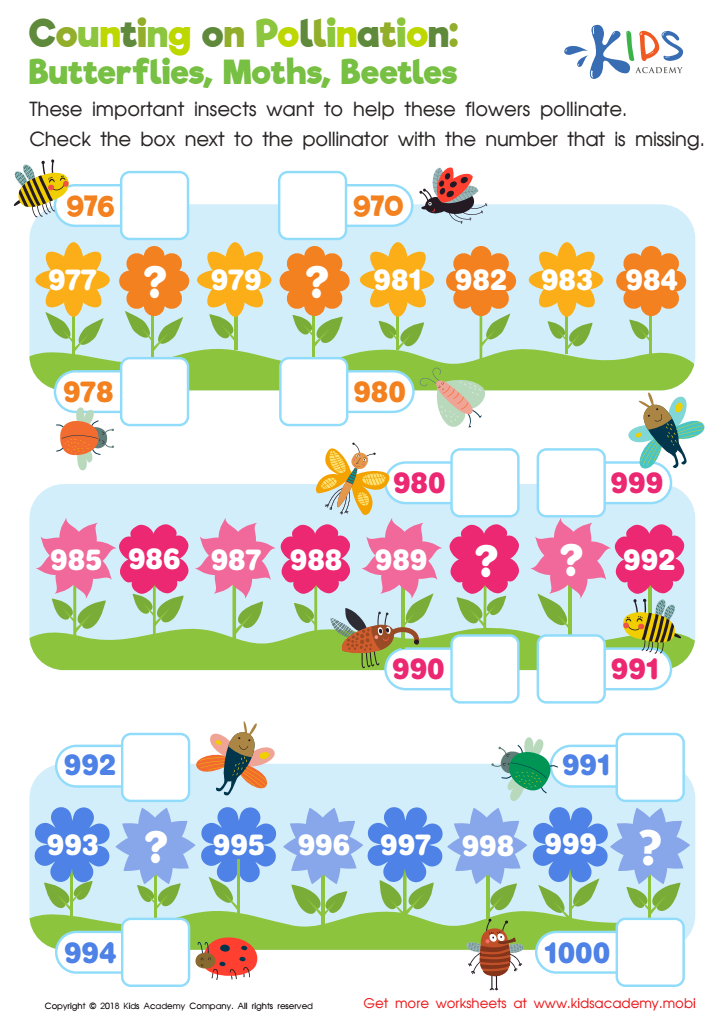
Counting on Pollination: Butterflies, Moths, Beetles Worksheet





.jpg)
.jpg)
Understanding pollination is important for children ages 4-7 because it lays the foundation for both scientific knowledge and environmental appreciation. At this young age, children are naturally curious about the world around them. Learning about pollination helps them understand how plants reproduce and grow, which is essential for food production including fruits and vegetables.
By caring about this topic, parents and teachers can encourage a sense of wonder and respect for nature. Engaging in hands-on activities, such as planting seeds or observing bees and butterflies, creates meaningful learning experiences that make science fun. Additionally, understanding pollination highlights the role of insects and animals in our ecosystems, fostering a sense of stewardship for the environment.
Furthermore, discussing pollination can lead to broader topics about biodiversity, the importance of bees, and the impacts of pesticides. This early awareness can help instill a passion for the environment and inspire future generations to protect it. In summary, teaching young children about pollination cultivates curiosity, respect for nature, and awareness of ecological relationships, all vital for nurturing environmentally conscious citizens of tomorrow.








