Visual discrimination Worksheets for Ages 4-7 - Page 2
28 filtered results
-
From - To
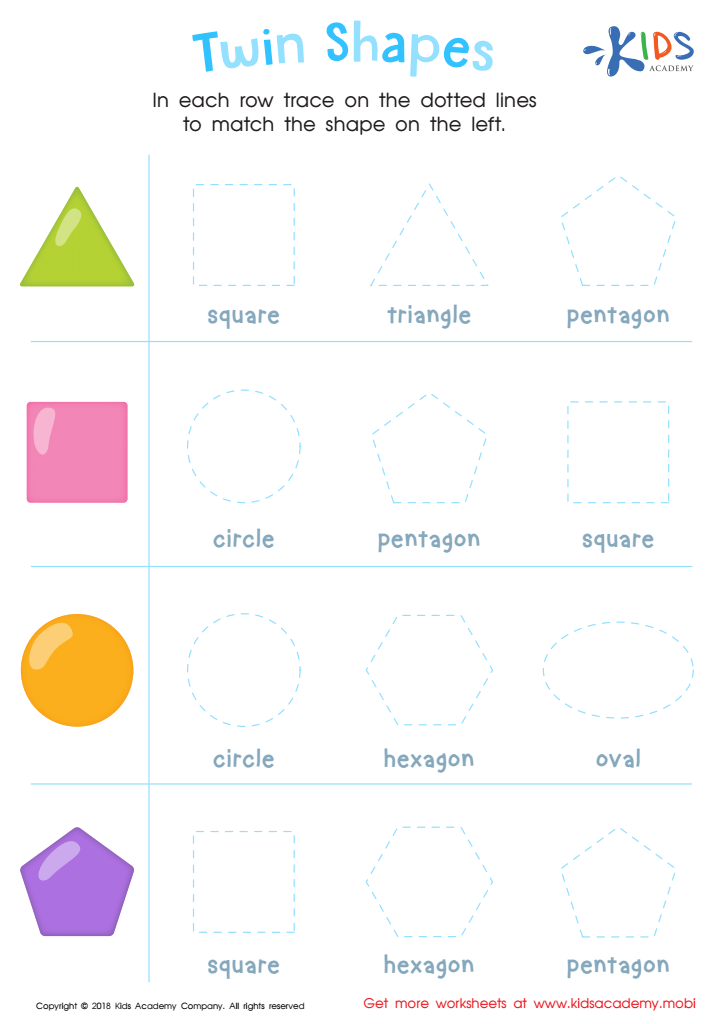
Twin Shapes Dot-to-Dot Worksheet
 Assign to My Students
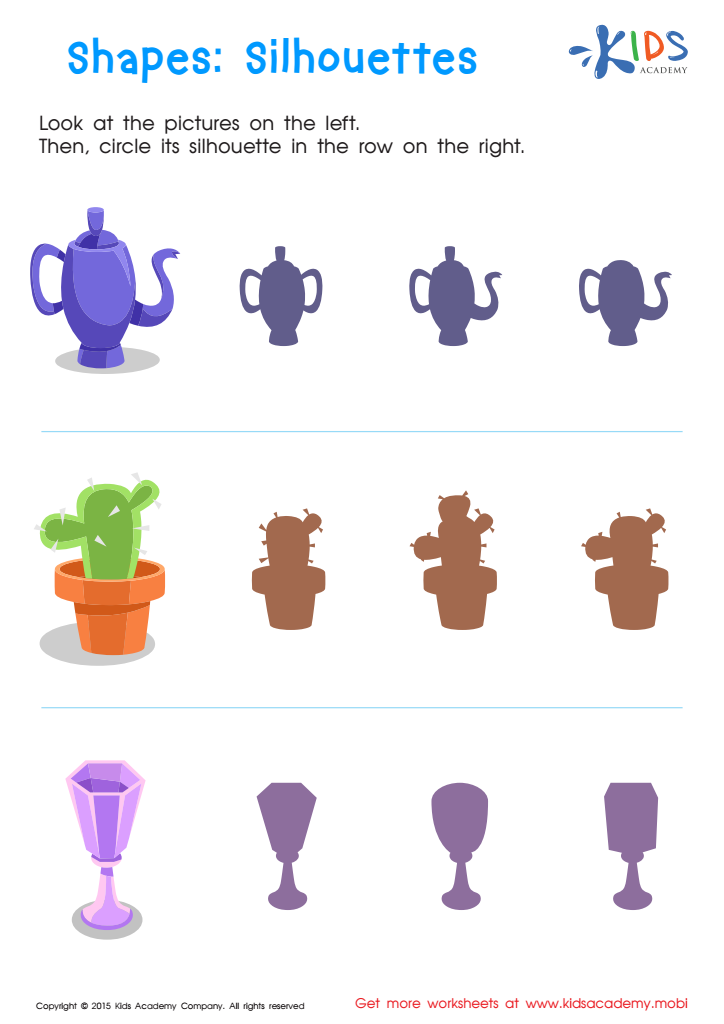
Silhouettes – Shapes Worksheet
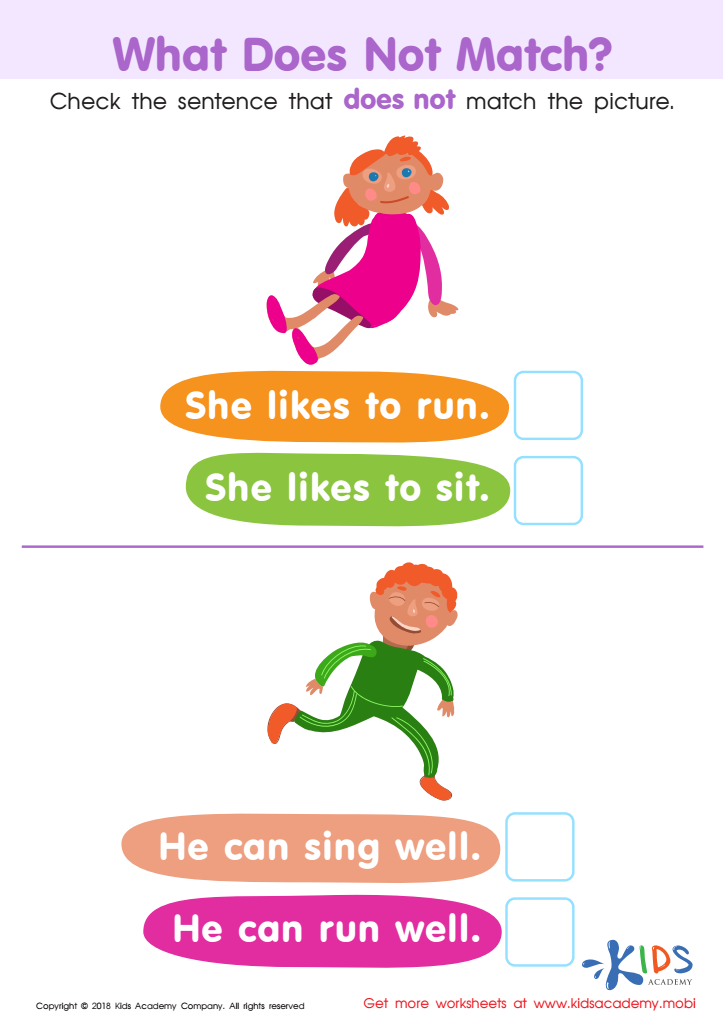
What Does Not Match? Worksheet






Visual discrimination is the ability to discern differences and similarities between shapes, patterns, colors, and objects, and it plays a crucial role in a child's early development. For children aged 4-7, this skill is foundational for learning and everyday functioning. Parents and teachers should prioritize visual discrimination for several reasons.
Firstly, it directly impacts literacy skills. Children who can easily differentiate between letters and shapes are more likely to develop strong reading and writing abilities. This skill aids in recognizing words, forming letters, and understanding the significance of spacing.
Secondly, visual discrimination supports mathematical learning. It enables children to categorize objects, identify patterns, and grasp spatial relationships, which are essential skills in math.
Moreover, visual discrimination fosters problem-solving skills and enhances critical thinking. As children learn to notice differences and identify details, they develop the ability to analyze situations and make informed decisions.
Lastly, strong visual discrimination encourages independent learning. Children gain confidence in navigating their environment, promoting self-esteem.
In summary, visual discrimination is not just an academic skill; it nurtures a well-rounded child capable of thriving in a complex world. Investing in this area of development prepares children for future success.








