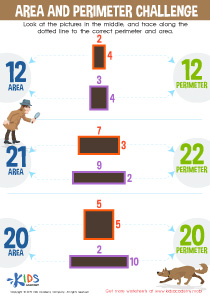
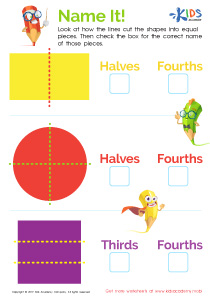
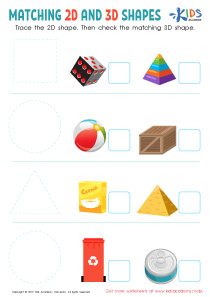
Spatial awareness 2D Shapes Worksheets for Ages 4-7
3 filtered results
-
From - To
Enhance your child's spatial awareness with our engaging 2D Shapes Worksheets designed for children ages 4-7! These interactive worksheets feature fun, age-appropriate activities that help young learners explore and identify various shapes including circles, squares, triangles, and more. Through coloring, tracing, and matching exercises, your child will develop essential spatial recognition skills vital for early math comprehension. Our thoughtfully crafted resources not only support academic growth but also encourage creativity and fine motor skills. Perfect for classroom use or at-home learning, these worksheets make teaching geometry enjoyable and impactful. Discover the joy of learning shapes today!
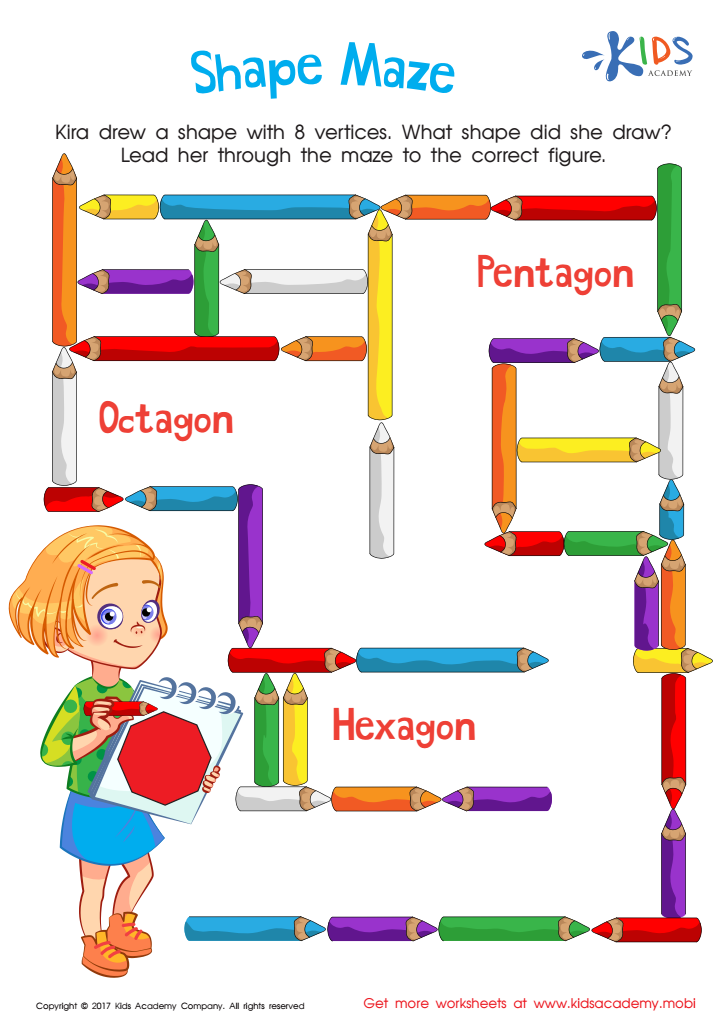
Shape Maze Worksheet
 Assign to My Students


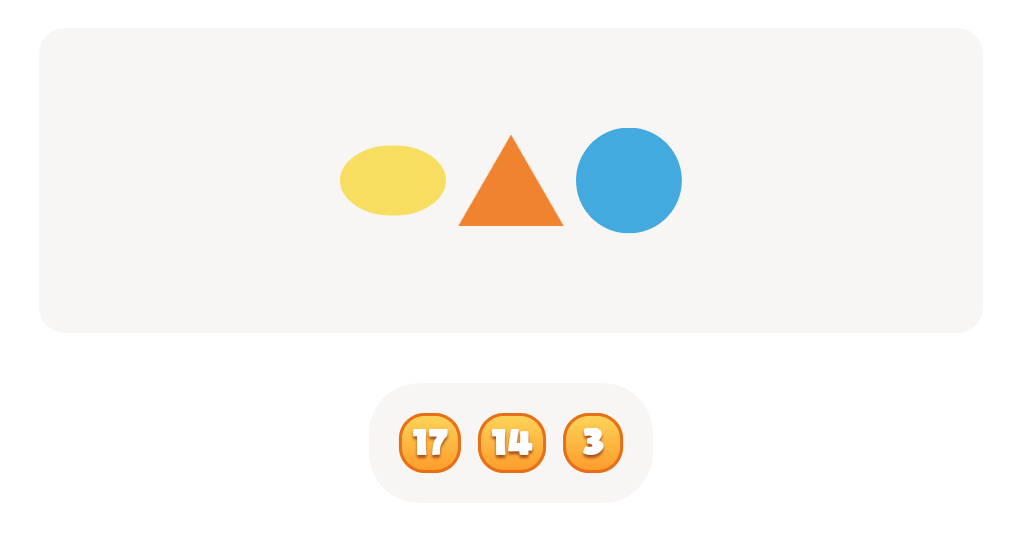
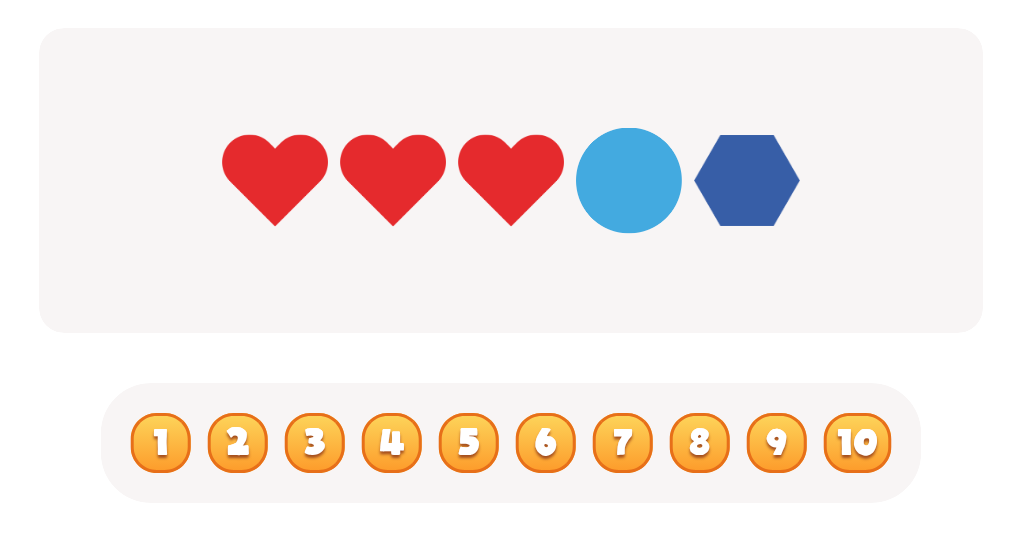
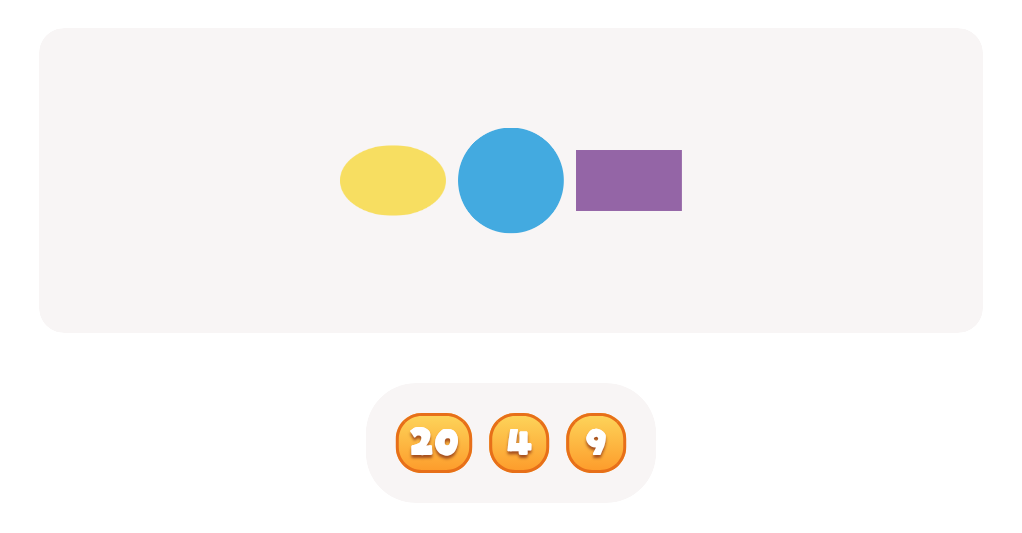
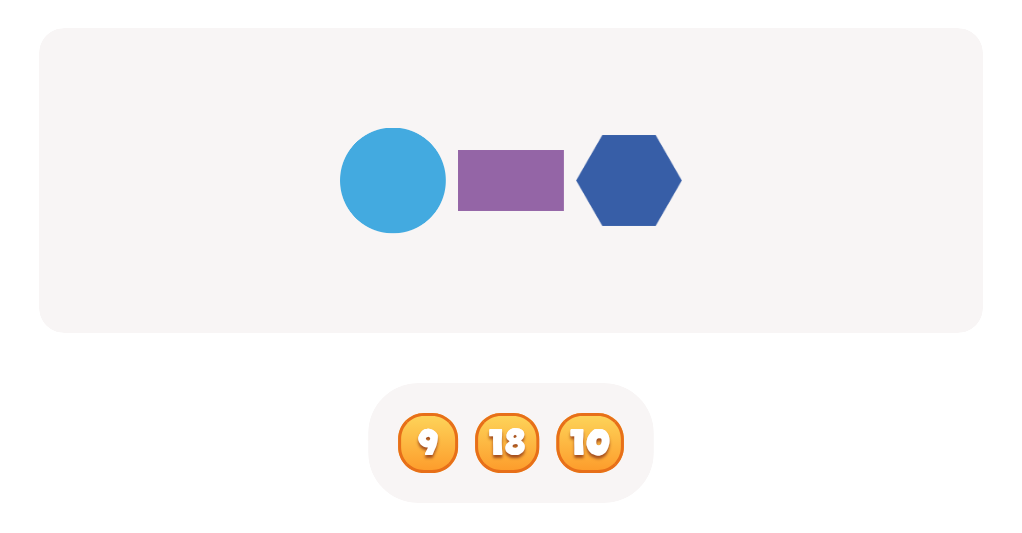
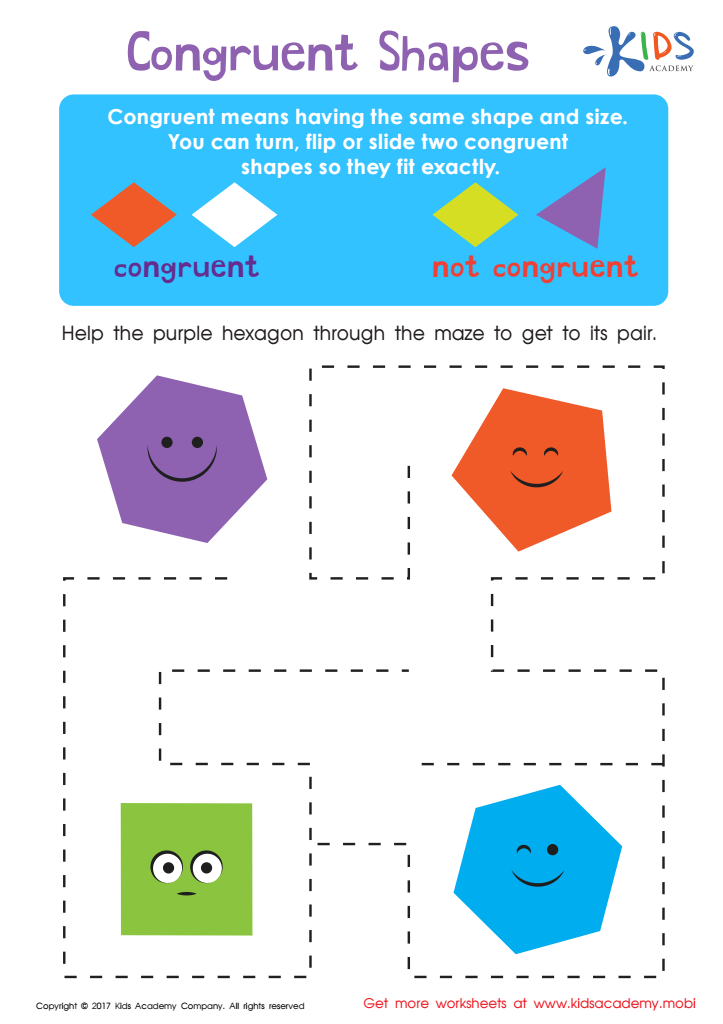
Congruent Shapes Worksheet
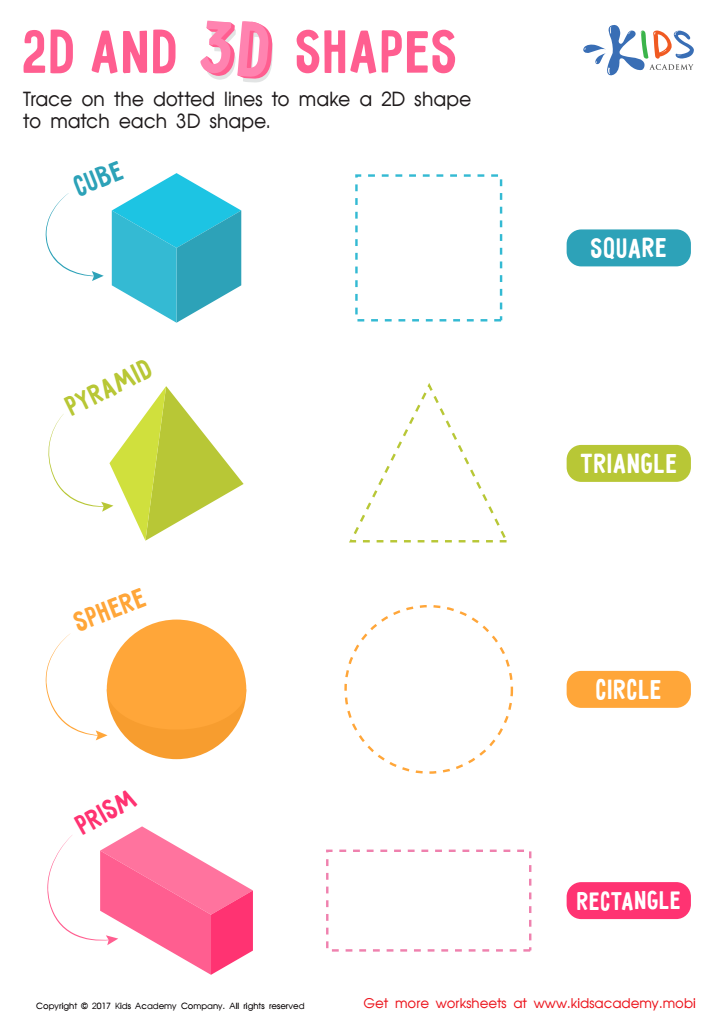
2D and 3D Shapes Worksheet








Spatial awareness and understanding of 2D shapes are foundational skills for children ages 4-7, playing a crucial role in their cognitive and physical development. These skills enhance problem-solving abilities and critical thinking, vital for later academic success in subjects like math and science. Children who grasp spatial concepts can visualize and manipulate objects, fostering creativity and innovation.
Moreover, proficiency in recognizing and understanding 2D shapes helps with early literacy skills. As children learn to associate shapes with letters and numbers, they develop stronger reading and mathematical contexts. For instance, understanding shapes aids in grasping concepts such as area and perimeter later in life.
Parents and teachers should also recognize the significance of spatial awareness in everyday life. It influences children’s ability to organize their environments, comprehend directions, and even interact with technology, such as tablets and smartphones. Engaging children in activities like puzzles, art, and outdoor play allows them to explore shapes and spatial concepts naturally, leading to increased confidence and self-esteem.
Ultimately, nurturing spatial awareness and an understanding of 2D shapes equips children with essential life skills, promoting holistic growth during these formative years. By prioritizing this area of development, we set the stage for future learning and success.